GPS Collars Worth Buying for a Siberian Husky
There's a special kind of dread that grips a Siberian Husky owner, a cold knot in the stomach when you realize your dog isn't where you left them. These beautiful, intelligent, and notoriously independent dogs are escape artists par excellence, and the fear of them running off is a constant companion. This guide will walk you through why GPS collars are an indispensable tool for Husky owners and what to look for to ensure your adventurous companion stays safe.
Why a GPS Collar Is Not a "Nice-to-Have" for a Siberian Husky
Let's be honest, if you own a Siberian Husky, you've probably either experienced the panic of a runaway dog, or you live in perpetual fear of it. These aren't just high-energy dogs; they are finely tuned escape machines with an ancestral drive that makes them unique among most domestic breeds. A GPS collar isn't just a fun gadget for a Husky; it's a critical piece of safety equipment.
The Inherent Roaming Instinct
It’s not just that Huskies like to run; it’s that they are bred to run. For thousands of years, their ancestors, the working dogs of the Chukchi people, covered vast distances pulling sleds across unforgiving landscapes. This isn't a desire to bolt because they're scared or poorly trained; it’s an intrinsic, deeply ingrained behavioral drive. They thrive on covering ground, on exploring, on following a scent trail for miles. This means that a loose Husky isn't just taking a quick detour; they're embarking on an adventure, often with little regard for returning home quickly.
Even the most loving, well-exercised, and obedient Siberian Husky can have this switch flipped by an interesting scent, a glimpse of a rabbit, or the pure joy of open space. That "come" command, which works flawlessly in the backyard, can evaporate into thin air when their powerful prey drive kicks in, or the call of the wild becomes too strong. It's not a personal affront; it's just who they are. You can read more about The Roaming Instinct Bred Into Every Siberian Husky to understand this better.
Escape Artists Extraordinaire
If you’ve heard stories about Huskies scaling fences or digging under them, believe them. These dogs are problem-solvers when it comes to achieving freedom. A six-foot fence? Many Huskies will consider it a challenge, and often, a solvable one. They have incredible vertical leap capabilities, and if they can get even a paw hold, they’re going up and over. If they can’t go over, they’ll go under. Their digging prowess is legendary, turning a meticulously installed fence line into a mere suggestion within minutes.
Beyond climbing and digging, Huskies are often surprisingly adept at manipulating latches and gates. It's not uncommon to hear tales of Huskies figuring out how to open gate latches or even dog doors. They observe, they learn, and they exploit weaknesses in your containment system with an almost uncanny intelligence. This relentless pursuit of freedom means that traditional containment methods, while necessary, often aren't enough to guarantee their safety, making a reliable backup like a GPS collar indispensable. You might want to review The Height a Siberian Husky Can Clear and Siberian Huskies That Dig Under Fences for more insights.
The Limitations of Traditional ID
Of course, your Siberian Husky should always wear a traditional collar with up-to-date ID tags, and they absolutely need to be microchipped. These are fundamental layers of protection. A tag provides immediate contact information for whoever finds your dog, and a microchip offers permanent identification if your dog ends up at a shelter or vet. However, both of these solutions are reactive. They rely on someone else finding your dog, checking for tags, and then hopefully scanning for a chip.
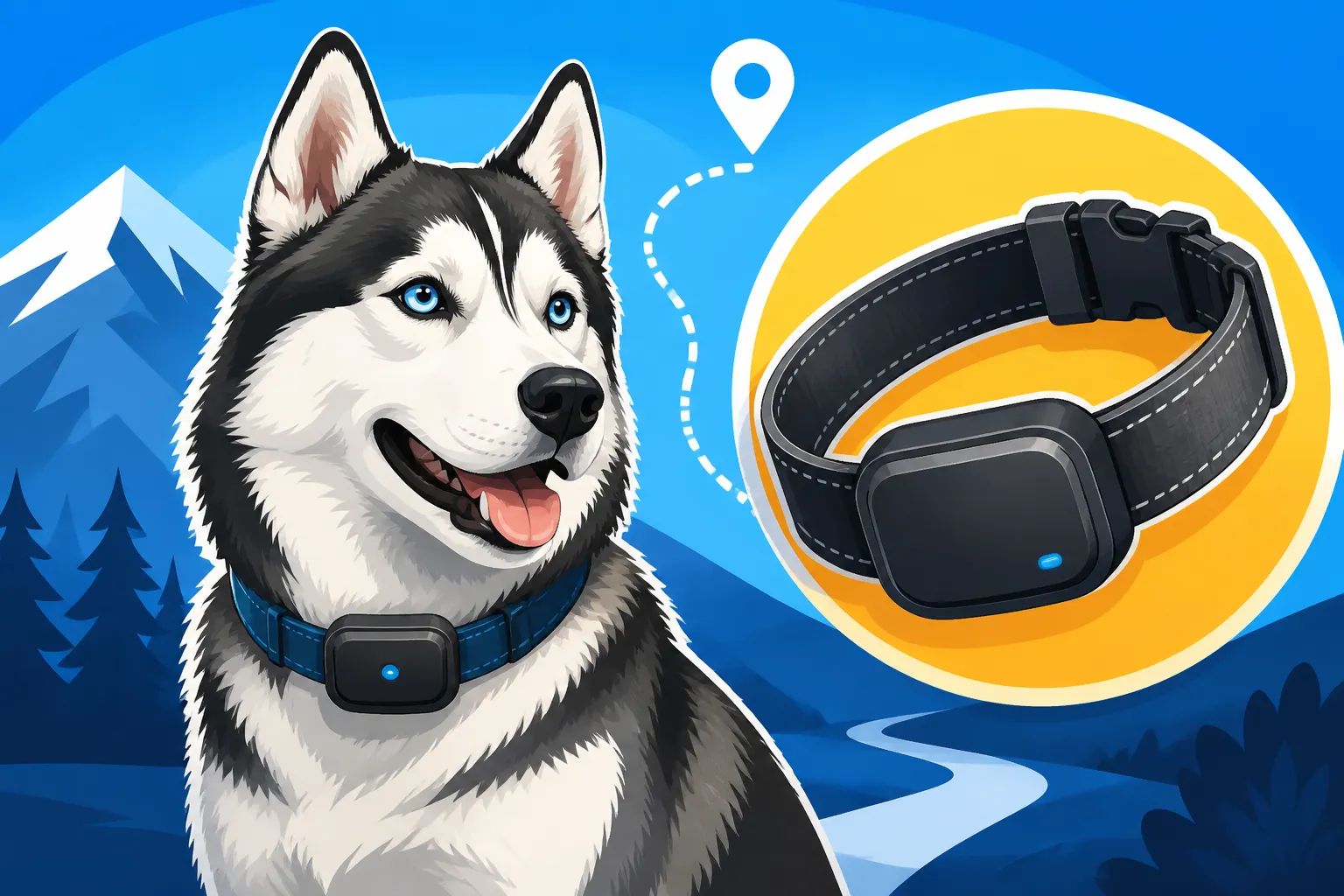
In those terrifying moments when your Husky has slipped out the gate or vaulted the fence, you don't want to wait for someone else to find them. You want to be proactive. A GPS collar changes the game entirely by allowing you to actively track and locate your dog in real-time. It turns a desperate search into a targeted recovery effort, potentially saving precious hours or even days, and significantly reducing the risks your Husky faces while loose. Ensuring your dog is always easily identifiable is key, and Microchip Registration for a Siberian Husky is a foundational step.
What to Look for in a GPS Collar for Your Husky
Choosing a GPS collar isn't just about picking the first one you see. For a Siberian Husky, you need specific features that cater to their unique blend of athleticism, independence, and sheer determination. Think of it as investing in a piece of tech that needs to keep up with a four-legged Olympian.
Real-Time Tracking Capabilities
This is arguably the most critical feature for a Husky. When your dog makes a break for it, they can cover ground incredibly quickly. A GPS collar that updates every five or ten minutes isn't going to cut it; by the time you get an update, your Husky could be half a mile further down the road or deeper into the woods. You need near real-time tracking, ideally with updates every few seconds in "live tracking" or "expedition" modes.
Look for collars that connect to robust cellular networks (often requiring a subscription) to provide continuous, accurate location data. The precision of the GPS signal matters too – how close to their actual location can the collar pinpoint? When you're frantically searching a wooded area or a dense neighborhood, every foot of accuracy counts. Imagine trying to find your dog in a vast park; precise, frequent updates are the difference between a quick reunion and an agonizing hunt.
Durable and Weatherproof Design
Siberian Huskies are not dainty lapdogs. They love to run, roll in the mud, dig in the dirt, and splash in puddles – sometimes even snow, if you're in the right climate. Their GPS collar needs to be built to withstand all of it. A flimsy plastic device will be chewed through, scratched, or simply fall apart after a few rough-and-tumble adventures.
Look for collars with high waterproof ratings (IPX7 or IPX8 are excellent, meaning they can be submerged). The casing of the tracking device itself should be rugged and impact-resistant. Consider how it attaches to the collar – is it securely integrated or merely clipped on, making it easy for a determined Husky to dislodge? Materials matter too; while the tracking module is the tech, the collar itself should be made from durable, non-chafing material that won't irritate their thick double coat, especially in varying temperatures. Remember, your Husky might encounter all sorts of weather conditions, so durability is key. Siberian Husky Cold Weather Care and Its Limits will give you an idea of the conditions they can endure.
Long Battery Life and Geofencing
What good is a tracking device if its battery dies an hour into your Husky's grand escapade? Long battery life is crucial, especially if you live in an area where your Husky could roam for hours or even days before being found. Aim for collars that offer several days of battery life on a single charge under normal usage, and ideally at least 12-24 hours in a more aggressive live-tracking mode. Some collars even feature battery-saving modes that kick in when your dog is stationary or within a safe zone.
Geofencing is another non-negotiable feature for Husky owners. This allows you to set up virtual boundaries around your home, yard, or designated safe areas. The moment your Husky steps outside this invisible fence, you receive an instant alert on your phone. This early warning system is invaluable; it means you can start your search the moment they bolt, rather than discovering their absence much later. This proactive alert dramatically increases your chances of a swift recovery, often before they've gone too far.
Comfort and Fit for a Husky's Neck
While technology is important, your Husky's comfort is paramount. A bulky, heavy, or poorly designed GPS device can be uncomfortable, cause chafing, or even be easily removed by a clever and annoyed Husky. Their thick necks and dense double coats mean that you need a collar that's designed to sit well without causing irritation.
Look for lightweight, ergonomic designs. Ensure the collar or the attached device doesn't chafe against their skin or get buried uncomfortably in their fur. Some GPS trackers integrate directly into a special collar, while others are modules that attach to your existing collar. Whichever you choose, make sure it allows for a snug but not tight fit, ensuring it can't slip over their head if they pull back. Comfort ensures they'll wear it consistently, and consistent wear is the only way a GPS collar can truly protect them. Considerations for their unique anatomy, like The Siberian Husky Head, Ears and Tail, can help inform your choice.
Here's a quick look at some features you might find in GPS collars suitable for a Siberian Husky:
| Feature | Description | Husky Relevance |
|---|---|---|
| Real-Time Tracking | Updates location every few seconds/minutes for immediate monitoring. | Essential for quickly locating a fast-moving, far-ranging Husky. |
| Geofencing | Virtual boundaries with instant alerts if crossed. | Critical for early warning of an escape, minimizing search time. |
| Battery Life | Duration of charge, often 2-7 days, less in live-tracking. | Longer life means you have more time to find them without power worries. |
| Waterproof Rating | IPX7 or IPX8 for submersion; IPX6 for splashes. | Must withstand rain, snow, puddles, and energetic rolls in mud. |
| Durability | Rugged casing, strong attachment points, resistant to impacts. | Huskies are tough on gear; it needs to survive their adventures. |
| Activity Monitor | Tracks steps, rest, calories burned. | Useful for understanding energy levels, but secondary to location. |
| Subscription Plan | Required for cellular network connectivity. | Most reliable tracking requires a monthly/annual fee; crucial for coverage. |
| App Interface | User-friendly map, alerts, battery status, history. | Intuitive app is key for rapid response in an emergency. |
Getting the Most Out of Your Siberian Husky's GPS Collar
Having a top-of-the-line GPS collar is one thing; using it effectively is another. It's a tool, and like any tool, its efficacy depends on how diligently and thoughtfully you employ it. For a Siberian Husky, this means incorporating it into a broader safety strategy.
Regular Charging and Maintenance
This might sound obvious, but it’s the most common reason a GPS collar fails its owner. A dead battery turns a sophisticated tracking device into a piece of decorative plastic. Make charging the GPS collar as routine as charging your own phone. Many owners find it easiest to charge it overnight, every night, or every other night, depending on the battery life and how often their Husky roams. Don't wait until the battery is critically low.
Beyond charging, give the device a quick visual inspection regularly. Is it still securely attached to the collar? Are there any cracks or damage to the casing? Clean off any mud, dirt, or debris that might interfere with charging ports or signal transmission. A well-maintained collar is a reliable collar. When you're buying other pet essentials, like food or toys from a place like Chewy, consider adding a reminder to check the GPS collar's charge!
Pairing with Strong Physical Containment
Let's be unequivocally clear: a GPS collar is an extra layer of security and an emergency recovery tool, not a substitute for proper physical containment. Your primary defense against a runaway Husky should always be a secure, inescapable yard and diligent supervision. This means a fence that is tall enough (at least six feet, often more for a determined jumper), reinforced at the bottom to prevent digging (think L-footers or buried wire), and gates with escape-proof latches.
Even with a GPS collar, you don't want your Husky getting out in the first place. The collar provides peace of mind that if they do manage an escape, you have a much better chance of getting them back quickly and safely. But prevention is always better than recovery. Double-check your fences, supervise them closely when outdoors, and understand the vulnerabilities of your yard. Reviewing topics like The Six-Foot Fence a Siberian Husky Needs and Adding an L-Footer Against Siberian Husky Digging are crucial for responsible ownership.
Training and Acclimation
Introducing any new piece of gear to a Husky should be done with patience and positive reinforcement. Some dogs might be indifferent, while others might find the new weight or sensation of the GPS device irritating. Start by letting them wear it for short periods, associating it with positive experiences like meal times, playtime, or tasty treats. Gradually increase the duration until they are completely comfortable.
Ensure the collar is fitted correctly – snug enough that it can't slip off, but loose enough to be comfortable and not chafe, especially with their thick fur. You should be able to slide two fingers comfortably under the collar. While a GPS collar helps find a lost Husky, a well-trained Husky who has a good recall (even if it's only reliable in controlled environments) is always safer. Continuing training, even if it feels like Training an Independent Siberian Husky is a lifelong endeavor, is an important part of overall safety.
Understanding the App and Features
Don't wait for an emergency to figure out how to use your GPS collar's accompanying app. Take the time to explore all its features. Set up your geofences accurately for your home and any other areas your Husky frequents. Customize alert settings so you receive notifications immediately. Understand how to activate live tracking and interpret the map interface. Many apps also offer activity monitoring, which can be a fun bonus feature to track your Husky's daily exercise.
Knowing your way around the app will significantly reduce stress and response time if your Husky ever makes an escape. Familiarize yourself with how to share location data with family members or friends who might help in a search. The more prepared you are to use the technology, the more effective it will be in that critical moment. While pet insurance companies like Healthy Paws focus on covering your pet's health needs, investing in a GPS collar and knowing how to use it gives you peace of mind that you can find your pet, which is a different, but equally vital, kind of protection.
Disclaimer
This article is for general informational purposes only and does not constitute professional advice. Laws, prices and regulations vary by location and change over time. Consult a qualified professional for guidance on your specific situation.