Long Lines and Recall Gear for a Siberian Husky
One of the most common frustrations Siberian Husky owners face is the constant battle with their dog's recall – or rather, the lack thereof. You want to give your adventurous Husky the freedom to explore, but the fear of them bolting and disappearing is very real. This comprehensive guide will walk you through how to use long lines and other essential recall gear to build a safer, more reliable recall, helping you provide your Husky with the exercise and mental stimulation they crave without the constant anxiety.
Why Long Lines Are a Husky Owner's Best Friend
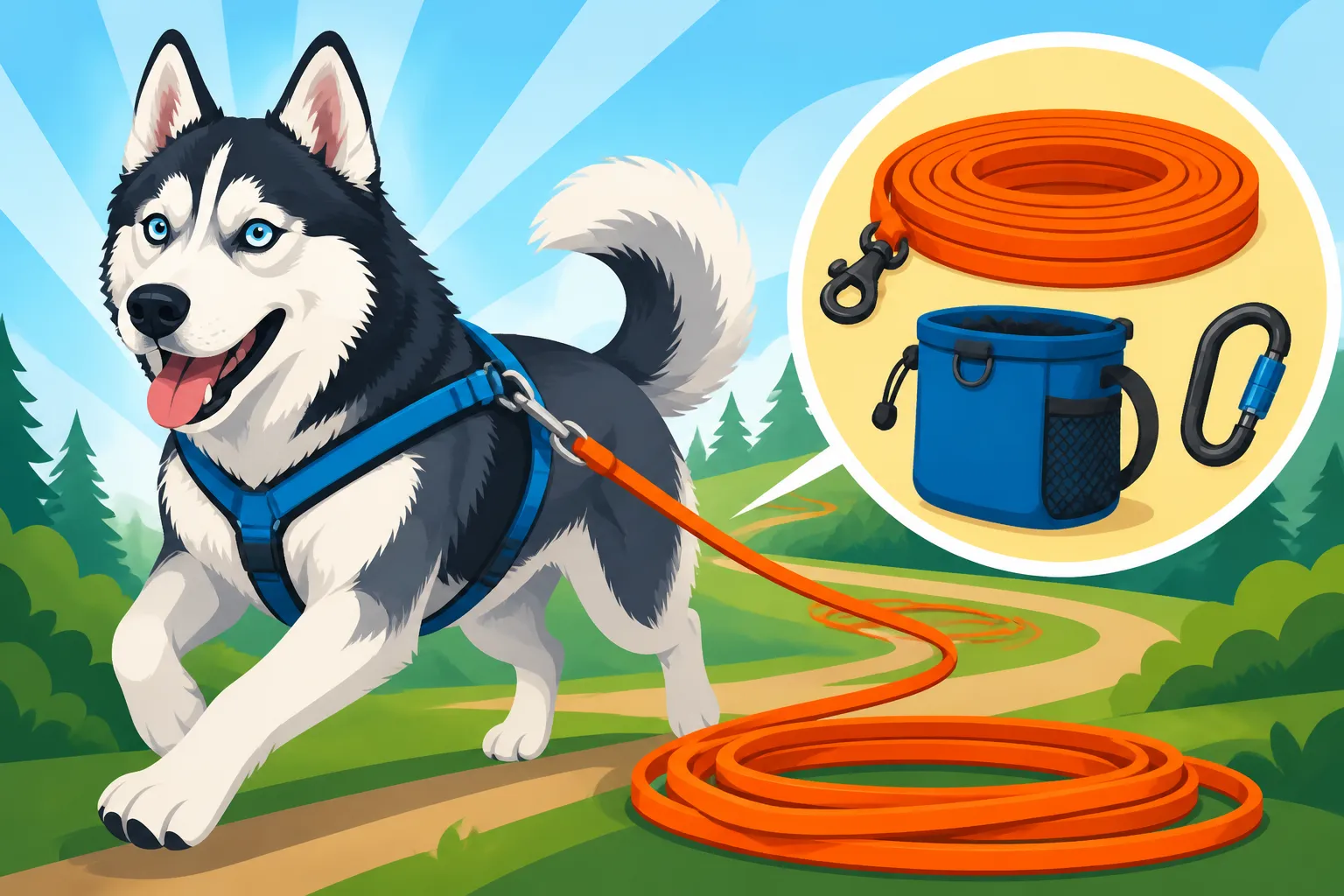
Let's be honest, the Siberian Husky has an infamous reputation for being an escape artist and having a recall that's, shall we say, "selective" at best. Their ancient instincts to roam and cover vast distances mean that once they decide to go, a simple "come!" command often falls on deaf ears. This isn't stubbornness, not really; it's deep-seated breed history at play. A long line isn't a crutch; it's a vital training tool that acts as a safety net, bridging the gap between leash walking and truly reliable off-leash freedom (if that's even achievable for your particular Husky, which for many, it simply isn't outside of a secure area).
A long line allows your Husky to practice independence while remaining safely tethered to you. This means they can investigate interesting smells, chase after a leaf in the wind, and just generally be a Husky without you having a heart attack every two minutes. This freedom, even on a line, is crucial for their mental well-being and helps burn off that boundless energy. It also allows you to reinforce positive recall in a controlled environment. When you call your Husky and they don't immediately respond, you can gently reel them in, rather than letting them "get away" with ignoring you, which only teaches them that your commands are optional. Think of it as a crucial step in Building a Siberian Husky Recall Word From Scratch.
Moreover, long lines are invaluable for socialization and environmental exposure. Imagine taking your young Husky puppy to a large, quiet park or an empty field. On a standard 6-foot leash, they're quite restricted. But on a 20 or 30-foot long line, they can explore, sniff, and experience new textures and sounds from a safe distance, building confidence without ever being truly off-leash. This controlled exploration helps prevent fear or reactivity down the line, as they learn that new situations are not threatening. It's a way to let them feel like they're making their own choices, even when you're ultimately in control.
Choosing the Right Long Line: Materials, Length, and Features
Selecting the perfect long line for your Siberian Husky isn't a one-size-fits-all decision. You'll want to consider the material, length, and any special features that make it suitable for your adventurous companion and your training goals. The right gear can make all the difference in both safety and effectiveness.
Materials Matter for Durability and Comfort
When it comes to long lines, the material is paramount, especially with a strong, energetic breed like a Husky. You're going to be dragging this line through mud, over rocks, and potentially through bushes, so durability is key.
- Nylon Webbing: This is a very common choice. Nylon is strong, relatively lightweight, and often affordable. It comes in various widths and strengths. The downside can be that it absorbs water, becoming heavier and potentially dragging more dirt. If it gets wet, it can also become slippery or cause rope burn if it slides through your hand too quickly, which is a real concern if your Husky makes a sudden dash. When looking online at retailers like Chewy, you'll find a wide array of nylon options, so you can compare thicknesses and hardware quality.
- Biothane: Ah, Biothane! This material is often a favorite among professional trainers and those with active dogs. It's a synthetic material (a polyester webbing with a PVC or TPU coating) that feels much like leather but is waterproof, odor-proof, and incredibly durable. It doesn't absorb water or dirt, making it super easy to clean – just wipe it down! It also maintains its flexibility in cold weather, which is a big plus if you're out with your Husky in chillier temperatures. The smooth surface is less likely to cause rope burn, and it tends to glide over surfaces more easily, reducing tangles. While it can be a bit more expensive upfront, its longevity and ease of maintenance often make it a worthwhile investment.
- Cotton/Natural Fibers: Less common for long lines designed for powerful dogs, cotton can be soft on the hands but lacks the durability and weather resistance of nylon or Biothane. It soaks up water readily, gets heavy, and can be harder to clean. For a Husky's strength and love for all things dirty, cotton is generally not the best choice.
Length Considerations for Different Training Scenarios
The length of your long line directly impacts the amount of freedom and control you have. Most long lines range from 15 to 50 feet, but some can go even longer.
- 15-20 Feet: This length is excellent for starting out, especially with a young Husky puppy, or for use in smaller, more contained areas. It offers a decent amount of freedom for sniffing and exploring without letting your dog get too far ahead. It's also more manageable if you're still getting the hang of handling a long line. It allows you to practice closer recalls and maintain a stronger connection.
- 30-35 Feet: This is often considered the "sweet spot" for many Husky owners. It provides a significant range for your dog to run, explore, and stretch their legs in larger fields or parks. This length is fantastic for really proofing your An Emergency Stop Cue for a Siberian Husky and ensuring they respond even when they're a good distance away. It gives them the illusion of total freedom while you still have that crucial safety tether. Thirty Feet or Fifty on a Siberian Husky Line discusses this in more detail.
- 50+ Feet: For truly expansive areas and advanced recall work, a 50-foot or longer line can be incredibly useful. It allows your Husky to gallop at full speed and still be under your control. However, these longer lines require more skill to manage; they can get tangled easily and require significant space to use safely. They're not for crowded areas!
When choosing, always opt for a line with a sturdy, reliable clasp that won't easily unclip from your Husky's harness. You'd be amazed how quickly a dog can shake off a flimsy clasp during an exciting moment.
Essential Recall Gear Beyond the Long Line
While the long line is your primary tool, a well-rounded recall strategy involves a few other pieces of gear that can significantly improve your chances of success and your Husky's safety. Remember, Why Siberian Husky Recall Fails at the Worst Moment often comes down to their strong instincts and independent nature, so every bit of help counts.
Harnesses for Safety and Comfort
A proper harness is absolutely critical when using a long line with a Siberian Husky. Never attach a long line directly to a flat collar, as a sudden stop or lunge can cause serious neck injury, including tracheal damage. Huskies are strong, and they can pull hard.
- Front-Clip Harnesses: These are excellent for everyday walks and can help reduce pulling, but they aren't ideal for long line work where you need the dog to pull away from you. The clip on the chest can twist the harness around during fast movements or changes in direction.
- Back-Clip Harnesses: A sturdy, well-fitting back-clip harness is usually the best choice for long line training. It distributes pressure evenly across your Husky's chest and back, minimizing strain if they hit the end of the line. Look for harnesses with multiple adjustment points to ensure a snug, escape-proof fit, especially around the rib cage. Huskies are notorious for wiggling out of harnesses if they're not fitted correctly. Brands like Ruffwear or other robust options found on Chewy are often good considerations for durable harnesses.
- Y-Front Design: Whichever clip style you prefer, prioritize a harness with a Y-front design. This ensures the harness straps do not go across your Husky's shoulder joints, which can restrict their natural movement and cause discomfort or even injury over time, especially during active use like long line running.
High-Value Training Treats
Let's face it, a standard dry biscuit isn't going to cut it when your Siberian Husky has spotted a squirrel 50 feet away. You need treats that are so utterly irresistible that they override that primal prey drive. These are your "jackpot" rewards for a successful recall.
- Meat-Based Treats: Think real meat – cooked chicken bits, small pieces of cheese, hot dogs, or even freeze-dried liver. These smell strong and taste amazing, making them highly motivating. Many owners find that fresh, human-grade food services like Ollie provide excellent, palatable options that can be cut into small, high-value training pieces. The key is something your Husky never gets otherwise, making it extra special.
- Soft and Small: Choose treats that are soft, easy to chew, and small enough to be eaten quickly without distracting from the training. You want immediate gratification, not a chewing session.
- Variety is Key: Keep your Husky guessing! Rotate through a few different high-value treats to maintain their interest and excitement during training sessions. You can also mix in praise and enthusiastic play as a reward, but for a Husky, food often reigns supreme. Rewards That Beat the Siberian Husky Chase Instinct delves into this in more detail.
GPS Trackers: An Extra Layer of Security
Even with the best training and a diligent owner, accidents can happen, especially with a breed as prone to escape as the Husky. A GPS tracker, while not strictly "recall gear," is an invaluable safety device that can literally be a lifesaver. GPS Collars Worth Buying for a Siberian Husky is a topic many Husky owners find critical.
- Real-time Tracking: These devices attach to your Husky's collar or harness and allow you to track their location in real-time via a smartphone app. If your Husky somehow slips their gear or gets away (which, for this breed, is always a possibility, even for the most careful owner), a GPS tracker dramatically increases your chances of finding them quickly.
- Subscription Services: Most GPS trackers require a monthly or annual subscription fee for cellular service to transmit location data. Consider the coverage in your area and the battery life of the device.
- Peace of Mind: While they don't prevent escapes, they offer immense peace of mind. Knowing you have a way to locate your beloved companion if the worst happens is priceless. This is where pet insurance, like Healthy Paws, can also come into play, providing financial security for unexpected vet bills that might arise from an escape-related injury or accident.
Using Long Lines Effectively: Training Tips and Safety Considerations
A long line is a powerful training tool, but it needs to be used correctly and safely to be effective and prevent injury to both you and your Siberian Husky. Remember, the goal is to create a positive association with coming when called, not to yank them around.
Introducing the Long Line Gradually
Don't just clip on a 50-foot line and expect your Husky to understand. Start slow.
- Start Short: Begin with a shorter long line, perhaps 15-20 feet, in a very familiar, quiet, and secure area. Let your Husky drag it at first, getting used to the feel of it. Make sure the area is free of anything the line could snag on dangerously.
- Hold It Lightly: Once your Husky is comfortable dragging it, start holding the end of the line. Don't grip it tightly all the time. Let it flow through your hand, allowing them to explore. Only apply gentle tension when you need to prevent them from straying too far or to guide them back.
- Positive Reinforcement: Every time your Husky checks in with you, even if they just glance back, praise them enthusiastically and give a small, high-value treat. If they come closer voluntarily, throw a party! This builds a positive association with being near you.
- Practice Recall in Low-Distraction Areas: Once your Husky is comfortable with the line, move to a quiet, securely fenced field (if possible, or a very open, safe space away from roads). Let them reach the end of the line, then give your recall cue (e.g., "Come!"). If they start to come, immediately start backing up and praising them, making yourself exciting. If they don't respond, gently reel them in, still using your happy voice, and reward them when they reach you. The key is to never let them ignore your cue without following through. This helps them understand Whether a Siberian Husky Comes Back on Its Own.
Mastering Your Handling Skills
Handling a long line with a strong Husky requires practice and awareness to avoid tangles and injuries.
- The "S" Method: Don't wrap the line around your hand or arm, as this can cause serious injury if your Husky bolts. Instead, learn to gather the line in loose "S" shapes or figure-eights, allowing it to pay out smoothly. If your Husky suddenly takes off, you can drop the line and step on it, rather than being dragged.
- Wear Gloves: Heavy-duty gardening or work gloves can protect your hands from rope burn, especially with nylon lines, when your Husky makes an unexpected dash.
- Clear the Area: Always be mindful of your surroundings. Ensure there are no trees, poles, or other obstacles the line can wrap around, which could cause a sudden, dangerous jerk for your dog. Similarly, avoid other people or dogs until your Husky is very reliable, as a tangled long line can be a hazard to others.
- Supervision is Non-Negotiable: Never, ever leave your Siberian Husky unattended on a long line. They can easily get tangled, choked, or hurt themselves. A long line is a direct extension of your control.
Progressive Training and Proofing
As your Husky gets more reliable on the long line in low-distraction environments, gradually introduce more challenges.
- Increase Distractions: Move to areas with slightly more distractions, like a park with distant activity or a trail where you might encounter other people (but still avoid off-leash dogs initially). This is where Practicing Siberian Husky Recall in a Fenced Field becomes invaluable.
- Vary Locations: Practice in different parks, fields, and even urban environments (if safe and appropriate). Each new environment presents new smells and sights that can challenge your Husky's focus.
- The "Emergency Recall": Develop a separate, distinct, and extremely high-value recall cue that you only use for emergencies and reward lavishly. This is often a whistle or a unique word that means "drop everything and come NOW for the best reward ever!" Don't dilute this cue by using it for casual recalls.
By consistently and safely using long lines, you can give your Siberian Husky the freedom they instinctively crave while building a more reliable recall, ensuring their safety and your peace of mind. Remember, with a Husky, patience and consistency are your greatest allies.
| Long Line Material | Pros | Cons | Best Use for Huskies |
|---|---|---|---|
| Nylon Webbing | Durable, widely available, often affordable | Absorbs water/dirt, can cause rope burn, can get heavy | General training, good starter line |
| Biothane | Waterproof, odor-proof, easy to clean, strong | More expensive upfront, may feel stiff at first | All-weather training, high-frequency use, preferred |
| Cotton | Soft on hands, natural feel | Less durable, absorbs water/dirt easily, prone to tangles | Not recommended for strong, active Huskies |
Disclaimer
This article is for general informational purposes only and does not constitute professional advice. Laws, prices and regulations vary by location and change over time. Consult a qualified professional for guidance on your specific situation.