Cooling Mats and Fans for a Siberian Husky
Few things are more disheartening than watching your magnificent Siberian Husky suffer through a hot summer day, panting excessively and trying to burrow into the coolest spot on the tile. Despite their stunning double coats, our furry friends can really struggle when temperatures climb, turning their usual playful energy into lethargic discomfort. This guide is all about helping you create a more comfortable environment for your Husky, exploring how cooling mats and various types of fans can become indispensable tools in your quest to beat the heat and keep your beloved companion happy and healthy.
Understanding Your Husky's Heat Challenge
It's a common misconception that because Huskies have a thick coat, they're inherently bad in the heat. While they are built for arctic conditions, their coat is actually a marvel of natural engineering, designed to insulate them from both extreme cold and extreme heat. However, this natural system can be overwhelmed when the ambient temperature gets too high, or when there isn't enough air movement to help them shed heat effectively.
The Double Coat Dilemma
A Siberian Husky's coat isn't just one layer; it's a dense, plush undercoat for insulation and a protective outer layer of guard hairs. In winter, this traps warm air close to their body. In summer, it's supposed to prevent heat from penetrating their skin while allowing air to circulate. The problem arises when humidity is high or there's no breeze, trapping warm air against their body and making it difficult for them to cool down through panting alone. This is why you should Why You Must Never Shave a Siberian Husky, as shaving actually removes their natural defense system against both cold and heat.
Think of it like wearing a very efficient down jacket. It keeps you warm in the cold, but in a stuffy room with no ventilation, you're going to get uncomfortably hot, fast. Your Husky feels much the same way. Their bodies are built to conserve heat, not dissipate it rapidly, which puts them at a disadvantage compared to breeds with single coats when the mercury rises. Providing artificial cooling methods like mats and fans supplements their natural, but sometimes insufficient, cooling mechanisms.
Signs Your Husky is Overheating
Recognizing the early signs of overheating is critical to preventing a serious health emergency like heatstroke. Huskies are stoic dogs by nature, but their discomfort will be evident if you know what to look for. Excessive panting, which sounds more labored than usual, is often the first indicator. They might also appear restless, constantly shifting positions in search of a cooler spot, or conversely, become unusually lethargic and slow to respond.
Other red flags include drooling more than usual, a darkening of their gums, or a rapid heart rate. If you notice any of these, it's time to act quickly to cool them down. Don't wait until they're staggering or collapsing, as at that point, they could be in severe distress. Our article, Signs of Heat Trouble in a Siberian Husky, goes into more depth on this crucial topic, but for now, remember that vigilance is your best friend when it comes to summer safety.
Cooling Mats: A Spot of Relief
Cooling mats offer a localized spot of coolness that can be a real lifesaver for a hot Husky. They provide a comfortable, chilled surface for your dog to lie on, helping to draw heat away from their body through conduction. It's like finding that one cool patch of floor that just hits the spot on a scorching day.
Types of Cooling Mats and How They Work
There's a surprising variety of cooling mats out there, each with its own mechanism for keeping things frosty. The most common are gel mats, which typically contain a non-toxic gel activated by pressure. When your Husky lies down, their weight spreads the gel, initiating a chemical reaction that creates a cool sensation. These are fantastic because they don't require refrigeration, water, or electricity, making them super portable. However, they do tend to absorb body heat over time and may need a break to "recharge" and cool down again on their own.
Then you have water-filled mats. These are usually more robust and involve filling them with cold water, sometimes even adding ice. They offer a deeper, more consistent coolness, akin to a human waterbed. The downside is the potential for leaks, especially if you have a Husky who likes to chew, and the effort of filling and emptying them. They can also be quite heavy. Finally, there are elevated beds, often made with breathable mesh. While they don't actively cool, they lift your Husky off the hot floor, allowing air to circulate underneath and around them, which significantly aids in evaporative cooling. This type of bed is particularly good when combined with a fan, as the fan can blow air directly under and over the dog. You can often find a wide selection of these options at places like Chewy, offering different sizes and styles to fit your Husky's specific needs and your home's aesthetic.
Choosing the Right Mat for Your Husky
When picking a cooling mat, size is paramount. Your Husky needs to be able to stretch out completely on it, allowing their entire body to make contact with the cool surface. A mat that's too small will only offer partial relief, defeating much of its purpose. Don't underestimate your Husky's potential for destruction either; many mats are designed with chew-resistant materials, but a determined Husky can often find a weak spot. Look for durable seams and robust outer fabrics.
Washability is another key consideration. Huskies shed, they track in dirt, and they sometimes get messy. A mat with a removable, machine-washable cover will save you a lot of hassle. Also, consider the ambient temperature of your home. If your house is already fairly cool, a simple elevated bed might suffice. If you're battling truly hot indoor conditions, a gel or water-filled mat will provide more active cooling. Observe your Husky's preferences; some take to them instantly, while others might need a little encouragement or a different type of mat altogether.
Here's a quick comparison of popular cooling mat types:
| Mat Type | How It Works | Pros | Cons | Best Use Case |
|---|---|---|---|---|
| Gel Mat | Pressure-activated gel absorbs body heat | No electricity/water, portable, self-cooling | Can warm up, puncture risk, may not last all day | Indoor use, travel, short cooling sessions |
| Water-Filled | Cold water circulation, can add ice | Deep, consistent cooling | Heavy, potential leaks, requires refilling/emptying | Stays in one spot, deep cooling needed |
| Elevated Bed | Lifts dog off floor, allows airflow underneath | Durable, promotes air circulation, lightweight | Doesn't actively cool, needs fan for max effect | Combined with fans, in moderately warm environments |
Fans: Creating a Breeze of Comfort
While cooling mats address direct contact cooling, fans tackle the broader issue of air circulation, which is vital for a Husky to cool down effectively through panting and evaporative cooling. A good fan doesn't just push air around; it helps your Husky's body shed heat more efficiently.
Different Fans for Different Needs
Just like with mats, there's a range of fans suitable for keeping your Husky comfortable. Box fans are often the most straightforward and cost-effective. They move a lot of air quickly and directly, making them great for placing near a dog's bed or crate. Their simplicity is their strength, but they can be a bit noisy and bulky. Ensure they are placed securely so your Husky can't knock them over or get tangled in cords.
Tower fans are sleeker, more modern, and often come with oscillation features, spreading the breeze across a wider area. They're excellent for general room cooling and can be less intrusive in your living space. However, their air movement isn't always as powerful or directed as a box fan, and a curious Husky might be able to tip them. For a whole-room approach, circulation fans like those from Vornado are designed to move air in a more sophisticated way, creating a "vortex" that circulates air throughout the entire room rather than just blowing it directly. These are often quieter and more efficient at creating a generally cooler feeling, though they might come with a higher price tag.
For those times your Husky is in their crate, especially if you're briefly away or need targeted cooling, crate fans are incredibly handy. These smaller, often battery-operated fans attach directly to the crate door, providing a direct, gentle breeze. They're fantastic for portability, but keep an eye on battery life and understand they offer localized, rather than widespread, cooling. Always ensure cords are safely out of reach for any fan type to prevent chewing hazards.
Strategic Fan Placement for Maximum Effect
Simply pointing a fan at your Husky isn't always the most efficient way to cool them down. Strategic placement can make a huge difference. If you have multiple fans, consider creating cross-ventilation by placing one fan in a window to draw cooler air in and another in an opposite window to push warmer air out. This creates a consistent airflow throughout the room, which is far more effective than stagnant air.
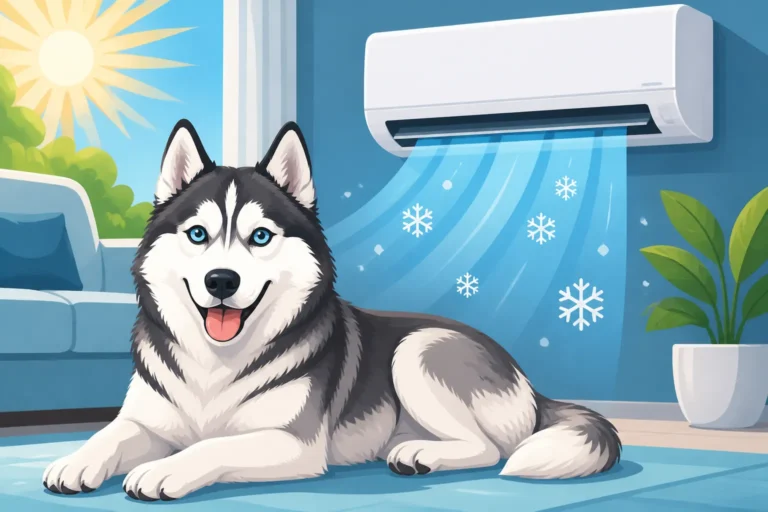
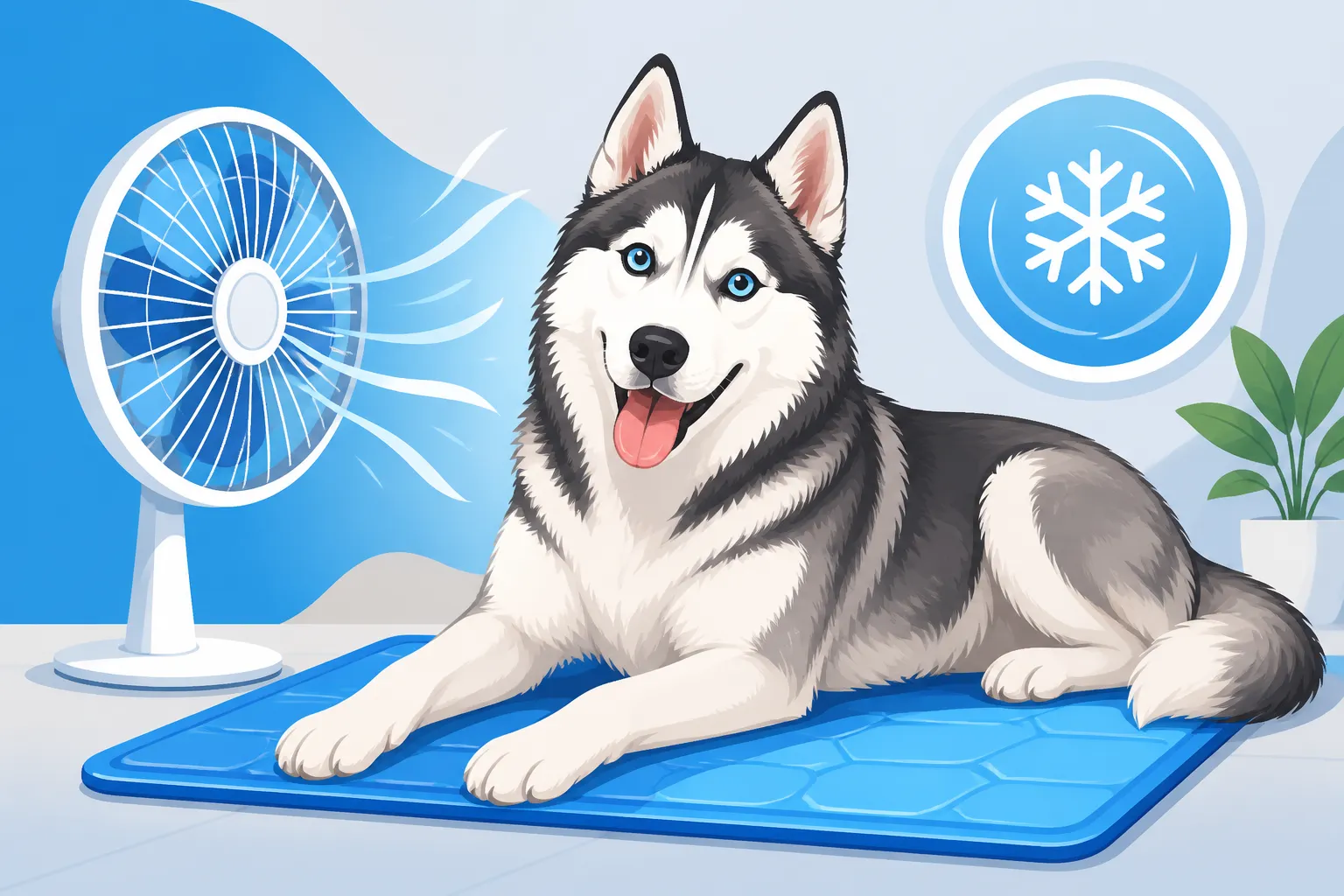
Alternatively, direct a fan towards your Husky's favorite resting spot, perhaps over an elevated bed or a cooling mat, to maximize the evaporative cooling effect. The moving air helps evaporate moisture from their breath and paws, carrying heat away from their body. You can also combine fans with open windows during cooler parts of the day, particularly in the mornings and evenings, to cycle fresh air through the house. While fans are great, sometimes the heat is just too intense, and you might need to consider other methods, as discussed in Air Conditioning Costs in a Siberian Husky Household.
Integrating Cooling into Your Husky's Summer Routine
Providing cooling mats and fans isn't just about placing them in a room; it's about integrating them into a holistic strategy to keep your Siberian Husky comfortable and safe when the weather turns warm. It requires a bit of planning and consistent effort.
Beyond Just Mats and Fans
While cooling mats and fans are excellent tools, they are just part of a larger heat management plan. Providing ample access to fresh, cool water is non-negotiable. Place multiple water bowls around the house and yard, consider adding ice cubes, or even a pet fountain to encourage drinking. Many Huskies also enjoy frozen treats like Kongs stuffed with frozen broth, peanut butter, or yogurt – these offer both mental stimulation and a way to cool down from the inside out. For a fun, supervised cooling session, a kiddie pool in the yard can be a huge hit.
Managing their exercise schedule is equally crucial. Avoid strenuous activity during the hottest parts of the day. Instead, opt for early morning walks or late evening adventures when temperatures are much milder. Our guide, Running a Siberian Husky in Summer Heat, offers great tips on how to balance their need for activity with heat safety. And remember, regular grooming, especially during their Siberian Husky Coat Blow and the Six Weeks It Lasts, helps remove excess undercoat, allowing better air circulation through their remaining fur. This is a critical step that many owners overlook. You can find many of these grooming tools, as well as engaging puzzle toys to keep your Husky occupied indoors when it's too hot to play outside, at Chewy. This helps with Wearing Out a Siberian Husky Without Leaving the House.
Monitoring and Emergency Preparedness
Even with the best preventative measures, sometimes the heat can be overwhelming. Constant vigilance for any The Temperature a Siberian Husky Starts Struggling At and early signs of overheating is paramount. Know your Husky's normal behavior and be quick to notice any changes. If you suspect your Husky is overheating, immediately move them to a cooler environment, offer water, and begin active cooling measures, such as wetting their paws, ears, and belly with cool (not ice-cold) water.
It's vital to have a plan for what to do in an emergency. Know the location and phone number of the nearest emergency veterinary clinic. Time is of the essence when dealing with potential heatstroke. Our article, Cooling a Siberian Husky Down Fast, offers immediate steps to take, and Heat Stroke Risk in a Siberian Husky details what you need to know about this serious condition. Always err on the side of caution; if in doubt, contact your vet immediately. Being prepared can make all the difference in protecting your beloved Husky.
Caring for a Siberian Husky in warmer climates or during summer months can be challenging, but with the right tools and strategies, you can ensure their comfort and safety. Cooling mats and fans are excellent additions to your arsenal, offering direct relief and improved air circulation. By understanding your Husky's unique needs, recognizing the signs of heat stress, and implementing a comprehensive cooling plan, you can help your companion enjoy the summer months without distress.
Disclaimer
This article is for general informational purposes only and does not constitute professional advice. Laws, prices and regulations vary by location and change over time. Consult a qualified professional for guidance on your specific situation.