Air Conditioning Costs in a Siberian Husky Household
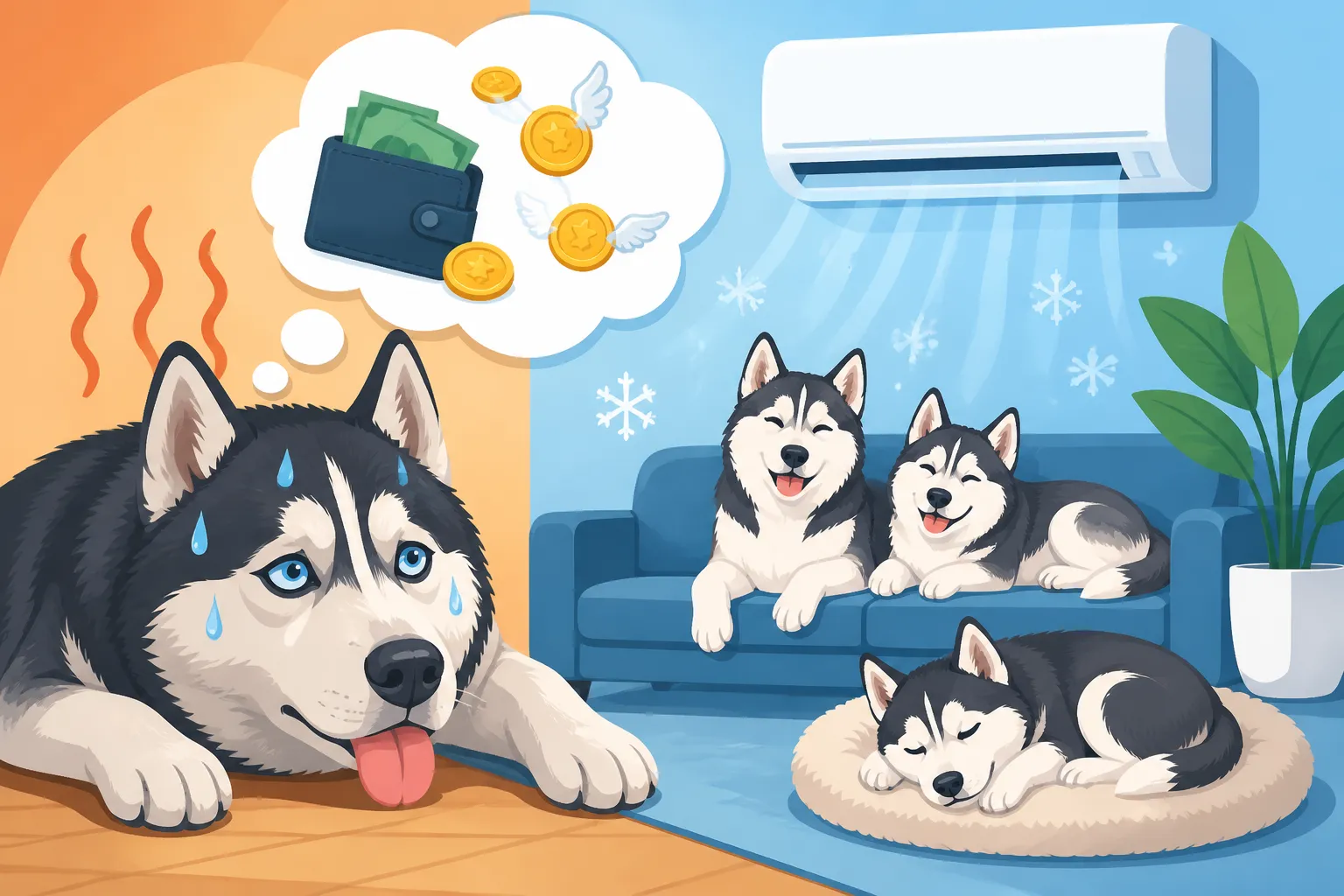
One of the biggest concerns for any Siberian Husky owner living outside of truly Arctic conditions is keeping their beloved furry friend cool when the temperatures start to climb. You might hear people say, "Oh, Huskies are fine in the heat, they just adapt!" but that's a dangerous oversimplification. The truth is, these dogs are built for cold, and while they can tolerate moderate warmth, sustained heat, especially with humidity, puts them at serious risk. This comprehensive guide will walk you through the often-underestimated costs and practicalities of providing essential air conditioning for your Siberian Husky, helping you understand why it's not a luxury, but a necessity, and how to manage those utility bills.
The Non-Negotiable Need for Air Conditioning for Siberian Huskies
When you bring a Siberian Husky into your home, you're not just getting a dog; you're adopting a piece of the Arctic. Their very physiology, from their thick double coat to their efficient metabolism, is designed to thrive in freezing temperatures. But what happens when the mercury rises? That beautiful coat, so perfect for insulating against the cold, can become a significant liability, trapping heat against their body and making them incredibly vulnerable to overheating. Ignoring this fundamental need can have dire consequences, turning a beautiful summer day into a medical emergency.
Why a Double Coat Isn't Always Enough
It's a common misconception that a Siberian Husky's double coat acts like a perfect insulator against all extremes. While it's true that their dense undercoat and longer guard hairs create an insulating layer that helps regulate their body temperature, this system is primarily optimized for cold environments. Think of it like a high-performance winter jacket; it keeps you incredibly warm in a blizzard, but you wouldn't wear it to the beach in July, right? The same principle applies to your Husky. In cold weather, their coat traps warm air close to their body. In hot weather, it traps hot air.
The efficiency of their coat also depends heavily on humidity. In dry climates, like a scorching summer day in Arizona, their coat can still do a decent job of shedding heat if they have shade and access to water. The dryness allows evaporated moisture from their skin and respiratory tract to dissipate more easily. However, introduce humidity, like a typical summer day in Houston or Tampa, and their natural cooling mechanisms – panting and sweating through their paw pads – become far less effective. The humid air is already saturated with moisture, making it difficult for your Husky to evaporate sweat and expel heat through panting. This is where their natural defenses often fall short, and external cooling, specifically air conditioning, becomes absolutely crucial to prevent Heat Stroke Risk in a Siberian Husky.
Recognizing the Signs of Overheating
Your Siberian Husky can't tell you in words that they're too hot, so it’s your responsibility to be vigilant and understand the subtle, and not-so-subtle, cues they give you. Ignoring these signs can quickly escalate into a life-threatening situation. Early recognition and intervention are paramount.
The first, and most obvious, sign of overheating is excessive panting. While panting is a normal way for dogs to cool down, if it's continuous, very rapid, and appears labored, it's a red flag. Look for their tongue appearing wider and longer than usual, often a deep red color. Another tell-tale sign is lethargy; your usually energetic Husky might be moving slowly, seem unwilling to play, or lie down and refuse to get up. They might also exhibit excessive drooling, sometimes thick and ropey, which is another indication their body is struggling to regulate temperature. Their gums might appear bright red or even purplish. As their condition worsens, you might notice unsteadiness on their feet, disorientation, or even collapsing. These are all critical indicators that your dog is in distress. If you see these severe signs, it’s not enough to just bring them inside; you need to start Cooling a Siberian Husky Down Fast and get to an emergency vet immediately.
Understanding Your Home's Cooling System and Its Efficiency
Knowing the type of air conditioning system you have and how efficiently it operates is the first step in understanding and managing the costs associated with keeping your Siberian Husky comfortable. Not all AC systems are created equal, and their design directly impacts both their cooling power and your electricity bill. For a breed like the Siberian Husky, which genuinely needs a consistently cool environment, efficiency isn't just about saving money; it's about reliable, sustained comfort.
Types of Air Conditioning Systems and Their Energy Consumption
Most homes in warmer climates rely on one of a few primary types of AC systems, each with its own benefits and drawbacks, especially when it comes to consistent cooling for a Husky.
Central air conditioning is perhaps the most common system in many parts of the country. It uses a single unit to cool air and then distributes it throughout your home via a network of ducts. This system is great for whole-house cooling, providing a uniform temperature, which is ideal for a Husky that might roam. However, central AC units can be significant energy consumers, especially older models. When evaluating a central AC, look at its SEER (Seasonal Energy Efficiency Ratio) rating. A higher SEER rating indicates greater energy efficiency, meaning it will use less electricity to produce the same amount of cooling. Modern units typically have SEER ratings of 14 or higher, compared to older units that might be in the 8-10 range. The difference in energy consumption can be substantial over a hot summer, and for a Husky owner, that means a consistent cool home without breaking the bank quite as badly.
Window or portable AC units are often a more budget-friendly upfront option, excellent for cooling specific rooms or smaller apartments. If you live in a smaller space or only need to cool the primary area where your Husky spends its time, these can be effective. However, they are generally less efficient for whole-house cooling and can struggle to maintain a comfortable temperature if you have an open-concept living space or a larger home. You might find yourself running multiple units, which can actually add up to more electricity consumption than a single central unit. These are often a temporary fix or a supplement for a very specific need, like cooling a designated "Husky room" while you're at work.
Ductless mini-split systems offer a middle ground. They consist of an outdoor compressor/condenser and one or more indoor air-handling units, connected by a conduit rather than extensive ductwork. This allows for "zoned" cooling, meaning you can cool individual rooms or areas to different temperatures, or even turn off cooling in unused spaces. While the initial installation cost can be higher than a window unit, mini-splits are often very energy-efficient, especially if you only need to cool specific areas for your Husky while leaving other parts of the house warmer. This can be a smart investment for precise control over your Husky's immediate environment.
Factors Influencing Your AC Bill
Beyond the type of system, several other factors play a huge role in how much you're actually paying to keep your home cool enough for your Siberian Husky. It's not just about the thermostat setting; it's about your home's entire envelope.
One of the biggest culprits for high AC bills is poor insulation. If your attic isn't properly insulated, or your walls lack sufficient barrier, heat seeps in effortlessly, forcing your AC to work harder and longer to maintain the desired temperature. Imagine trying to keep a leaky bucket full; it's a constant, uphill battle. Investing in insulation can have a dramatic impact on your energy consumption, making your home more comfortable for both you and your Husky and significantly reducing your operating costs for air conditioning.
Window efficiency is another critical factor. Old, single-pane windows are notorious for letting heat in during the summer (and out in the winter). Upgrading to double-pane, low-emissivity (Low-E) windows can drastically reduce heat transfer, keeping your home cooler with less effort from your AC. While a significant upfront cost, this is a long-term investment that pays dividends in comfort and savings.
Finally, your thermostat settings and geographic location are huge players. Continuously running your AC at a very low temperature, say 68°F (20°C), will naturally cost more than setting it at 72°F (22°C). For a Siberian Husky, a temperature between 70-75°F (21-24°C) is generally considered comfortable, though some might prefer it cooler. Consider a programmable thermostat which allows you to schedule higher temperatures when you're away or at night when it's naturally cooler, and then drop it down before you or your Husky return home. The difference between a home in Phoenix, Arizona, where the AC might run 24/7 for months, versus one in Portland, Oregon, where it's only needed intermittently, is staggering. States like Texas, Florida, and Louisiana face extreme heat and humidity for extended periods, making air conditioning a constant, expensive necessity for any Husky owner there.
Calculating the Cost: What to Expect on Your Utility Bill
The thought of opening your utility bill in the summer can send shivers down your spine, especially when you know your Siberian Husky is depending on that cool air. It's easy to feel overwhelmed by the numbers, but by understanding the basic calculations and common variables, you can better anticipate and manage these essential expenses. Remember, this isn't an optional comfort; it’s a health requirement for your Arctic-adapted companion, meaning Air Conditioning a Siberian Husky Depends On heavily on your budgeting and planning.
Estimating Daily and Monthly Costs
Estimating your AC costs can feel a bit like guesswork, but we can break it down into some core components to get a clearer picture. The main factors are your local electricity rate, the wattage of your AC unit, and how many hours you run it.
Electricity rates are measured in kilowatt-hours (kWh) and vary wildly by region. For instance, residents in New England or California might pay upwards of $0.20-$0.30 per kWh, while those in parts of the Midwest or Pacific Northwest might see rates closer to $0.10-$0.15 per kWh. Let's say your average central AC unit uses about 3,500 watts (or 3.5 kW) per hour. If you run it for 12 hours a day and your rate is $0.15/kWh, that’s 3.5 kW * 12 hours * $0.15/kWh = $6.30 per day. Multiply that by 30 days, and you’re looking at around $189 a month just for running your AC half the day. If you live in a hotter climate like Dallas, Texas, where the AC might run 20 hours a day for months and electricity rates can be higher, that daily cost could easily jump to $10.50 ($0.15/kWh) or more, totaling over $300 a month.
Here's a simplified table to give you a rough idea of what to expect, based on a 3.5 kW central AC unit:
| Region | Avg. Electricity Rate (per kWh) | Daily Usage (Hours) | Estimated Daily Cost | Estimated Monthly Cost |
|---|---|---|---|---|
| Pacific Northwest | $0.12 | 10 | $4.20 | $126 |
| Midwest | $0.14 | 14 | $6.86 | $205.80 |
| Southeast (Humid) | $0.16 | 18 | $10.08 | $302.40 |
| Southwest (Arid) | $0.18 | 20 | $12.60 | $378 |
| Northeast | $0.25 | 16 | $14.00 | $420 |
| California | $0.30 | 15 | $15.75 | $472.50 |
Note: These are estimates and actual costs will vary based on insulation, window efficiency, unit age, and specific utility plans.
This table highlights how significantly your location and daily usage affect your bill. For a Siberian Husky, particularly during peak summer months, you're likely going to be on the higher end of daily usage to ensure their comfort and safety. This is a recurring, substantial expense that many new owners underestimate when considering what Siberian Husky owners underestimate in overall ownership costs.
Seasonal Spikes and Unexpected Expenses
It's not just the steady hum of your AC racking up costs; you also need to factor in seasonal spikes and the potential for unexpected expenses.
The most obvious spike comes during the summer months. For a Husky owner, this means committing to running your AC consistently from late spring through early fall, sometimes even longer depending on your climate. In places like Phoenix, Arizona, the "cooling season" can stretch from April well into October, meaning several months of significantly elevated utility bills. In contrast, someone living in upstate New York might only need heavy AC usage for 2-3 months. These seasonal surges can strain a budget if not planned for.
Beyond electricity, there are maintenance costs. Your AC system, like any appliance, needs regular upkeep to run efficiently and prevent breakdowns. This includes changing air filters monthly (especially with a shedding Husky!), and scheduling an annual professional tune-up. A tune-up typically costs $75-$150 and involves cleaning coils, checking refrigerant levels, and inspecting components. Neglecting this can lead to reduced efficiency, higher electricity bills, and ultimately, premature system failure.
And then there are the truly unexpected expenses: emergency repairs. Imagine your AC unit dying in July when it’s 95°F (35°C) outside, and your Husky is panting heavily. The cost of an emergency repair can be hundreds, sometimes thousands, of dollars, especially if major components like the compressor need replacing. This is where a robust emergency fund or even considering home warranty plans can come into play. Your Husky's well-being literally depends on a functioning cooling system. If a system failure leads to a vet visit for heatstroke, the vet bills can be substantial, making pet insurance, like a plan from Healthy Paws, a wise investment to cover unexpected medical costs.
Strategies to Mitigate AC Costs While Keeping Your Husky Cool
Keeping your Siberian Husky cool and comfortable during warmer months is non-negotiable, but that doesn't mean you have to resign yourself to eye-watering electricity bills. There are numerous strategies you can employ to make your cooling efforts more efficient, saving money without compromising your Husky's well-being. It's all about working smarter, not just harder, with your cooling system.
Smart Thermostat Usage and Zoned Cooling
One of the most effective ways to manage AC costs is by upgrading to a smart or programmable thermostat. These devices are game-changers for efficiency. Instead of leaving your AC running at a constant, low temperature all day while you're at work, you can program it to run warmer when the house is empty and then automatically drop to a comfortable temperature (around 70-75°F, or 21-24°C) an hour or so before you or your Husky arrive home. This prevents your AC from constantly battling the external heat when no one is there to benefit from the lower temperature, yet ensures a cool welcome. Brands like Nest or Ecobee offer intuitive apps that let you control your thermostat remotely, which is incredibly convenient if your plans change or you just want to check on the temperature for your Husky from afar.
If you have a central AC system, consider implementing a form of "zoned cooling" even without a full ductless mini-split system. Identify the rooms your Husky primarily uses during the day. If they tend to nap in the living room or a specific bedroom, close the vents in unused rooms like guest bedrooms or basements. This redirects the cool air more efficiently to the areas that need it most, reducing the overall load on your system. While it won't be as precise as a dedicated zoned system, it can make a noticeable difference in cooling effectiveness and energy consumption. Just be sure to check on your Husky frequently to ensure they haven't decided to seek out a warmer spot.
Complementary Cooling Methods
Beyond the AC unit itself, there are several supplemental cooling methods that can help your Husky stay comfortable, allowing you to potentially set your thermostat a degree or two higher without sacrificing their well-being. Every degree counts when it comes to energy savings.
Cooling mats are fantastic for Huskies. These mats often contain a gel that activates with pressure, providing a cool surface for your dog to lie on. They don't require electricity and are great for indoor use. Similarly, elevated dog beds, often made with mesh fabric, allow air to circulate underneath, preventing heat buildup. You can find a wide variety of these products on sites like Chewy. Frozen treats, like Kongs stuffed with peanut butter and then frozen, or simply ice cubes in their water bowl, provide internal cooling and mental stimulation. Remember that Kiddie Pools for a Siberian Husky in Summer can also be a wonderful outdoor option for supervised cool-downs, though not a substitute for indoor AC.
Fans, both ceiling fans and portable box fans, can also provide relief. While fans don't actually lower the ambient air temperature, they create a wind chill effect by moving air across your Husky's skin, which helps evaporate moisture and makes them feel cooler. Position a fan near your Husky's favorite resting spot, but always ensure they have a way to move away from the fan if they choose.
Finally, consider strategic window opening. If temperatures drop significantly at night, especially in arid climates, open windows on opposite sides of your house to create a cross-breeze. Close them tightly first thing in the morning before the day heats up to trap the cooler night air inside. This might not be feasible in very humid areas or if your Husky is a known escape artist, given their prowess at figuring out Siberian Huskies That Open Gates and Doors.
Home Upgrades and Long-Term Investments
While some strategies offer immediate savings, certain home improvements represent long-term investments that drastically reduce your need for excessive AC usage. These upgrades not only benefit your utility bill but also increase your home's overall comfort and value.
Improving your home's insulation is perhaps the most impactful long-term investment. Adding insulation to your attic, walls, and even crawl spaces creates a stronger barrier against external heat. This means your AC unit won't have to work as hard to maintain a cool indoor temperature, leading to significant and consistent energy savings over many years. A well-insulated home retains cool air more effectively, making your Husky's environment more stable.
Upgrading to energy-efficient windows is another substantial investment that yields significant returns. Modern double-pane or triple-pane windows with low-emissivity (Low-E) coatings block much of the solar heat gain while still allowing light in. This prevents your home from turning into a greenhouse on sunny days, reducing the strain on your AC.
Even landscaping can play a role. Planting deciduous trees on the east and west sides of your home can provide crucial shade during the hottest parts of the day, reducing the amount of direct sunlight hitting your windows and walls. In winter, when the leaves fall, the sun can still help warm your home.
For the truly dedicated, installing solar panels can dramatically offset or even eliminate your electricity costs, including the substantial expense of running your AC for your Siberian Husky. This is a significant upfront investment, often in the tens of thousands of dollars, but it provides energy independence and a very green solution to your cooling needs. While the initial outlay is high, the long-term savings, especially with government incentives and rising energy costs, can make it a compelling option for a stable, comfortable environment for your Husky.
Alternative Cooling Solutions and When They're Not Enough
When the summer heat rolls in, it's natural to explore every possible avenue to keep your Siberian Husky comfortable. While air conditioning is often the gold standard, some alternative cooling methods can be effective in specific situations or serve as valuable supplements. However, it's critical to understand their limitations and recognize when they simply aren't enough to protect your Husky from dangerous temperatures.
Evaporative Coolers in Dry Climates
Evaporative coolers, often called "swamp coolers," are a fascinating alternative to traditional air conditioning, but they come with a big caveat: they only work effectively in dry climates. These systems cool air by drawing it over water-saturated pads, which causes the water to evaporate, lowering the air temperature and adding moisture. Think of how cool you feel when you step out of a shower in a dry room.
In arid regions like Denver, Phoenix, or the desert areas of California, where humidity levels are consistently low (below 40-50%), evaporative coolers can significantly drop the indoor temperature. They use much less electricity than compressor-based AC units, making them a more economical choice. For a Husky in a dry climate, a well-maintained swamp cooler can provide adequate relief, especially if supplemented with fans and access to cool water. The added humidity can even be beneficial to their respiratory system in very dry environments.
However, if you live in a humid climate – anywhere from the Southeast to the Pacific Northwest during summer – an evaporative cooler will be largely ineffective, or worse, make your home feel sticky and uncomfortable without actually cooling it to a safe temperature for your Husky. Instead of providing relief, you'll just be adding more moisture to an already saturated environment, hindering your dog's natural cooling mechanisms. In these conditions, traditional air conditioning is simply non-negotiable for your Siberian Husky. Trying to rely on a swamp cooler in, say, Orlando, Florida, when the humidity is at 80% would be irresponsible and dangerous for your dog.
Fans, Ice, and Water for Temporary Relief
Portable fans, ice, and access to water are absolutely essential tools in your Husky-cooling arsenal, but they must be viewed as supplements to air conditioning, not substitutes, especially when temperatures are dangerously high.
Fans, as mentioned, create a wind-chill effect. They move warm air across your Husky's body, helping to evaporate moisture and make them feel cooler. They're great for enhancing the effectiveness of your AC or providing comfort on moderately warm days, but they don't actually cool the air itself. If the ambient temperature is 90°F (32°C), a fan blowing 90°F air on your Husky won't cool them down to a safe temperature. It just circulates the hot air. So, while a fan can make a 75°F (24°C) room feel like 72°F (22°C), it won't prevent heatstroke in a truly hot environment.
Ice and water are critical for internal cooling and hydration. Always ensure your Husky has access to fresh, cool water, perhaps even with a few ice cubes floating in it. Many owners also offer frozen treats, like Kongs filled with a mixture of wet food and broth then frozen, or just plain ice blocks. These are fantastic for providing internal cooling and a bit of enrichment. Even a cool, damp towel placed over their body or allowing them to soak their paws in a shallow basin of water can provide quick, temporary relief. Remember, Chewy offers a range of innovative cooling products, from water-resistant cooling pads to toys that can be frozen, all of which can contribute to your Husky's comfort.
However, never rely solely on these methods when outdoor temperatures are soaring, especially into the 80s°F (27°C) and above, or when humidity is high. These methods simply cannot counteract the physiological stress of sustained high temperatures on a Siberian Husky's body. If your AC breaks down on a hot day, these tools are vital for immediate first aid, but your priority should be to get your Husky into a properly air-conditioned environment as quickly as possible, even if that means a trip to a local pet-friendly store or vet clinic that has AC. These measures are for comfort and preventing issues, not for treating full-blown heatstroke, which is a medical emergency.
Preparing for Power Outages and Emergencies
The reliance on air conditioning for your Siberian Husky means that a power outage, especially during hot weather, isn't just an inconvenience; it can quickly become a dangerous situation. Being prepared for such emergencies is a vital part of responsible Husky ownership. You need a clear plan to ensure their safety and comfort when your primary cooling system is suddenly out of commission.
Emergency Preparedness Kits and Plans
Every Husky household should have an emergency preparedness plan, particularly one that accounts for power loss during summer months. This plan should start with a comprehensive emergency kit. Beyond standard human emergency supplies, consider your Husky's specific needs. This includes a several-day supply of their regular food (perhaps some from Ollie or Chewy, ready to go), plenty of bottled water (and bowls), any medications they might need, a first-aid kit designed for pets, and a leash and collar with up-to-date ID tags.
For power outages specifically, think about your cooling strategy. If you live in an area prone to outages or extreme heat, investing in a portable generator can be a lifesaver. Even a smaller generator can power a window AC unit in one room, creating a designated "cool room" for your Husky. Have a battery-operated fan or two readily available. Research local cooling centers or pet-friendly hotels in your area that you could retreat to if an outage is prolonged and temperatures remain high. Having a list of emergency vet contacts and their locations is also crucial, especially if a heat-related emergency arises. Understanding the specifics of Siberian Husky Deaths From Trauma and Escape also highlights the broader need for emergency planning, as escape can put them in dangerous situations, including exposure to heat.
Pet-Specific Emergency Measures
Beyond a general emergency kit, focus on measures specifically designed to keep your Siberian Husky safe and as cool as possible during a power outage.
First and foremost, secure your Husky in the coolest part of your home. This might be a basement, a north-facing room with minimal sun exposure, or a bathroom with tile floors. Close curtains and blinds to block out sunlight, which is a major source of heat gain. Provide multiple water bowls filled with fresh, cool water, and consider adding ice cubes to them regularly. You can pre-freeze large plastic bottles of water to use as "ice blocks" that your Husky can lie near or against. These will slowly melt, providing a cool surface and then a source of cool drinking water.
Portable, battery-operated fans or even hand-held fans can help create some airflow around your Husky. While they don't lower ambient temperature, the movement of air can offer a sense of relief and aid in evaporative cooling. If safe to do so, and your Husky enjoys it, a damp towel draped over their back or a quick spritz with a spray bottle of cool water can also help, provided you don't soak their dense undercoat, which can take ages to dry and potentially lead to skin issues.
Crucially, have a plan for evacuation. If a power outage extends for many hours or days during a heatwave, staying in your un-air-conditioned home could put your Husky at severe risk. Identify friends or family members who live nearby and have working AC, or know the locations of pet-friendly cooling centers. This might mean having a portable crate ready for transport. Remember that your Siberian Husky's well-being is entirely dependent on your ability to provide a safe, cool environment, and sometimes that means making tough decisions and temporary relocations.
Disclaimer
This article is for general informational purposes only and does not constitute professional advice. Laws, prices and regulations vary by location and change over time. Consult a qualified professional for guidance on your specific situation.