Cooling a Siberian Husky Down Fast
It’s every Siberian Husky owner’s nightmare: you look over and your usually energetic dog is lagging, panting excessively, or worse, starting to collapse. Huskies are built for cold, not heat, and their incredible double coats, while perfect for arctic winters, can quickly turn into a sauna in warmer temperatures or during intense exercise. When your furry escape artist is suddenly struggling with the heat, knowing exactly how to react and Cooling a Siberian Husky Down Fast can literally be a lifesaver. This guide will walk you through recognizing the signs of overheating and give you actionable, immediate steps to bring their temperature down and potentially prevent a serious medical emergency.
Recognizing the Early Warning Signs of Overheating in Your Husky
One of the biggest frustrations with Siberian Huskies is their stoic nature; they often try to push through discomfort, making it difficult for us humans to tell when something is truly wrong. A Husky might be panting hard after a good run, which is completely normal. But how do you know when that panting shifts from "just exercised" to "dangerously overheating"? This is the critical first step in keeping your beloved dog safe.
The initial signs of overheating can be subtle, mimicking normal post-exercise behavior. Your Husky will pant heavily, trying to expel heat. This panting might be deeper and more rapid than you'd typically see after a similar amount of activity. Their tongue might appear very red, and their gums, when you gently lift their lip, might also be a much brighter red than usual. You might notice their saliva becoming thick and sticky, almost ropey, around their mouth. This is their body struggling to regulate its temperature.
As things progress, you'll start to see more alarming symptoms. Their eyes might appear glazed over, and they could seem disoriented or less responsive to your commands. They might stumble or show general weakness, collapsing suddenly, or simply refusing to move. You might even observe gastrointestinal upset like vomiting or diarrhea. It’s a rapid decline, and what starts as seemingly normal heavy breathing can quickly escalate into a full-blown emergency. Always remember the potential Heat Stroke Risk in a Siberian Husky that comes with these symptoms.
If you have a rectal thermometer handy and know how to use it safely, checking their temperature can confirm your suspicions. A dog's normal temperature is between 100°F and 102.5°F (37.8°C to 39.2°C). Anything above 104°F (40°C) is a clear indicator of overheating, and temperatures pushing 106°F (41°C) are critically dangerous, potentially causing irreversible organ damage. Knowing Panting That Means Trouble in a Siberian Husky versus normal exertion is key. Trust your gut; if something feels off, it probably is.
Immediate Steps to Get Your Husky Out of Danger
Once you suspect your Siberian Husky is overheating, every second counts. Your immediate priority is to remove them from the heat source and get them to a cooler environment. Don't waste time trying to figure out if it's severe enough; act first and assess later.
First, get them into the shade, indoors, or into an air-conditioned car. If you're out on a trail and your Husky suddenly seems to hit a wall, find the nearest patch of shade, even if it means carrying them. If you're at home, move them to the coolest part of the house – ideally, somewhere with air conditioning or a fan. The goal is to stop their body from absorbing more heat while you begin active cooling. Remember that their double coat is designed to insulate, meaning it traps heat just as effectively as it keeps cold out, so getting them out of direct sunlight or a hot car is paramount.
While getting them to a cooler location, offer them small amounts of water. Don't force them to drink, especially if they are disoriented or struggling, as they could aspirate it into their lungs. Just make it available. If they lap it up, great. If not, don't press the issue. Your main focus needs to be on external cooling.
It's natural to panic when you see your beloved dog in distress, but try to remain as calm as possible. Your Husky will pick up on your anxiety, which can elevate their stress and, by extension, their body temperature. Speak in a soothing voice, reassure them, and move with purpose. This critical first step, getting them away from the heat, is the foundation for all further cooling efforts. Consider that The Temperature a Siberian Husky Starts Struggling At can vary, but any signs of discomfort warrant immediate action.
Hands-On Techniques for Rapid Cooling at Home
Once you've moved your Husky to a cooler environment, it's time to actively bring their body temperature down. The key here is targeted and controlled cooling. Simply dousing them with ice water from head to tail might sound logical, but it can actually be counterproductive and even dangerous for a Siberian Husky.
Targeted Wetting and Evaporative Cooling:
Instead of submerging your Husky, focus on applying cool (not ice-cold) water to specific areas where blood vessels are close to the surface, allowing for rapid heat exchange. These "hot zones" include their paw pads, the insides of their ears (not inside the ear canal!), their armpits, and their groin area. You can use a hose on a gentle setting, wet towels, or even just your hands to sponge water onto these spots. The coolness of the water absorbs heat, and as the water evaporates, it carries heat away from the body.
It’s important to understand why not to use ice-cold water or completely soak their entire coat:
- Ice-cold water: Can cause the blood vessels on the surface of the skin to constrict (vasoconstriction), which actually traps heat inside the body rather than releasing it. It can also cause a dangerous drop in core body temperature too quickly.
- Fully soaking the double coat: A Husky's dense undercoat is incredibly insulating. If you simply wet the top layer, the water can get trapped, creating a moist, warm environment that holds heat in, especially if there isn't sufficient airflow to facilitate evaporation. This is a common mistake and why techniques like Cooling a Siberian Husky Without Wetting the Undercoat are discussed for general comfort, but for rapid cooling, targeted wetting is needed with proper airflow.
Leveraging Airflow:
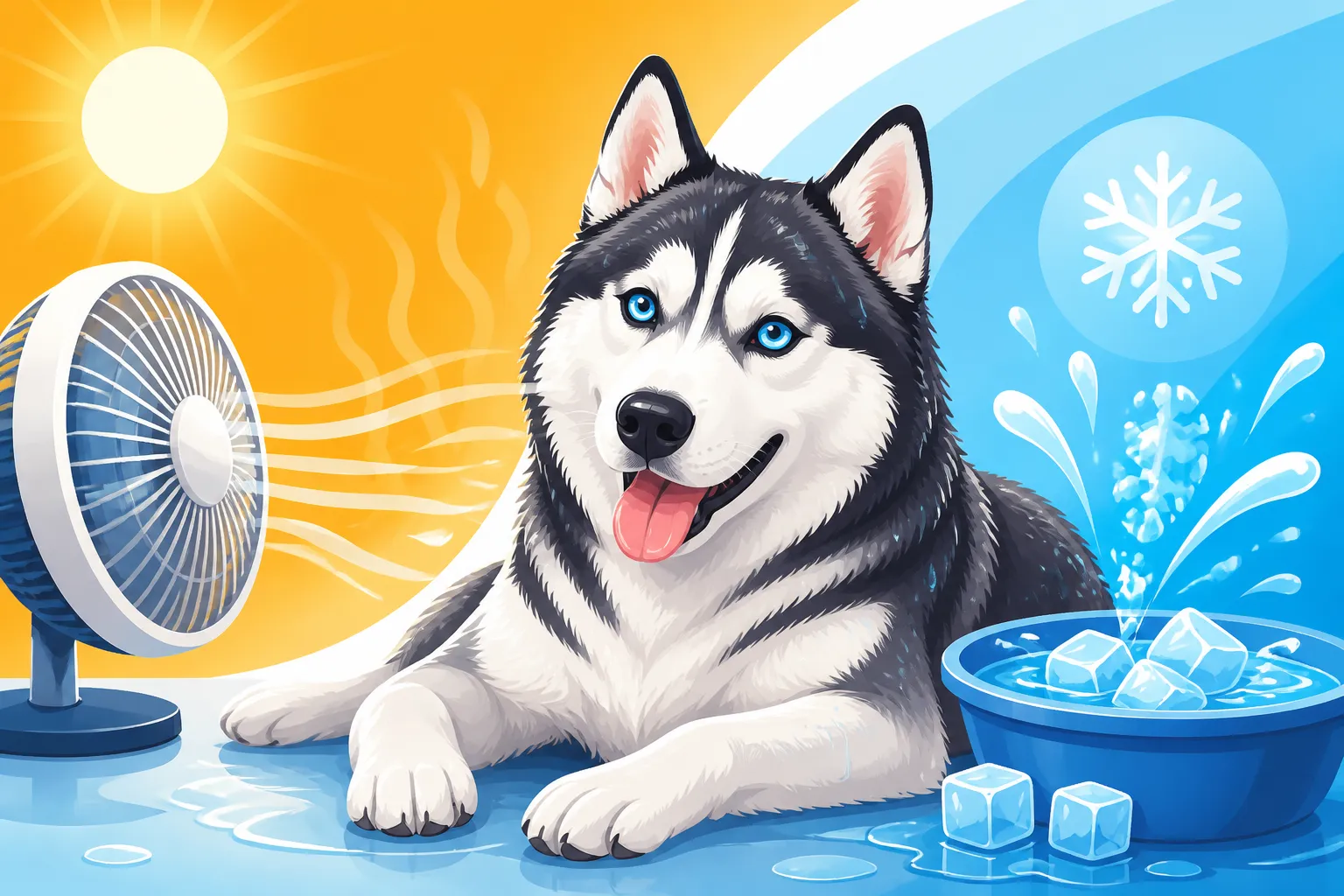
Evaporative cooling is vastly more effective when combined with airflow. Position a fan directly on your Husky while you are wetting those key areas. If you're in a car, blast the air conditioning. If you're outside, a battery-operated portable fan from a retailer like Amazon can make a huge difference. The moving air helps the water evaporate more quickly, pulling heat away from their body. Without good airflow, simply wetting them might not be enough.
Utilizing Cool Surfaces:
Lay cool, wet towels (again, not icy) over their back, sides, and belly, changing them frequently as they warm up. The direct contact with a cooler surface helps draw heat away. Many owners find Cooling Mats and Fans for a Siberian Husky helpful for general cooling, and in an emergency, a cooling mat can offer immediate relief if available. If you have tile or concrete flooring in your home, direct them there, as these surfaces are naturally cooler than carpet and can help dissipate heat from their body.
Hydration and Monitoring:
Continue to offer small amounts of cool, fresh water. Once they are less distressed, they might be more willing to drink. You can try adding a few ice cubes to their water bowl to make it more appealing, but again, don't force it. The most crucial part of this process is constant monitoring. Keep an eye on their breathing, gum color, and overall responsiveness. If you have a rectal thermometer, check their temperature every 5-10 minutes. The goal is to bring their temperature down to a safe range, ideally below 103°F (39.4°C). Once it drops below 103°F, you should stop active cooling to prevent overcooling, which can be just as dangerous.
Here's a quick reference table for rapid cooling methods:
| Cooling Method | Application Area | Key Benefits | Important Considerations |
|---|---|---|---|
| Cool Water Application | Paw pads, armpits, groin, ears | Rapid heat exchange, evaporative cooling | Use cool, not ice-cold. Avoid soaking entire coat. |
| Airflow (Fan/AC) | Directly on body | Enhances evaporative cooling, disperses heat | Essential with water application. Portable fans for outdoor. |
| Cool Surfaces | Belly, back, contact areas | Direct heat absorption | Wet towels (change often), tile/concrete floors, cooling mats. |
| Oral Hydration | Water bowl | Replenishes fluids, aids internal regulation | Offer small amounts; do not force if disoriented. |
These methods, when applied swiftly and correctly, can make a huge difference. For more comfort-focused cooling ideas, not necessarily for emergencies, things like Kiddie Pools for a Siberian Husky in Summer can be great preventative measures, but for a true crisis, the above methods are your frontline defense.
Knowing When It's Time for Emergency Veterinary Care
Sometimes, despite your best efforts at home, or because the situation has progressed too far, professional medical intervention is absolutely necessary. Knowing when to stop home cooling and immediately head to the vet is critical for your Husky's survival.
If your Husky's temperature remains stubbornly high (above 104°F/40°C) despite your cooling efforts for more than 10-15 minutes, or if their condition is worsening, it’s time to go. Other red flags that warrant an immediate trip to the emergency veterinarian include sustained disorientation, collapse, seizures, loss of consciousness, uncontrolled vomiting or diarrhea, or very dark red gums that turn blue or purple. These are signs that heatstroke is severely impacting their internal organs and can lead to irreversible damage if not treated promptly.
Don't hesitate. Call your nearest emergency veterinary clinic while you are gathering your Husky and heading out the door. Inform them that you are bringing in a dog with suspected heatstroke so they can prepare for your arrival. This allows the veterinary team to have an IV ready, cooling blankets, and other necessary equipment for immediate treatment upon your arrival.
Even while en route to the vet, continue your cooling efforts if it's safe to do so. Keep the car's air conditioning on full blast, and if you have wet towels, keep them on your Husky's hot spots. Every minute counts in preventing further organ damage.
It’s important to understand that even if your Husky seems to recover and their temperature drops to a normal range, a veterinary visit is still highly recommended after a severe overheating episode. Heatstroke can cause internal damage to organs like the kidneys, liver, brain, and heart, which may not be immediately apparent. Your vet will perform blood tests and other diagnostics to check for these potential complications and ensure a full recovery. They can also advise on how to prevent future incidents, such as adjusting your exercise routine to Walking a Siberian Husky Before Sunrise during warmer months or avoiding strenuous activity altogether when The Temperature a Siberian Husky Starts Struggling At. Be aware that What a Siberian Husky Emergency Visits Run can be substantial, but saving your dog's life is priceless.
Disclaimer
This article is for general informational purposes only and does not constitute professional advice. Laws, prices and regulations vary by location and change over time. Consult a qualified professional for guidance on your specific situation.