Microchips, Tags and GPS for a Siberian Husky
One of the biggest heartbreaks and deepest fears for any Siberian Husky owner is the dreaded moment your beloved, fluffy escape artist goes missing. Their incredible intelligence, boundless energy, and deep-seated roaming instinct make them champions of finding ways out of even the most secure environments. This comprehensive guide will walk you through the essential tools and strategies – microchips, identification tags, and GPS trackers – to ensure you have the best possible chance of reuniting with your Husky should they ever embark on an unscheduled adventure.
The Inevitable Escape Artist: Why Huskies Get Lost
It's not just a stereotype; Siberian Huskies are truly masters of escape. If you've ever owned one, you know the sinking feeling when you realize they've managed to scale, dig under, or even open what you thought was an impenetrable barrier. This isn't usually malice or a lack of love; it's simply their breed, ingrained through generations.
The Deep-Seated Roaming Instinct
To truly understand why microchips, tags, and GPS are so crucial for a Siberian Husky, you first have to grasp the very core of their being: the roaming instinct. These dogs were bred for endurance, to cover vast distances efficiently, often with minimal supervision, across the frozen tundras of Siberia. That drive to explore, to see what's over the next hill, or just to run for the sheer joy of it, is profoundly embedded in their DNA. It’s why you often hear tales of Huskies found miles from home, seemingly unfazed by their journey. They aren't trying to escape you; they're fulfilling an ancient, powerful urge. It’s also why it's so critical to understand Why a Siberian Husky Cannot Be Trusted Off Leash. They might love you dearly, but a squirrel, a scent, or just the open road can trigger that deep instinct, often with tragic consequences.
This inherent wanderlust means that a Husky's definition of "home" can be a lot more fluid than, say, a Labrador's. While many breeds form strong attachments to a specific house and yard, a Husky might see their territory as much wider, encompassing several blocks or even entire neighborhoods. This broad perception of their stomping grounds is why they don't always come back when called, particularly if they've spotted something interesting in the distance. They're not being disobedient; they're simply following their instincts.
Houdini-Level Escape Tactics
If there's a weakness in your fence, a latch that isn't perfectly secured, or a door left ajar for a split second too long, your Husky will find it. They are incredibly intelligent problem-solvers when it comes to freedom. They’ll test fence lines, push against gates, and even learn how to manipulate latches. Stories abound of Huskies jumping six-foot fences, digging tunnels worthy of a professional miner, and even figuring out complex gate mechanisms. This isn't just playful mischief; it's a dedicated effort born from their drive to roam. Stopping a Siberian Husky From Escaping the Yard often requires thinking several steps ahead of your clever canine.
Many Husky owners can tell you tales of returning home to find a perfectly secure gate somehow unlatched, or a section of fence mysteriously compromised. It often takes observation, or even security cameras, to truly understand the sheer ingenuity your Husky employs. They are not content to wait for an opportunity; they will actively seek or create one. This makes traditional containment methods challenging, which is why layering identification and tracking methods is so important.
The Call of the Wild
Once a Siberian Husky is out, the world becomes an exhilarating playground of smells, sights, and sounds. That strong prey drive, meant to help them hunt and survive in harsh environments, kicks in. A rabbit darting across a field, a deer scent in the woods, or even the sound of other dogs barking can lead them on a chase that takes them far from familiar territory. They can run for miles without tiring, making them incredibly difficult to catch once they've gained momentum.
The sheer speed and endurance of a Siberian Husky are awe-inspiring in the right context, like pulling a sled, but terrifying when they're loose. The tragic reality is that Siberian Husky Deaths From Trauma and Escape are far too common, often due to encounters with cars, getting lost in unfamiliar areas, or falling victim to other dangers. Their focus on the chase means they often aren't looking out for traffic or other hazards. This makes immediate identification and tracking tools not just convenient, but potentially life-saving.
Microchips: The Permanent ID Solution
A microchip is essentially a tiny, permanent identification tag implanted under your Husky’s skin. It’s a game-changer for reuniting lost pets, especially for breeds like Huskies who are notorious for slipping collars or losing tags. Think of it as their invisible, unremovable ID card.
How a Microchip Works and Why It's Essential
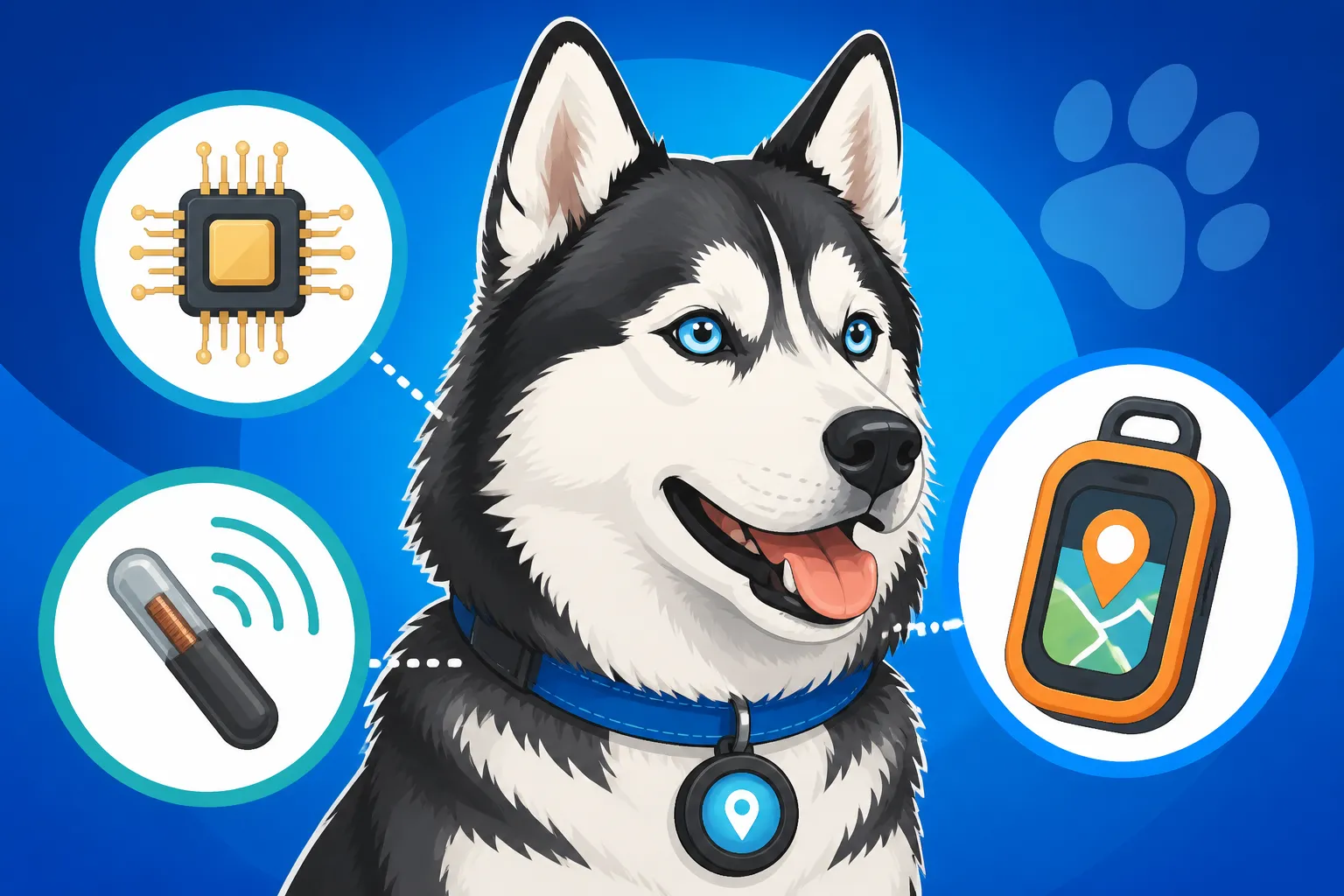
A microchip is about the size of a grain of rice and contains a unique identification number. It doesn't have a battery and isn't a GPS device; it only becomes active when scanned by a compatible microchip scanner, typically held by a vet, shelter, or animal control officer. When scanned, the chip transmits its ID number, which can then be looked up in a national database linked to your contact information. This makes it an incredibly reliable form of permanent identification, especially because it can't be lost or damaged like a collar or tag.
Many Husky owners, myself included, have experienced the heart-stopping moment when a collar snaps or a tag falls off during a rigorous play session or an unexpected bolt. With a microchip, you have a fail-safe. Even if your Husky arrives at a shelter without any visible identification, a routine scan will reveal their microchip number. This is often the critical step in getting them back home. It's truly a small investment for massive peace of mind, especially given the breed's propensity to roam and the potential for a lost Husky to travel How Far a Loose Siberian Husky Travels.
The Microchip Implantation Process and Safety
Implanting a microchip is a quick, relatively painless procedure, much like a routine vaccination shot. A veterinarian uses a sterile needle to inject the microchip under the skin, usually between the shoulder blades. Most dogs don't react much, perhaps a quick yelp from the momentary prick, but it's over in seconds. There's no anesthesia required, and complications are exceedingly rare. Once implanted, the chip typically stays in place for the dog's entire life.
It's important to choose a reputable vet for this procedure. They will ensure proper placement and provide you with all the necessary paperwork. While there are sometimes concerns about microchip migration (the chip moving from its original spot), this is uncommon with modern chips. Even if it does migrate slightly, it's still usually detectable with a scanner. The benefits of having a permanent, unremovable identifier far outweigh the minimal risks associated with implantation. Many vets recommend microchipping during a puppy's initial vaccination series, so it's a great question to ask when you're considering Health Testing Before You Buy a Siberian Husky.
Registering and Keeping Your Microchip Information Current
Having a microchip implanted is only half the battle; registering it and keeping your contact information up-to-date is absolutely critical. A microchip without current registration information is essentially useless. When your vet implants the chip, they will give you a registration form or instructions on how to register it online with the associated database (e.g., AKC Reunite, PetLink, HomeAgain). It's usually a one-time registration fee or an annual subscription, depending on the service.
This step is so often overlooked, and it's a huge pitfall. I've heard countless stories from shelter staff about scanning a lost dog only to find an unregistered chip or one with outdated phone numbers or addresses. Think about it: if you move, change your phone number, or even if your Husky goes to a new owner, you must update that information immediately. Set a reminder in your calendar to check your microchip registration annually – perhaps around your Husky’s birthday or during their annual vet visit. It's a small task that makes all the difference when your Husky needs to get home.
Tags and Collars: Your First Line of Defense
While microchips are fantastic permanent identifiers, a visible ID tag on a sturdy collar is still your first, fastest line of defense. It allows a good Samaritan to quickly identify and contact you without needing a scanner.
Essential Information to Include on Your Husky's Tags
Your Husky’s ID tags should contain clear, easy-to-read information. At a minimum, this should include:
- Your Name: Not the dog’s name, but yours.
- Your Phone Number(s): Include at least two, like your cell and a secondary contact, if possible. Make sure they're numbers you'll answer even if it's an unknown call.
- Your City and State: A street address isn't always necessary and can be a privacy concern for some, but locality is helpful.
- "Microchipped" or "Reward" (Optional but Recommended): Adding "Microchipped" encourages anyone who finds them to take them to a vet or shelter for scanning. A "Reward" offer can also motivate people to help.
It’s tempting to put your Husky’s cute name on the tag, but prioritizing direct contact information for you is far more important. A lost dog’s name can actually be a hindrance if someone with ill intent tries to claim them. Focus on the data that gets them back to you safely.
Choosing the Right Collar for a Siberian Husky
Siberian Huskies are notorious for slipping collars, especially if they're not fitted properly or if the collar type isn't suitable for their build and behavior. A flat buckle collar is common, but many Husky owners opt for a Martingale Collars for a Siberian Husky. A Martingale is a type of collar that tightens slightly when the dog pulls, preventing them from backing out of it. It’s designed to be humane, tightening just enough to prevent escape without choking, and then relaxing when the pressure is off.
For everyday wear, a strong nylon or leather collar that fits snugly but comfortably (you should be able to get two fingers under it) is ideal. Make sure the D-ring for the tags is sturdy. Because Huskies can be escape artists, it's a good idea to periodically check the collar's condition – stitching, buckles, and the D-ring – for wear and tear. You wouldn't want it to break during a crucial moment. While some people consider harnesses for permanent ID, they can be cumbersome for 24/7 wear and can sometimes rub, especially in a double-coated breed like a Husky. For daily identification, a secure collar with legible tags is usually the best bet.
Limitations of Tags and Collars
While essential, tags and collars have their downsides. They can break, get snagged, or simply fall off. A determined Husky can sometimes even learn to remove a collar if it's not fitted correctly or if they are left unsupervised for extended periods. Additionally, in a worst-case scenario where your Husky is stolen, the first thing a thief might do is remove the collar and tags, eliminating the immediate visual identification.
Another limitation is that a person finding your dog needs to be comfortable approaching them to read the tags. While most Huskies are friendly, a scared, lost dog might be wary of strangers, making it difficult for someone to get close enough. This is where the microchip becomes invaluable as a backup. It's an important piece of the puzzle, but never the only piece.
GPS Trackers: Real-Time Location for Peace of Mind
For the ultimate in modern-day pet safety, GPS trackers are an absolute game-changer, especially for breeds like the Siberian Husky who are prone to grand adventures. These devices offer real-time location tracking, meaning you can literally see where your Husky is on a map.
How GPS Trackers Work and Their Key Features
GPS pet trackers typically attach to your dog's collar and use global positioning system (GPS) technology, combined with cellular networks, to pinpoint their location. This information is then sent to an app on your smartphone or computer, allowing you to track your Husky in real-time. Key features often include:
- Real-time Tracking: See your dog's exact location updated every few seconds or minutes.
- Geofencing: Set up virtual boundaries around your yard or safe zones. If your Husky leaves this area, you'll receive an instant alert on your phone. This is particularly useful for detecting escapes early, especially if you have a Husky who frequently tries to get past your Six-Foot Fences and the Siberian Husky That Climbs.
- Location History: Review where your Husky has been, which can be helpful for understanding their escape patterns.
- Activity Monitoring: Some trackers also monitor activity levels, sleep, and calories burned, which can be a nice bonus for managing a high-energy breed.
Brands like Tractive and Findster Duo are popular choices, offering robust features tailored for active dogs. Imagine the relief of seeing your Husky’s icon moving on a map, knowing exactly which direction to head, instead of aimlessly wandering your neighborhood calling their name.
Selecting a GPS Tracker for a High-Energy Husky
Choosing the right GPS tracker for a Siberian Husky involves considering their active lifestyle, their thick coat, and their penchant for challenging equipment. Here’s what to look for:
- Durability and Water Resistance: Huskies love to run, jump, dig, and sometimes swim. Your tracker needs to withstand mud, rain, snow, and rough play. Look for ratings like IP67 or IP68 for excellent water and dust resistance.
- Secure Attachment: The tracker must attach firmly to the collar and not easily fall off or be chewed. Some models integrate directly into specific collars, while others use robust clips.
- Size and Weight: While smaller is generally better, ensure the device is not so tiny that it gets lost in their thick fur or is easily dislodged. It also shouldn't be so large or heavy that it's uncomfortable for your Husky, especially if they're doing activities like canicross or bikejoring.
- Battery Life: This is critical. A tracker that runs out of juice after a few hours is useless when your Husky is on an all-day adventure. Look for trackers with battery lives of several days, or at least 24 hours in active tracking mode.
Considering their strength and mischievousness, a sturdy, well-designed tracker is a must. If you're looking into GPS Collars Worth Buying for a Siberian Husky, do your research on how well they hold up to typical Husky antics.
Battery Life, Connectivity, and Subscription Costs
These three factors are often the biggest considerations after durability.
- Battery Life: As mentioned, this is paramount. Some trackers offer different modes – a "power-saving" mode that updates less frequently versus "live tracking" which drains the battery faster. Understand how these modes work and how long you can expect the battery to last in real-world scenarios. Many require daily or every-other-day charging.
- Connectivity: Most GPS trackers rely on cellular networks (often 2G or 4G LTE-M) to transmit location data. This means they need cellular coverage in the areas where your Husky might roam. If you live in a rural area with spotty cell service, verify the tracker's network compatibility and coverage map for your region. This is also why Why Invisible Fencing Does Not Hold a Siberian Husky often fails, as they can run beyond the boundary, but a GPS can still tell you where they went.
- Subscription Costs: Nearly all GPS pet trackers require a monthly or annual subscription fee to cover the cellular data usage and access to the tracking platform. These fees can range from $5 to $20+ per month, depending on the brand and features. It's an ongoing cost to factor into your The Yearly Cost of Owning a Siberian Husky, but for the peace of mind, many owners find it invaluable.
It's wise to compare different models and read reviews specifically from owners of active breeds like Huskies to gauge real-world performance before making a purchase. While the upfront cost and subscription might seem like a lot, it pales in comparison to the emotional and financial cost of losing your beloved companion.
Combining Strategies: The Ultimate Safety Net
The best approach to keeping your Siberian Husky safe isn't to rely on just one method, but to implement a multi-layered strategy that combines all three identification and tracking tools. Think of it like a defense system, where each layer provides backup for the others.
Layering Protection for Maximum Security
Imagine your Husky, Luna, decides the grass is greener on the other side of the fence. Here’s how a layered approach works:
- Immediate Visual ID (Tags): A neighbor sees Luna trotting down the street. They can read your phone number on her tag and call you immediately. Crisis averted quickly!
- Permanent Backup (Microchip): But what if Luna’s collar snagged on a bush and came off? Now she's just a beautiful, unidentified dog. A kind stranger picks her up and takes her to a local vet or animal shelter. A quick scan reveals her microchip, and they contact you.
- Real-Time Tracking (GPS): What if Luna didn't just go to the neighbor's, but decided to explore the entire nature preserve a few miles away, where cell service for a quick call might be spotty? Your GPS tracker immediately alerts you that she’s left her geofence. You pull up the app, see her exact location in the preserve, and head straight there to Getting a Loose Siberian Husky to Come to You.
Each layer enhances the likelihood of a swift and safe reunion. For a breed so adept at disappearing, having these redundancies is not just smart; it's essential. It provides the best chance of preventing What a Lost Siberian Husky Costs to Recover – not just financially, but emotionally.
What to Do When Your Husky Goes Missing
Even with all the preventative measures, a determined Husky can sometimes get loose. Knowing what to do in those terrifying first few hours is crucial.
- Don't Panic (As Much As Possible): Take a deep breath. Panic doesn't help.
- Activate GPS (If Applicable): Immediately check your GPS tracker app. This is your first and best lead. Follow the tracker in real-time.
- Search Immediately: Start searching your immediate area and expand outwards. Call their name loudly. Bring their favorite toy or a smelly treat. Drive slowly through your neighborhood.
- Notify Neighbors and Local Shelters: Get the word out fast. Call your local animal control and humane societies. Provide them with your Husky’s description, microchip number, and a photo. Even if your Husky has tags, they might not be wearing them when found.
- Use Social Media: Post clear photos and details on local lost pet Facebook groups, Nextdoor, and other community forums. These can be incredibly effective.
- Put Up Flyers: Post flyers with a clear photo, description, and your contact info in your neighborhood, local parks, vet offices, and pet supply stores (like Chewy and PetSmart).
- Contact Microchip Registry: Call your microchip registry to ensure your contact information is correct and to flag your Husky as missing.
Remember, time is of the essence. The faster you act, the higher the chances of a happy reunion.
Prevention is Key: Reinforcing Your Home and Training
While microchips, tags, and GPS are crucial recovery tools, the absolute best strategy is to prevent your Husky from escaping in the first place. This means a multi-pronged approach to home security and consistent training.
- Secure Fencing: This is non-negotiable. For a Siberian Husky, a six-foot fence is often the minimum, and even then, many can jump it. Consider adding extensions like Coyote Rollers on a Siberian Husky Fence or lean-ins to prevent climbing. Equally important is preventing digging. Burying chicken wire or L-footers along the fence line can deter Siberian Huskies That Dig Under Fences.
- Gate Security: Install robust, high-quality latches that your Husky can't easily manipulate. Consider double-latching or adding carabiners for extra security. Always ensure gates fully close and latch behind you.
- Door Manners: Train your Husky to respect open doors. Work on a "wait" command at all doorways and exits. Never allow them to bolt out.
- Supervised Outdoor Time: Never leave your Husky unsupervised in the yard, even a highly secure one, for extended periods. They are ingenious escape artists, and boredom or a tempting scent can motivate them to find a weakness you didn't know existed.
- Reliable Recall Training: While Huskies are independent, consistent positive reinforcement training can build a stronger recall, even if it's never 100% bomb-proof for this breed. Practice in securely fenced areas using high-value treats.
- Crate Training: A secure crate can be invaluable when you cannot supervise your Husky, preventing them from attempting escapes or destructive behaviors indoors. Make sure you choose Choosing a Crate a Siberian Husky Cannot Bend.
Investing in these preventative measures, alongside your identification and tracking tools, will give you the best chance of keeping your adventurous Siberian Husky safe and sound at home.
Comparing Siberian Husky Identification and Tracking Options
Here's a quick overview of the different tools to help you decide how best to protect your adventurous Siberian Husky.
| Feature | ID Tags & Collar | Microchip | GPS Tracker |
|---|---|---|---|
| Visibility | High (if collar is on) | Invisible (internal) | High (attaches to collar) |
| Removability/Loss | Can be lost, broken, or removed | Permanent, cannot be removed | Can be lost if collar breaks, or battery dies |
| Functionality | Passive (reader calls info on tag) | Passive (scanner reads ID number) | Active (real-time location data) |
| Battery Required | No | No | Yes (rechargeable) |
| Tracking Ability | None | None | Real-time, distance, geofencing |
| Cost (Initial) | Low ($5-$25) | Low/Moderate ($30-$75, one-time vet fee) | High ($50-$150+) |
| Cost (Ongoing) | Low (replacement tags) | Low (annual registration fee) | Moderate/High (monthly/annual subscription) |
| Ease of Use | Easy for anyone to read | Requires scanner | Requires smartphone app & cellular service |
| Best For | First line of defense, immediate ID | Permanent backup, vet/shelter ID | Active tracking, escape alerts |
| Key Limitation | Can be lost, no tracking | No tracking, requires scanner | Battery life, cellular coverage, subscription |
Disclaimer
The information provided in this article is for general informational purposes only and does not constitute professional veterinary or behavioral advice. Always consult with a qualified veterinarian or certified professional dog trainer for personalized guidance regarding your Siberian Husky's health, training, and safety needs. The recommendations for products and services are based on general knowledge and not an endorsement. Always perform your own research and choose what is best for your individual dog and circumstances.