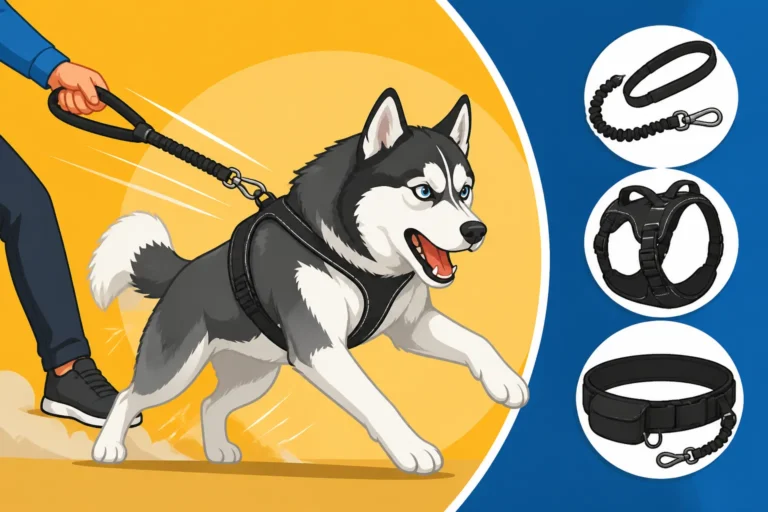
How Far a Loose Siberian Husky Travels
It’s a heart-stopping moment many Siberian Husky owners dread: you turn your back for a second, a gate is left ajar, or a leash slips, and suddenly, your adventurous Husky is a blur in the distance. The immediate, agonizing question is always, "How far can they possibly go?" The truth is, a loose Siberian Husky can cover an astonishing amount of ground in a short time, driven by instincts that are deeply ingrained. This guide will explore just how far these incredible dogs can travel, what motivates them, and what you can do to prevent and respond to their wanderlust.
The Instinctive Drive to Roam and Explore
If you live with a Siberian Husky, you already know they aren't like other dogs when it comes to staying put. Their desire to run, explore, and simply go is not a flaw in their training or a sign of disrespect; it's a fundamental part of their genetic makeup. Understanding this intrinsic drive is the first step toward managing it and keeping your furry escape artist safe.
The Ancient Roaming Instinct
Siberian Huskies were selectively bred for centuries by the Chukchi people of Siberia to be long-distance sled dogs. Their survival depended on their ability to cover vast stretches of frozen tundra, often traveling for days with minimal sustenance, seeking out trails and new hunting grounds. This isn't just about speed; it's about endurance and an innate navigational prowess. When a Husky gets loose, this ancient programming kicks in. They're not looking to get home in the same way a Golden Retriever might; they're looking for adventure, new scents, and the sheer joy of covering ground. This is why a simple walk can become a cross-county marathon if they get off-leash. It's a primal call that few other breeds possess with such intensity.
For a Husky, running isn't just exercise; it's freedom. They don't see a fence as a boundary, but as a challenge, and an open gate as an invitation to fulfill their genetic destiny. This makes them incredibly challenging pets for those unprepared for their unique needs. It also explains why that desperate, panicked chase often makes them run harder and faster – it just feels like part of the game to them.
High Prey Drive and Scent Trails
Beyond the pure joy of running, a significant motivator for a loose Husky's travel is their highly developed prey drive. These dogs were bred not just to pull sleds, but also to hunt for their own food when necessary. A tantalizing scent – a rabbit, a squirrel, a deer, or even a neighborhood cat – can ignite this drive, sending them off on an exhilarating chase. Once they're locked onto a scent, their focus is absolute, and they will follow it for miles, oblivious to their surroundings or your frantic calls.
This prey drive means that even the most well-behaved Husky might suddenly "switch off" their training when a small animal darts across their path. The adrenaline, the chase, the ancient thrill of the hunt overrides everything else. They'll follow these scent trails through fields, across roads, and deep into unfamiliar territory, putting significant distance between themselves and their last known location. This is also why many owners find their Huskies returning hours later, exhausted but satisfied, after an epic chase they can't quite describe. You can learn more about this by reading Siberian Husky Prey Drive Around Small Animals.
The Lure of "Greener Pastures"
Another factor is a Husky's inherent curiosity and desire for novel experiences. Their intelligence, combined with their independence, means they are always looking for something new and exciting. A loose Husky isn't usually distressed or afraid; they're often exhilarated. They see new yards as uncharted territories, new smells as mysteries to solve, and new people or dogs as potential playmates or fellow adventurers.
This means they'll actively seek out new environments, pushing further and further from home. They might wander into a distant park, follow the sounds of children playing, or investigate an interesting construction site. This constant desire for novelty, coupled with their incredible stamina, ensures that their journey won't be a short one. They’re not waiting to be found; they’re busy exploring the world.
Factors Influencing How Far a Husky Travels
While the innate drive is strong, several factors can significantly impact how far a loose Siberian Husky will actually travel. It's not always a straight line, and the environment plays a huge role in their trajectory and ultimate distance covered.
Terrain and Urban vs. Rural Environments
The landscape a Husky escapes into directly affects their travel distance. In a dense urban environment, a Husky might cover fewer linear miles, but still travel extensively through winding streets, back alleys, and parks. The sheer number of distractions (people, other dogs, traffic, interesting garbage smells) can slow them down or divert their path, but they'll still be moving. They might dart through several blocks, cross busy intersections, and even end up in another part of town before being spotted.
In contrast, a Husky that escapes in a rural or suburban area has a much greater potential for covering vast distances quickly. Open fields, quiet country roads, and natural trails allow them to run unimpeded for miles. A Husky might easily cover 10-20 miles in a day in such an environment, sometimes even more if truly motivated by a scent or the thrill of the chase. Their ability to move efficiently over varied terrain, combined with their strong musculature, makes them perfect candidates for long-distance travel. Consider the difference between navigating a congested city block and having miles of open parkland at their disposal; the latter allows for truly impressive feats of travel. The Roaming Instinct Bred Into Every Siberian Husky further explains this drive.
Weather Conditions and Energy Levels
A Husky's stamina is legendary, but even they are influenced by external conditions. Moderate to cold weather is their sweet spot. In cooler temperatures, they can run for hours without overheating, potentially covering dozens of miles. Their thick double coat, designed for frigid Arctic conditions, acts as an insulator, keeping them comfortable even when other dogs would be seeking shelter. This is part of what makes them such effective long-distance runners.
However, hot or humid weather can significantly reduce their travel distance. While they will still try to run, the risk of overheating will force them to slow down, seek shade, or find water sources. This doesn't mean they won't go far, but their pace will be more measured, and they might stop to rest more frequently. Similarly, an older or less fit Husky, or one that hasn't had adequate daily exercise, might tire more quickly than a young, athletic working-line dog. An escaped Husky, however, is often running on pure adrenaline, which can temporarily override fatigue.
| Factor | Impact on Travel Distance | Typical Scenario |
|---|---|---|
| Terrain (Rural/Open) | High | Miles of fields, quiet roads; can easily cover 10-20+ miles/day. |
| Terrain (Urban/Dense) | Moderate | Winding streets, many distractions; may cover 5-10 miles in a less linear path. |
| Weather (Cold/Mild) | High | Optimal conditions for sustained running; less risk of overheating. |
| Weather (Hot/Humid) | Moderate/Low | Increased risk of overheating; will seek shade/water, may slow down or stop. |
| Energy Level (High) | High | Well-exercised, young dog; runs further for longer. |
| Energy Level (Low/Old) | Moderate | Tires more quickly; may still travel significant distance on adrenaline, but slower. |
| Prey Drive Intensity | High | Strong scent trail means single-minded pursuit for miles. |
| Familiarity with Area | Variable | Might circle familiar area if disoriented, or explore further if confident. |
Familiarity with the Area
It might seem counterintuitive, but a Husky's familiarity with their immediate surroundings can sometimes encourage them to travel further, not less. If they know the local parks, the river trails, or the neighbor's property, they might intentionally head there, treating it as an extended walk. They know these areas are "safe" to explore. However, if they become disoriented or get a strong scent that leads them into completely unknown territory, they can quickly find themselves many miles away without a clear path back.
Some Huskies, especially those who have escaped multiple times, might even develop a "route" they take, almost like a ritual. This doesn't mean they'll return by that route, but it shows their incredible ability to map and remember their environment. For this reason, waiting for a Husky to "come back on their own" is rarely a reliable strategy, especially given how far they might have gone. Whether a Siberian Husky Comes Back on Its Own highlights the dangers of this approach.
The Dangers of a Roaming Husky
While a Husky on the loose might feel like an exhilarating adventure to them, for us, it's a terrifying scenario fraught with very real and severe dangers. The longer they're out, and the further they travel, the greater these risks become.
Traffic and Environmental Hazards
The most immediate and devastating danger for any loose dog, especially a fast-moving Husky, is traffic. Their focus on the chase or exploration means they often have little regard for cars, crossroads, or the rules of the road. A Husky can dart across a highway in pursuit of a squirrel, run through a busy intersection without hesitation, or simply fail to notice an oncoming vehicle. This can lead to severe injuries or fatalities for the dog and potentially cause accidents involving humans. It's a sobering reality that many escaped Huskies are hit by cars.
Beyond traffic, the environment itself presents numerous hazards. They could fall into open culverts, get entangled in fences, or get lost in dense brush. In rural areas, they might encounter farm equipment, open wells, or be mistaken for a wild animal by property owners. Even in urban settings, construction sites, polluted water sources, or discarded sharp objects pose significant threats. The world is not designed for a free-roaming dog, and a Husky’s adventurous spirit often puts them directly in harm's way. Siberian Husky Deaths From Trauma and Escape is a stark reminder of these risks.
Interactions with Wildlife and Other Animals
A Husky's strong prey drive, as we discussed, is a double-edged sword. While it motivates them to run far, it also puts them at risk during encounters with wildlife. They might chase a deer and find themselves confronted by an angry mother bear or a protective coyote. Even smaller animals can inflict injuries, and a bite from a wild animal carries the risk of disease. A loose Husky could also be injured trying to hunt a porcupine or tangling with a skunk.
Furthermore, interactions with other domestic animals can be problematic. A Husky might approach another dog in an unfriendly manner, or they could be seen as a threat by a territorial pet. Livestock in rural areas are particularly vulnerable to a roaming Husky's predatory instincts, which can lead to legal issues for the owner and potentially fatal consequences for the Husky if a farmer protects their animals. A loose Husky is rarely just a nuisance; it can be a genuine threat to other animals and, by extension, to themselves.
Risk of Injury or Capture
The longer a Husky travels, the more exhausted they become, and fatigue increases their risk of injury. They might jump a fence awkwardly, slip on wet pavement, or simply twist a paw running over uneven ground. Dehydration and hunger also become concerns, especially if they are out for an extended period. These injuries can slow them down, making them more vulnerable to traffic or capture.
Speaking of capture, while animal control and good samaritans often try to help, the capture process itself can be stressful and dangerous. A scared or overstimulated Husky might not respond well to being approached by strangers, potentially leading to nips or bites if cornered. They are also incredibly adept at evading capture, often leading to prolonged chases that put both the dog and their would-be rescuers at risk. If they are captured and taken to a shelter far from home, the process of finding and reclaiming them becomes exponentially more difficult and expensive.
What Happens When a Husky Gets Lost
When a Siberian Husky truly gets lost, meaning they are far from familiar territory and their internal compass hasn't led them back, their behavior shifts. They move from exploratory adventure to survival mode, and the reality of their situation can set in, though their independent nature often keeps them from panicking in the way some other breeds might.
Instinctive Survival Mode
A lost Husky, particularly one who has traveled a significant distance, will eventually settle into a survival pattern. This means seeking out food sources, finding shelter from the elements, and avoiding perceived threats. They might become more wary of humans, even those trying to help, making them harder to approach. Their instincts for hunting small prey will intensify, and they'll likely revert to more primal behaviors to sustain themselves. This is a dog that has been bred for resilience and self-sufficiency in harsh environments, and they will tap into those deep reserves.
This survival mode means they are less likely to simply sit by the roadside waiting for you. They will keep moving, sometimes in wide circles, sometimes in a relatively straight line, as they forage. They might seek out areas with dense cover, like wooded patches, abandoned buildings, or even large culverts. Understanding this behavior is crucial for effective searching. You're not looking for a dog that's whimpering for help; you're looking for an intelligent, resourceful animal that is actively surviving on its own.
The Challenges of Identification
One of the biggest heartbreaks of a lost Husky is the challenge of identification once they've traveled far. While microchips are essential, they are only as good as the scanner and the registry. If a Husky is found miles from their home, a stranger might assume they are a stray and not even think to check for a microchip immediately. Their rugged appearance can also lead people to believe they are a "wild" dog or part wolf, making them hesitant to approach.
Even if they wear tags, those can fall off or become unreadable. And if they've traveled across county lines or into a different jurisdiction, local animal control might not recognize them or connect them to distant "lost dog" reports. This is why reliable, permanent identification like a microchip is absolutely non-negotiable for a breed with such a high escape risk. Make sure your microchip information is always up to date! Microchips, Tags and GPS for a Siberian Husky are critical tools in this fight.
Community Response and Animal Control
When a Husky is spotted roaming, the community response can vary wildly. Some people will immediately try to capture them, often unsuccessfully, due to the Husky's speed and evasion skills. Others might simply call animal control. The problem, as mentioned, is that if your Husky has traveled dozens of miles, they might be picked up by an animal control agency far from your local jurisdiction. It can be a real puzzle connecting a found dog to a lost report filed in a different town or county.
Animal shelters and rescues are often inundated with lost Huskies, a testament to their escape artistry. These organizations do incredible work, but they can only hold an animal for so long. If your Husky isn't identified quickly, they could be moved to another facility, put up for adoption, or, in worst-case scenarios, face euthanasia if space is limited or they are deemed unadoptable due to perceived aggression (often just fear or overstimulation). This is why a widespread, immediate search and notification system is vital as soon as you realize your Husky is missing.
Preventing a Long-Distance Escape
Given their powerful instincts and ability to cover ground, prevention is paramount when it comes to Siberian Huskies. Trust me, it's far easier to invest in robust prevention than to deal with the agony of a lost dog.
Secure Containment is Non-Negotiable
This cannot be stressed enough: your containment system must be Husky-proof. A standard four-foot fence is merely a suggestion for these dogs; they can easily clear it or, if feeling ambitious, climb it. We're talking about a minimum of a six-foot fence, and often, even that isn't enough without additional measures. Many Husky owners opt for "L-footers" along the bottom of the fence (wire buried horizontally inward) to deter digging. Others install "coyote rollers" along the top to prevent climbing and scaling.
Gates must be securely latched, preferably with multiple latches that require human dexterity to open. Don't underestimate their intelligence; a Husky can figure out basic latches with astounding speed. Keeping them contained means constant vigilance, checking for weak spots, and understanding that they are always looking for an opportunity. Never leave a Husky unsupervised in a yard, no matter how secure you think it is. This diligent approach is critical if you want to avoid the heartache of a far-ranging escape. Stopping a Siberian Husky From Escaping the Yard dives deep into these methods.
Training and Mental Stimulation
While no amount of training will completely override a Husky's innate desire to roam or their prey drive, it can significantly improve management and response. A solid recall is your best defense if an escape does happen, though it needs to be practiced religiously in varied environments and with high-value rewards. Positive reinforcement training, perhaps with a program like BAXTER & Bella, can build a strong bond and establish clear communication, making them more likely to listen when it counts. But always remember, their recall in a high-distraction, high-drive situation is still a gamble. Teaching a Siberian Husky to Come Back emphasizes this challenging but crucial training.
Mental stimulation is just as important as physical exercise. A bored Husky is a destructive and escape-prone Husky. Puzzle toys, interactive feeders (those that make them work for their food), and regular training sessions can help channel their intelligence and energy productively. Even short bursts of mental games throughout the day can make a big difference in reducing their urge to create their own "adventure." A mentally tired Husky is often a more content Husky.
Technology as a Safety Net
Modern technology offers valuable tools to supplement physical containment and training. GPS collars, available from retailers like Amazon, can provide real-time tracking if your Husky does manage to get loose. These devices can literally be a lifesaver, allowing you to quickly pinpoint their location, even if they've traveled miles away. They work best in conjunction with a microchip and visible ID tags, providing multiple layers of security.
However, it’s vital to remember that technology is a backup, not a primary solution. A GPS collar can be lost, run out of battery, or malfunction. It doesn't prevent the escape or the dangers a loose Husky faces. But when seconds count and your dog is covering ground at an incredible rate, knowing their last reported location can dramatically reduce search time and increase the chances of a safe recovery. Always test your GPS collar regularly and ensure it's charged.
Finding Your Far-Ranging Husky
Despite our best efforts, sometimes a Husky still manages to slip away. When this happens, swift and strategic action is your best bet for a reunion, especially considering how far they can travel.
Immediate Action is Key
The moment you realize your Husky is gone, every second counts. Don't just stand there calling their name; they're already putting distance between you.
- Assess the Situation: Where did they go? Which direction? Was anything chasing them (prey)?
- Alert Key People: Immediately call family members, neighbors, and friends to help with the search. The more eyes on the ground, the better.
- Secure the Area: If they got out of a gate, secure it so they can't get back in and out again, or so another pet doesn't escape.
- Start the Search: Grab their favorite treats, a squeaky toy, and head out. Use their unique howling sound (if they have one) to call for them, as they might recognize it. Walk, drive, or even bike the immediate vicinity, expanding your search radius rapidly. Remember that a Husky will travel far, so don't limit your initial search to just your street.
Consider leaving something familiar outside your home, like their bed, a favorite blanket, or an unwashed piece of your clothing, especially if they've been gone for a while. The familiar scent might draw them back if they happen to circle back to the general area, though this is less reliable for a truly far-ranging Husky.
Leveraging Local Resources
Once you’ve conducted an immediate physical search, it’s time to activate your broader network.
- Notify Animal Control/Shelters: Immediately call all animal shelters and animal control agencies in your county and adjacent counties. Remember, your Husky could be miles away. Provide a detailed description, a photo, and your microchip information. Many shelters have online lost pet portals.
- Veterinary Offices: Call local veterinary clinics, as people sometimes bring stray animals there.
- Social Media: Post on local lost pet groups on social media platforms. Include multiple clear photos, details about their temperament (are they friendly or wary of strangers?), and the last known location. Ask people to share widely. Many communities have very active online groups dedicated to reuniting lost pets.
- Physical Flyers: Create clear, concise flyers with a large photo, "LOST HUSKY" in big letters, and your contact information. Post them at intersections, local businesses, veterinary offices, and community boards. Don't forget to ask for permission!
If your Husky wears a GPS collar, this is where that investment pays off. Check the app frequently, noting any new pings and directing your search efforts accordingly. What Losing a Siberian Husky Costs can give you an idea of the emotional and financial toll involved, which underscores the importance of swift action.
The Power of Persistent Searching
Finding a lost Siberian Husky, especially one that has traveled a long distance, often requires incredible persistence. They are masters of evasion and can go days, even weeks, on their own. Don't give up.
- Expand Your Search Radius: If they haven't been found locally, they've likely gone further. Expand your physical search area. Drive different routes, explore parks, hiking trails, and even industrial areas where they might find shelter.
- Visit Shelters in Person: Don't just call. Visit shelters in person, sometimes multiple times. Descriptions can be subjective, and seeing the dogs yourself ensures no misidentification.
- Use Traps (Professional Guidance): In some cases, if a Husky is spotted repeatedly in a specific area but evades capture, a humane trap might be an option. Only attempt this with guidance from experienced lost pet recovery specialists or animal control, as improper use can cause more harm than good.
- Don't Chase: If you or someone else spots your Husky, do not chase them. This will almost always trigger their flight instinct and send them running further away. Instead, get low, act calmly, speak softly, and try to entice them with high-value treats or a familiar toy. Sometimes, even sitting down and acting indifferent can pique their curiosity enough to approach.
Remember, a Husky’s endurance means they can keep going long after other breeds would have given up. Your persistence is their best chance for a safe return.
Disclaimer
This article is for general informational purposes only and does not constitute professional advice. Laws, prices and regulations vary by location and change over time. Consult a qualified professional for guidance on your specific situation.