Whether Two Siberian Huskies Howl More Than One
One of the biggest concerns prospective Siberian Husky owners often grapple with, even more so if they're considering bringing a second one home, is the sheer volume of noise. We all know huskies are vocal, but the question that keeps many up at night is: will adding a second husky turn a moderate "woo-woo-woo" into an unending, ear-splitting symphony? This guide dives deep into the realities of multi-husky households and helps you understand if two Siberian Huskies truly howl more than one, and what you can do about it.
Understanding the Husky Howl: More Than Just Noise
Let's be honest, the Siberian Husky howl isn't like a typical dog bark. It's a primal, often beautiful, sound that connects them directly to their wolf ancestors. But it's also a sound that can test the patience of even the most devoted owner, not to mention the neighbors! Before we tackle the "two-husky" question, it’s important to understand why huskies howl in the first place. It's not usually just for the fun of it, though sometimes it certainly seems that way.
The Instinctual Chorus: Why Huskies Howl
Huskies are an ancient breed, and their vocalizations are deeply ingrained in their DNA. Think back to their origins with the Chukchi people in Siberia. These dogs lived and worked in packs, often over vast, open distances. Howling was a crucial survival tool. It allowed pack members to locate each other, communicate over long distances, and even signal warnings about potential threats. When your husky lets out a mournful howl, it's tapping into generations of instinct, a call across the tundra, even if they're just sitting on your living room rug.
They might howl in response to high-pitched sounds like sirens, car alarms, or even certain musical notes. It’s like their own personal rendition of a siren song, compelled by something deep within them. Many owners report their huskies "singing along" to fire trucks or ambulance sirens passing by, an almost automatic response. It’s not a trained behavior; it’s an innate reaction, and it’s one of the charming, albeit sometimes frustrating, quirks of the breed. Understanding this instinct helps us move past simply labeling it "bad behavior" and instead look for ways to manage and redirect it.
The Social Language: How Huskies Communicate
Beyond instinct, howling is a fundamental part of how Siberian Huskies communicate. It's their way of talking to us, to other dogs, and to the world around them. They might howl when they're excited, when they want attention, or when they're feeling anxious or lonely. For example, a husky left alone for too long might howl out of separation anxiety, a cry for connection. This is often where some of the most persistent and problematic howling behaviors arise, as it's rooted in emotional distress.
They also use distinct vocalizations to express different needs. A sharp, urgent howl might mean "I need to go outside right now!" while a longer, more drawn-out wail could be "I'm bored, come play with me!" Many husky owners become quite adept at understanding the nuances of their dog's vocal repertoire, distinguishing a "talking back" sound from an actual distress signal. This intricate communication system means that while they might not bark as much as some breeds, their howls carry a significant amount of information, and it's essential to try and decipher what they're trying to tell you. If you're struggling to understand your husky's vocal habits, you might find some useful insights in The Siberian Husky Noise Nobody Warns You About.
The "Two is One" Myth: Does a Second Husky Double the Howling?
This is the million-dollar question for many considering a second Siberian Husky. You might have heard the old adage, "two is one, and one is none," meaning that huskies often thrive in pairs. While this can be true for their overall happiness and energy levels, it doesn't automatically translate to doubling the noise. In some cases, it might even reduce certain types of howling, but it certainly introduces new dynamics.
The Catalytic Effect: When One Husky Inspires Another
It's common for a new behavior to emerge or intensify when you introduce a second dog, especially with breeds as vocal as huskies. If one husky starts howling in response to a siren, it’s highly likely the second one will join in, creating a harmonious (or cacophonous, depending on your perspective) chorus. This is the "catalytic effect" in action – one dog's vocalization acts as a trigger for the other, reinforcing the behavior. Suddenly, you're not just dealing with one husky's instinctual response, but a duet, or even a full pack performance.
This can be particularly noticeable with "alert" howling, where one dog hears something outside and lets out a warning howl, and the second one immediately echoes it. It's their way of saying, "Yep, I heard it too! We're on guard!" This isn't necessarily a bad thing, as it demonstrates their pack mentality and their natural inclination to communicate with each other. However, if your first husky already has a habit of howling at everything that moves outside the window, adding a second one might amplify that specific issue. It's like adding another instrument to an already enthusiastic band – the sound gets bigger, even if the individual intention remains the same. You might find resources on Howling in a Siberian Husky Household helpful for understanding these dynamics.
Pack Dynamics: How Group Howling Differs
The reality of two (or more) Siberian Huskies living together is that their pack dynamics profoundly influence their vocalizations. Instead of simply doubling the noise, you often see a shift in the types and triggers of howling. For instance, a single husky might howl out of loneliness or separation anxiety when left alone. But if you have two huskies, they have each other for company. This companionship can often significantly reduce separation-related howling, as they are no longer truly alone. They might snuggle up, play, or simply observe their surroundings together, finding comfort in each other's presence.
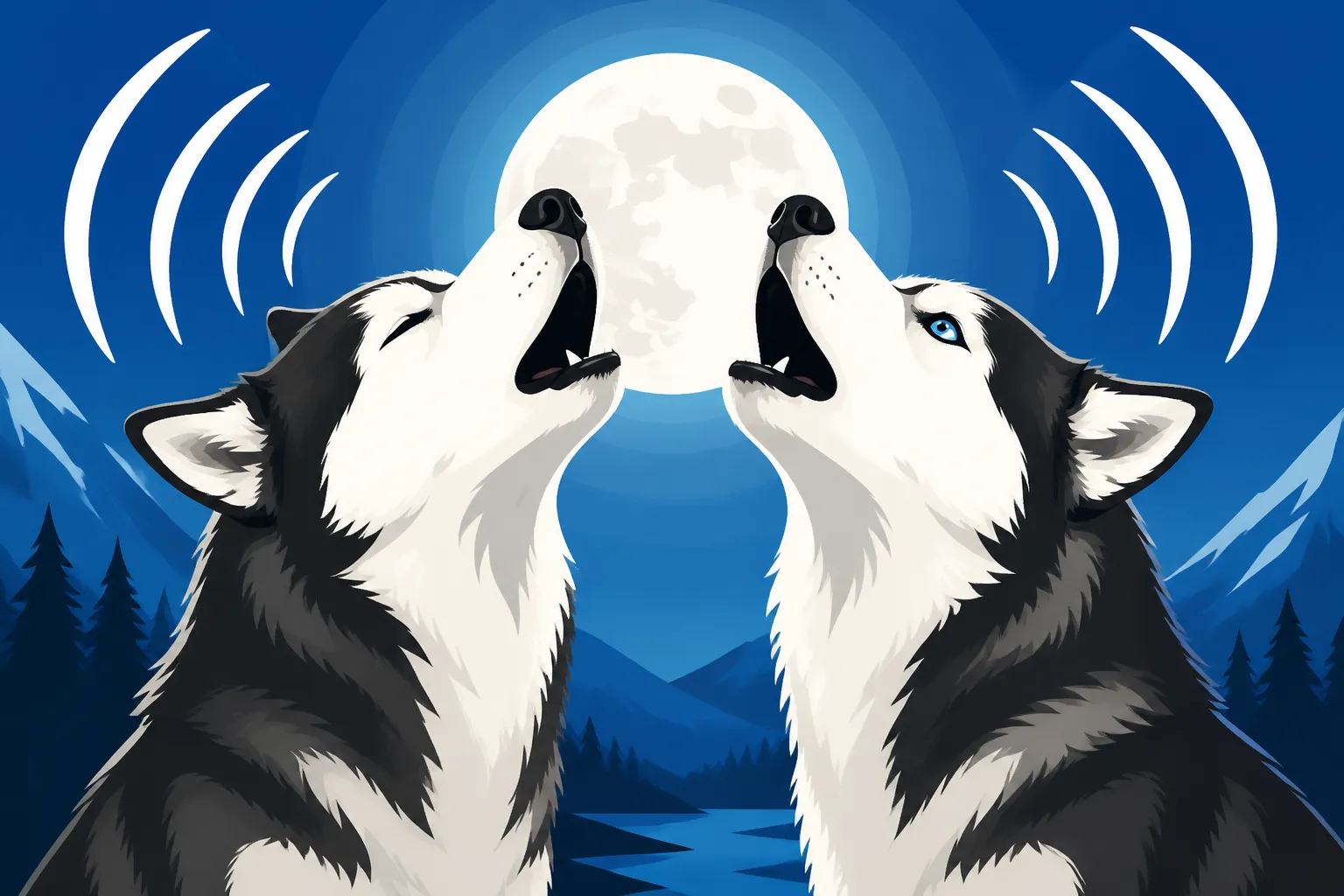
However, group howling also introduces new scenarios. Huskies are known for their "sing-alongs." When one husky initiates a howl, the others might join in, not necessarily because they're distressed, but because it's a social activity, a bonding experience. They're singing their family song! This can happen at random times, perhaps in response to a distant train whistle, a particularly interesting scent, or just because the mood strikes them. It's a collective expression of their pack identity.
Consider this table outlining some common howling scenarios and how the number of huskies can influence them:
| Howling Trigger/Scenario | Single Siberian Husky Impact | Two Siberian Huskies Impact |
|---|---|---|
| Separation Anxiety | Often high, due to loneliness and lack of companionship. | Potentially lower, as they provide each other comfort and company. |
| Sirens/High Pitched Sounds | Likely to howl alone, an instinctual response. | Highly likely to howl together, reinforcing the behavior as a duet. |
| Attention Seeking | Can be persistent, focusing all attention demands on the owner. | Might split attention between owner and companion, or amplify demands. |
| Boredom | May lead to destructive behavior or incessant howling for stimulation. | Often reduced, as they can entertain each other with play. |
| "Talking Back" / Communication | Playful vocalizations directed at the owner. | Enhanced, as they communicate verbally with each other and the owner. |
| Alert/Warning | Single alert sound or bark. | Collective alarm, a louder, more sustained warning from the "pack." |
As you can see, it's not a straightforward doubling. While some howling might increase in volume or frequency due to the "choir" effect, other types of howling might actually decrease because the dogs fulfill each other's social needs. It's a complex interplay of instinct, communication, and companionship. For more on managing their social needs, you might want to read Whether a Second Husky Settles the First One.
Managing a Multi-Husky Household's Soundscape
Living with one vocal husky is an experience; living with two or more is a whole new adventure! The good news is that you're not powerless to influence their noise levels. It takes consistency, understanding, and a proactive approach, but you can certainly create a more peaceful household even with multiple talkative Siberians. The goal isn't necessarily to eliminate howling entirely – that's likely impossible and frankly, a bit unfair to the breed – but to manage it and reduce excessive or inappropriate vocalizations.
Training for Quieter Interactions
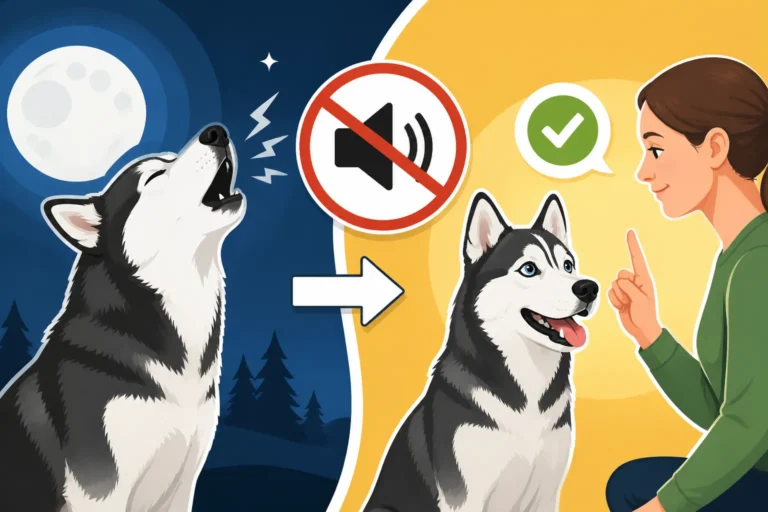
Training is paramount when it comes to managing husky vocalizations, whether you have one or a whole pack. The key is to teach your huskies an alternative behavior and to reward quiet. This often involves teaching a "quiet" cue. Start when they're howling, perhaps at the doorbell. Once they pause, even for a second, mark that moment (with a clicker or a verbal "yes!") and reward them generously. Gradually, you can extend the duration of quietness before the reward.
Another effective strategy is to proactively manage triggers. If you know sirens set them off, try to distract them before the howling starts. Engage them in a quick game, offer a high-value treat, or ask for a known command. Consistency is vital; every member of the household needs to be on the same page. If one person accidentally reinforces howling by giving attention when the dogs are vocal, it can undermine weeks of training. For tools to help with training, particularly for an independent breed like the husky, check out platforms like BAXTER & Bella, which offer comprehensive online training programs. These can be particularly helpful for new multi-husky owners.
Don't forget to teach them appropriate communication. For instance, if they howl for attention, ignore the howl but reward them when they sit quietly. This teaches them that calm behavior gets results, not demanding noise. Training these intelligent but independent dogs can be a marathon, not a sprint, and you might find useful tips in Why a Siberian Husky Looks Stubborn Rather Than Slow or Keeping a Siberian Husky Interested in Training.
Environmental Enrichment to Reduce Howling Triggers
A bored husky is a vocal husky, and two bored huskies can be a howling orchestra! Environmental enrichment plays a massive role in reducing unwanted vocalizations. Huskies need mental and physical stimulation to be happy and quiet members of your household. This means plenty of exercise, but also mental challenges.
Think about incorporating puzzle feeders into their daily routine, especially when you're leaving them alone. Instead of just putting food in a bowl, make them work for it. This engages their minds and tires them out mentally. Puzzle Feeders a Siberian Husky Cannot Beat can be a lifesaver here. Rotate their toys regularly to keep them interesting. Consider durable chew toys that can withstand their powerful jaws. Brands found on Amazon often have a great selection of robust toys specifically designed for strong chewers.
Physical exercise is, of course, non-negotiable for Siberians. Two runs a day for a Siberian Husky is a good baseline, but some individuals will need more. These dogs were bred for endurance, and if they don't get an appropriate outlet for that energy, it will manifest in various ways, including excessive howling, destructive behavior, or even attempts to escape. Structured activities like canicross or bikejoring, or even just long, brisk walks with plenty of sniffing opportunities, can make a huge difference. A tired husky is a content husky, and a content husky is usually a quieter husky.
When to Seek Professional Help
Sometimes, despite your best efforts with training and environmental enrichment, the howling becomes overwhelming or seems rooted in deeper issues. This is when it's absolutely crucial to seek professional help. A certified professional dog trainer or a veterinary behaviorist can help identify the root cause of the howling and develop a tailored plan. They can assess if the howling is truly separation anxiety, frustration, attention-seeking, or a combination of factors unique to your specific dogs and household dynamic.
A professional might observe your huskies' interactions, assess their daily routine, and provide strategies that you might not have considered. They can help you understand subtle body language cues that might precede a howling session, allowing you to intervene proactively. They can also rule out any underlying medical conditions that might contribute to changes in vocalization. For instance, an older husky might howl more due to pain or cognitive decline. Don't feel like a failure if you need to call in an expert; it's a responsible step toward creating a harmonious home for everyone, especially if you have two highly intelligent and vocal dogs. Finding a trainer who has worked with Huskies specifically can be incredibly beneficial, as their unique temperament requires a distinct approach.
Disclaimer
This article is for general informational purposes only and does not constitute professional advice. Laws, prices and regulations vary by location and change over time. Consult a qualified professional for guidance on your specific situation.