Whether to Free Feed a Siberian Husky
It’s a common scenario for busy pet parents: you just want to make sure your beloved Siberian Husky has food available whenever they’re hungry. Free feeding, or leaving a bowl of kibble out all day, sounds like a convenient solution, a way to offer continuous access and perhaps even prevent them from feeling deprived. But with a breed as unique as the Siberian Husky, this approach can quickly lead to more problems than it solves, ranging from nutritional imbalances to behavioral quirks that leave you scratching your head. This guide is here to walk you through why free feeding might not be the best strategy for your Husky and how to implement a more beneficial feeding routine.
Understanding the Siberian Husky's Unique Relationship with Food
Before we dive into the pros and cons of free feeding, it’s crucial to understand that Siberian Huskies aren’t just any dog. They were bred for a specific, demanding purpose in harsh environments, and their bodies and minds adapted accordingly. This heritage deeply influences their eating habits.
The "Survival Metabolism" of the Breed
Siberian Huskies are famous for their incredibly efficient metabolisms. Back in their Chukchi origins, these dogs often worked long hours on minimal rations. Their bodies became masters at extracting every last bit of energy from their food and storing it wisely, rather than burning through it rapidly. This isn't just a fun fact; it's a fundamental aspect of their biology that impacts how they handle food today. Many Husky owners are surprised to learn that their active dog often needs less food than other breeds of a similar size. If you've ever heard that a Husky needs only Feeding a Siberian Husky on 60 Percent of the Label, this is precisely why. Their survival metabolism means they simply don't require the same caloric intake as, say, a Labrador Retriever of comparable weight, even if both are equally active.
This efficiency also means they're not always driven by a constant, ravenous hunger. Unlike some breeds who might gorge themselves at every opportunity, a Husky's historical context taught them to conserve resources, including their appetite. They eat what they need, and sometimes, that's surprisingly little.
Why Huskies Aren't Your Typical Overeaters (Usually!)
Because of this efficient metabolism, many Siberian Huskies aren't prone to overeating in the way some other breeds are. You might even find your Husky leaves food in the bowl, sometimes for hours, or even skips meals entirely. This isn't necessarily a sign of illness, though it always warrants a quick check-in with your vet if it's a sudden change. Often, it's just their nature. They're not driven by an instinct to clear the bowl because their ancestors didn't have a constantly full bowl. This can be confusing for owners used to dogs who act like every meal is their last.
However, while they might not overeat in one sitting, free feeding can still lead to unhealthy weight gain in Huskies. If food is always available, those small, frequent nibbles throughout the day can add up, especially if the dog isn't getting adequate exercise to match. It's a subtle creep, not a sudden feast, but the results are the same: extra pounds that can strain their joints over time. This makes understanding The Weight a Siberian Husky Should Hold crucial for long-term health.
The Behavioral Instincts Around Food
Beyond metabolism, Siberian Huskies also possess strong behavioral instincts around food that stem from their working dog heritage. While they might be independent and seemingly indifferent to food at times, they also have a deeply ingrained prey drive and can be incredibly possessive or "resource guarders" if they feel their food source is threatened. Free feeding can sometimes exacerbate this, particularly in multi-dog households where competition for a constantly available food source might escalate tensions. Even with a single dog, constant availability might not foster a healthy respect for meal times, or it could lead to boredom and a lack of interest in food as a reward.
The Pitfalls of Free Feeding a Siberian Husky
While the idea of free feeding sounds convenient, for a Siberian Husky, it can present a unique set of challenges that impact their health, behavior, and your ability to monitor their well-being.
Weight Management Challenges and Health Risks
Even with their efficient metabolism, free feeding can lead to gradual, unhealthy weight gain in Siberian Huskies. If a bowl of kibble is always accessible, your Husky might graze throughout the day, taking small portions more often than their body truly needs. This constant, unregulated intake can slowly tip the scales, leading to excess weight. An overweight Husky, even by a few pounds, faces increased risks for joint problems, especially as they age, impacting their mobility and overall quality of life. Issues like Siberian Husky Weight and Joint Health become much more pertinent with extra weight.
It's not just about obvious weight gain, either. Free feeding makes it incredibly difficult to accurately monitor your Husky's daily caloric intake. You might think they're eating normally, but without clear portion control, it's a guessing game. This can be especially problematic if you're trying to manage their weight or if they're a growing puppy where precise nutrition is key.
Exacerbating Picky Eating and Food Refusal
Siberian Huskies are notorious for being picky eaters or "food snobs." It's not uncommon for them to turn up their nose at a perfectly good bowl of food simply because they're not in the mood or because they sense something better might be coming. When you free feed, you inadvertently reinforce this pickiness. If they know the food will always be there, there's no incentive for them to eat it now. They can hold out for something tastier, or simply eat only when hunger truly strikes, which might be irregular and unpredictable.
This can become incredibly frustrating for owners. You might find yourself constantly worried about whether your Husky is eating enough, or perhaps even swapping out different foods in a desperate attempt to entice them, only to create an even pickier eater. The cycle of A Siberian Husky That Leaves Food in the Bowl becomes a daily battle rather than a rare occurrence.
Missing Early Health Cues
One of the most significant drawbacks of free feeding is that it makes it very difficult to spot subtle changes in your Husky's appetite or eating habits, which are often the first indicators of an underlying health issue. If your dog always has access to food, you might not notice for hours, or even days, that they're eating less than usual or not at all.
For example, a sudden disinterest in food can be a sign of anything from a minor upset stomach to more serious conditions like infections, dental pain, or even thyroid issues. When you feed on a schedule, you immediately notice if your Husky doesn't touch their morning or evening meal. This early detection can be critical for prompt veterinary intervention, especially for conditions where early treatment makes a big difference. Without this direct observation, you're missing out on a vital diagnostic tool that your dog's appetite provides.
Behavioral Issues: Resource Guarding and Boredom
Free feeding can also contribute to or worsen certain behavioral issues in Huskies. In multi-dog households, constant food availability can lead to resource guarding. One dog might try to claim the communal food bowl, leading to tension, growling, or even fights over who gets to eat. Even with a single dog, having food constantly available might not teach them to value their meals, or it might make them more possessive if another pet or person approaches their "stash."
Furthermore, Huskies are intelligent dogs who thrive on routine and mental stimulation. Meal times can be a valuable part of their day, offering structure and a chance to engage. When food is always there, it loses its special status. It doesn't provide the same mental engagement or the opportunity to work for a reward. This lack of stimulation, combined with the Husky's natural inclination towards mischief when bored, can lead to other destructive behaviors. A bored Husky might chew on furniture, dig up the yard, or vocalize excessively, especially if left alone. While free feeding isn't the sole cause of Siberian Husky Destruction When Left Alone, it certainly doesn't help alleviate the boredom that contributes to it.
The Case for Structured Meal Times
Moving away from free feeding and embracing a scheduled meal routine can bring a host of benefits for your Siberian Husky, addressing many of the challenges unique to the breed. It's about taking control of their nutrition and fostering a healthier, more predictable relationship with food.
Better Portion Control and Nutritional Management
The most immediate benefit of scheduled feeding is the ability to precisely control your Husky's portion sizes. Given their efficient "survival metabolism," it's easy to accidentally overfeed a Husky, even with what seems like a standard amount of food. With scheduled meals, you can measure out their food precisely according to their age, weight, activity level, and specific dietary needs. This ensures they're getting the right amount of calories to maintain a healthy weight without packing on extra pounds. For example, if your vet recommends a particular kibble from Chewy or Ollie, you can follow their feeding guidelines much more accurately.
This control isn't just about preventing obesity; it's also vital for ensuring they receive adequate nutrition. If you're using specialized food for specific health concerns, or if your vet is monitoring their intake for any reason, scheduled feeding makes it simple to track and adjust as needed. It helps you stick to the recommended Calories a Fifty-Pound Siberian Husky Needs Daily rather than guessing.
Establishing Routine and Communication
Siberian Huskies, despite their independent streak, thrive on routine. A predictable schedule helps them understand what to expect throughout their day, reducing anxiety and promoting a sense of security. Scheduled meal times become a significant anchor in this routine. Your Husky learns when food will be offered, and this can actually reduce pickiness because they understand that if they don't eat it now, it will be gone until the next meal. This creates a clear form of communication between you and your dog, where mealtime isn't just about hunger, but about a shared, predictable event.
This routine also creates opportunities for training and reinforcing good behavior. Meal times can be used to practice patience, waiting for a "sit" or "stay" command before the bowl is put down, and promoting calm behavior around food. It reinforces your role as the provider and leader, strengthening your bond.
Monitoring Appetite and Overall Health
As mentioned earlier, one of the biggest advantages of scheduled feeding is the ability to easily monitor your Husky's appetite. When you present a meal and they either eat it enthusiastically, pick at it, or ignore it completely, you immediately have valuable information about their well-being. A sudden change in appetite is often the first sign that something is off, whether it's a minor tummy ache or a more serious health issue.
This vigilant observation allows for early detection of potential problems, giving you the chance to seek veterinary advice sooner rather than later. For example, if you notice your Husky is not eating their usual kibble from Amazon or showing unusual thirst, it's a red flag. Prompt action can often prevent minor issues from becoming major health crises. This consistent monitoring is invaluable, particularly as your Husky ages, when changes in appetite can signal a variety of age-related health concerns.
Implementing a Scheduled Feeding Plan for Your Husky
Deciding to switch from free feeding to scheduled meals is a great step for your Husky's health and your peace of mind. Here's how to go about it thoughtfully and effectively.
Determining the Right Amount and Frequency
The first step is figuring out how much to feed and how often. Most adult Siberian Huskies do well with two meals a day, roughly 12 hours apart – say, morning and evening. For puppies, you might need three meals a day, gradually reducing to two as they mature.
When it comes to the amount, always start with the guidelines on your dog food bag, but be prepared to adjust. Remember that Husky metabolism is efficient. Many owners find they need to feed their Husky slightly less than the amount recommended for their weight by the general guidelines on the bag. A good starting point might be 75-80% of what's listed for their target adult weight, then adjust from there.
The best way to tell if you're feeding the right amount is to monitor your Husky's body condition. You should be able to easily feel their ribs without seeing them prominently, and they should have a discernible waist when viewed from above. Regularly checking for Feeling for a Waist Under a Siberian Husky Coat is more important than the number on the scale for daily adjustments. If your Husky is gaining too much weight, slightly reduce the portion; if they're looking a bit too lean (and are healthy otherwise), increase it.
Transitioning from Free Feeding
If your Husky is used to free feeding, the transition to scheduled meals might take a little patience. They might initially ignore their bowl when you first put it down, knowing it will "always be there." The key is consistency.
- Set Meal Times: Choose two consistent times for meals, for example, 7 AM and 7 PM.
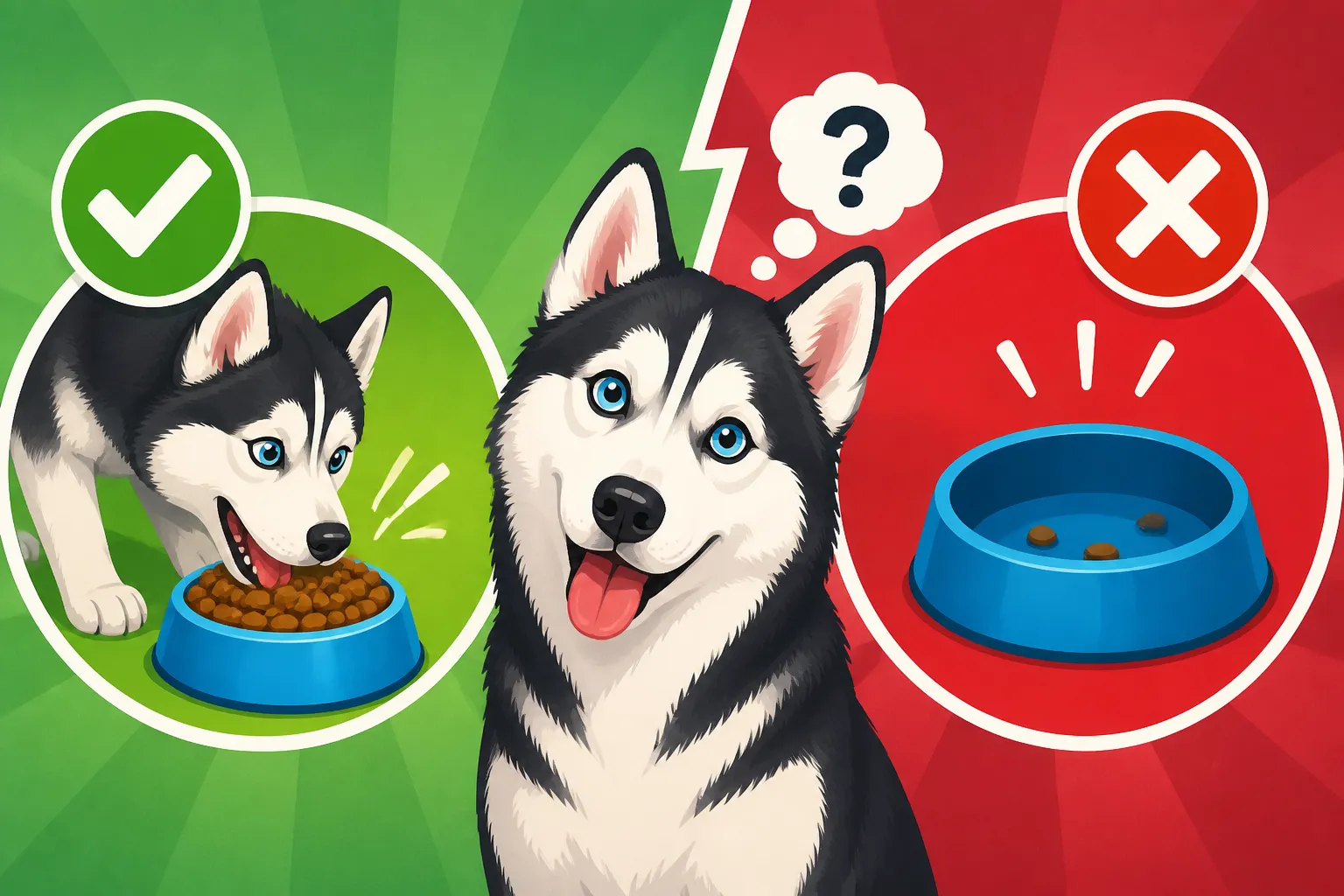
- Offer for a Limited Time: Put the food down for 15-20 minutes. If your Husky doesn't eat it within that window, pick up the bowl. Do not offer any more food until the next scheduled mealtime.
- No Snacks (Initially): During the transition, minimize treats or human food scraps. You want them to understand that their main nutrition comes at scheduled mealtimes.
- Stay Strong: It might feel cruel to pick up the food, especially if your Husky looks sad or hungry. But a healthy dog will not starve themselves. They will quickly learn the new routine.
- Be Patient: It can take a few days, or even a week, for some Huskies to fully adjust. Consistency is paramount. Once they understand the new rules, you'll find they often eat their meals with more enthusiasm.
Remember, this isn't about withholding food to punish them, but about establishing a healthy routine. Brands like Chewy and Ollie often have great guides on transitioning foods, and the same principles apply here for transitioning feeding styles.
Making Mealtime Engaging and Rewarding
Scheduled meals don't have to be boring. In fact, they're a perfect opportunity to add some enrichment to your Husky's day. Instead of just putting a bowl down, consider:
- Puzzle Feeders: These can turn mealtime into a mental exercise. Your Husky has to work to get their food, which can be incredibly satisfying and reduce boredom. There are many types available on Amazon or Chewy, from simple slow-feeder bowls to more complex interactive toys. Using a Puzzle Feeders a Siberian Husky Cannot Beat can be a fantastic way to engage their intelligent minds.
- "Work to Eat": Have your Husky perform a few basic commands (sit, stay, down) before you set the bowl down. This reinforces good behavior and makes them "earn" their meal, tapping into their desire to work.
- Location Variety (Occasionally): Sometimes, feeding your Husky in a different spot (a secure yard, a different room) can add novelty and mental stimulation, especially if you have a Siberian Husky That Panics in a Crate and want to make their crate a more positive place for meals.
- Frozen Kongs: If your Husky tends to eat too quickly, stuffing a Kong with their kibble (maybe moistened and frozen) can slow them down and extend mealtime, providing longer-lasting entertainment.
By moving to a structured feeding schedule, you're not just managing your Siberian Husky's food intake; you're actively contributing to their overall health, well-being, and a more harmonious life together.
Disclaimer
This article is for general informational purposes only and does not constitute professional advice. Laws, prices and regulations vary by location and change over time. Consult a qualified professional for guidance on your specific situation.