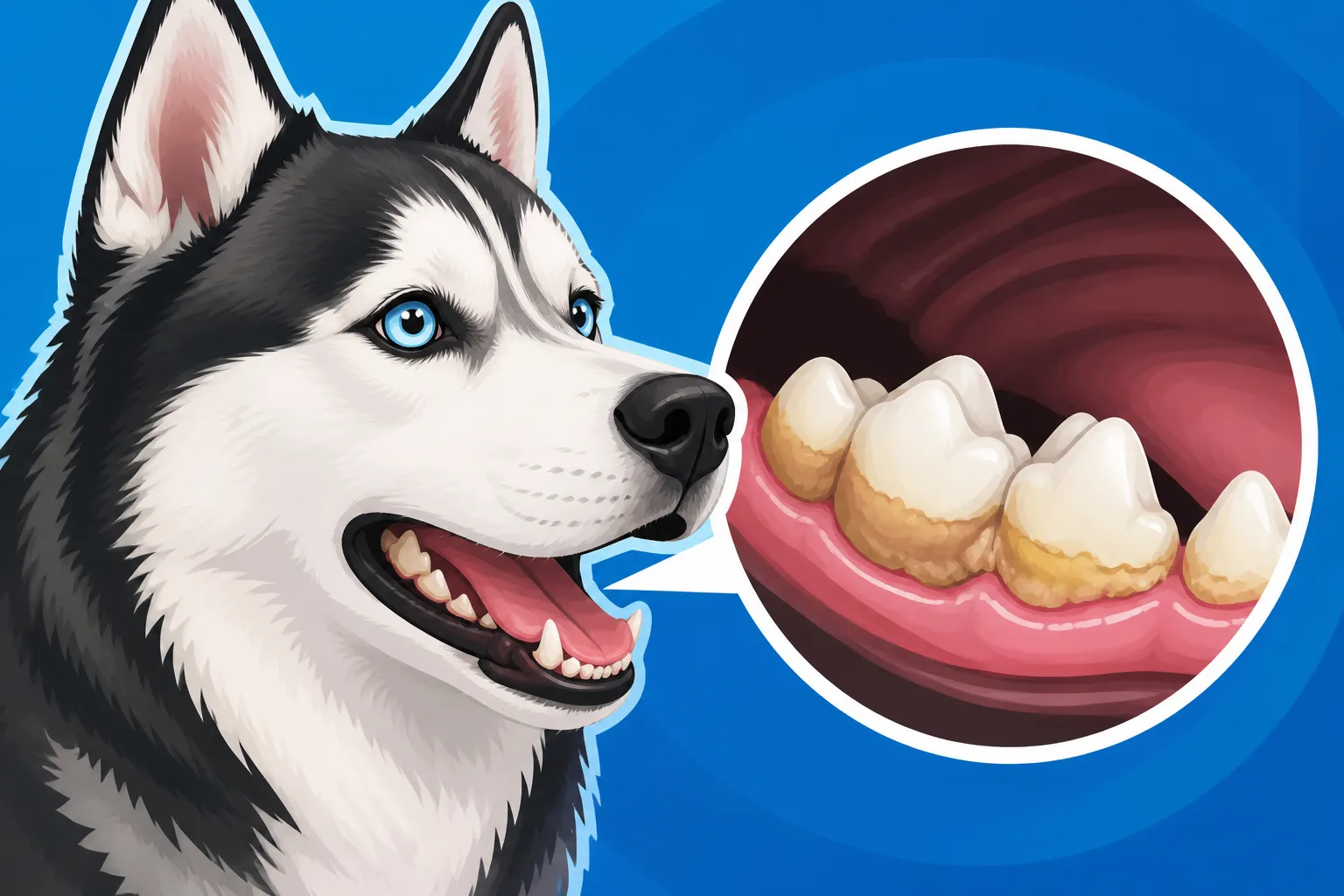
Tartar on a Siberian Husky’s Back Teeth
It’s a common frustration for Siberian Husky owners: you open your sweet dog’s mouth for a quick peek, maybe after noticing a bit of less-than-fresh breath, and there it is. That yellowy-brown buildup, often clinging stubbornly to those back molars. It can feel like you just brushed their teeth yesterday, or perhaps, like you’ve been meaning to start brushing and now the evidence is glaring. Tartar on a Siberian Husky’s back teeth isn’t just an aesthetic problem; it’s a red flag for their overall health, and understanding why it happens and what to do about it is crucial for every husky parent. This guide will walk you through the specifics of tartar formation, how to spot it, and, most importantly, how to tackle it head-on to keep your husky’s mouth healthy and happy.
Understanding Tartar Buildup in Siberian Huskies
Tartar, also known as dental calculus, is the hardened form of plaque. Plaque itself is a sticky film of bacteria, food particles, and saliva that constantly forms on your dog's teeth. If not removed, it mineralizes and turns into that hard, rough substance we call tartar. For many husky owners, it feels like an uphill battle, especially when you compare your dog’s gleaming canine teeth to the crusty molars tucked away at the back.
Why Back Teeth Are Particularly Vulnerable
When you think about how your husky chews, it makes a lot of sense why those back teeth take the brunt of the tartar buildup. Their powerful molars are designed for grinding, not just tearing. They're doing most of the heavy lifting when it comes to breaking down kibble, chews, or anything else that enters their mouth. Because of their location deep within the mouth, these teeth often have less exposure to the natural scrubbing action that might occur on the front teeth, which are more involved in nipping and tearing.
Additionally, the architecture of a dog's mouth, combined with saliva flow, plays a role. The salivary glands tend to deposit minerals more readily on the surfaces of the molars and premolars. This creates a prime environment for plaque to quickly harden into tartar. It’s not just about what they eat, but how they eat and where those natural cleaning mechanisms are weakest. You might diligently provide dental chews, only to find the front teeth sparkling while the back ones remain stubbornly coated.
Another factor is the natural grinding motion. While some chewing is beneficial for scraping off plaque, if the diet doesn't provide enough abrasive action, or if the dog has a malocclusion (misalignment of teeth), certain surfaces of the back teeth might be missed entirely. Over time, these missed spots become perfect breeding grounds for plaque to settle and mineralize without interruption. It's a silent process that often goes unnoticed until the tartar is well-established, making it much harder to remove.
The Progression from Plaque to Hardened Tartar
It all starts innocently enough with plaque. Imagine you’ve just given your husky their dinner. Within hours, that thin, invisible film of plaque begins to form on their teeth. This film is a mix of bacteria from their mouth, tiny bits of food, and proteins from their saliva. It’s a bit like the fuzzy feeling you get on your own teeth if you skip brushing for a day.
If this plaque isn't mechanically removed through brushing, chewing, or certain dental products, it starts to change. Minerals present in your husky's saliva, particularly calcium, begin to bind with the plaque. This process, called mineralization, causes the soft, sticky plaque to harden into tartar. Once tartar forms, it’s much more difficult to remove. It adheres firmly to the tooth enamel, often creating a rough surface that attracts even more plaque, accelerating the cycle.
The color of tartar can range from a light yellow or brown to a dark, almost black hue, depending on its age and the presence of blood from irritated gums. You might even notice your husky’s gums appearing red and swollen where the tartar meets the gumline. This is gingivitis, the first stage of periodontal disease. At this point, home care alone is rarely enough to reverse the damage, and professional intervention becomes the most effective, if not only, solution. This progression is why early detection and consistent preventive measures are so vital.
The Impact of Diet on Tartar Formation
Diet plays a significant, though often misunderstood, role in the development of tartar. Many owners believe that feeding crunchy kibble automatically keeps teeth clean. While some specialized dental kibble designs can help scrape plaque, general kibble often shatters upon impact, providing minimal abrasive action against the tooth surface. Think about it: a hard piece of kibble might clean the tip of the tooth, but it won't necessarily reach the gumline or the crevices where plaque loves to hide.
Soft, wet foods, while often enjoyed by huskies, typically offer even less mechanical abrasion. These diets, while great for hydration and palatability, contribute very little to plaque removal. If your husky primarily eats wet food, their dental care routine needs to be even more rigorous to compensate. It's not that wet food is "bad" for teeth, but it doesn't provide the incidental cleaning that a more abrasive diet might offer. This is where supplements and other dental hygiene tools come into play, as the food itself won't be doing the heavy lifting.
Beyond texture, the composition of the food can also matter. Diets high in fermentable carbohydrates can potentially contribute to a more acidic oral environment, which might encourage bacterial growth. While the main culprit is the lack of mechanical cleaning, a balanced diet is part of an overall health strategy. Some commercial brands like Ollie focus on fresh, less processed ingredients, but even with high-quality food, the physical act of cleaning remains paramount. No food, no matter how premium, is a substitute for active dental care.
Recognizing the Signs and Risks of Dental Disease
Many husky owners feel a pang of guilt when they realize their dog has dental problems because the signs can be so subtle at first. They’re such stoic dogs, often hiding discomfort until it’s quite advanced. You might even think a bit of bad breath is just "dog breath," but in reality, it's often the first strong indicator that something more serious is brewing beneath the surface. Knowing what to look for and understanding the potential risks can help you catch issues early.
Subtle Clues Beyond Bad Breath
While bad breath, or halitosis, is indeed the most common and often the first noticeable sign of dental disease, there are many other subtle clues that your husky might be experiencing discomfort. They might start to show a slight preference for chewing on one side of their mouth, or you might notice them dropping food more frequently. Perhaps they’re less enthusiastic about their favorite chew toy, or they're taking longer to finish their meals. Sometimes, a husky with dental pain might become a bit more withdrawn or irritable, though this can be mistaken for other behavioral changes.
Other physical signs include red, swollen, or bleeding gums, especially along the gumline where the tooth meets the tissue. You might also spot some drooling, or even a bit of blood in their saliva, particularly after chewing. If you gently lift their lips, you might see yellowish-brown or even green-tinged tartar accumulating on the teeth, particularly those back molars. Sometimes, you’ll notice a distinct change in their gum color, or even pus around the tooth base in more severe cases. These are clear indicators that gingivitis has progressed, and the underlying structures supporting the teeth are being affected.
Don't forget to observe their facial expressions and general demeanor. A husky in dental pain might paw at their mouth, rub their face against furniture or the floor, or become sensitive to touch around their muzzle. They might also shy away when you try to examine their mouth. These seemingly small changes can add up to a significant message: your dog is uncomfortable. Regularly checking your husky's mouth, even just a quick lift of the lip, can help you catch these details before they escalate. For more information, consider reading Siberian Husky Dental Disease by Age Five.
The Serious Health Implications of Untreated Tartar
Untreated tartar is far more than just a cosmetic problem; it's a gateway to serious health complications for your Siberian Husky. The bacteria present in plaque and tartar don't just stay in the mouth. As periodontal disease progresses, these bacteria can enter the bloodstream, traveling to other vital organs. This systemic spread of bacteria can lead to inflammation and infection in places like the heart, kidneys, and liver, potentially contributing to more serious conditions like heart valve infections or kidney disease. It's a frightening thought, but a real risk that every husky owner needs to be aware of.
Beyond systemic issues, severe periodontal disease can cause excruciating pain for your dog. Imagine having a constant toothache or infected gums. This pain can impact their quality of life, leading to difficulty eating, weight loss, and a general reluctance to engage in play or activity. It can also lead to tooth loss, as the supporting bone structure around the teeth erodes. In advanced cases, the infection can become so severe that it creates an oronasal fistula, a hole between the oral cavity and the nasal cavity, leading to chronic nasal discharge and sneezing.
The bone loss associated with severe dental disease can also weaken the jawbone, particularly in smaller breeds, making it prone to fractures. While Siberian Huskies are sturdy dogs, the chronic inflammation and infection can still take a toll on their immune system and overall vitality. Addressing dental health is not just about fresh breath; it's about protecting their long-term health and ensuring they live a comfortable, pain-free life. It's truly one of the Siberian Husky Lifespan and What Shortens It factors that are often overlooked.
When to Seek Professional Veterinary Help
The moment you spot significant tartar buildup, notice persistent bad breath, or observe any of the subtle signs of discomfort we discussed, it's time to schedule a visit with your veterinarian. Don't wait until your husky is clearly in pain or refusing to eat. Early intervention is key to preventing the progression of dental disease and its associated health risks. Your vet can perform a thorough oral examination and recommend the next steps, which will almost certainly involve a professional dental cleaning.
A professional dental cleaning, often referred to as a dental prophylaxis or "prophy," involves much more than just scraping visible tartar. It’s typically performed under general anesthesia, allowing the vet to thoroughly examine every tooth, including those below the gumline. They will scale off all plaque and tartar, both above and below the gum, and then polish the teeth to smooth the enamel, making it harder for new plaque to adhere. X-rays are often taken to assess the health of the tooth roots and jawbone, which can reveal hidden problems like abscesses or bone loss that aren't visible to the naked eye. This is why a regular Wellness Visit Costs for a Siberian Husky should always include a dental check.
If you’re concerned about the cost or the anesthesia, discuss these concerns openly with your vet. They can explain the procedure, potential risks, and benefits in detail. The reality is that an untreated dental infection can lead to far more expensive and invasive treatments down the line, not to mention the suffering it causes your husky. Don't let fear or cost deter you from seeking the care your dog needs. For older huskies, specifically, discussing Anesthesia Risk in a Senior Siberian Husky is a critical conversation to have with your vet, as the benefits of a clean mouth often outweigh the risks.
Strategies for Managing and Preventing Tartar
Dealing with tartar on your husky's back teeth can feel overwhelming, especially if it's already a significant problem. But the good news is there are effective strategies, both professional and at-home, that can make a real difference. The key is consistency and finding a routine that works for both you and your strong-willed husky.
The Gold Standard: Professional Dental Cleanings
As mentioned, professional dental cleaning under anesthesia is truly the gold standard for treating and managing existing tartar and periodontal disease. There's simply no substitute for a thorough cleaning by a trained veterinary professional. During this procedure, the vet can access all tooth surfaces, including the critical area below the gumline, where much of the destructive periodontal disease occurs. They use specialized ultrasonic and hand scaling tools to remove tartar, followed by polishing to create a smooth surface that inhibits future plaque adhesion.
Beyond the visible cleaning, the anesthetic procedure allows for detailed oral examination and dental X-rays. These X-rays are invaluable because about two-thirds of the tooth structure is hidden beneath the gumline, where problems like root abscesses, bone loss, or unerupted teeth can fester unseen. Without X-rays, many significant issues would be missed, leading to continued pain and disease for your husky. It's often during these procedures that vets discover a severely compromised tooth that needs extraction, bringing immense relief to a dog that has been silently suffering.
The frequency of these cleanings will depend on your husky’s individual needs, their genetic predisposition to dental issues, and your commitment to home care. Some huskies might need a professional cleaning every year, while others, with diligent home care, might go two or three years between procedures. Your vet will assess your dog’s oral health and help you determine the appropriate schedule. Remember, investing in these cleanings is investing in your husky’s overall health and comfort. You might also find value in reading about Dental Cleaning Costs for a Siberian Husky to help budget for this essential care.
Daily Home Care: Brushing and Alternatives
Let's be realistic: convincing a Siberian Husky to sit still for daily tooth brushing can be a challenge. They are often not the most cooperative patients for this kind of intimate care, preferring to be on the move. However, brushing remains the single most effective way to prevent plaque from turning into tartar on a daily basis. Start slowly, make it a positive experience with lots of praise and treats, and aim for at least a few times a week, if not daily. Use a pet-specific toothbrush and toothpaste (never human toothpaste, as it contains ingredients toxic to dogs). Focus on the outside surfaces of the back teeth, where tartar tends to accumulate most heavily. For detailed guidance, check out Whether a Siberian Husky Needs Its Teeth Brushed.
If daily brushing is simply not feasible, don't despair; there are alternatives. Dental wipes or finger brushes can be easier for some owners to maneuver. Water additives designed to reduce plaque bacteria can be a simple addition to their drinking water, though their efficacy varies. There are also dental rinses that can be applied directly to the gums. The key is to find a method that you can consistently implement. Even a few minutes a day of targeted attention to their back teeth can make a world of difference in slowing tartar accumulation.
For those moments when you just can't get into their mouth, consider a robust chew. Not just any chew, but those specifically formulated and designed for dental health, often carrying a Veterinary Oral Health Council (VOHC) seal of approval. These chews typically have a texture and shape designed to scrape plaque from the tooth surface as your dog chews. Brands like Greenies or dental sticks available on Chewy or Amazon can be helpful. However, always supervise your husky with chews to prevent choking or broken teeth, and remember they are supplements to, not replacements for, other forms of dental care.
Diet and Chews: What Really Helps
Beyond the act of brushing or using dental wipes, what you feed your Siberian Husky and the chews you provide can play a supporting role in managing tartar. When it comes to kibble, don't assume all "crunchy" food helps. Look for specific dental diets designed with larger, fibrous kibble that forces the dog to chew more thoroughly, providing a scrubbing action on the tooth surface. These specialized diets often contain ingredients that help prevent tartar formation. It's not about how hard the kibble is, but its design and how it interacts with the teeth during chewing.
Raw bones can sometimes be advocated for dental health, but they come with significant risks, including fractured teeth, internal blockages, and bacterial contamination. If you choose to offer bones, always opt for raw, appropriately sized recreational bones (not weight-bearing bones from large animals) and supervise closely. Better yet, stick to safe, veterinarian-approved dental chews that are designed to be digestible and pose less risk of tooth breakage. Always research and choose products carefully, avoiding anything too hard that could damage their strong jaws or teeth.
Remember, even the best diet or chew is only one piece of the puzzle. While a good diet can help support oral health, it cannot reverse established tartar or treat periodontal disease. Think of diet and chews as preventive tools, but brushing and professional cleanings are the heavy hitters in the fight against tartar. This is especially true for a breed like the Siberian Husky, known for its efficient metabolism, which means Why a Siberian Husky Eats Less Than a Labrador but still needs specific nutrients to support all bodily functions, including dental health.
| Dental Care Method | Effectiveness for Tartar Removal | Prevention Score (1-5) | Effort Level (1-5) | Notes |
|---|---|---|---|---|
| Professional Dental Cleaning | High (removes existing tartar) | 5 | 5 (requires vet visit/anesthesia) | Essential for existing tartar and below-gumline issues. |
| Daily Tooth Brushing | High (prevents plaque/tartar) | 4 | 4 (daily commitment) | Most effective home care. Pet-specific toothpaste is crucial. |
| VOHC-Approved Dental Chews | Moderate (prevents plaque) | 3 | 1-2 (easy to give) | Supplements brushing, but doesn't replace it. Supervise always. |
| Dental Wipes/Finger Brushes | Moderate (removes plaque) | 3 | 3 (consistent effort) | Good alternative for huskies resistant to traditional brushing. |
| Water Additives/Rinses | Low-Moderate (reduces plaque bacteria) | 2 | 1 (very easy) | Least effective on their own, best used as part of a multi-pronged approach. |
| Specialized Dental Kibble | Moderate (mechanical abrasion) | 3 | 1 (part of diet) | Look for VOHC seal. Not all "crunchy" kibble is dental-specific. |
Living With a Siberian Husky Prone to Dental Issues
It’s easy to feel defeated when your husky seems to develop tartar faster than you can keep up, or when you’re facing another professional cleaning bill. But remember, you’re not alone. Many husky owners navigate these very same challenges. The key is to develop a long-term, sustainable strategy that integrates dental care into your life and your dog’s routine, understanding that it's an ongoing commitment.
Creating a Realistic Dental Routine
The first step is to assess your lifestyle and your husky’s personality. Is your husky generally tolerant of having their mouth handled? Do you have a consistent block of time each day, or even a few times a week, that you can dedicate to brushing? Be honest with yourself. If daily brushing for five minutes isn't realistic, don't set yourself up for failure. Instead, commit to something you can do, like a quick 60-second brush three times a week, combined with a VOHC-approved dental chew daily.
Make dental care a positive experience from the start. Associate it with high-value treats and praise. For instance, after a quick brush of those back teeth, immediately reward your husky with something they absolutely love. This creates a positive association, making them more likely to tolerate it next time. Some huskies might do better if dental care is integrated into a larger grooming routine, like after a quick brush-down, while others might prefer it as a separate, quick session. Experiment to find what works for your unique dog.
Remember that consistency beats intensity. A little bit of care regularly is far more effective than an intense session once a month. Set reminders on your phone, keep dental supplies readily accessible, and involve other family members if possible. Even if you miss a day, don't give up. Just pick up where you left off. Over time, these small, consistent efforts will accumulate and make a significant difference in your husky’s oral health, potentially delaying the need for their next Dental Cleaning Costs for a Siberian Husky.
Monitoring and Adapting Your Approach
Dental health is not a one-and-done solution; it’s a journey that evolves throughout your husky’s life. What works for a young, active husky might need adjustment for an older one. Regularly monitor your husky’s mouth, ideally once a week, for any new tartar buildup, red gums, or unusual smells. Early detection allows for prompt action, which can often prevent minor issues from becoming major problems. You can even read up on What Changes in a Siberian Husky After Nine to prepare for age-related dental issues.
As your husky ages, their dental needs might change. Older huskies can be more prone to dental issues, including advanced periodontal disease, tooth root abscesses, and even some forms of oral cancer. Their immune systems might not be as robust, making them more susceptible to the systemic effects of dental infections. This is when your vet becomes an even more crucial partner in managing their oral health. They might recommend more frequent professional cleanings or suggest specific dietary modifications or supplements.
Don't be afraid to adapt your routine. If a particular toothbrush isn't working, try a different style. If your husky hates the taste of one toothpaste, try another flavor. There are many options available through retailers like Chewy and Amazon, so you can experiment to find what your dog tolerates best. The goal is to keep their teeth as clean as possible for as long as possible, ensuring their comfort and overall well-being throughout their magnificent lives.
Disclaimer
This article is for general informational purposes only and does not constitute professional advice. Laws, prices and regulations vary by location and change over time. Consult a qualified professional for guidance on your specific situation.