A Siberian Husky That Hesitates in Dim Rooms
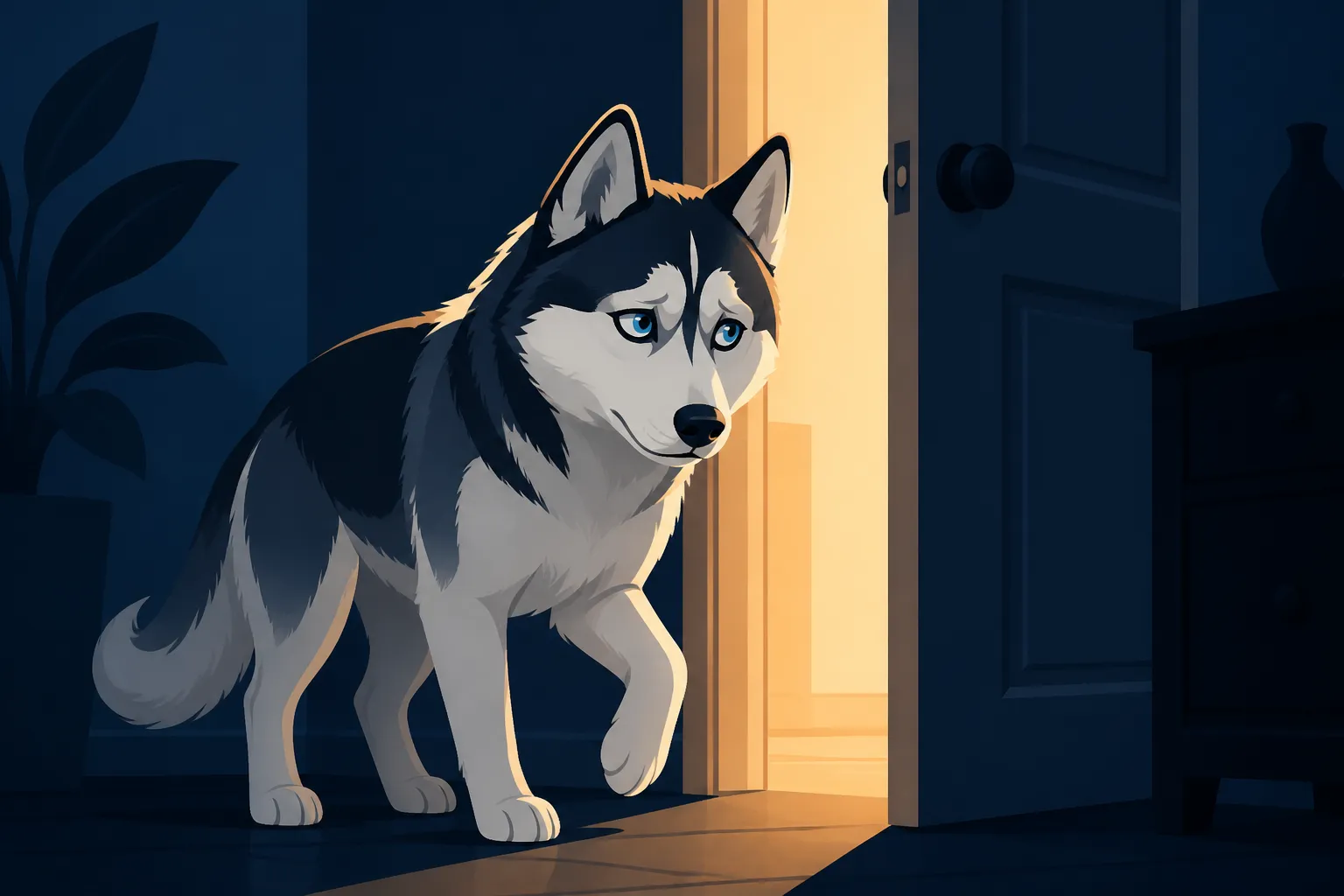
It’s unsettling to watch your usually confident Siberian Husky suddenly hesitate at the threshold of a dimly lit room, bumping into furniture, or acting unusually clumsy when the lights are low. This change in behavior isn't just a quirk; it's a clear signal that something might be affecting their vision, especially in challenging lighting conditions. This guide will walk you through the common reasons your husky might be struggling in dim light, what those hesitations could mean for their health, and how to best support them.
Understanding Vision in Siberian Huskies
Siberian Huskies are truly remarkable dogs, bred for endurance and speed in vast, often dimly lit snowy landscapes. Their eyes are naturally adapted to see well in low light, benefiting from a high rod-to-cone ratio in their retinas, which aids scotopic (low-light) vision. So, when a husky starts showing reluctance or clumsiness in dim environments, it's a significant departure from their natural abilities and warrants attention.
This hesitation isn't just about bumping into things; it can manifest as a general unwillingness to move from a brightly lit area to a darker one, a sudden slowness, or even a startled reaction to objects they usually navigate easily. Owners often notice it first when their husky enters a hallway after sundown, or when they transition from a well-lit living room to a darker backyard. It’s a subtle shift that, over time, can impact their confidence and quality of life. Understanding the nuances of their vision is the first step in addressing any underlying issues.
The Husky's Excellent Low-Light Adaptations
Siberian Huskies, much like their wild ancestors, possess several physiological adaptations that allow them to thrive in low-light conditions. Their large pupils can dilate extensively, allowing maximum light collection. More crucially, their retinas are rich in rod photoreceptor cells, which are responsible for detecting movement and vision in low light, rather than cones, which handle color and detailed vision. This rod-dominant retina is why they excel in twilight or moonlight conditions. They also have a tapetum lucidum, a reflective layer behind the retina that acts like a mirror, bouncing light back through the retina to give the photoreceptor cells a second chance to absorb it. This is what gives many animals, including huskies, the characteristic "eyeshine" you see in photos.
It's this very efficiency in low-light vision that makes any difficulty in dim rooms particularly alarming. A husky shouldn't be struggling in conditions that most other breeds might find challenging. If you notice your dog hesitating where they once walked with confidence, it's a red flag. Their peripheral vision is also typically excellent, helping them navigate wide, open spaces. Any loss or impairment of this natural advantage can make them feel vulnerable and hesitant.
How to Observe Changes in Your Husky's Dim Light Vision
Observing subtle changes in your husky's behavior in dim light requires a keen eye and consistency. It’s not always an overnight transformation; often, it's a gradual decline that can be easy to miss amidst their usual antics. Start by paying close attention during routine transitions. Does your husky pause longer than usual at the doorway between a lit kitchen and a darker living room? Do they rely more on sniffing the ground or tapping their paws to gauge their surroundings in less illuminated areas?
Another good indicator is their interaction with familiar objects. A husky with normal vision will effortlessly weave around furniture or toys in their own home, even in low light. If they start bumping into the coffee table they’ve navigated a thousand times, or seem hesitant to jump onto a favorite couch in the evening, it’s worth noting. Also, watch their confidence during evening walks. Are they more hesitant to step off the curb or navigate uneven terrain in fading light? Keeping a small journal or even just a mental note of these instances can help you track the progression and provide valuable information to your veterinarian.
Common Eye Conditions Affecting Low-Light Vision
When a Siberian Husky starts to struggle in dim light, it's almost always related to an underlying eye condition. These conditions can range from genetic predispositions to age-related changes, but they all share the common thread of impacting the delicate structures responsible for vision, especially in low light. It’s crucial not to dismiss these signs, as early intervention can sometimes slow progression or manage discomfort.
Several conditions can affect a husky's ability to see clearly in dim environments, and understanding them is key to addressing the issue effectively. Some are specific to the breed, while others are more general but still prevalent. If you're noticing changes, it's time to dig a little deeper.
Progressive Retinal Atrophy PRA
Progressive Retinal Atrophy (PRA) is perhaps one of the most concerning diagnoses when it comes to a husky's night vision. It's a group of degenerative diseases that affect the photoreceptor cells (rods and cones) in the retina, eventually leading to blindness. In many forms of PRA, the rod cells, which are crucial for low-light vision, degenerate first. This means that a dog with PRA will typically experience "night blindness" as one of the very first symptoms. Imagine trying to see in the dark when your night vision has been slowly fading; that's what your husky might be experiencing.
A Siberian Husky that hesitates in dim rooms could very well be exhibiting early signs of PRA. You might notice them being completely fine during the day, happily chasing balls and navigating their environment, only to become clumsy and fearful as dusk settles or when entering a dimly lit hallway. Over time, as the disease progresses, their daytime vision will also begin to deteriorate, leading to complete blindness. Because this is a genetic condition, reputable breeders screen for it. If you suspect PRA, a visit to a veterinary ophthalmologist is essential. You can learn more about this serious condition in our article, Progressive Retinal Atrophy in Siberian Huskies.
Cataracts and Nuclear Sclerosis
Cataracts are another common culprit behind a husky's struggles in low light. A cataract is any opacity or clouding of the lens of the eye. Think of it like a frosted window pane; the more frosted it becomes, the harder it is for light to pass through. While severe cataracts can cause significant vision loss even in bright light, early or developing cataracts might primarily interfere with light reaching the retina, particularly when light levels are already low. This can make dimly lit areas feel even darker and more confusing for your husky.
In Siberian Huskies, cataracts can appear at different ages. Juvenile Cataracts in the Siberian Husky can develop early in life, sometimes even before a year old, while others are age-related. It's important to distinguish cataracts from nuclear sclerosis, which is a normal, age-related hardening and graying of the lens that often doesn't significantly impair vision. While both can make the lens appear cloudy, nuclear sclerosis usually allows light to pass through fairly well. A vet ophthalmologist can easily tell the difference. If your husky's vision in dim light is declining, and you notice a cloudiness in their eyes, it's worth getting it checked out.
Glaucoma
Glaucoma is an incredibly painful and serious eye condition that can lead to rapid blindness if not treated promptly. It’s characterized by increased pressure within the eye, which damages the optic nerve and retina. While often associated with sudden, severe eye pain, redness, and a bulging appearance, even chronic, low-grade glaucoma can subtly impact vision, especially in dim light. The increased pressure can compromise the function of the retina, making it harder for the eye to adapt to changes in light.
A husky experiencing early or chronic glaucoma might not show overt signs of pain but could become increasingly reluctant to enter dim areas, or might blink excessively. This is because the visual field can be compromised, and the pressure can cause a dull ache. Glaucoma is a veterinary emergency, and if you ever notice sudden redness, squinting, or a cloudy eye in combination with your husky’s dim light hesitation, seek immediate veterinary care. Catching it early is paramount for potentially saving your dog's sight. Our article, Glaucoma as a Siberian Husky Emergency, provides more critical details.
Veterinary Consultation and Diagnosis
When your Siberian Husky starts to show hesitation in dim rooms, your first step should always be a consultation with your veterinarian. Don't wait until the problem becomes severe. Early diagnosis can make a world of difference in managing eye conditions and preserving your dog's quality of life. Your general vet can perform an initial examination, but often, they will recommend a specialist.
It's common for general practitioners to refer eye cases to a board-certified veterinary ophthalmologist. These specialists have advanced training and equipment to accurately diagnose and manage complex eye conditions. They can distinguish between different types of vision loss and determine the best course of action. When considering the costs involved, pet insurance providers like Healthy Paws can often help cover specialist visits and diagnostic tests, offering peace of mind during a stressful time.
What to Expect at the Vet
When you bring your husky to the vet for dim light hesitation, expect a thorough examination. Your vet will likely start with a general physical exam, but their focus will quickly shift to your dog's eyes. They will perform a basic ophthalmic exam, which includes checking the eyelids, conjunctiva, cornea, and iris. They might use an ophthalmoscope to look at the retina and optic nerve at the back of the eye. They'll also check your dog's menace response (blinking when an object approaches their eye) and pupillary light reflexes to see how their pupils react to light.
If the general vet suspects an underlying eye condition, they will likely recommend a referral to a veterinary ophthalmologist. The specialist will conduct a more detailed examination, often including tests like:
- Schirmer Tear Test: Measures tear production to check for dry eye.
- Fluorescein Stain: Detects corneal ulcers or abrasions.
- Tonometry: Measures the intraocular pressure (IOP) to check for glaucoma.
- Electroretinography (ERG): This is a specialized test that measures the electrical responses of the retina to light. It's particularly useful for diagnosing conditions like PRA, even before visible changes occur.
- Gonioscopy: Examines the drainage angle of the eye, which is relevant for glaucoma.
- Ocular Ultrasound: Can be used to look for problems behind the lens or in cases where the lens is too opaque to see through.
Bringing a detailed history of when you first noticed the signs, how they've progressed, and any other symptoms will be incredibly helpful to the vet. For more about general check-ups, see our guide on Siberian Husky Vet Visits by Life Stage.
Diagnostic Tests for Eye Conditions
Pinpointing the exact cause of your husky's dim light struggles often requires specialized diagnostic tests. As mentioned, an ERG is particularly powerful for detecting early retinal degenerations like PRA. This test involves placing electrodes near the eye and flashing lights, then recording the electrical activity generated by the retina. It’s non-invasive, though your dog might need mild sedation to remain still.
For cataracts, the ophthalmologist will dilate your husky's pupils to get a clear view of the lens. They can then assess the size, location, and density of any cataracts. This helps determine if surgery is a viable option. If glaucoma is suspected, tonometry is critical. This involves touching a specialized probe to the surface of the eye to measure pressure, a quick and generally painless procedure.
Common Diagnostic Tests for Eye Conditions in Huskies
| Test Name | What It Measures | Primary Conditions Detected | How It Helps with Dim Light Hesitation |
|---|---|---|---|
| Electroretinography (ERG) | Electrical activity of retinal photoreceptors | Progressive Retinal Atrophy (PRA) | Directly identifies retinal degeneration causing night blindness |
| Slit Lamp Biomicroscopy | Detailed structures of the anterior eye | Cataracts, corneal issues, uveitis | Visualizes lens clouding (cataracts) impacting light transmission |
| Tonometry | Intraocular pressure (IOP) | Glaucoma | Detects increased pressure that can damage retina and optic nerve |
| Ophthalmoscopy | Structures of the retina and optic nerve | Retinal detachment, optic nerve damage, PRA | Assesses overall retinal health and signs of degeneration |
| Gonioscopy | Drainage angle of the eye | Primary Glaucoma risk | Identifies anatomical predispositions to glaucoma |
Genetic testing is also available for certain inherited eye diseases, including some forms of PRA. If your husky's breed history is known, this could be a helpful diagnostic tool, especially if you have a puppy. These tests provide clear answers that allow for targeted treatment plans and help you understand your husky's long-term prognosis.
Living with a Husky's Dim Light Challenges
Discovering that your beloved Siberian Husky is struggling with their vision in dim light can be heartbreaking, especially when a diagnosis like PRA is confirmed. However, a diagnosis isn't the end of the road; it's the beginning of a new chapter where you can actively support your husky and ensure they maintain a good quality of life. Huskies are incredibly resilient, and with your help, they can adapt remarkably well to vision loss.
Managing their environment and routine becomes paramount. It's about making their world predictable, safe, and comfortable. This might involve simple changes around the house, adjustments to their exercise routine, and ensuring consistent veterinary care to monitor their condition. Remember, your husky still loves you just as much, and your reassurance is key to their continued happiness.
Environmental Adjustments and Safety
Making your home safe and navigable for a husky with compromised dim light vision is crucial. Their world becomes one of predictability and familiar scents. The first, most obvious step, is to maximize lighting. Install nightlights in hallways, bathrooms, and any areas where your husky frequently transitions from light to dark. Consider motion-activated lights, especially for outdoor potty breaks in the evening. Keeping a consistent lighting schedule can also help.
Beyond lighting, spatial consistency is key. Avoid rearranging furniture. If you must move something, do so gradually and help your husky explore the new layout with you. Keep paths clear of clutter, especially toys or shoes that could become tripping hazards. Placing rugs or textured mats at the top and bottom of stairs can provide tactile cues, making stairs safer to navigate. For huskies who might be completely blind, consider using baby gates to block off stairs or dangerous areas. Outdoors, ensure your yard is securely fenced, and always supervise them, especially during dusk or dawn. A GPS collar can be a lifesaver for an adventurous husky with vision impairment, like those offered by Tractive or Fi.
Routine and Confidence Building
Maintaining a consistent daily routine is incredibly important for a husky with vision challenges. Predictability reduces anxiety and builds confidence. Feed them at the same times, take them for walks on the same routes, and keep their potty breaks consistent. This allows them to create a mental map of their environment and anticipate events.
When walking, always use a leash and harness. A front-clip harness or a head halter can give you better control and guidance without putting pressure on their neck. Let them sniff and explore at their own pace. Verbal cues are your best friend. Start teaching them verbal commands like "step up," "step down," "wait," "left," and "right" to guide them through obstacles. Praise and treats are powerful motivators. For instance, when approaching a curb, say "step down," give a treat, and gently guide them. Over time, they'll associate the cue with the action.
Engage them in games that don't rely heavily on sight, such as scent work or puzzle toys. Hiding treats around the house for them to find is a fantastic way to stimulate their minds and use their incredible sense of smell. Interactive toys that make noise can also be very engaging. Building their confidence isn't about ignoring their vision loss, but about empowering them to thrive in their world with their other senses.
Ongoing Care and Management
Ongoing veterinary care is essential for managing your husky's eye condition. Regular check-ups with your general vet and the veterinary ophthalmologist will help monitor the progression of the disease and address any secondary issues that might arise, such as infections or discomfort. Your vet may prescribe eye drops or other medications to manage specific symptoms or slow disease progression, depending on the diagnosis. For example, if your husky has Uveodermatologic Syndrome and the Siberian Husky, eye drops will be part of the treatment.
Nutrition also plays a role in overall eye health, although it cannot cure genetic conditions. Ensure your husky is on a high-quality diet. Some supplements, like those containing antioxidants (Vitamins C and E, Lutein, Zeaxanthin) and Omega-3 fatty acids, are sometimes recommended to support eye health, although their efficacy in preventing or reversing specific conditions like PRA or cataracts is limited. Always discuss any supplements with your vet first to ensure they are appropriate and safe for your husky. Pet insurance, such as a plan from Healthy Paws, can be invaluable for covering the recurring costs of specialist visits, diagnostic tests, and ongoing medications associated with chronic eye conditions. Investing in a good policy when your husky is young can help mitigate financial stress later. Our article on Caring for a Siberian Husky Past Ten also delves into considerations for aging dogs, where vision changes are more common.
Disclaimer
This article is intended for informational purposes only and does not constitute medical advice. Always consult with a qualified veterinarian or veterinary ophthalmologist for any health concerns or before making any decisions about your pet's health or treatment plan.