Siberian Husky Eye Pain and Sudden Squinting
There's nothing quite as alarming for a Siberian Husky owner as seeing their normally vibrant, alert dog suddenly squinting or showing obvious signs of eye pain. Huskies are known for being incredibly stoic, often masking discomfort until a problem is quite advanced, so when you see them openly struggling with an eye issue, it's a clear signal that something serious is happening and needs immediate attention. This guide will walk you through the common causes of Siberian Husky eye pain and squinting, what urgent steps you can take at home, and why professional veterinary care is paramount to protecting your dog's precious sight.
Understanding Siberian Husky Eye Pain and Squinting
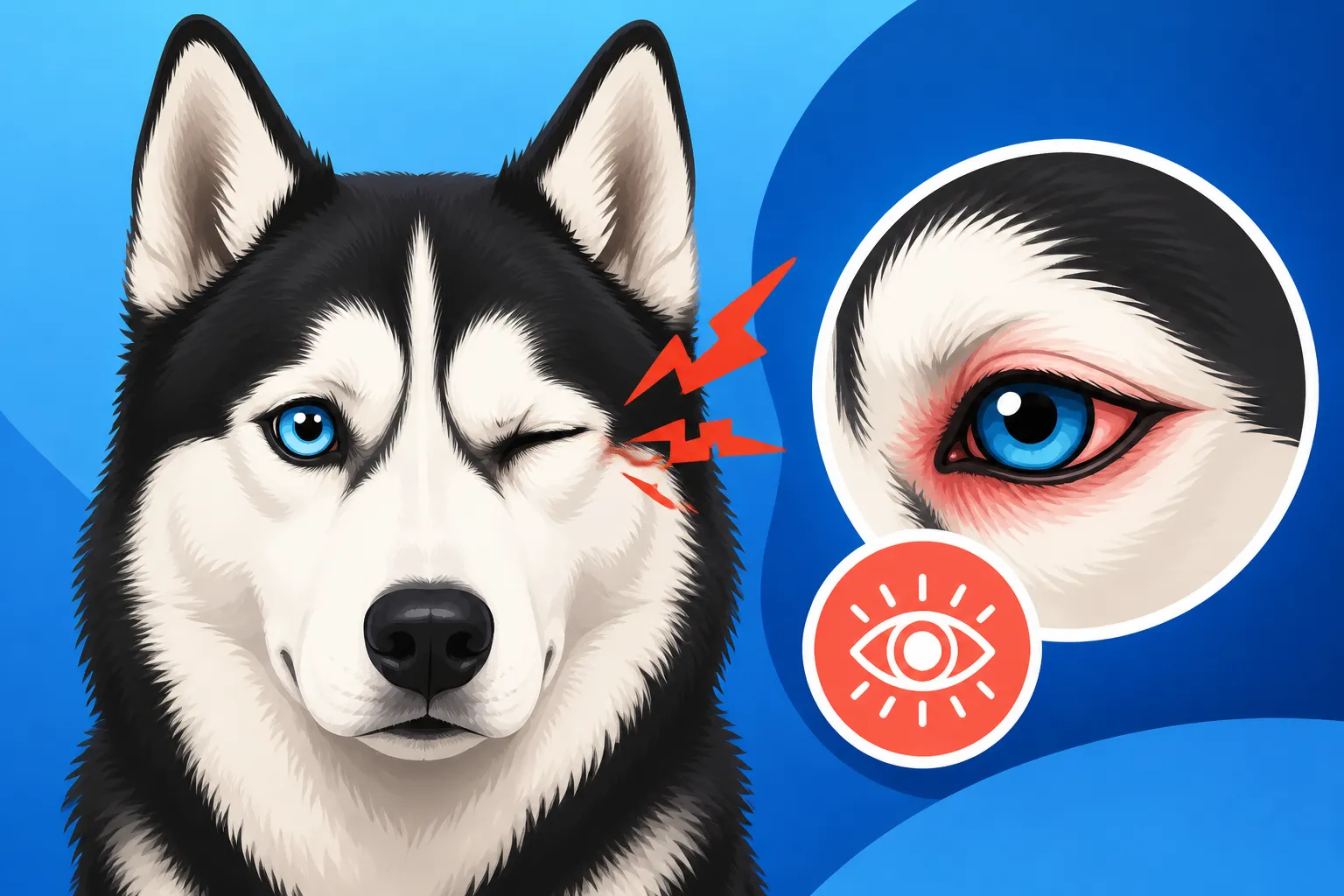
When your Husky starts squinting or rubbing their eye, it's their way of telling you that something is wrong. Squinting, medically known as blepharospasm, is an involuntary response to pain or irritation in or around the eye. It's an attempt to protect the eye from further damage or discomfort, and it's a symptom that should never be ignored, especially in a breed like the Siberian Husky, which can be prone to certain eye conditions.
Common Causes of Eye Pain and Squinting
Siberian Huskies, while generally a hardy breed, are not immune to eye problems. Their active, adventurous nature can sometimes lead to superficial injuries, but they can also inherit or develop more complex conditions. Understanding the potential culprits behind their discomfort is the first step towards getting them the right help.
One of the most frequent causes is a simple foreign body or a corneal injury. Imagine your Husky happily charging through a field of tall grass or sticking their head out the car window – a stray seed, a speck of dust, or even a tiny twig can easily lodge in the eye or cause a scratch on the delicate surface of the cornea. These seemingly minor irritations can cause significant pain, leading to constant blinking, tearing, and squinting as your dog tries to dislodge the irritant. Left untreated, these minor scratches can quickly become infected or develop into more serious corneal ulcers.
Another common issue is conjunctivitis, an inflammation of the conjunctiva, the pink membrane lining the eyelids and covering the white part of the eye. This can be caused by bacteria, viruses, or allergies. While often less painful than a corneal injury, it can still cause discomfort, redness, discharge, and, yes, squinting. Allergic conjunctivitis, for instance, might appear seasonally, making your Husky's eyes itchy and watery, which they'll try to alleviate by rubbing.
More serious conditions that can cause sudden, intense eye pain include glaucoma and uveitis. Glaucoma is a terrifying condition where pressure inside the eye rapidly increases, damaging the optic nerve and potentially leading to irreversible blindness if not treated within hours. The pain from glaucoma can be excruciating, and your Husky might suddenly develop a red, cloudy eye, often with a dilated pupil, and be visibly distressed. For a deep dive into this emergency, you can read more about Glaucoma as a Siberian Husky Emergency
Uveitis, an inflammation of the uvea (the middle layer of the eye), can also be incredibly painful and is a serious condition that requires prompt veterinary attention. In Huskies, uveitis can sometimes be a manifestation of a more systemic autoimmune issue, such as Uveodermatologic Syndrome and the Siberian Husky The symptoms often include a red eye, a constricted pupil, light sensitivity, and, of course, pronounced squinting.
Eyelid abnormalities, such as entropion (where the eyelid rolls inward, causing eyelashes to rub against the cornea) or ectropion (where the eyelid rolls outward, exposing the eye to irritants), are less common in Huskies than some other breeds but can still occur. Similarly, extra eyelashes (distichiasis) or eyelashes growing in an abnormal spot on the eyelid (ectopic cilia) can constantly irritate the eye, leading to chronic squinting and discomfort.
How to Differentiate Between Mild Irritation and Severe Pain
It can be tough to tell if your Husky is just a little bothered or if they're in significant pain, especially given their tendency to hide discomfort. However, there are some key indicators that can help you gauge the severity of the situation.
Mild irritation might manifest as occasional squinting, a little extra tearing, or perhaps a bit of clear discharge. Your Husky might rub their face against furniture or paw at their eye intermittently, but they generally won't be in constant distress. They might still be interested in playing or eating, even if they're a bit annoyed by their eye. The eye itself might look slightly red, but not intensely so, and the cloudiness or pupil dilation often associated with severe issues might be absent.
Severe pain, on the other hand, is usually more dramatic and consistent. You'll likely observe persistent, intense squinting – the eye might be held almost completely shut. Your Husky might be more withdrawn, less interested in food or activities, and might even become head-shy, pulling away if you try to examine their face. The affected eye may be noticeably red, swollen, or cloudy, and the pupil might be unusually constricted or dilated. Excessive tearing, thick discharge (yellow or green), or pawing at the eye relentlessly are all red flags. If your Husky is sensitive to light, moving to a darker room might offer some relief, which is another sign of significant discomfort. Any sudden change in the appearance of the globe of the eye, such as bulging or extreme cloudiness, indicates an emergency.
Immediate Actions When Your Husky Squints or Shows Eye Pain
When your Husky is experiencing eye pain, time is often of the essence. While you might feel a natural urge to help them yourself, it's crucial to know what you can safely do at home and, more importantly, when to rush to the vet. Delaying professional treatment, especially for conditions like glaucoma or deep corneal ulcers, can lead to permanent vision loss.
Safe At-Home Examination and Gentle Cleaning
First and foremost, approach your Husky calmly and gently. Even the most docile dog can snap when in pain, especially if you're trying to touch a sensitive area like their eye. If they resist or show signs of aggression, stop immediately. Your safety and their comfort are paramount.
Once they're relaxed, try to get a good look at the affected eye without directly touching it. Pull back the eyelids gently with clean hands, if your Husky allows, to look for any obvious foreign objects, redness, swelling, or discharge. Compare it to the unaffected eye – is one pupil larger or smaller? Is there any cloudiness on the surface of the eye? Look for obvious scratches or punctures.
If you spot any discharge or debris that looks like it could be easily rinsed away, you can attempt a gentle flush with a sterile saline solution. Make sure it's a plain saline solution, similar to what's used for contact lenses, and not an eye wash containing medications or harsh chemicals. Squirt the solution gently into the eye, aiming to flush out any irritants. Do not use tap water, as it's not sterile and can contain bacteria that might worsen the situation.
It's vital to stress this: do not, under any circumstances, try to remove embedded foreign objects yourself. Do not apply any eye drops you might have on hand from a previous issue or human eye drops, unless specifically instructed by a vet. Many common veterinary eye drops contain steroids, which can be incredibly dangerous if a corneal ulcer is present, potentially leading to eye rupture. Your goal at home is to assess and provide minimal, safe relief, not to diagnose or treat.
The Importance of a Prompt Veterinary Visit
While a gentle saline flush might offer temporary relief for a minor irritant, any persistent squinting, redness, discharge, or signs of pain warrant an immediate trip to your veterinarian. This isn't something to "wait and see" about. Many serious eye conditions progress rapidly, and early intervention can literally save your Husky's sight.
When you arrive at the vet, be prepared to describe all the symptoms you've observed, when they started, and any potential causes (e.g., "he was running through the bushes earlier"). Your vet will perform a thorough ophthalmic exam, which typically includes several diagnostic steps. They might use a fluorescein stain to check for corneal abrasions or ulcers – this dye turns green where there's a defect on the corneal surface. They'll also likely check the intraocular pressure (IOP) using a device called a tonometer, which is crucial for diagnosing or ruling out glaucoma. This is often a painless procedure for your dog, involving a gentle touch to the eye surface.
Your vet might also examine the inside of the eye with an ophthalmoscope and might even take samples of any discharge for laboratory analysis if an infection is suspected. Based on these findings, they can accurately diagnose the problem and prescribe the appropriate treatment, which could range from antibiotic eye drops to oral medications, or even refer you to a veterinary ophthalmologist for specialized care or surgery. Getting your Siberian Husky’s eyes checked yearly is a crucial part of preventative care, as highlighted in Why a Siberian Husky Needs an Eye Exam Every Year
Diagnosing and Treating Specific Eye Conditions
Once your Husky is at the vet, a clear diagnosis is the goal. Many eye conditions present with similar symptoms, but their treatments can be vastly different, and in some cases, administering the wrong medication can be detrimental.
Corneal Abrasions and Foreign Bodies
Corneal abrasions, essentially scratches on the surface of the eye, are incredibly common. Your Husky's adventurous spirit, digging in the dirt, or simply a windy day can easily lead to a tiny speck of debris getting caught. These can cause immediate and intense pain, leading to rapid squinting, tearing, and sometimes a visible cloudiness over the affected area.
Diagnosis is typically straightforward: the vet will use a fluorescein stain. This bright orange dye adheres to areas where the outer layer of the cornea has been compromised, glowing a brilliant green under a cobalt blue light. It's a quick, painless test that instantly reveals the presence and size of any corneal defect. Foreign bodies, if not removed by the Husky's blinking or tearing, can often be seen by the vet, sometimes requiring magnification.
Treatment usually involves antibiotic eye drops or ointment to prevent infection, and often a pain-relieving eye drop to keep your Husky comfortable. An Elizabethan collar (e-collar, or "cone of shame") is almost always necessary to prevent your Husky from rubbing or scratching the eye, which could worsen the injury or even lead to an ulcer. Most simple abrasions heal within a few days to a week with proper care. However, if the abrasion is deep or becomes infected, it can develop into a corneal ulcer, which takes longer to heal and may require more intensive treatment.
Glaucoma: A True Emergency
Glaucoma is one of the most frightening eye conditions because of how rapidly it can cause blindness due to increased pressure within the eye. In Siberian Huskies, certain types of glaucoma can be hereditary, and it's something every owner should be aware of.
Symptoms of acute glaucoma are dramatic: extreme pain, intense redness of the white part of the eye, a dilated pupil that doesn't respond to light, and often a cloudy or bluish appearance to the cornea (corneal edema). Your Husky will be visibly distressed, pawing at their face or rubbing it against surfaces, and will likely hold the eye tightly shut. This is not a situation for "wait and see." It demands immediate emergency veterinary attention.
The diagnosis is confirmed by measuring the intraocular pressure (IOP) using a tonometer. Pressures will be significantly elevated compared to normal ranges. The aim of treatment is to rapidly reduce this pressure to prevent irreversible damage to the optic nerve. This often involves a combination of strong eye drops and oral medications, sometimes administered every 15-30 minutes in the initial stages. If medication isn't enough, surgical interventions, like laser therapy or shunt placement, may be considered by a specialist, but these options are often explored once the initial crisis is managed. Remember, with glaucoma, minutes matter. For more detail, refer to Glaucoma as a Siberian Husky Emergency
Uveitis and Other Inflammatory Conditions
Uveitis, an inflammation of the internal structures of the eye, can be a complex condition in Huskies. It can be caused by trauma, infections (bacterial, viral, fungal, or parasitic), or systemic autoimmune diseases. In some Siberian Huskies, it's associated with a specific autoimmune disorder called Uveodermatologic Syndrome, which affects both the eyes and pigmented skin. This connection is further explored in Uveodermatologic Syndrome and the Siberian Husky
The signs of uveitis include a painful, red eye, a constricted pupil (miosis), sensitivity to light (photophobia), and often a cloudy appearance to the eye, though different from the cloudiness seen in glaucoma. You might also notice a slight haziness in the anterior chamber of the eye, known as "flare," which indicates inflammatory cells are present.
Diagnosis involves a thorough ophthalmic exam, including checking the intraocular pressure (which is often low with uveitis, unlike glaucoma where it's high) and examining the internal structures of the eye. Blood tests may be recommended to look for underlying systemic causes, especially if Uveodermatologic Syndrome is suspected.
Treatment primarily focuses on reducing inflammation and pain. This typically involves corticosteroid eye drops or oral steroids, sometimes in combination with non-steroidal anti-inflammatory drugs (NSAIDs). Pupil-dilating drops might also be used to prevent adhesions within the eye and reduce spasm. It's important to treat the underlying cause if one is identified. Long-term management might be necessary for chronic or autoimmune forms of uveitis.
Eyelid Abnormalities and Ectopic Cilia
While not as common as in some other breeds, Siberian Huskies can still develop eyelid conditions that lead to chronic eye irritation and pain.
Entropion is a condition where the eyelid rolls inward, causing the eyelashes and fur to rub against the cornea. This constant friction is incredibly irritating and can lead to corneal abrasions, ulcers, and chronic discomfort. You'll see your Husky constantly squinting, tearing, and often develop a mucous discharge. It can be present from a young age or develop later.
Ectropion, the opposite, is when the eyelid rolls outward, exposing the conjunctiva and allowing foreign debris and irritants to enter the eye more easily. While usually less painful than entropion, it can lead to chronic dryness, inflammation, and infections.
Distichiasis refers to extra eyelashes growing from an abnormal location on the eyelid margin, often emerging from the oil glands. These lashes can rub against the cornea, causing irritation. Ectopic cilia are similar but even more problematic: they are single or multiple lashes that grow through the conjunctiva and emerge directly on the inside of the eyelid, pointing inwards to directly abrade the cornea.
Diagnosis for these conditions is made by direct visualization during an ophthalmic exam. The vet will carefully examine the eyelids and lash lines, often using magnification, to pinpoint the source of irritation.
Treatment for entropion and ectopic cilia is typically surgical. A veterinarian or veterinary ophthalmologist will perform a procedure to correct the eyelid's position or remove the offending lashes. Distichiasis can sometimes be managed with lubricating drops, but if the irritation is significant, the lashes can also be removed by freezing or electrocautery. Post-operative care usually involves eye drops and an e-collar to ensure proper healing.
Here's a quick overview of some common eye issues:
| Condition | Key Symptoms | Common Treatment | Urgency Level |
|---|---|---|---|
| Corneal Abrasions | Squinting, tearing, redness, possible cloudiness, pawing at eye | Antibiotic eye drops, pain relief, e-collar | High |
| Foreign Body | Sudden squinting, tearing, visible object (sometimes), pawing at eye | Removal by vet, antibiotic eye drops, e-collar | High |
| Conjunctivitis | Redness of whites of eyes, discharge (clear, yellow, green), mild squinting | Antibiotic/anti-inflammatory eye drops (based on cause) | Moderate |
| Glaucoma | Intense pain, red eye, dilated pupil, corneal cloudiness, head-shyness | Emergency eye drops to lower pressure, oral meds, possible surgery | EMERGENCY |
| Uveitis | Pain, redness, constricted pupil, light sensitivity, cloudy eye ("flare") | Steroid eye drops/oral meds, pain relief, dilating drops | High |
| Entropion/Ectropion | Chronic squinting, tearing, discharge, visible eyelid abnormality | Surgical correction | Moderate/High |
| Ectopic Cilia | Chronic irritation, tearing, squinting, sometimes corneal ulcers | Surgical removal | High |
Financial Preparedness for Eye Emergencies
Let's be real, veterinary care, especially emergency or specialized care, can be expensive. Eye emergencies are no exception, and the costs can quickly add up, especially if surgical intervention or long-term medication is required. It's not uncommon for a serious eye issue, particularly one like glaucoma that might require ongoing management or specialist visits, to run into hundreds or even thousands of dollars.
Having a financial plan in place is crucial. Many owners find pet insurance invaluable for covering unexpected veterinary bills. Companies like Healthy Paws offer comprehensive plans that can reimburse a significant percentage of eligible costs after your deductible is met. It's often best to enroll your Husky when they are young and healthy to avoid pre-existing condition clauses, which would exclude coverage for conditions already present at the time of enrollment. Learning about Siberian Husky Pet Insurance and the Eye Clause can help you choose the right policy.
Even without insurance, having a dedicated emergency fund can alleviate some of the stress when faced with a sudden vet bill. Discussing treatment options and their associated costs with your veterinarian openly is always a good idea; they can often help you prioritize care or explore payment plans if needed.
Long-Term Management and Prevention
Once your Husky's immediate eye issue is resolved, it's vital to think about long-term care and prevention to minimize the chances of recurrence and safeguard their vision for years to come. Huskies are prone to a few specific eye diseases, so proactive care is the best defense. The Three Eye Diseases a Siberian Husky Faces offers a more detailed look at these concerns.
Regular Eye Health Check-ups
One of the most important things you can do for your Siberian Husky's eye health is to ensure they receive regular, comprehensive eye check-ups. This isn't just about the routine peek your general practice vet gives during an annual physical. Huskies, especially those from reputable breeders, should have their eyes examined annually by a board-certified veterinary ophthalmologist.
These specialists are trained to detect subtle changes that a general vet might miss, and they can screen for hereditary conditions like juvenile cataracts or progressive retinal atrophy (PRA) long before they become apparent to the untrained eye. Organizations like the Orthopedic Foundation for Animals (OFA) maintain a Canine Eye Registration Foundation (CERF) database, and breeders often submit their dogs for these annual exams to ensure the health of their breeding stock. Knowing what an ophthalmologist checks is detailed further in What an Ophthalmologist Checks in a Siberian Husky and understanding Reading a Siberian Husky OFA Eye Certificate can empower you as an owner. Consistent annual eye exams are so important, as discussed in Siberian Husky Eye Disease and the Annual Exam
Environmental Considerations and Protective Measures
While you can't bubble-wrap your adventurous Husky, you can take steps to minimize their exposure to environmental irritants that can cause eye problems. If your Husky loves to run through tall brush or play in dusty areas, consider rinsing their eyes gently with sterile saline solution after such outings.
For working Huskies or those involved in high-speed activities like bikejoring or canicross, "doggles" (dog goggles) are a fantastic investment. They protect against wind, dust, debris, and even harmful UV rays. Many brands offer comfortable, adjustable designs that can stand up to a Husky's activity level. Getting your Husky used to wearing them from a young age can make it a positive experience.
Beyond specific protection, simply keeping their living environment clean and free of excessive dust or allergens can help. Regularly clean any discharge from around their eyes with a damp, soft cloth to prevent irritation and infection, being careful not to touch the eyeball itself.
Disclaimer
This article is intended for informational purposes only and does not constitute medical advice. Always consult with a qualified veterinarian or veterinary ophthalmologist for any health concerns or before making any decisions about your Siberian Husky's care.