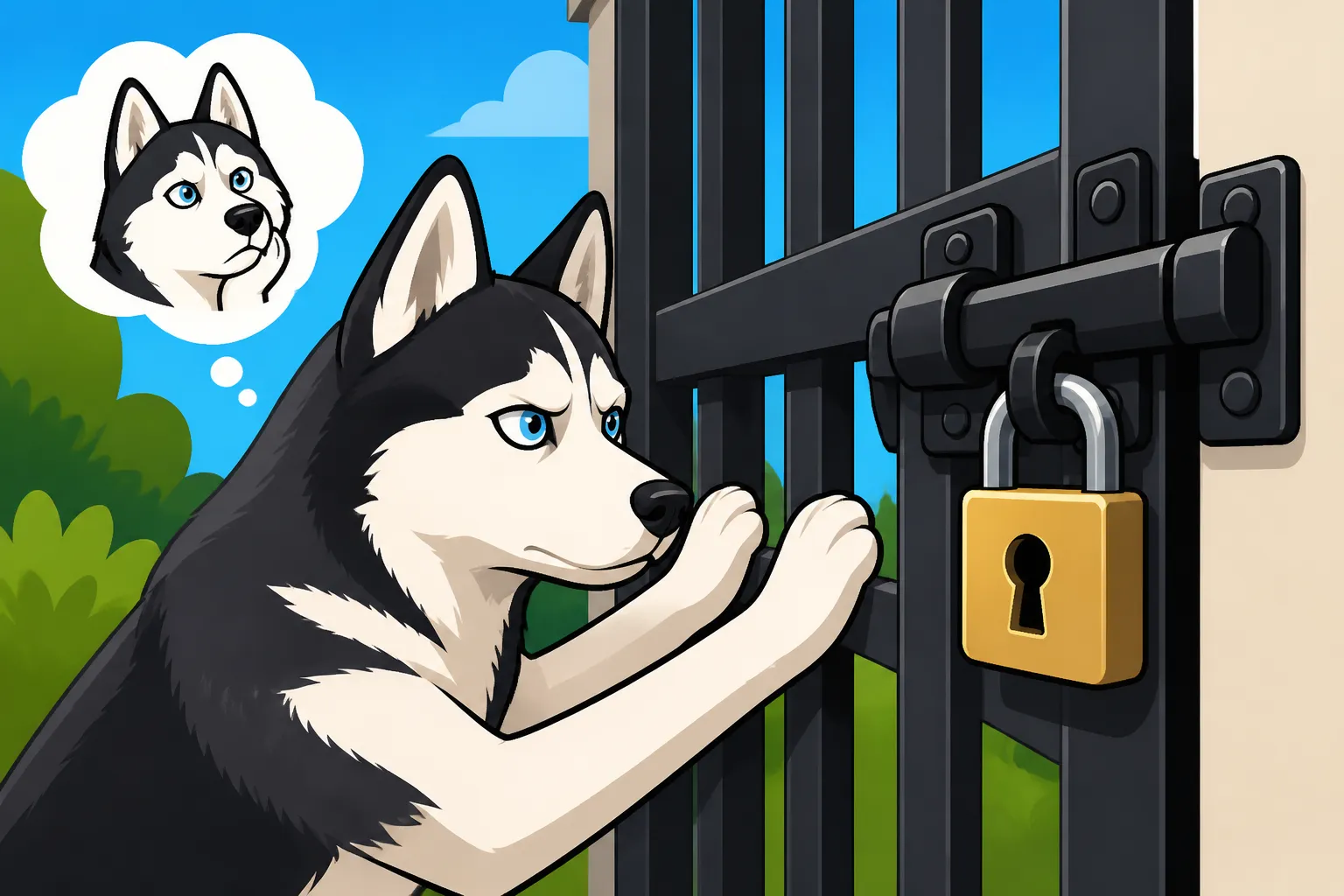
Gate Locks a Siberian Husky Cannot Open
There's nothing quite like the heart-stopping panic that sets in when you realize your cunning Siberian Husky has once again outsmarted your gate, slipping away into the great unknown. It’s a frustration many Husky owners know intimately – that moment of dread, the frantic search, and the nagging question: how did they even do that? Our Huskies are notorious escape artists, and a flimsy gate latch just won't cut it. This guide is dedicated to helping you fortify your home, specifically focusing on gate locks that even the most determined Siberian Husky won't be able to open, bringing you peace of mind and keeping your furry Houdini safe.
Understanding the Siberian Husky's Escape Artist Mentality
Before we dive into hardware, it’s crucial to understand why your Siberian Husky is so driven to pick locks and test boundaries. It’s not about being a "bad" dog; it’s about their very nature. These aren't your average backyard pooches content to lounge all day.
The Husky's Natural Drive to Roam
Siberian Huskies were quite literally bred to run for miles, pulling sleds across vast, open landscapes. This inherent drive for exploration, combined with an insatiable curiosity, means they view fences and gates not as barriers, but as intriguing puzzles to be solved. If you’ve ever wondered, "Why a Siberian Husky Cannot Be Trusted Off Leash," it all stems from this deep-seated desire to explore. Their world is meant to be vast, and a quarter-acre yard, no matter how lovely, often feels confining to their adventurous spirit.
This powerful instinct to roam is often fueled by their incredibly high prey drive. A squirrel darting across the street, a rabbit hopping through a neighbor's yard, or even the scent of a distant deer can instantly activate that ancient hunting impulse. Once that switch flips, any obstacle between them and the chase becomes a momentary challenge to overcome. Their problem-solving skills, often underestimated, are incredibly sharp when a high-value reward like "freedom" or "the chase" is on the line. They learn quickly, observing how you operate latches and using their powerful noses, clever paws, and even their teeth to mimic your actions.
Beyond Simple Latches: Why Standard Locks Fail
If you've ever installed a basic spring-loaded gate latch, a simple thumb-latch, or even a barrel bolt, and thought, "That'll hold," you've probably learned the hard way that a Siberian Husky sees those as mere suggestions. These standard options are simply no match for a breed that specializes in intelligence and manipulation.
Think about it: many basic latches rely on gravity or a simple spring mechanism that can be nudged open. A Husky, with its keen observation skills, might watch you push a button or lift a lever. Then, they'll use their strong nose to push, their nimble paws to bat, or even their teeth to grip and pull. I've seen Huskies successfully open everything from basic hook-and-eye closures to more complex lever handles that require a specific action. They can stand on their hind legs, paw at the gate, and often, with a bit of jiggling and brute force, spring even seemingly secure latches. This is why when you're thinking about "Siberian Huskies That Open Gates and Doors," you need to think several steps ahead of their potential maneuvers.
Types of Gate Locks That Stand a Chance Against a Husky
When it comes to securing your gate against a Siberian Husky, you need to think in layers and prioritize robust, multi-step locking mechanisms. Forget anything that can be easily nudged or lifted with a single action.
Double-Locking Mechanisms: Keyed and Gravity Latches
The key to outsmarting a Husky often lies in complexity. A single latch, no matter how strong, presents one challenge. Two challenges are far more effective. This is where double-locking mechanisms really shine.
Keyed Locks: Adding a keyed lock to your gate is a game-changer. These require a physical key to unlock, making it impossible for a Husky to manipulate. You can install a standard deadbolt or a keyed entry lever directly onto your gate, especially if it's a solid wood or metal gate with a frame robust enough to accept the hardware. The beauty of a keyed lock is its absolute security; there's no pushing, pulling, or pawing that will open it without the key. This provides an excellent primary layer of defense. However, remember to keep the key handy but out of reach of tiny human hands, and always check that it's engaged after you pass through.
Gravity Latches: While not as foolproof as a keyed lock on their own, a heavy-duty gravity latch can be a fantastic secondary defense, or a primary one when combined with a padlock (which we'll discuss next). A good gravity latch requires the latch arm to be lifted up and out of a catch. The weight of the arm ensures it drops back into place automatically. However, some Huskies can learn to jump and hit the arm just right, or even push the gate in a specific way to dislodge it. The trick is to find one that requires a significant upward lift and has a deep catch. Combining a gravity latch with a separate keyed lock means that even if your Husky manages to dislodge the gravity latch, they still face an impenetrable keyed barrier. This layered approach significantly reduces the chance of your dog becoming one of the "Siberian Huskies That Bolt Through Open Doors" because you forgot a second lock.
Heavy-Duty Hardware and Installation Best Practices
Even the best lock is useless if it's attached to flimsy wood or secured with tiny screws. The entire system—gate, hinges, and latch—needs to be robust enough to withstand a determined Husky’s antics.
When selecting hardware, look for industrial-grade, rust-resistant materials. Stainless steel or heavy-gauge galvanized steel is ideal, especially if your gate is exposed to the elements. For wooden gates, choose hardware that is designed for outdoor use and can withstand the force of a dog throwing its weight against it. If your gate is metal, ensure the lock can be securely bolted or welded to the frame. The type of gate you have—whether it's a sturdy wooden privacy gate or a wrought iron masterpiece—will dictate the specific hardware you can use, but the principle of heavy-duty remains constant.
Installation is paramount. Don't just screw a latch onto the surface. For wooden gates, use carriage bolts or long lag screws that penetrate deep into the gate posts and frame, ideally going all the way through and secured with washers and nuts on the other side. Short screws can easily be pulled out over time as your Husky continuously tests the gate. Reinforce the gate frame itself if it feels weak or wobbly. Adding extra bracing or even a diagonal support can prevent the gate from flexing and creating gaps that your Husky might exploit. Think about how much force your Husky can exert; their powerful bodies are built for pulling, and they can leverage that strength against a weak gate with surprising effectiveness. This also ties into "The Six-Foot Fence a Siberian Husky Needs" – the gate is often the weakest point.
| Lock Type | Husky Evasion Difficulty | Best Use Case | Pros | Cons |
|---|---|---|---|---|
| Basic Thumb Latch | Very Easy | Not recommended for Huskies | Convenient, inexpensive | Easily manipulated by paws/noses |
| Barrel Bolt | Easy | Internal shed doors, not primary gate security | Simple, low cost | Can vibrate open, easily slid by paws |
| Gravity Latch | Moderate | Good secondary lock, or primary with padlock | Self-latching, relatively secure | Some Huskies learn to jump/manipulate |
| Keyed Entry Lock/Deadbolt | Difficult | Primary security for residential gates | High security, requires a key | Requires key access, can be forgotten |
| Padlock | Difficult | Combined with other latches for maximum security | Very secure, no key required on site | Can be inconvenient, easily lost key |
| Carabiner | Moderate to Difficult | Temporary extra security, secondary measure | Quick to add, portable, inexpensive | Requires manual attachment, can be flimsy if not heavy-duty |
Padlocks and Carabiners: The Manual Security Layer
Sometimes, the simplest solutions are the most effective, especially when layered on top of other security measures. Padlocks and heavy-duty carabiners can add an invaluable manual layer of security that relies purely on human action.
Padlocks: For ultimate peace of mind, adding a sturdy padlock to your gate is a fantastic idea. This works best in conjunction with an existing gravity latch or even a simple gate hook, creating a second, independent locking point. The padlock prevents the latch from being lifted or slid open. Choose a weather-resistant padlock with a hardened steel shackle that can't be easily cut with bolt cutters. While it adds a small step to opening and closing the gate, that extra moment of fumbling with a key or combination is often the difference between a secure yard and a frantic search for your escaped pup. Just make sure the padlock loop or chain is short enough that a Husky can't get a paw or nose caught in it, or chew on it.
Carabiners: Heavy-duty climbing-grade carabiners can also serve as an excellent temporary or supplementary lock. If you have a gate with a sturdy loop or bar on the gate itself and another on the post, a locking carabiner can quickly and effectively secure the two. These are great for when you're working in the yard and frequently going in and out, or as an extra layer when you're having guests who might not be as diligent about re-latching. While convenient, make sure you're using proper, strong carabiners – not the decorative ones meant for keychains. A locking carabiner, which has a screw-gate mechanism, offers an added level of security by preventing accidental opening. This provides a robust but temporary solution, ensuring that your Siberian Husky remains safely contained, especially if you have an extremely determined one that's learned to foil other latches.
Advanced Gate Security Beyond Just Locks
While strong locks are your first line of defense, a truly escape-proof gate for a Siberian Husky requires thinking beyond just the latch. These dogs are master strategists, and they'll exploit any weakness in your perimeter.
Gate Reinforcement and Anti-Climb Measures
A secure lock means little if your Husky can simply go over, under, or through the gate itself. Huskies are surprisingly agile climbers and jumpers, and a gate that's too short or flimsy is an open invitation.
First, consider the height of your gate. If your fence is six feet tall, your gate needs to match that height, or even be slightly taller. Many standard gates are only five feet, leaving a dangerous gap. You can add extensions to existing gates using lattice, wire mesh, or even sections of matching fencing material, ensuring these extensions are securely attached and don't create new footholds. For a dog that is notorious for "The Height a Siberian Husky Can Clear," every inch matters.
Beyond height, think about anti-climb measures. A smooth, vertical surface is harder to climb than a textured one. If your gate has horizontal slats or cross-bracing that can serve as a ladder, consider covering these with smooth sheets of metal or sturdy polycarbonate. For the truly determined climber, a "coyote roller" at the top edge of the gate (and fence) can be invaluable. This is a round, rotating bar that prevents a dog from getting purchase to climb over. These clever additions prevent your Husky from getting the leverage needed to hoist themselves over the top.
Addressing Digging and Undermining Attempts
The ground beneath your gate is just as important as the gate itself, as any owner of a Husky who loves to dig will tell you. If they can't go over, they'll go under! "Siberian Huskies That Dig Under Fences" are a common frustration, and the gate area is often a prime target.
One of the most effective solutions is an "L-footer" or "footer trench." This involves burying wire mesh (like hardware cloth or strong welded wire) horizontally, extending out from the bottom of the gate and fence line, usually about 12-18 inches. The mesh should be buried a few inches deep, with the L-shape facing inward towards the yard. When your Husky tries to dig, they'll quickly hit the buried mesh and become discouraged. Another option is to bury sturdy galvanized chicken wire or specific "dig defense" products available at places like Chewy, ensuring they are well-secured and don't create sharp edges your Husky could get hurt on.
For particularly persistent diggers right at the gate opening, consider laying a concrete apron or heavy-duty paving stones directly beneath and extending a foot or two from the gate. This makes digging impossible in that specific, high-traffic spot. The idea is to create a physical barrier beneath the gate that your dog cannot penetrate, effectively closing off this escape route. This strategy is closely related to "Burying Fence Wire Against a Digging Siberian Husky" and is essential for comprehensive security.
Smart Home Integration and Alerts
In our modern world, technology can be a powerful ally in keeping our escape artists contained. While not a lock in itself, smart home integration can provide an invaluable layer of awareness and alert you the moment a gate is compromised.
Consider installing gate sensors that connect to your home security system or a dedicated smart home app. These small, weather-resistant sensors can be placed on the gate and the gate post. If the magnetic connection is broken (meaning the gate opens), you'll receive an instant notification on your smartphone. This allows you to react immediately if your Husky somehow manages to defeat a physical lock. Imagine getting an alert while you're inside, giving you precious seconds to intervene before your dog makes a dash for it.
Additionally, security cameras strategically placed to monitor your gate can provide live footage and recordings. Many modern cameras offer motion detection and send alerts when activity is detected. This not only allows you to see who is coming and going, but also to observe how your Husky might be attempting an escape. Understanding their methods can help you refine your security. While these systems don't physically stop an escape, they give you the critical advantage of early detection, which can be a lifesaver for a breed known for its "Siberian Husky Deaths From Trauma and Escape."
Integrating Security into Your Daily Routine
Having the best locks and reinforcements in the world means nothing if they're not used consistently and correctly. The human element is often the weakest link in any security system, especially when dealing with a clever Siberian Husky.
The Human Element: Vigilance and Habits
This might sound obvious, but it bears repeating: every single time you open that gate, you must consciously close and secure it immediately. It’s so easy to get distracted, especially if you’re carrying groceries or wrangling kids. But that split second of inattention is all your Siberian Husky needs.
Establish a routine for yourself and everyone in your household. Make it a rule that the gate is always double-checked. If you have a keyed lock, use the key. If you have a padlock, put it on. Consistency is key, because your Husky is watching. They learn patterns, and they will exploit any deviation from those patterns. Educate visitors, pet sitters, and anyone else who might use your gate about the importance of securing it properly. Don't assume they understand the unique challenges of keeping a Husky contained. A quick briefing can prevent a desperate search for "A Siberian Husky That Ran" after a delivery person leaves the gate ajar. For an added layer of safety, consider investing in a GPS collar worth buying for a Siberian Husky, even with a secure yard.
Regular Maintenance and Inspection
Even the toughest hardware can succumb to wear and tear, especially with a boisterous Siberian Husky constantly testing its limits and exposure to the elements. Regular inspections are critical to prevent unforeseen escapes.
Make it a habit to inspect your gate and its locking mechanisms at least once a month, and especially after severe weather. Check all screws and bolts for tightness – a Husky leaning against a gate repeatedly can loosen them over time. Look for any signs of rust on latches and hinges, which can compromise their strength and function. Check the gate itself for any bowing, warping, or weakening of the wood or metal frame. Are there new gaps forming at the bottom or sides that your Husky could squeeze through? What about the ground directly beneath the gate – are there new divots or signs of digging that indicate your L-footer or buried mesh needs reinforcement? A little proactive maintenance can prevent a big headache down the road. If you find something that needs replacing, consider reputable pet supply retailers like Chewy for replacement parts or new reinforcement materials.
Considering Professional Installation for Complex Setups
While many of us are DIY enthusiasts, there comes a point where professional expertise can make all the difference, particularly with the unique challenges a Siberian Husky presents.
If you're dealing with a particularly determined escape artist, a non-standard gate configuration, or if your current setup feels fundamentally insecure despite your best efforts, calling in a professional fencing or security expert is a wise investment. They can assess your specific situation, recommend appropriate commercial-grade hardware, and ensure everything is installed to the highest standards. They can also advise on local building codes and regulations that might impact gate height or materials. Sometimes, the peace of mind knowing that an expert has fortified your perimeter is priceless. While it might seem like an extra cost, preventing a costly emergency vet visit from an escaped dog, which Healthy Paws insurance may cover, or avoiding "Animal Control Fines for a Loose Siberian Husky" can quickly offset the expense. For those looking for comprehensive solutions, involving a professional ensures your gate security is as robust as your Husky is clever.
Disclaimer
This article is for general informational purposes only and does not constitute professional advice. Laws, prices and regulations vary by location and change over time. Consult a qualified professional for guidance on your specific situation.