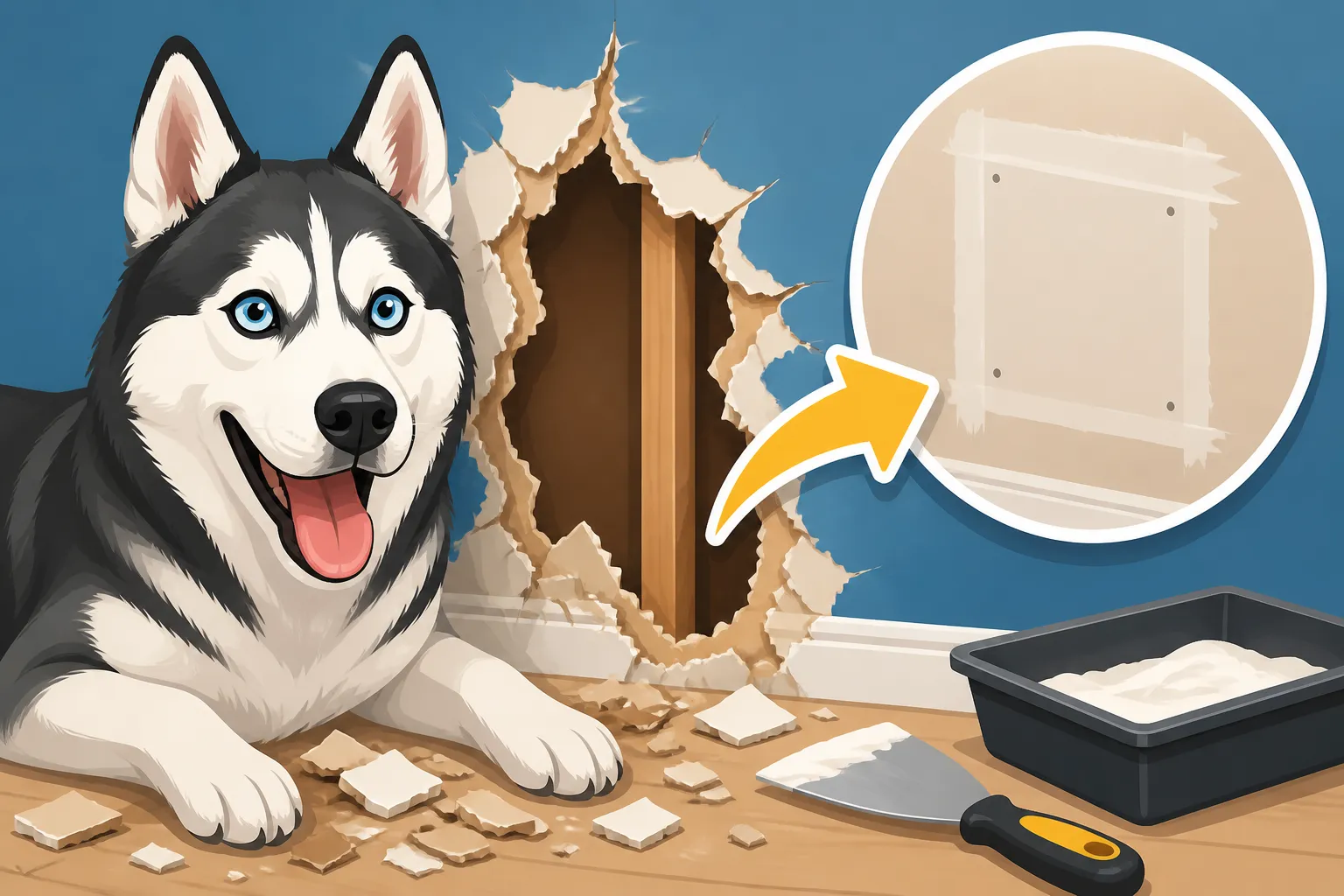
Drywall Repairs After a Bored Siberian Husky
There's nothing quite like the sinking feeling in your stomach when you walk into a room and realize your beloved Siberian Husky has redecorated—not with tasteful throw pillows, but with their teeth and claws, directly on your drywall. It’s a frustrating, expensive, and often baffling problem that many Husky owners face, leaving you wondering if your home will ever look the same. This guide is here to help you understand why your Husky might be turning your walls into chew toys, how to effectively repair the damage, and most importantly, how to prevent it from happening again, saving both your sanity and your security deposit.
Understanding the "Why": The Roots of Siberian Husky Drywall Destruction
Before you even think about grabbing spackle, it's crucial to understand why your Siberian Husky might be channeling their inner demolition crew. This isn't usually out of spite; it's almost always a symptom of an unmet need or underlying stress. Huskies are intelligent, energetic, and highly independent dogs, and when their needs aren't met, they can become incredibly creative—and destructive—in finding ways to cope or entertain themselves.
Boredom and Pent-Up Energy
Let's be real: Huskies were bred to run, and run, and run some more, often for miles on end, pulling sleds through harsh conditions. If your Husky isn't getting adequate physical exercise, that boundless energy doesn't just disappear; it finds an outlet. Chewing drywall can be an incredibly effective way for a bored Husky to burn off physical and mental steam. They're engaging their jaws, using their muscles, and often getting a reaction (even if it's a negative one when you discover it later), which is more stimulating than just sitting around. This is especially true if you have a young, active dog that hasn't quite reached maturity. Ignoring the need for intense physical activity is a common pitfall for new Husky owners. Think about whether your current routine truly matches what a dog bred for endurance needs. For many, two runs a day for a Siberian Husky is the minimum.
Separation Anxiety and Frustration
Another significant culprit behind drywall destruction is separation anxiety. Huskies are social animals, and while they possess an independent streak, many can become genuinely distressed when left alone. This isn't just a puppy phase; adult Huskies can develop it too. The act of chewing, scratching, or digging at walls, especially near exits like doors or windows, can be a self-soothing mechanism, an attempt to escape, or a desperate cry for attention. If your Husky typically causes damage when you're away, and exhibits other signs of stress like excessive howling, inappropriate urination, or frantic pacing before you leave, then separation anxiety is likely a major factor. The noise a Siberian Husky makes when left alone can be a tell-tale sign as well. They might also engage in other destructive behaviors like Siberian Husky destruction when left alone or even Siberian Huskies that eat their own bedding.
Curiosity and Exploration
Sometimes, it's simply curiosity. Huskies are known for their inquisitive nature. They might hear a rustle in the wall (a mouse? an insect?), or perhaps they simply find the texture of drywall interesting. Puppies, especially, explore the world with their mouths. If your Husky is still young, they might just be experimenting with different textures and finding that drywall offers a unique resistance that feels good on their developing teeth. This isn't necessarily malicious; it's just a dog being a dog, often without proper guidance on what is and isn't an appropriate chew item.
Assessing and Tackling the Damage: Your First Steps for Drywall Repair
Okay, the damage is done. Your initial reaction might be panic, but taking a deep breath and systematically approaching the problem will serve you best. The type of repair you need will depend on the extent of the damage.
Evaluating the Extent of the Destruction
First, get a good look at the damage. Is it just a few scratches from excited paws, or is there a gaping hole where your Husky has literally eaten through the wall?
- Scratches and Surface Damage: These are often the easiest to fix. Your Husky might have been digging or attempting to climb the wall.
- Small Holes/Dents: These can happen from excited play, a bumped head, or initial exploratory nibbles.
- Large Holes/Missing Sections: This is when your Husky has committed to a full-on demolition project, often involving significant chewing or tearing away sections of the wall. Check for loose debris, dust, and any exposed wiring or insulation. Safety first!
- Corner or Edge Damage: Huskies love to target corners where they can get a good grip. This might involve damaged corner bead (the metal or plastic strip that reinforces drywall corners) as well as the drywall itself.
Immediate Cleanup and Safety Concerns
Before you do anything else, make sure the area is safe.
- Remove all loose debris: Bits of drywall, paint chips, and insulation can be ingested by your Husky, leading to digestive upset or even a blockage. Get your dog away from the area immediately and clean up thoroughly.
- Check for exposed wiring: If your Husky has chewed deeply, there’s a small chance of exposed electrical wires. Exercise extreme caution. If you see wires, do not touch them, and if possible, shut off power to that circuit at your breaker box before proceeding.
- Inspect for insulation: If insulation is exposed, consider wearing gloves and a mask when cleaning, as some types can be irritating.
- Secure the area: If the damage is extensive, you might need to temporarily cover the hole with a piece of plywood or heavy cardboard to prevent further "redecorating" attempts until you can repair it properly.
The Art of Repair: DIY Fixes for Common Husky Drywall Damage
Most drywall damage caused by a bored or anxious Siberian Husky can be fixed with a bit of elbow grease and a trip to your local hardware store. Don't worry, you don't need to be a professional contractor to get your walls looking good again.
Repairing Scratches and Minor Indentations
For surface-level damage, these fixes are straightforward:
- Clean the area: Wipe down the scratched or dented section with a damp cloth to remove any dust or debris.
- Apply spackle or joint compound: For minor scratches, a thin layer of lightweight spackle should do the trick. For slightly deeper dents, use joint compound. Apply it smoothly with a putty knife, ensuring it's flush with the surrounding wall.
- Let it dry: This is crucial. Read the product instructions for drying times. Don't rush it!
- Sand smooth: Once completely dry, lightly sand the area with fine-grit sandpaper (around 120-150 grit) until it’s perfectly smooth and blends with the wall.
- Clean and paint: Wipe away any sanding dust, then prime and paint the repaired section to match the rest of your wall. You might need to paint the entire wall if you can't get a perfect color match on a patch.
Patching Small to Medium-Sized Holes
When your Husky has created a hole up to about 6 inches in diameter, you can usually use a self-adhesive drywall patch:
- Trim any jagged edges: Use a utility knife to carefully trim away any loose or jagged pieces of drywall around the hole, making the edges as clean as possible.
- Clean the area: Again, wipe down to remove dust.
- Apply the patch: Peel the backing off the self-adhesive patch. Center it over the hole and press firmly to ensure good adhesion to the wall. The patch usually has a metal screen with a mesh border.
- Apply joint compound: Using a wide putty knife or drywall trowel, apply a thin, even layer of joint compound over the entire patch, feathering it out onto the surrounding wall. You're aiming to completely cover the patch and blend it seamlessly.
- Dry and repeat: Let the first coat dry completely. Apply a second, and possibly a third, thin coat, sanding lightly between each coat with fine-grit sandpaper until the area is smooth and flat.
- Prime and paint: Once the final coat is dry and sanded, clean off the dust, prime, and paint.
Fixing Large Holes and Extensive Damage
For bigger holes (larger than 6 inches) or extensive damage, you’ll need to cut out a new piece of drywall and fit it in. This is a bit more involved but still manageable for a DIY enthusiast.
- Square off the damage: Using a utility knife and a straight edge, carefully cut a clean, square or rectangular opening around the damaged area. Make sure to cut into solid, undamaged drywall.
- Cut backing strips: Cut two pieces of wood (e.g., furring strips or scrap wood) about 6-8 inches longer than the height of your hole. These will act as backing supports.
- Install backing strips: Insert one strip into the hole horizontally, centering it so it extends beyond the top and bottom edges of the hole. Screw it into the existing drywall on either side of the hole. Repeat with the second strip for the other side of the hole. These strips provide something to screw your new drywall patch into.
- Cut a new patch: Measure your newly cut square/rectangular opening precisely. Cut a new piece of drywall to match these dimensions exactly.
- Install the patch: Fit the new drywall patch into the opening. It should fit snugly. Screw it into the wooden backing strips you installed, being careful not to overtighten and strip the drywall.
- Tape the seams: Apply self-adhesive fiberglass mesh tape over all four seams where the new patch meets the old drywall. This prevents cracking.
- Apply joint compound: Apply thin, even layers of joint compound over the tape and the entire patch, feathering it out onto the surrounding wall. This will likely take 2-3 coats, with complete drying and light sanding with fine-grit sandpaper between each coat.
- Prime and paint: Once the repair is completely dry and smooth, prime the area and then paint to match your wall.
| Damage Type | Recommended Repair Method | Skill Level | Typical Materials Needed |
|---|---|---|---|
| Scratches/Minor Indentations | Spackle/Joint Compound | Beginner | Spackle, putty knife, sandpaper, paint |
| Small Holes (< 2 inches) | Spackle with mesh tape reinforcement | Beginner | Spackle, mesh tape, putty knife, sandpaper, paint |
| Medium Holes (2-6 inches) | Self-adhesive Drywall Patch | Intermediate | Drywall patch, joint compound, putty knife, sandpaper, paint |
| Large Holes (> 6 inches) | Cut-out Drywall Patch with Wood Backing | Intermediate | Drywall piece, wood strips, screws, mesh tape, joint compound, utility knife, drill, sandpaper, paint |
| Corner Damage | Corner bead repair (if necessary), joint compound, patch | Intermediate | Corner bead, snips, joint compound, tape, utility knife, drill, sandpaper, paint |
Beyond the Patch: Preventing Future Drywall Mayhem
Repairing drywall is one thing, but preventing your Siberian Husky from turning your home into a construction zone again is the real victory. This requires addressing the root causes we discussed earlier.
Adequate Exercise and Mental Stimulation
This is non-negotiable for a Husky. If your dog is destroying your walls out of boredom or excess energy, it means they're not getting enough mental and physical stimulation.
- Daily, vigorous exercise: Think beyond a leisurely stroll. Huskies need to run. Consider activities like canicross, bikejoring, or long hikes. Even if you don't have access to vast open spaces, you can still provide vigorous exercise. Explore options for Wearing Out a Siberian Husky Without Leaving the House or how to set up Bikejoring Safely With One Siberian Husky.
- Mental puzzles: Engage their intelligent minds. Food-dispensing toys, puzzle feeders, and training sessions can tire them out mentally. Brands like Chewy offer a fantastic selection of enrichment toys that can keep a Husky engaged for a good chunk of time, diverting their attention from your walls. Regularly rotate toys to keep things fresh.
- Training and obedience: A tired Husky is a good Husky, but a trained Husky is even better. Short, consistent training sessions can burn mental energy and reinforce good behavior. Training an Independent Siberian Husky can be challenging but incredibly rewarding.
Managing Separation Anxiety
If separation anxiety is the root cause, patching walls won't solve the underlying distress. This requires a more nuanced approach.
- Crate training: A well-crate-trained Husky views their crate as a safe den, not a punishment. This can prevent destructive behavior and keep them safe when you're away. However, some Huskies are escape artists; you might need to invest in a heavy-duty crate. Look into Crates a Siberian Husky Cannot Break Out Of if your dog is particularly adept at bending bars.
- Desensitization and counter-conditioning: Gradually accustom your Husky to your departures. Start with very short absences and slowly increase the time. Pair your departures with high-value treats or a favorite puzzle toy (e.g., a frozen KONG stuffed with peanut butter or a bit of their Ollie fresh food).
- Professional help: For severe separation anxiety, consult a certified professional dog trainer or a veterinary behaviorist. They can provide tailored strategies and, if necessary, discuss medication in conjunction with behavior modification. This is where Siberian Husky Pet Insurance and the Eye Clause might come in handy for unexpected vet bills. Healthy Paws is one provider often mentioned for comprehensive pet insurance, though policies vary.
Dog-Proofing Your Home
Sometimes, prevention is simply about making the destruction less appealing or less accessible.
- Cover vulnerable areas: If your Husky targets specific spots, consider covering them with something they can't chew through easily, such as plastic sheeting, metal panels, or even strong chew-proof material like polycarbonate sheets.
- Provide appropriate chew toys: Always have a variety of sturdy, safe chew toys available. Offer different textures and challenge levels. Rotate them regularly. Make sure they are more interesting than your drywall!
- Supervision: The best prevention is always supervision. When you're home, actively engage with your Husky. When you can't actively supervise, consider crating them or using baby gates to confine them to a "safe room" where they are less likely to get into trouble.
- Diet and overall well-being: While not a direct solution to drywall chewing, a balanced diet plays a role in overall health and temperament. A dog receiving proper nutrition, perhaps from a high-quality food source like Ollie, might be more generally content and less prone to stress-induced behaviors. Ensure your Husky is otherwise healthy; sometimes, pain or discomfort can manifest as behavioral issues, so regular Siberian Husky Vet Visits by Life Stage are important.
By understanding the motivations behind your Husky's drywall destruction and implementing a multi-faceted approach to exercise, training, and environmental management, you can protect your home and foster a happier, healthier relationship with your spirited companion.
Disclaimer
This article is for general informational purposes only and does not constitute professional advice. Laws, prices and regulations vary by location and change over time. Consult a qualified professional for guidance on your specific situation.