Teaching a Siberian Husky the Difference Between Pull and Walk
Siberian Husky leash training helps owners establish clear boundaries between polite walking and powerful pulling behaviors.

Siberian Husky leash training helps owners establish clear boundaries between polite walking and powerful pulling behaviors.

Siberian Husky walking requires choosing between a traditional collar and a harness to manage pulling safely and comfortably.

Siberian Husky vocalizations include howls, whines, and grumbles rather than traditional barks, explaining why owners hear frequent noise.

Siberian Husky vocalizations include howls, mumbles, and screams, explaining why these dogs talk and how owners manage them.

The Siberian Husky scream is a high-pitched vocalization expressing excitement, frustration, demand, or discomfort in dogs.

Siberian Husky prey drive toward livestock explains ancestral instincts, predatory sequences, and the risks of unmanaged chasing.

Siberian Huskies and cats can coexist safely when owners manage strong predatory instincts and establish secure cat-only zones.

Siberian Husky training sessions require short timeframes because ancestral independence and high prey drive limit their focus.
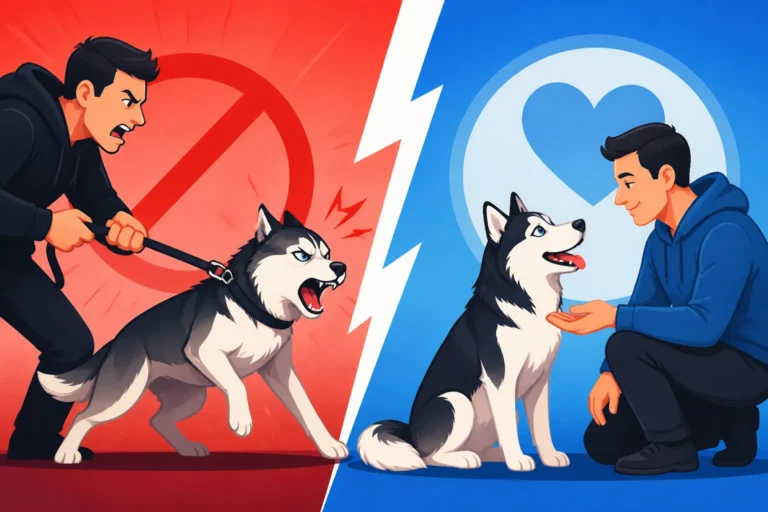
Force training fails on Siberian Huskies because selective breeding created independent thinkers who require negotiation and tangible rewards.

Siberian Huskies ignore owners because of independent working dog history and strong sensory distractions in the environment.