Siberian Huskies That Learn Gate Latches
Oh, the sheer frustration of walking out to your yard, only to find the gate ajar and that tell-tale, mischievous Siberian Husky grin disappearing into the horizon! Many of us have faced that sinking feeling when our clever, independent companions figure out how to manipulate a latch we thought was secure. This guide is all about understanding why your Husky seems to have a Ph.D. in escapeology, pinpointing common gate weaknesses, and offering solid solutions to keep them safely contained.
The Crafty Canine Mind Behind Gate Escapes
If you own a Siberian Husky, you already know they're not just dogs; they're furry, four-legged escape artists with an insatiable curiosity about what lies beyond the fence. It’s not about defiance; it’s hardwired into their very being, a remnant of their ancient purpose that makes them incredible, but also incredibly challenging.
The Husky's Innate Drive to Explore
Siberian Huskies were bred for thousands of years by the Chukchi people in Siberia to be endurance sled dogs, capable of covering vast distances with minimal effort. This means they possess an incredible roaming instinct, a deep-seated desire to travel, explore, and investigate. They don't see your yard as a finite space; they see it as a puzzle to solve, a temporary barrier between them and the grand adventure that awaits just outside. This isn't naughtiness; it's instinct. It’s why The Roaming Instinct Bred Into Every Siberian Husky is such a critical topic for new owners.
Think about it: a Husky is designed to run for miles, often silently, without constant human direction. When confined, that mental and physical energy needs an outlet. If they're not getting enough exercise or mental stimulation, that innate drive to move and explore often funnels into finding a way out. I've heard countless stories of Huskies who seem to be planning their escape routes for days, observing the family's habits, testing fence lines, and yes, eyeing those gate latches like they're reading a manual. It can feel deeply personal when your dog consistently outsmarts your best efforts, but remember, it’s just them being a Husky. They're not trying to annoy you; they're just being true to their breed.
How Huskies "Solve" Latches
Huskies are incredibly intelligent and observant problem-solvers. They watch how you open the gate. They notice the pressure points, the direction you push, and the sound of the latch clicking open. They learn through trial and error, a process that can be alarmingly quick with their focused determination.
Here are some common tactics they employ:
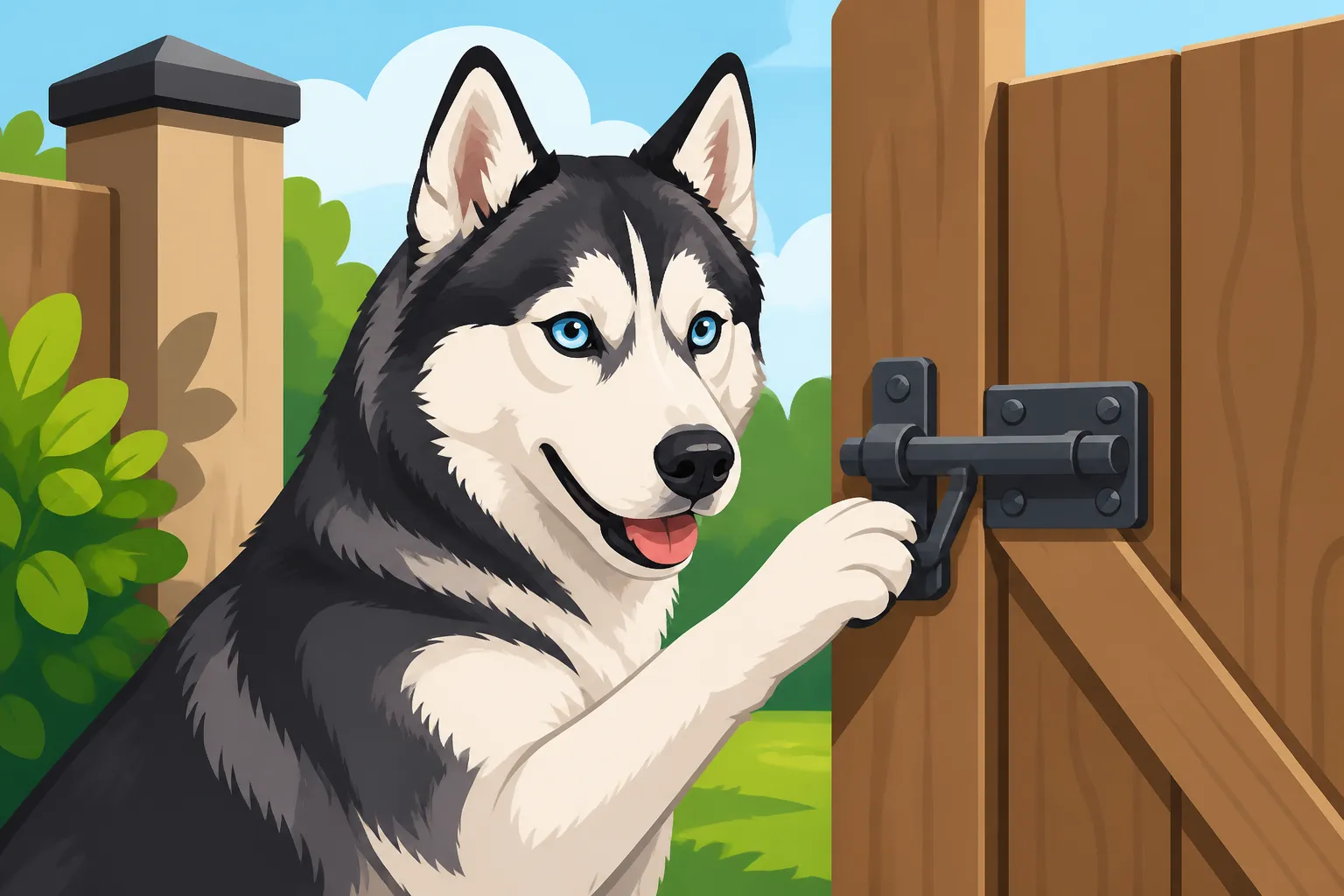
- Pawing and Nosing: Many simple thumb latches or lever handles can be nudged, pawed, or pushed open with enough force or precision. A Husky might stand on their hind legs and use their front paws to bat at the latch, or use their powerful snout to lift or slide a mechanism. I once had a Husky named Koda who would meticulously nose at the base of a simple spring latch, slowly but surely wiggling it free.
- Jumping and Body Weight: Some Huskies will jump up on the gate, using their body weight to rattle it, hoping to dislodge a loose latch or spring mechanism. The gate flexes, the latch shifts, and with a bit of luck (from their perspective!), it gives way. This is especially true for gates that aren't perfectly aligned or have a slight sag.
- Observation and Mimicry: This is perhaps the most unnerving. Huskies are excellent observers. If they see you press a button, lift a lever, or slide a bolt, they'll try to replicate that action. They might not understand why it works, but they understand the sequence of events. Many owners swear their Husky watches them intently, learning the exact motion required to free themselves. It's truly a testament to their smarts, even if it drives us absolutely bonkers!
Common Gate Latch Weaknesses and Why They Fail
It's easy to blame ourselves, but often, the issue isn't our vigilance but the inadequacy of the latch itself for a breed as determined as a Siberian Husky. Many standard gate latches simply aren't designed to withstand the focused, intelligent efforts of a canine escape artist.
Simple Thumb Latches and Bolt Locks
These are the most common culprits. The kind of latch you find on a typical garden gate – a simple thumb press, a small bolt, or a hook and eye. They're convenient for humans but are practically an open invitation for a Husky.
- Vulnerability to Manipulation: A simple thumb latch requires only a downward press and a push. A Husky can easily stand on its hind legs, place a paw on the thumb mechanism, and simultaneously push the gate with its chest or other paw. It might take them a few tries, but they learn. Bolt locks, while seeming more secure, can often be rattled or jiggled until the bolt slides back, especially if the hole is worn or the gate itself is a bit wobbly.
- Lack of Redundancy: These latches offer only one point of failure. Once that single mechanism is overcome, the gate is open. There's no backup, no secondary step needed. For a breed like the Husky, a single point of failure is practically a challenge. I’ve seen Huskies practically unlatch their own crates, so a simple gate latch is often child's play for them.
Spring-Loaded and Gravity Latches
These latches often seem more secure because they automatically latch when the gate closes or use gravity to keep a bolt in place. However, even these have their Achilles' heel when dealing with a persistent Siberian Husky.
- Pressure and Jarring: A spring-loaded latch relies on the spring mechanism to hold it in place. If a Husky repeatedly pushes against the gate, jumps on it, or shakes it, they can put enough pressure on the spring or the latch itself to make it give way. The repeated jarring can also cause the latch to wear down or deform over time, making it easier to pop open.
- Weight and Sag: Gravity latches often involve a heavy piece of metal that drops into a receiver. If the gate sags even slightly over time due to weather, use, or foundation shift, that gravity bolt might not drop fully into its housing, or it might become easier to lift out with an upward thrust from a Husky's nose or shoulder. Imagine a Husky jumping at the gate, and just as they land, their weight shifts the gate enough for the latch to lift and clear the catch. It sounds incredible, but these dogs are incredibly clever.
- Environmental Factors: Don't underestimate how weather can impact these latches. Ice can jam mechanisms, making them both harder to open (for you) and sometimes easier to break free (for them) if the ice is holding a component in a precarious position. Snow piling up against a gate can also add pressure, or create a ramp for a climbing Husky.
The "Human Error" Factor
Let's be honest, even the most secure latch in the world is useless if we don't use it properly. This is where the "human error" factor comes in, and with a Husky, even a momentary lapse can lead to a grand adventure.
- The Quick Close Trap: How many times have you closed the gate quickly, assuming it latched, only to realize later it wasn't fully engaged? We're often in a rush, juggling groceries, kids, or other distractions. A Husky will exploit this. They're constantly testing boundaries, and that slightly-ajar latch is an open invitation. This is a big part of Siberian Husky Deaths From Trauma and Escape – that moment of oversight can have serious consequences.
- Forgetting to Lock: Even if you have a padlock on your gate, if you don't actually put the padlock on and secure it, it's just a deterrent to a particularly dim-witted squirrel. The assumption that "it'll be fine for a minute" is often when a Husky decides to make their move. Always double-check. Always.
- Complacency: Over time, we can become complacent with our gate security, especially if our Husky hasn't made an attempt in a while. But a Husky is always learning, always observing. A slight change in their routine, a new scent on the breeze, or an unexpected visitor can be all the motivation they need to try that latch one more time.
Secure Gate Latch Solutions That Outsmart a Husky
Now that we understand their tactics and our vulnerabilities, let's talk about solutions that actually work. It's not about making a gate impossible to open, but making it impossible for a Husky to open without opposable thumbs (which, thankfully, they don't have!).
Double-Locking Mechanisms and Keyed Latches
The key here is requiring multiple distinct actions to open the gate, or an action that a paw or snout simply cannot mimic.
- Two Separate Latches: This is a simple yet highly effective strategy. Install two different types of latches, one high and one low, on your gate. For example, a sturdy bolt latch near the bottom and a spring-loaded, lever-style latch near the top. The Husky would need to operate both simultaneously or in a specific sequence, which is incredibly difficult for them. You might even consider orienting them differently – one horizontal, one vertical – to add another layer of complexity.
- Keyed Latches or Padlocks: A keyed entry latch, similar to what you might have on a house door, is an excellent option for the primary gate. Your Husky can't pick a lock! Alternatively, add a heavy-duty padlock to your existing latch. This requires a physical key or combination, making it impossible for paws, noses, or body weight to open. Just remember to always use the padlock. Leaving it dangling open negates its purpose entirely.
- Gate Handle with Integrated Lock: Some heavy-duty gate handles, especially for livestock or pool gates, come with an integrated locking mechanism. These often require a squeezing action, a turn, and then a push, making them very difficult for a dog to operate. When choosing one, prioritize robust construction over aesthetic appeal.
Carabinier Clips and Spring Snaps
These are your best friends for adding secondary security to any gate, even those with seemingly robust latches. They are cheap, effective, and readily available from places like Amazon or your local hardware store.
- Simple and Effective Backup: A heavy-duty carabiner clip can be used to secure the gate to the fence post, or to lock the existing latch in place. For instance, if you have a traditional gate latch with a small hole in the handle, thread a carabiner through it and clip it to a fixed point on the gate frame or post. It's an extra step that prevents the latch from disengaging even if manipulated. I always recommend getting industrial-strength carabiners, not the cheap ones meant for keychains.
- Secure Spring Snaps: Similar to carabiners, strong spring snaps (like those used for marine applications or heavy dog leashes) can be used. These require a human hand to depress the spring-loaded mechanism and open the clip. Again, they add a layer of mechanical complexity that frustrates even the cleverest Husky.
- Regular Checks for Wear: While these clips are sturdy, constantly battling a strong, determined Husky can cause wear over time. Make it a habit to check them for bending, rust, or weak springs, especially if your Husky is frequently testing the gate. Replacement is cheap insurance against an escape.
Auto-Closing and Self-Latching Gates
These are fantastic for mitigating human error and ensuring the gate is always secure, but still require careful selection and sometimes a secondary lock.
- Peace of Mind for Forgetful Moments: Auto-closing hinges or gate springs ensure that the gate swings shut and latches behind you, even if you get distracted. This is invaluable, particularly if you have kids or multiple people using the gate. It's one less thing to worry about.
- Choosing the Right Self-Latching Mechanism: Look for self-latching mechanisms that require an upward pull and a squeeze or a specific lever press, rather than just a simple push or lift. The best ones will also have an additional hole for a padlock or carabiner for extra security. Some even offer key-lockable options directly on the latch.
- Still Consider Secondary Security: Even with an auto-closing, self-latching gate, if the primary latch mechanism itself is simple (e.g., just a gravity drop), a determined Husky might still find a way. For absolute peace of mind, pair it with a carabiner or padlock, especially when leaving your Husky unattended in the yard for extended periods.
Addressing the Full Escape Route
Remember, the gate latch is just one part of the equation. A truly Husky-proof yard addresses all potential escape routes. While we're focusing on latches, don't forget their other talents! Stopping a Siberian Husky From Escaping the Yard means thinking about the full perimeter.
- Digging: Huskies are notorious diggers. If your fence has gaps at the bottom or isn't buried deeply, they'll go under. Consider adding an L-footer or burying chicken wire along the fence line. Siberian Huskies That Dig Under Fences is a common problem owners face.
- Climbing/Jumping: Many Huskies can clear a six-foot fence with ease, especially if there are footholds or objects near the fence. Some can even scale chain link. Six-Foot Fences and the Siberian Husky That Climbs highlights the need for truly robust and tall fencing.
- Pushing Gates: If the gate itself is flimsy or not properly installed, a Husky can push against it with enough force to warp the frame or even pop it off its hinges. Ensure your gate posts are deeply set and reinforced.
Comparison of Gate Latch Types for Husky Security
Here’s a quick overview of common gate latches and their effectiveness against a savvy Siberian Husky:
| Latch Type | Description | Husky Security Level | Notes |
|---|---|---|---|
| Simple Thumb Latch | Press thumb lever, push gate open. | Low | Easily manipulated by paws or nose. Offers only one point of failure. |
| Bolt Lock/Slide Bolt | Metal bolt slides into a receiver hole. | Low to Medium | Can be rattled or nudged open if loose or worn. Requires human input to slide, but a clever Husky can mimic the movement. |
| Gravity Latch | Heavy metal piece drops into a catch; lifted to open. | Medium | Better than thumb latches, but can be lifted by pushing up with nose/shoulder or jostled open if gate sags or is jarred. |
| Spring-Loaded Latch | Requires squeezing or pressing a lever against spring tension. | Medium | Can be overcome with enough pressure or repeated jarring. The spring mechanism can wear out over time, making it easier to open. |
| Keyed Entry Latch | Requires a key to unlock; similar to a house door lock. | High | Highly secure as a primary lock; Huskies cannot operate a key. |
| Padlock/Chain & Lock | External lock securing the gate to the post or another latch. | High | Requires human to unlock with a key/combination. Highly effective when consistently used. |
| Carabiner/Spring Snap | Clip used as secondary security to existing latch. | Adds High Security | Excellent and inexpensive backup. Requires human dexterity to operate. Best when used in addition to a primary latch. Get heavy-duty ones. |
| Self-Latching (Advanced) | Auto-closes and latches; often requires lift/squeeze action. | High | Mitigates human error. Look for mechanisms that require complex hand movements. Still consider a secondary lock (like a carabiner) for extra peace of mind, especially if the internal mechanism feels less robust. |
Implementing and Maintaining Your Husky-Proof Gate System
Securing your gates is an ongoing process, not a one-time fix. Huskies are resourceful, and what worked yesterday might not work tomorrow if they come up with a new strategy. Vigilance and maintenance are key.
Assessing Your Current Gate Security
Before you buy new hardware, take some time to observe your existing setup. Put yourself in your Husky's paws, so to speak.
- The "Husky Eye" Inspection: Go outside and examine your gates from your Husky's perspective. Are there any loose boards they could push through? Any gaps along the bottom where they could start digging? How easy would it be for a paw or nose to reach the latch mechanism? Is the latch at a height where they can easily stand on their hind legs and manipulate it? If your gate has a simple thumb latch, can you, with just your fingers, mimic the action of a paw?
- Observing Your Dog: If you suspect your Husky is trying to escape, or you're just being proactive, discreetly observe them when they're near the gate. Do they sniff the latch? Push against the gate? Watch you intently when you open and close it? This valuable intel will tell you exactly what kind of weakness they might be targeting. I had a client who set up a security camera facing their gate and discovered their Husky was actually using their body to ram the gate near the latch until it vibrated open. This led them to reinforce the gate frame itself, not just the latch.
- Checking for Structural Integrity: Beyond the latch, check the gate itself. Are the hinges sturdy? Are the posts firmly set in the ground? Does the gate sag or wobble when pushed? A loose gate is much easier for a Husky to manipulate, even if the latch itself is good.
Installation Tips for Maximum Security
Once you've identified weaknesses and chosen your new, Husky-proof latches, proper installation is crucial.
- Reinforce Posts and Gate Frame: Don't just slap a new lock on a rickety gate. Ensure your gate posts are solid, preferably set in concrete, and that the gate frame itself is rigid and doesn't have too much flex. A sturdy gate makes it harder for a Husky to leverage their body weight to open a latch.
- Use Heavy-Duty Hardware: For any new latches, hinges, or reinforcement brackets, use high-quality, heavy-duty hardware. Galvanized or stainless steel is best for outdoor use to resist rust and wear. Don't skimp on screws; use long, strong screws that penetrate deep into the wood or metal. You can find excellent options on Amazon.
- Install Latches Out of Reach (if possible): For very clever jumpers, installing a secondary latch (like a carabiner or bolt lock) higher up on the gate, just out of their jumping reach, can be a great deterrent. However, always ensure you can comfortably reach it for daily use.
- Close Gaps: Ensure there are no large gaps between the gate and the fence post, or underneath the gate itself. A determined Husky can squeeze through surprisingly small openings or get their head stuck.
Training Your Husky to Respect Boundaries
While physical security is paramount for a Siberian Husky, consistent training can also help reinforce boundaries, even if it won't stop a truly determined escape artist. Huskies are intelligent, but their independence means they need very clear, consistent communication.
- Positive Reinforcement for "Stay" and "Wait": You can train your Husky to "wait" before bursting through an open gate, or to "stay" when the gate is ajar. This isn't about teaching them not to escape, but teaching them impulse control around the open gateway. Reward heavily with high-value treats (think cooked chicken or cheese) when they wait calmly.
- Consistency is Key: Every person who interacts with the gate must be consistent with how they open, close, and secure it. If one person occasionally leaves it unlatched, your Husky will learn that inconsistency and try to exploit it.
- Professional Guidance: If you're struggling with gate manners or general boundary training, a professional trainer experienced with independent breeds like Huskies can be invaluable. Training programs like BAXTER & Bella can offer structured online guidance and support, which might be helpful if you're looking for consistent methods to apply. Remember, Huskies thrive on structure, even if they often try to negotiate the terms!
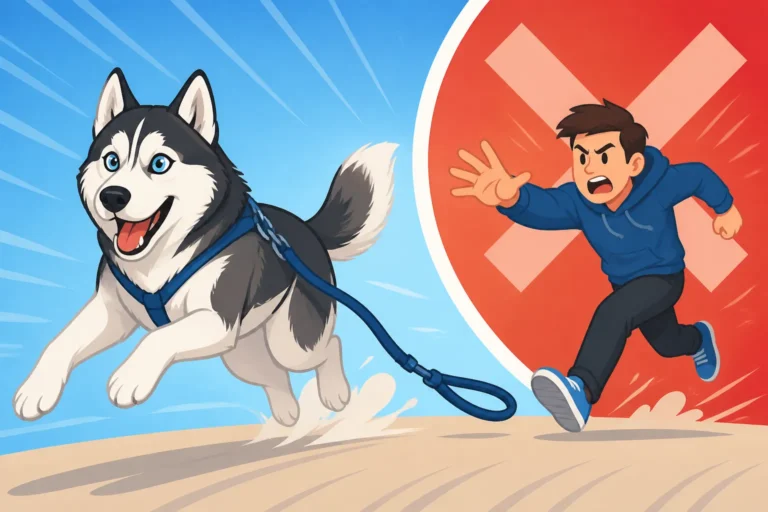
- Never Rely on Training Alone for Containment: Let me be clear: never rely solely on training to keep a Siberian Husky contained. Their roaming instinct is too strong. Training can complement physical security, making your life easier, but it should never be the primary barrier between your Husky and the great unknown. For more on this, consider reading Why a Siberian Husky Cannot Be Trusted Off Leash.
- Address Boredom and Exercise Needs: Often, escape attempts are a symptom of boredom or insufficient exercise. A tired Husky is less likely to plot an escape. Ensure your Husky gets plenty of physical and mental stimulation every day. This could mean long walks, runs (in harness!), puzzle toys, or training sessions. Siberian Husky Destruction When Left Alone often stems from these unmet needs, and gate escapes are just another outlet.
Keeping a Siberian Husky safely contained takes diligence, smart solutions, and an understanding of their unique nature. By shoring up your gate security and staying one step ahead, you can provide a safe environment for your adventurous companion and save yourself a lot of worry!
Disclaimer
This article is for general informational purposes only and does not constitute professional advice. Laws, prices and regulations vary by location and change over time. Consult a qualified professional for guidance on your specific situation.