Why a Siberian Husky Howls at Sirens
That distinctive, rising wail of a siren in the distance can be quite jarring for us humans, but for many Siberian Husky owners, it’s not just an irritation—it’s a guaranteed trigger for their beloved furry companion to launch into an impressive, often lengthy, vocal performance. If you’ve ever wondered why your Husky feels the irresistible urge to serenade every passing emergency vehicle, fire truck, or even distant factory whistle, you're not alone. This guide dives deep into the fascinating reasons behind this quintessential Husky behavior and offers practical ways to understand and manage it, without trying to extinguish their unique voice entirely.
Why Your Husky Can't Resist a Siren's Call
It's truly a mystery to many new Siberian Husky owners: you're enjoying a quiet afternoon, and suddenly, a faint siren cuts through the air, and your serene Husky transforms into a howling, singing wolf. This isn't just a quirk; it's a deeply ingrained behavioral response that stems from their ancient lineage and unique sensory perception. Understanding these roots is the first step toward appreciating (and perhaps even a little bit excusing) their dramatic flair.
The Ancestral Echo: A Call to the Pack
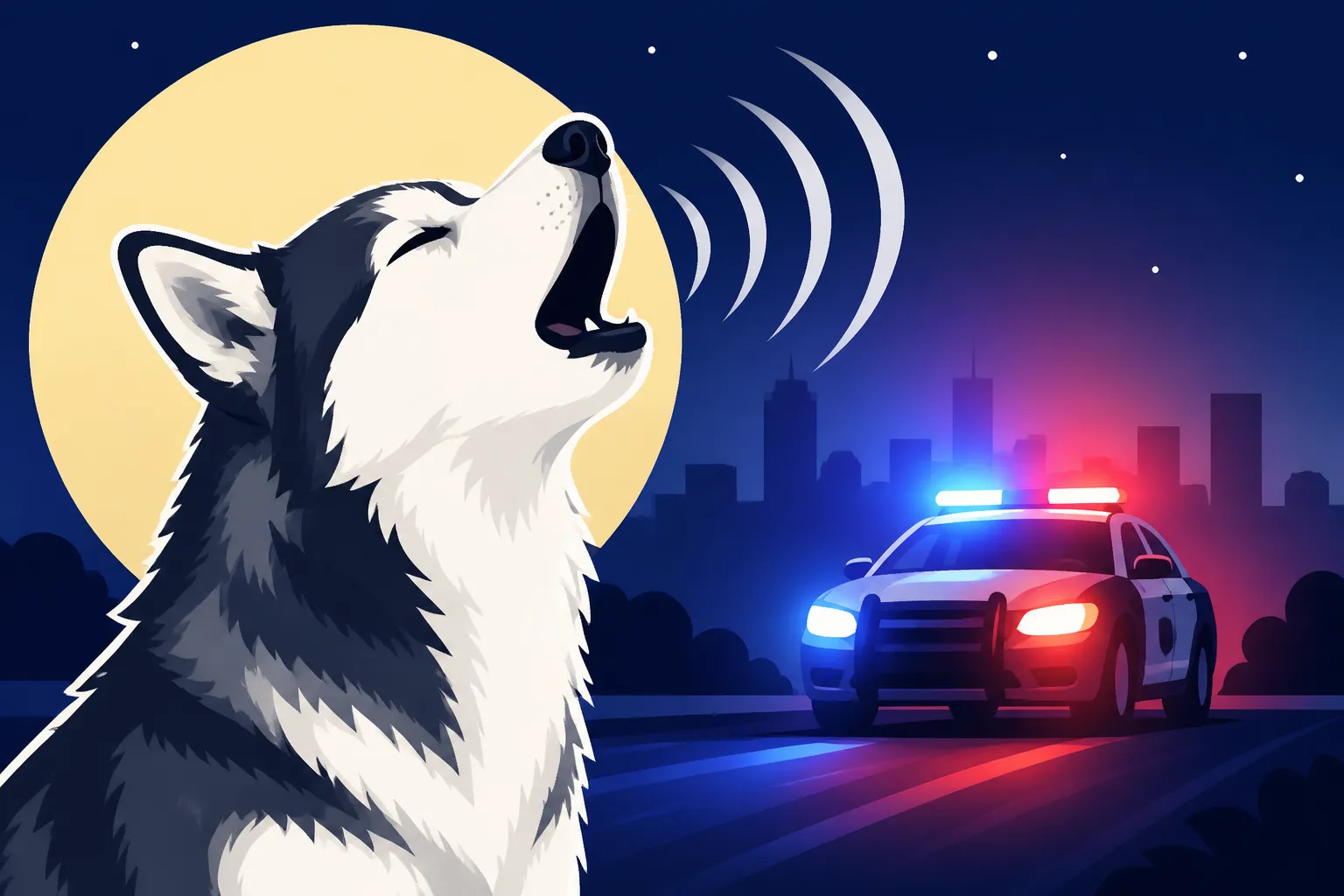
Siberian Huskies are primitive dogs, closely related to their wild wolf ancestors, and howling is one of the most fundamental forms of communication in canine packs. When a wolf howls, it's often to communicate over long distances—to locate pack members, announce its presence to rivals, or even signal a territorial claim. Sirens, with their sustained, undulating tones, often mimic the frequency and duration of a distant wolf howl. To your Husky, that siren might not sound like a vehicle warning at all, but rather a far-off dog or pack member calling out.
Imagine your Husky, perhaps curled up on the rug, suddenly hearing what sounds like another dog sending out a call. Their instinctual response is to answer, to let that "other dog" know they're there. It's a primal, social act, almost impossible for them to ignore. They aren't trying to be disruptive; they're simply engaging in a dialogue that, to them, feels natural and necessary. It’s part of Why Your Siberian Husky Howls and Talks, and it’s a beautiful, if sometimes inconvenient, connection to their heritage.
The Auditory Experience: More Than Just Noise
Huskies, like many dogs, have a far more acute sense of hearing than humans. What sounds like a faint, distant siren to us is likely much clearer and more intense for them. The specific frequencies and vibrations of a siren can be particularly stimulating, even irritating, to their sensitive ears. It’s not just the sound itself, but how their bodies perceive it.
Sometimes, the pitch or timbre of a siren can hit a specific nerve, almost like a dog whistle, but on a grander, more public scale. This heightened sensitivity can lead to a more profound reaction, causing them to vocalize as a way to express discomfort, curiosity, or even an attempt to "drown out" the perceived unpleasant noise. Think of it as a human encountering a sudden, loud, and jarring noise—we might yell, gasp, or cover our ears. A Husky's response is often to howl.
Territorial Alarm: Protecting Their Space
While Siberian Huskies are famously friendly and not typically guard dogs, they do have a strong sense of their territory and their family unit. When a siren wails, particularly if it sounds like it's approaching their home, some Huskies interpret it as an alarm. It could be seen as an external threat nearing their "den" or a warning sign that something unusual is happening in their environment.
In this scenario, their howling isn't just an answer to a distant call; it's an announcement to you, their pack leader, that they've detected something important. They are alerting you, and potentially warding off, whatever unseen entity that siren represents. This protective instinct, even if misplaced concerning an emergency vehicle, is a deep-seated trait that serves to keep their pack safe. It ties into their intelligence and independence, as explored in Siberian Husky Intelligence and Independence, where they often act on their own perceived needs rather than waiting for direct commands.
Understanding the Triggers and Variations in Howling
Not all sirens are created equal in the ears of a Siberian Husky, and not all Huskies react in the same way. The specific type of siren, the proximity, and even your Husky's individual personality can all play a role in how they respond. It's a fascinating display of their complex nature.
Types of Sirens and Their Impact
You might notice your Husky reacts more intensely to certain types of sirens. A fire truck's deep, sustained wail might elicit a different response than an ambulance's fluctuating yelp or a police car's rapid, staccato sound. This isn't coincidence; dogs, including Huskies, can distinguish between these variations.
| Siren Type | Common Characteristics | Typical Husky Reaction (Hypothetical) |
|---|---|---|
| Fire Truck | Deep, prolonged, often rising and falling | Long, sustained, soulful howl |
| Ambulance | Higher pitched, rhythmic, urgent yelp | Shorter, more frequent, anxious-sounding wails |
| Police Car | Rapid, piercing, often pulsating | Sharp, intense bursts of howling, sometimes barks |
| Factory Whistle | Monotone, long, low-frequency | Milder, contemplative howl or "singing" |
| Train Horn | Deep, resonant, prolonged blast | Often triggers howling, especially if close |
Some Huskies might only respond to the very high-frequency sounds that mimic a puppy's distress call, while others might be more attuned to lower, guttural tones. The intensity and duration of the siren also matter. A short, distant blip might get a head tilt, while a long, close wail could unleash a full-blown concert. Understanding these nuances can help you anticipate their reactions and potentially intervene before the howling begins.
Environmental Factors and Proximity
Where your Husky is when the siren sounds makes a big difference. If they're inside a well-insulated home with the windows closed, the sound might be muffled enough to not trigger a response. However, if they're outside in the yard, or if windows are open, the unfiltered sound is far more likely to get a reaction. The closer the siren, the louder and more intense it is, naturally increasing the likelihood and fervor of their howling.
Consider factors like acoustics in your neighborhood. Do you live near an emergency route where sirens are frequent and loud? Or are they rare occurrences? A Husky living in a busy urban environment might become somewhat desensitized over time, or they might become more agitated by the constant bombardment of noise. For those in quieter areas, an unexpected siren can be a dramatic event, sparking a full-throated response every single time. If you live in an apartment, the noise can be particularly disruptive, and you might even consider strategies like Soundproofing an Apartment for a Siberian Husky.
Individual Husky Temperament
Just like people, every Siberian Husky has a unique personality. Some are more vocal in general, prone to "talking" and expressing themselves with various sounds, as you might learn in Why Your Siberian Husky Howls and Talks. For these dogs, a siren is just another excuse to exercise their vocal cords. Others might be generally quiet but have this one specific trigger that they simply cannot ignore.
Anxiety or stress can also play a role. A Husky who is already feeling a bit on edge might react more strongly to a siren than one who is relaxed and secure. Factors like lack of exercise, insufficient mental stimulation, or even mild separation anxiety can contribute to a more pronounced vocal response. It's often not just about the siren itself, but how your Husky is feeling in that moment and their overall state of well-being.
Managing and Modifying Siren-Induced Howling
While you can't realistically silence every siren, there are definitely steps you can take to manage your Siberian Husky's reaction to them. The goal isn't necessarily to eliminate all howling—that's part of their charm, after all—but to reduce the intensity, frequency, and duration of the vocalizations, and to prevent them from becoming an anxiety-driven behavior.
Desensitization and Counter-Conditioning
This is often the most effective long-term strategy, though it requires patience and consistency. The idea is to change your Husky's emotional response to sirens from a trigger for howling to something neutral, or even positive.
- Controlled Exposure: Start by playing recordings of sirens at a very low volume, so low that your Husky barely notices or doesn't react. You can find these sounds easily online, perhaps even through a quick search on Amazon for "dog desensitization sounds."
- Positive Association: As the siren sound plays at that low, non-reactive volume, immediately give your Husky something incredibly positive: high-value treats, a favorite toy, or engaging in a brief, fun play session. The key is that the good thing only happens when the siren is present.
- Gradual Increase: Over many sessions (days or weeks), slowly increase the volume of the siren recording. The moment your Husky even glances towards the sound or shows the slightest sign of recognition without howling, reward them. If they start to howl, the volume is too high, and you need to dial it back to a level where they remain calm.
- Real-World Application: Once they're reliably calm with recordings at a reasonable volume, try to apply this in real-life scenarios. The moment a distant siren starts, before they have a chance to wind up, distract them with a puzzle toy filled with treats, or practice some quick obedience commands for rewards.
This process essentially teaches them: "Siren sound equals good things!" rather than "Siren sound equals time to howl." It's similar to the structured training you might find on platforms like BAXTER & Bella, which emphasize positive reinforcement and gradual exposure for various behavioral challenges.
Environmental Management and Distraction
Sometimes, the simplest solutions are the best for immediate relief. While long-term training is underway, you can also manage their environment.
- Close Windows and Doors: This might seem obvious, but it can significantly muffle the sound of approaching sirens, reducing their impact.
- White Noise or Background Music: Playing calming music, turning on a fan, or using a white noise machine can help mask the sound of distant sirens. This creates a more consistent soundscape that's less jarring.
- Provide a "Safe Space": A cozy crate or a designated quiet room where they feel secure can be a retreat when sirens are frequent. For some Huskies, a strong crate like those discussed in Crating a Siberian Husky That Bends the Bars might even offer a sense of den-like security.
- High-Value Distractions: Keep a special, highly engaging toy or chew available specifically for siren moments. A long-lasting chew or a puzzle feeder, which you can easily find on Amazon, can divert their attention away from the external sound. The goal is to redirect their focus before the howling fully takes hold.
Training a "Quiet" Cue
While Huskies are independent, they are intelligent and can be trained, especially with the right motivation. Teaching a "quiet" cue can be incredibly useful.
- Trigger the Vocalization: Intentionally get your Husky to howl (perhaps by playing a siren recording).
- Mark the Silence: The instant they stop howling, even for a split second, mark the behavior with a verbal cue like "Quiet!" and immediately reward them with a high-value treat.
- Increase Duration: Gradually extend the time they need to be silent before you give the "Quiet!" cue and reward. Start with just a second of silence, then two, then three, and so on.
- Practice Consistently: Practice this in various environments and with different vocalizations. This won't stop the initial howl, but it will give you a way to shorten the performance. Resources from BAXTER & Bella or similar online training programs can provide structured lessons on teaching cues like this, which are crucial for Motivating a Siberian Husky That Ignores You in other contexts.
Remember that a tired Husky is often a less vocal Husky. Ensuring your dog gets plenty of physical exercise (like long runs or rigorous play) and mental stimulation (through training, puzzle toys, and enrichment activities) can go a long way in managing overall vocalization. This aligns with advice on How Much Exercise a Siberian Husky Really Needs to maintain good behavior.
When to Seek Professional Help
If your Husky's howling at sirens is accompanied by other signs of extreme anxiety (pacing, panting, destructive behavior, refusal to eat), or if it's becoming unmanageable despite your best efforts, it might be time to consult a professional. A certified professional dog trainer or a veterinary behaviorist can help assess the root cause of the behavior and develop a tailored modification plan. They can offer insights into the nuances of Training an Independent Siberian Husky and create strategies that work specifically for your dog and living situation, ensuring that your Husky lives a happy, well-adjusted life, even amidst the occasional siren call.
Disclaimer
This article is for general informational purposes only and does not constitute professional advice. Laws, prices and regulations vary by location and change over time. Consult a qualified professional for guidance on your specific situation.