Whether Cooling Vests Work on a Siberian Husky
Oh, the endless quest to keep our fluffy, energetic Siberian Huskies comfortable when the mercury rises! It’s a challenge I know all too well, especially living in areas where summer heat can feel relentless. Many of us see those advertisements for cooling vests and think, "Aha! This could be the answer to my Husky's summer woes." We picture our dogs frolicking happily, totally unbothered by the heat, thanks to a simple piece of gear. But the reality for our double-coated marvels isn't always so straightforward. This guide is going to dive deep into whether cooling vests truly work for Siberian Huskies and explore more effective ways to help your beloved companion beat the heat.
The Unique Challenge of Keeping a Siberian Husky Cool
Let's be honest, trying to keep a Siberian Husky truly "cool" in anything above mild temperatures feels like an uphill battle, doesn't it? Their very design, their history, everything about them screams "arctic adventurer," not "beach bum." This isn't just about them feeling a bit warm; it's about their fundamental physiology being geared towards something entirely different than what most of us experience in urban or even suburban environments during summer.
Understanding the Siberian Husky's Double Coat
The Siberian Husky’s double coat is nothing short of an engineering marvel, but it’s a marvel built for the exact opposite of summer heat. It consists of two distinct layers: a soft, dense undercoat and a longer, coarser outer coat, often called guard hairs. This magnificent coat is designed primarily for insulation against extreme cold, trapping warm air close to the body and keeping frigid air and snow out. Think of it like a perfectly insulated parka that they wear 24/7.
While some might argue that this double coat also helps insulate from heat, by preventing warm air from reaching the skin, its primary function and effectiveness drastically decrease in humid, still, or truly hot conditions. When wet, especially with a cooling vest, this dense undercoat can actually become a liability. Instead of cooling, it can trap moisture and heat, creating a humid microclimate right against your dog's skin. This is the very opposite of what we're trying to achieve with cooling, leading to potential skin irritation or even a feeling of being stifled rather than refreshed. It's a cruel irony that the very thing that makes them so stunning can also make summer so challenging.
Why Huskies Struggle So Much in the Heat
Beyond their incredibly efficient cold-weather gear, Siberian Huskies also possess a metabolic efficiency that was invaluable for covering vast distances on minimal food in the sub-zero temperatures of Siberia. This efficient metabolism, while fantastic for endurance, means they don't dissipate heat as readily as some other breeds through their skin. Their main way of cooling down is panting, which works by evaporating moisture from their tongue and respiratory tract. However, if the ambient air is already hot and humid, this evaporative cooling becomes far less effective.
You'll notice your Husky exhibiting distinct behaviors when they're starting to overheat. It's not just a bit of heavy panting; they might become lethargic, lose interest in their usual antics, and actively seek out the coolest, shadiest spots they can find. They might lie on tile or concrete floors, sprawl out with their belly pressed to the ground, or even dig shallow "dens" in cool earth if they have access to a yard. Their gums might become a deeper red, and their panting can escalate to a point where it sounds strained or labored. Ignoring these early signs can rapidly lead to serious consequences, including Heat Stroke Risk in a Siberian Husky, which is a medical emergency. Understanding these subtle cues is crucial, because by the time they're showing obvious distress, they're already in trouble.
How Cooling Vests Are Supposed to Work (and Why They Fall Short for Huskies)
The idea behind cooling vests is wonderfully appealing, isn't it? Slip on a magical garment, and your dog stays comfortable. If only it were that simple for our furry snow dogs! While these vests have a place for some breeds, the unique physiology of the Siberian Husky often means they don't deliver the promised relief.
The Basic Principle of Cooling Vests
Most cooling vests operate on one of two main principles: evaporative cooling or phase-change materials.
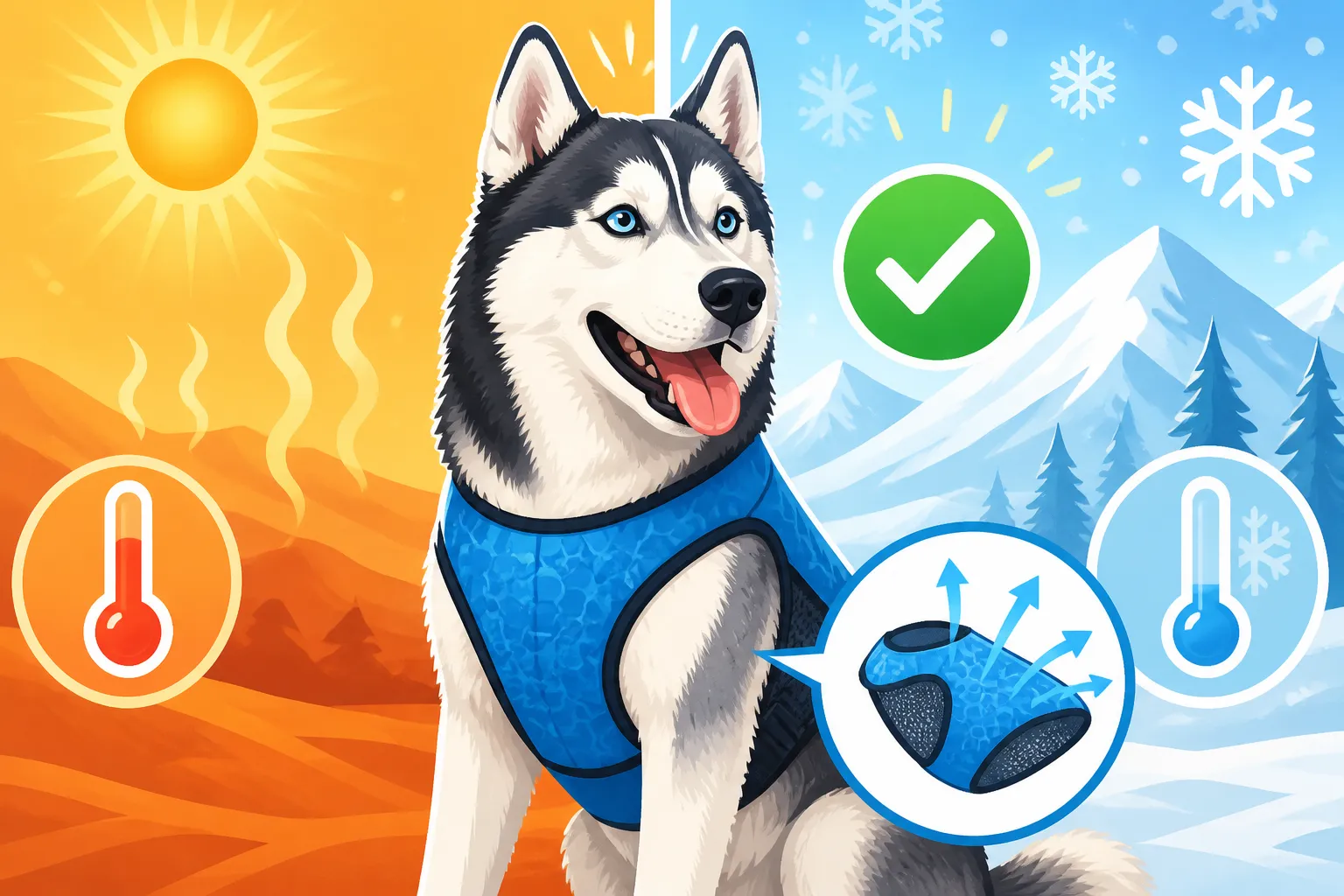
- Evaporative Cooling Vests: These are the most common type. You soak the vest in cold water, wring it out, and then put it on your dog. As the water evaporates from the vest's fabric, it draws heat away from the surface it's in contact with, which in theory, should be your dog's body. It's the same principle as sweating for humans – as sweat evaporates, it cools the skin. Many of these vests are made from multi-layered fabrics designed to hold water for a longer period and promote evaporation. You might find brands like Ruffwear or Kurgo offering these, often available through retailers like Chewy or Amazon.
- Phase-Change Material (PCM) Vests: These vests contain special gel packs or inserts that are pre-cooled (usually in a freezer or refrigerator) and maintain a constant, low temperature for a period, typically cooler than the ambient air but not freezing cold. These materials "phase-change" from a solid to a liquid as they absorb heat from your dog's body. The advantage here is that they don't make your dog wet, which can be appealing, and they're supposed to provide a more consistent cooling effect.
The goal for both types is to reduce your dog's core body temperature by promoting heat transfer away from the body. For breeds with single coats or shorter hair, or even those without the same insulation needs as a Husky, these vests can indeed offer some measure of comfort.
The Double Coat Dilemma: Why Vests Struggle to Reach the Skin
Here's where the theory often clashes with the reality of owning a Siberian Husky. Remember that incredible double coat we talked about? It’s fantastic for insulating against cold, but it becomes a major hurdle for a cooling vest.
When you put an evaporative cooling vest on a Husky, that dense undercoat acts as a barrier. The vest sits on top of the outer guard hairs and the thick undercoat, not directly against the skin. This means the cooling effect from the evaporating water struggles to penetrate through those layers to reach the dog's actual skin where heat exchange is most effective. Instead of efficiently cooling the dog, the vest often ends up trapping a layer of warm, humid air between the vest and the dog's body. This creates a sauna-like effect, counteracting the intended cooling and potentially making your Husky feel even hotter and more uncomfortable. It's like wearing a wet blanket in summer – initially cool, but quickly becomes clammy and suffocating.
Even with phase-change vests, the same insulating layer of fur prevents the cool pack from making efficient contact with the skin. The cooling effect is significantly diminished by the time it permeates through all that fur. The vest itself, once it warms up or dries out, can also become another insulating layer, holding heat in rather than letting it escape.
Practical Issues with Cooling Vests on a Husky
Beyond the fundamental design mismatch with a Husky's coat, there are several practical issues that make cooling vests less than ideal:
- Keeping Them Wet: Evaporative vests require constant re-wetting to be effective. On a hot, dry day, the water can evaporate surprisingly quickly, leaving you with just a damp piece of fabric that's doing very little to cool your dog. If you're out on a long walk or at a dog park, frequently re-wetting the vest becomes a chore, and sometimes impossible if water isn't readily available. Without a consistent supply of evaporating water, the vest can quickly turn from a cooling aid into just another layer of cloth holding in heat.
- Water Retention and Comfort: A soaked vest can become heavy and cumbersome, particularly on an active Husky. This added weight and bulk can restrict their natural movement, making them less inclined to run or play, which in turn might make them appear lethargic due to discomfort rather than actual cooling. Furthermore, a consistently wet environment trapped against the skin, especially within a dense coat, can lead to skin irritation, hot spots, or fungal growth if not properly aired out and dried. This is a real concern if the vest isn't removed promptly after use.
- Bulkiness and Restriction: Huskies are built for athletic movement. Many cooling vests, by their nature, add significant bulk, especially when saturated with water or filled with gel packs. This can feel restrictive around the chest and shoulders, hindering their natural stride and making them less comfortable. For a dog that thrives on running and pulling, anything that impedes their movement can be a source of frustration. While you can find various brands and styles online, perhaps through Ollie if they carry gear, or certainly Amazon, finding one that genuinely fits a Husky's build and provides effective cooling without discomfort is a tall order.
The bottom line is that while cooling vests sound like a great solution, for a Siberian Husky, they often prove to be more of a hindrance than a help due to the very nature of their incredible coat. We often want a quick fix, but with Huskies and heat, proactive, natural methods are almost always more effective.
| Cooling Method | Siberian Husky Effectiveness | Pros | Cons |
|---|---|---|---|
| Cooling Vest | Low to Moderate | May provide minor, temporary relief | Undercoat hinders heat transfer; can trap heat/humidity; requires constant re-wetting; can be bulky; potential for skin irritation. |
| Shade & Rest | High | Natural, no cost, effective prevention | Requires constant vigilance; limits activity |
| Water (Pool/Sprayer) | High | Direct cooling; engaging for many Huskies | Can lead to soggy fur (which can then trap heat) if not managed; requires setup |
| AC/Fans | High | Consistent, controlled environment | Energy cost; limited to indoors |
| Ice/Cool Packs | Moderate | Targeted relief for specific areas | Short-lived; direct contact too long can cause skin irritation; dog may chew |
| Grooming (De-shed) | High | Enhances natural ventilation of coat | Requires regular effort, especially during Siberian Husky Coat Blow and the Six Weeks It Lasts; only removes dead hair, never shave. |
More Effective Strategies for Cooling Your Siberian Husky
Since cooling vests often miss the mark for our Siberian Huskies, it's time to focus on strategies that truly make a difference. These are methods that work with their natural physiology, rather than against their incredible double coat.
Behavioral and Environmental Management
The first line of defense against overheating is always prevention and smart management of your Husky's environment and activity levels. This involves being acutely aware of the weather and how your dog is feeling.
- Timing Walks and Activity: This is perhaps the single most important adjustment you can make. Forget midday walks in summer. Your Husky needs to be out and exercising during the coolest parts of the day – typically early morning before the sun really hits, or late evening after sundown. I'm talking about getting out there at 5 or 6 AM, or waiting until 8 or 9 PM. On truly sweltering days, you might need to reconsider long runs or vigorous play altogether, opting instead for short potty breaks. Even a shaded walk can be too much if the air itself is hot and humid. Remember, pavement can get incredibly hot, easily burning paws. Try the "five-second rule": if you can't hold the back of your hand on the pavement for five seconds, it's too hot for your dog's paws. You can learn more about this in Walking a Siberian Husky Before Sunrise and Timing Siberian Husky Walks in Hot Weather.
- Providing Ample Shade and Cool Surfaces: If your Husky spends any time outdoors, whether supervised or not, access to deep, consistent shade is paramount. A small patch of shade from a tree isn't enough; they need a shaded area large enough to move around in as the sun shifts. Indoors, ensure they have access to cool, non-carpeted floors like tile, concrete, or linoleum. Many Huskies instinctively seek these out, sprawling out to maximize contact with the cooler surface.
- Kiddie Pools and Water Play: Oh, the joy a simple kiddie pool can bring to a hot Husky! Filling a shallow, sturdy plastic pool with a few inches of cool water offers a fantastic way for them to cool down. They can wade, splash, or just lie down in the water to cool their bellies and paws. This direct contact with water helps draw heat away from their bodies much more effectively than a vest, especially if they can get their paws and belly submerged. Just be mindful that a dripping wet coat can still eventually trap warmth if not allowed to dry properly in moving air, but the immediate relief is significant. For more ideas, check out Kiddie Pools for a Siberian Husky in Summer.
- Air Conditioning and Fans: For most Huskies, especially in warmer climates, air conditioning isn't a luxury – it's a necessity during the summer months. Creating a cool, climate-controlled indoor environment is by far the most effective way to prevent overheating. Coupled with fans to circulate the air, it helps their natural panting mechanism work more efficiently. If you live in a region prone to heatwaves, understanding Air Conditioning a Siberian Husky Depends On is crucial for their well-being. Keeping them indoors during the peak heat of the day is often the safest bet.
Grooming and Hydration
These two factors are often overlooked but play a vital role in your Husky's ability to regulate their temperature.
- Regular De-Shedding (Never Shave!): This is a critical point that cannot be stressed enough: never shave your Siberian Husky! While it might seem intuitive to shave off their thick coat to keep them cool, it actually does the opposite. Their double coat provides insulation not only from the cold but also from the sun's harsh UV rays, preventing sunburn, and it also helps them regulate their temperature by allowing air to circulate close to the skin. Shaving destroys this natural system. When the coat grows back, it often comes in woolly and uneven, further compromising its protective qualities. Instead of shaving, focus on regular, thorough de-shedding. This means using an undercoat rake to remove all the dead, loose undercoat that naturally sheds during the warmer months (or during their bi-annual "coat blow"). Removing this dead hair allows for much better air circulation through the remaining coat, making their natural cooling mechanisms more efficient. It also feels a lot lighter for them! Believe me, the amount of fur that comes off can be astonishing. For more insights on this, you might find Why You Must Never Shave a Siberian Husky and How Much Undercoat Comes Off a Siberian Husky particularly helpful.
- Ensuring Constant Access to Fresh, Cool Water: Hydration is paramount. Always, always ensure your Husky has access to fresh, cool water, both indoors and out. If you're going for a walk, bring water with you. Consider adding ice cubes to their water bowl at home; some Huskies love playing with them, and it helps keep the water cooler longer. You can even make "pupsicles" by freezing diluted broth or pureed fruit in ice cube trays for a hydrating treat. Proper hydration supports all their bodily functions, including thermoregulation. The importance of Water Intake for a Siberian Husky After Running cannot be overstated, even for short bursts of activity in warmer weather.
By implementing these proactive and natural strategies, you'll provide your Siberian Husky with far more effective relief from the heat than any cooling vest could offer. It's about understanding their breed-specific needs and working with them, not against them.
When to Be Wary and Seek Professional Advice
Even with the best preventative measures, sometimes the heat can get the better of our Huskies, or they might push themselves too hard. Knowing when to escalate your concerns and seek veterinary attention is absolutely crucial.
Recognizing Signs of Heatstroke
Heatstroke is a medical emergency that can quickly become life-threatening for a Siberian Husky. Because their bodies are so efficient at insulating, their core temperature can rise rapidly, and once it hits a critical point, organ damage can occur. It’s not just "being hot;" it’s a systemic failure to cool down.
Here are the key signs to watch for:
- Excessive, rapid, or labored panting: This will be much more intense than normal panting after a walk. It might sound distressed or like they're struggling to get enough air.
- Bright red gums: Their gums may appear abnormally dark red or even bluish as circulation is affected.
- Weakness, stumbling, or collapse: They may lose coordination, seem disoriented, or simply be unable to stand.
- Glazed eyes: Their eyes might appear unfocused or glassy.
- Vomiting and diarrhea: This can be a sign of internal organ distress.
- Thick, sticky saliva: Due to dehydration.
- Seizures: In severe cases, brain function is impacted.
If you suspect your Siberian Husky is experiencing heatstroke, act immediately. Move them to a cooler, shaded area. Begin cooling them down with cool (not ice-cold) water applied to their paws, ears, groin, and underarms. You can use a hose or wet towels. If conscious, offer small amounts of water. Then, get to an emergency vet clinic as fast as possible. This isn't something to "wait and see" with; every minute counts. Understanding how to Cooling a Siberian Husky Down Fast is good for initial intervention, but professional help is essential.
Managing Expectations in Hot Climates
This is a tough one to swallow for many Husky owners, but it's a realistic conversation we need to have: some climates are simply not well-suited for a Siberian Husky. While we can implement all the strategies discussed, there are limits to what we can do to mitigate extreme heat. If you live in an area with consistently high temperatures and humidity for extended periods, it means significant lifestyle adjustments for your dog.
It means outdoor activities are severely restricted, possibly for months on end. It means a higher reliance on air conditioning and indoor exercise. It means a constant vigilance for any signs of discomfort. It's not about being a "bad owner" if your Husky struggles in the heat; it's about acknowledging the fundamental mismatch between their breed design and certain environments.
If you're considering getting a Husky in a hot state, or you're moving to one, it's absolutely vital to be realistic about the commitment required. The question of Whether a Siberian Husky Belongs in a Hot State isn't just academic; it directly impacts their quality of life and health. It’s not about keeping them "comfortable;" it's about keeping them safe from genuine harm. Proactive management and a clear understanding of your Husky's limits are key to ensuring they have a happy, healthy life, regardless of the challenges their environment might present. Always prioritize prevention over hoping for a quick fix like a cooling vest.
Disclaimer
This article is for general informational purposes only and does not constitute professional advice. Laws, prices and regulations vary by location and change over time. Consult a qualified professional for guidance on your specific situation.