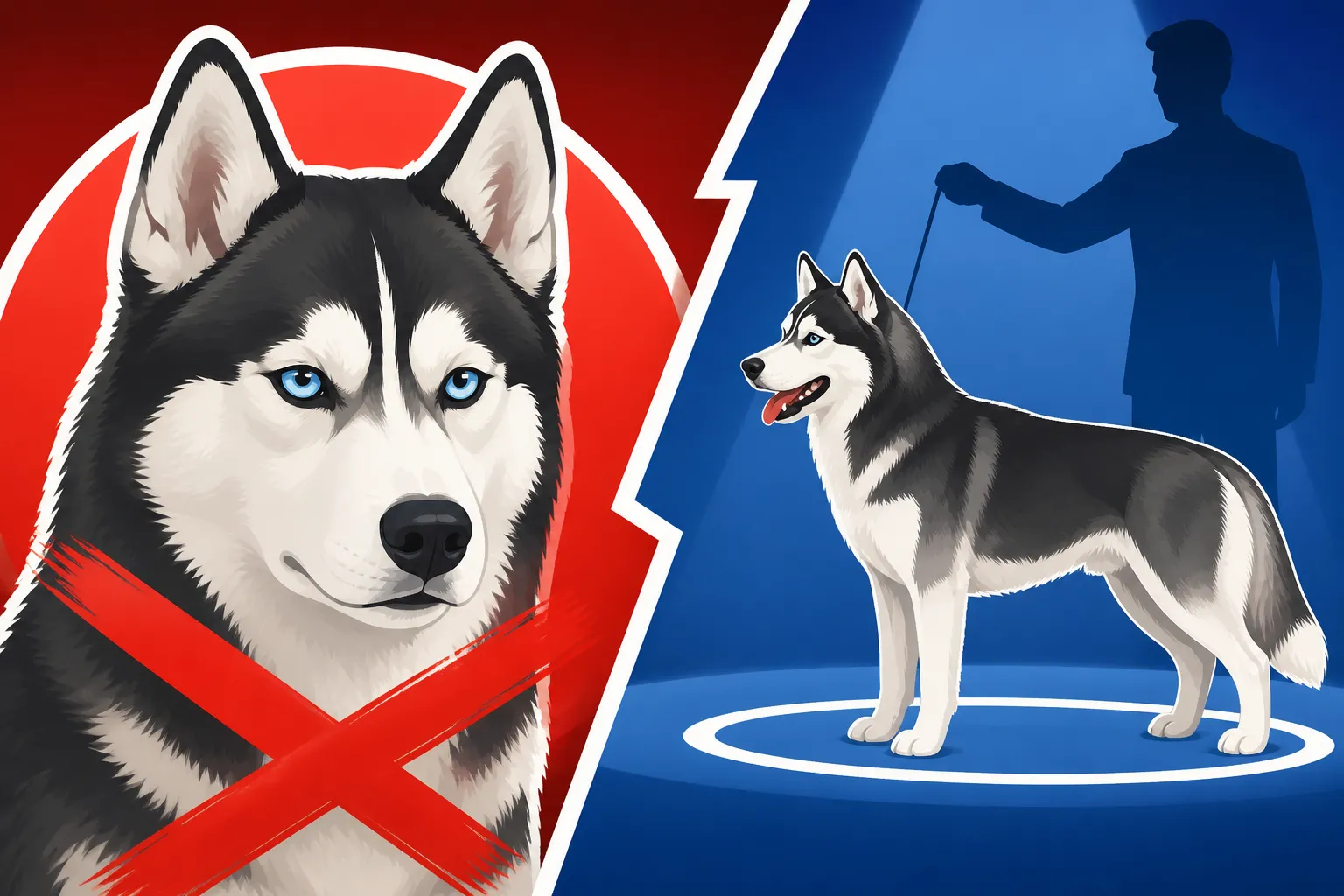
What Disqualifies a Siberian Husky in the Ring
It can be truly disheartening to see a beautiful Siberian Husky, a dog you adore and believe embodies the very spirit of the breed, deemed ineligible for the show ring due to a disqualifying fault. This isn't about whether your dog is a good companion – they absolutely are! – but about a very specific set of rules designed to preserve the breed's historical function and appearance. This guide will help you understand precisely what the American Kennel Club (AKC) considers a disqualification for a Siberian Husky in conformation events, separating fact from common misunderstanding.
The Foundation: Understanding the AKC Standard
When we talk about a dog show, we're not just admiring pretty faces. We're evaluating how closely a dog conforms to its breed standard, which is essentially the written blueprint for what an ideal specimen of that breed should look like, act like, and be structured for. For the Siberian Husky, this standard is steeped in its history as an endurance sled dog from the harsh Siberian tundra.
Why the Standard Exists: More Than Just Looks
The AKC breed standard for the Siberian Husky isn't just a list of aesthetic preferences; it's a historical document that describes a dog built for a specific purpose. Every aspect, from the wedge-shaped head to the well-furred tail, from the muscular yet agile body to the close-set, erect ears, contributes to its ability to pull light loads over vast distances in freezing temperatures. A dog with traits outside this standard might not have been as efficient or resilient in its original working role. For instance, a long, fluffy "wooly" coat, while perhaps charming to some, would collect snow and ice and impede movement in the extreme cold, making it a functional flaw for a working sled dog. The standard exists to ensure that breeders are striving to maintain these essential characteristics, preserving the integrity of the breed as it was developed by the Chukchi people.
General Faults vs. Disqualifications: Severity Matters
It's crucial to understand the difference between a "fault" and a "disqualification" in the show ring. A fault is a deviation from the ideal, making a dog less desirable but still allowing it to be shown and potentially win. Faults are typically graded in severity, from minor to serious. For example, a somewhat open eye or ears that are a little too large might be considered faults, costing a dog points but not removing it from competition entirely. Judges weigh these faults against a dog's overall virtues.
A disqualification, however, is an absolute deal-breaker. It means the dog cannot be awarded any points or placements, regardless of how perfect it might be in every other aspect. It's an immediate exit from the ring because the dog possesses a characteristic that is considered fundamentally contrary to the essence of the breed. These are clear, objective criteria that leave little room for a judge's personal interpretation, ensuring consistency across shows and judges.
The Judge's Perspective: What They're Looking For
Judges are highly trained individuals who have often spent years involved with the breed, either as breeders, exhibitors, or both. They have a deep understanding of the AKC standard and are looking for a dog that embodies it in both form and function. While they appreciate a dog's condition, grooming, and presentation – perhaps using products like those found on Chewy to keep a coat gleaming – their primary focus is on the structural and type characteristics defined by the standard. They are assessing everything from the angle of the shoulder to the set of the tail, the gait as the dog moves, and its overall temperament. When it comes to disqualifications, their role is simply to identify if one is present. If it is, their hands are tied; the dog cannot proceed.
Absolute Disqualifications: Deal Breakers in the Ring
When a judge identifies a disqualifying fault, it's not a judgment on your dog's worth as a pet, but rather an objective finding that it simply doesn't meet the absolute requirements for competing in conformation. These are the traits that immediately send a Siberian Husky out of the ring.
Weight and Height Outside the Standard: No Room for Interpretation
The AKC standard specifies a height and weight range for Siberian Huskies to ensure they maintain the light-boned, agile build necessary for their original purpose. Males should be 21 to 23.5 inches at the shoulder, weighing 45 to 60 pounds. Females should be 20 to 22 inches at the shoulder, weighing 35 to 50 pounds. Any dog that falls outside these ranges is disqualified. This isn't about being slightly over or under; it's about being definitively outside the published parameters.
Imagine a stunning male Siberian Husky, perfectly marked, with an incredible gait and wonderful temperament, but he stands 24 inches tall. As magnificent as he might be, that extra half-inch over the maximum height means he cannot place in the show ring. This strict adherence to size is because a dog that is too large or too heavy would struggle to maintain the endurance and speed required for sled work, while a dog that is too small might lack the necessary strength. It's a fundamental aspect of the breed's functional design. You can find more detail on this in Siberian Husky Height and Weight in the Standard.
Drop Ears: A Clear Sign of Non-Breed Type
One of the most defining features of a Siberian Husky is its erect, triangular ears, set high on the head. These ears are not just cute; they are functional, designed to protect against frostbite and capture sound in vast, open spaces. A Siberian Husky with "drop ears," meaning ears that are not erect and instead hang down like those of a Labrador Retriever or a Basset Hound, is an immediate disqualification. This is considered a fundamental deviation from the breed type.
This particular disqualification is very clear-cut. There's no gray area or subjective interpretation. If the ears are not standing firmly upright, the dog is out. This isn't a fault you can "train" away or improve with conditioning. It's a structural element that is non-negotiable for the breed.
Unrecognized Coat Colors or Patterns: Beyond the Acceptable Palette
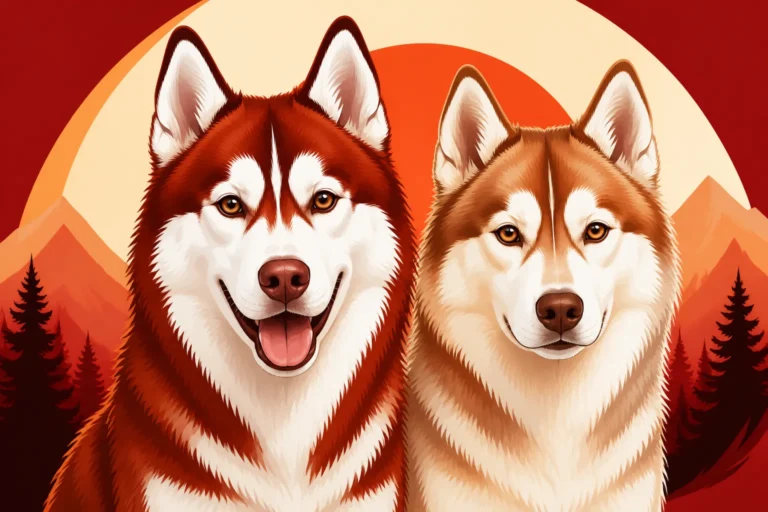
The Siberian Husky comes in a beautiful array of colors and patterns, from pure white to jet black, with various shades of gray, red, and sable in between. However, not every combination or shade is recognized by the AKC standard. While most common colors are accepted, any coat color or pattern not explicitly described or implied in the standard can be a disqualification. For example, a "merle" pattern, which creates splotches of dilute color and is seen in some other breeds like Australian Shepherds, is not part of the Siberian Husky standard and would result in disqualification.
It's important for prospective owners and breeders to familiarize themselves with The Coat Colors the Siberian Husky Standard Allows to avoid confusion. A seemingly unique or exotic coat pattern might be highly attractive but could be a disqualifying trait in the conformation ring. This emphasizes the importance of understanding the breed's genetic heritage and standard-approved appearances.
Wooly or Long Coats: Functional Flaws for a Working Breed
Perhaps one of the most surprising disqualifications for many new Husky enthusiasts is the "wooly" coat. A wooly coat is essentially an excessively long, soft, and fluffy coat that lacks the harsh outer guard hairs and dense undercoat that define a proper Siberian Husky double coat. While a long-haired Husky might look incredibly plush and appealing, it's a disqualifying fault in the show ring.
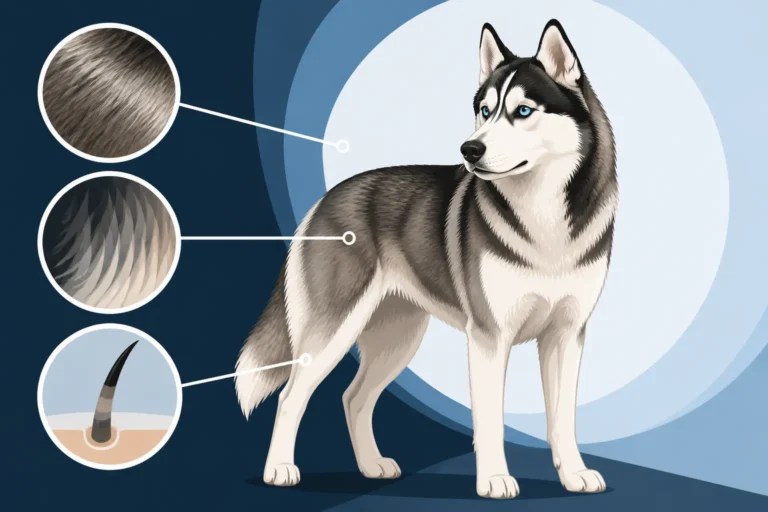
Why? Because the correct double coat is specifically engineered by nature to protect the dog in extreme cold and repel snow and ice. A wooly coat tends to collect snow, mat easily, and doesn't provide the same level of insulation. It's a functional flaw that would hinder a sled dog's ability to perform its duties. This is a clear example of how the breed standard prioritizes function over a potentially appealing aesthetic. You can delve deeper into this specific trait by reading Wooly Coated Siberian Huskies. This characteristic can also be particularly challenging for pet owners, as a wooly coat requires significantly more grooming to prevent matting than a standard coat, even with high-quality brushes and shampoos found at retailers like Chewy.
Other Physical Deformities or Health Issues: Beyond Cosmetic
Beyond the explicitly stated disqualifications, any physical deformity or health issue that is so severe it affects the dog's ability to function or represents a significant departure from healthy breed type can lead to a disqualification. This might include severe lameness, cryptorchidism (undescended testicles in males), or significant structural abnormalities that impede movement. While not always listed individually as "disqualifications," these conditions are often covered by general clauses regarding unsoundness or deviations from the breed's functional requirements.
For instance, while a specific eye disease might not be a direct disqualification per se if the dog is otherwise structurally sound, severe conditions that cause pain or impair vision could be considered under general health and soundness clauses. Breeders often perform health testing to avoid such issues, and understanding tests like those discussed in What Siberian Husky CHIC Certification Requires is vital for promoting healthy breeding practices.
Common Misconceptions About Disqualifications: What Isn't a Deal Breaker
It's easy to get caught up in rumors or misunderstandings about what constitutes a disqualification. Many traits often incorrectly cited as disqualifying are actually simply faults, or sometimes, perfectly acceptable breed characteristics.
Eye Color: Blue Eyes Are Perfectly Fine
Perhaps the most common misconception about Siberian Huskies is that blue eyes are a fault or even a disqualification. This is absolutely false! Blue eyes are a hallmark of the Siberian Husky breed and are explicitly allowed by the AKC standard. In fact, Siberian Huskies can have blue eyes, brown eyes, one blue and one brown (bi-eyed), or even parti-colored eyes (an eye with streaks of both blue and brown). None of these eye colors are a disqualification in the show ring.
The striking blue eyes are part of what makes the Siberian Husky so recognizable and beloved. So, if you have a blue-eyed Husky and aspire to show, don't let this old wives' tale deter you. It's truly a distinctive and beautiful trait. For more information, explore Blue Eyes and What They Mean in a Siberian Husky.
Missing Teeth: Often a Fault, Not Always a DQ
While a full complement of teeth is preferred and desirable, missing teeth in a Siberian Husky are generally considered a fault, not an outright disqualification, unless specifically stated otherwise or if the missing teeth severely impact bite function. The breed standard calls for a "scissor bite," and the presence of all 42 teeth is ideal, but variations can occur. Sometimes a tooth might be lost due to injury or never develop.
A judge will assess the overall bite and dental health. While missing teeth might impact a dog's chances against a dog with a perfect mouth, it typically won't lead to an automatic disqualification unless the deviation is extreme or represents a significant structural problem. This is a nuance where specific language in the standard must be carefully interpreted. Good dental hygiene, including products you might pick up from Chewy, can help maintain what teeth your Husky does have!
Minor Imperfections: The Difference Between a Fault and a DQ
Many things that new exhibitors worry about are minor faults rather than disqualifications. These could include things like a slightly soft back, a tail carried a little too high, or a coat that's a bit sparse. These are all considerations that a judge will factor into their overall evaluation, but they won't automatically dismiss a dog from the ring.
The key takeaway here is that a fault means the dog isn't perfect, but a disqualification means the dog is fundamentally outside the acceptable parameters of the breed standard. A dog with minor faults can still win if its overall virtues outweigh its imperfections. It's a holistic assessment, but disqualifications are non-negotiable.
Here’s a quick overview of some common distinctions:
| Feature | Ideal Standard | Common Fault (Deductible Points) | Disqualification (Out of Ring) |
|---|---|---|---|
| Height/Weight | Males 21-23.5", 45-60 lbs; Females 20-22", 35-50 lbs | Slight deviation within very close margins | Outside specified range (e.g., male > 23.5" or < 21") |
| Ears | Erect, triangular, close-set | Slightly large or wide-set | Drop ears |
| Coat Texture | Double coat, medium length, not wooly | Sparse undercoat, slightly coarse guard hairs | Wooly or excessively long, soft coat |
| Eye Color | Brown, blue, bi-eyed, parti-colored | No specific fault for color | Not a disqualification |
| Bite | Scissor bite | Level bite, slightly undershot/overshot | Severely undershot/overshot, wry mouth, missing teeth (extreme cases) |
| Temperament | Alert, outgoing, friendly, dignified | Shyness, slight aggression (may be fault) | Viciousness or extreme shyness |
The Impact of a Disqualification: Beyond the Ribbon
Understanding what disqualifies a Siberian Husky in the show ring is important for anyone involved with the breed, whether you're a serious breeder or simply an admirer. The implications extend beyond just winning a ribbon.
Breeding Considerations: Maintaining Breed Integrity
For reputable breeders, avoiding disqualifying faults is a paramount concern. A dog with a disqualifying fault, while still a cherished pet, should generally not be used in a breeding program if the goal is to produce show-quality offspring or to contribute positively to the breed's gene pool according to the standard. Passing on a disqualifying trait, such as the gene for a wooly coat or for extreme size, would dilute the breed's integrity and purpose. Breeders use health testing and careful pedigree research to minimize the chances of producing such traits.
This commitment to the standard is why you'll often see breeders talk about Health Testing Before You Buy a Siberian Husky and why they are so meticulous about the appearance and health of their breeding stock. The ultimate goal is to produce healthy, functional dogs that embody the ideal Siberian Husky.
Pet vs. Show Dog: Where the Standard Truly Matters
It's vital to remember that a disqualifying fault in the show ring has absolutely no bearing on a Siberian Husky's ability to be a loving, healthy, and happy family pet. Many incredible Huskies with wooly coats, slightly oversized frames, or other non-standard traits live full, wonderful lives as companions. The show ring is a highly specialized arena with very specific criteria.
Your Husky's worth as a companion isn't measured by a judge's tape measure or an examination of their ears. If your dog has a disqualifying fault but is otherwise healthy, well-tempered, and brings joy to your life, then they are a perfect dog for you. Focus on providing them with good nutrition, plenty of exercise, and enrichment activities – maybe even some fun agility courses in the backyard using equipment from Chewy – and their "disqualification" will be utterly meaningless in the grand scheme of things.
Looking Up a Siberian Husky in the OFA Database
While the OFA (Orthopedic Foundation for Animals) database is primarily used for tracking health clearances for genetic conditions like hip and eye diseases, it reinforces the concept of breed health and integrity. A dog with a show ring disqualification might still have excellent health clearances for hips, eyes, and thyroid, and could be a perfectly sound and healthy dog. Conversely, a show champion could have underlying health issues not visually apparent in the ring.
This database, which you can use to look up a Siberian Husky, helps breeders make informed decisions about mating pairs by focusing on verifiable health rather than just conformation. While a disqualification in the ring is about adherence to an appearance standard, the OFA helps us all work towards a future of healthier dogs, regardless of whether they ever set a paw in the show ring. The two standards – conformation and health – often go hand-in-hand in responsible breeding programs, even if they address different aspects of a dog's suitability.
Disclaimer
This article is for general informational purposes only and does not constitute professional advice. Laws, prices and regulations vary by location and change over time. Consult a qualified professional for guidance on your specific situation.