Parti-Eyed Siberian Huskies
It’s easy to get lost in the mesmerizing gaze of a Siberian Husky, isn't it? Their eyes are often one of their most striking features, whether they're piercing blue, warm brown, or even one of each. But what about those truly unique Huskies who have eyes that seem to hold an entire galaxy of colors within a single iris? If you’ve ever seen a Siberian Husky with an eye that's split between two distinct shades, you've encountered a parti-eyed beauty. This guide will dive deep into what makes a Siberian Husky parti-eyed, what it means for their health, and how it fits into the breed's fascinating characteristics.
What Exactly is a Parti-Eyed Siberian Husky?
When we talk about a parti-eyed Siberian Husky, we're discussing a very specific, and quite stunning, ocular trait. It’s more than just having two different colored eyes; it's about the mosaic of color happening within one eye itself. It's a natural wonder that adds another layer to the already diverse appearance of these magnificent dogs.
Defining Parti-Eyes Versus Bi-Eyes
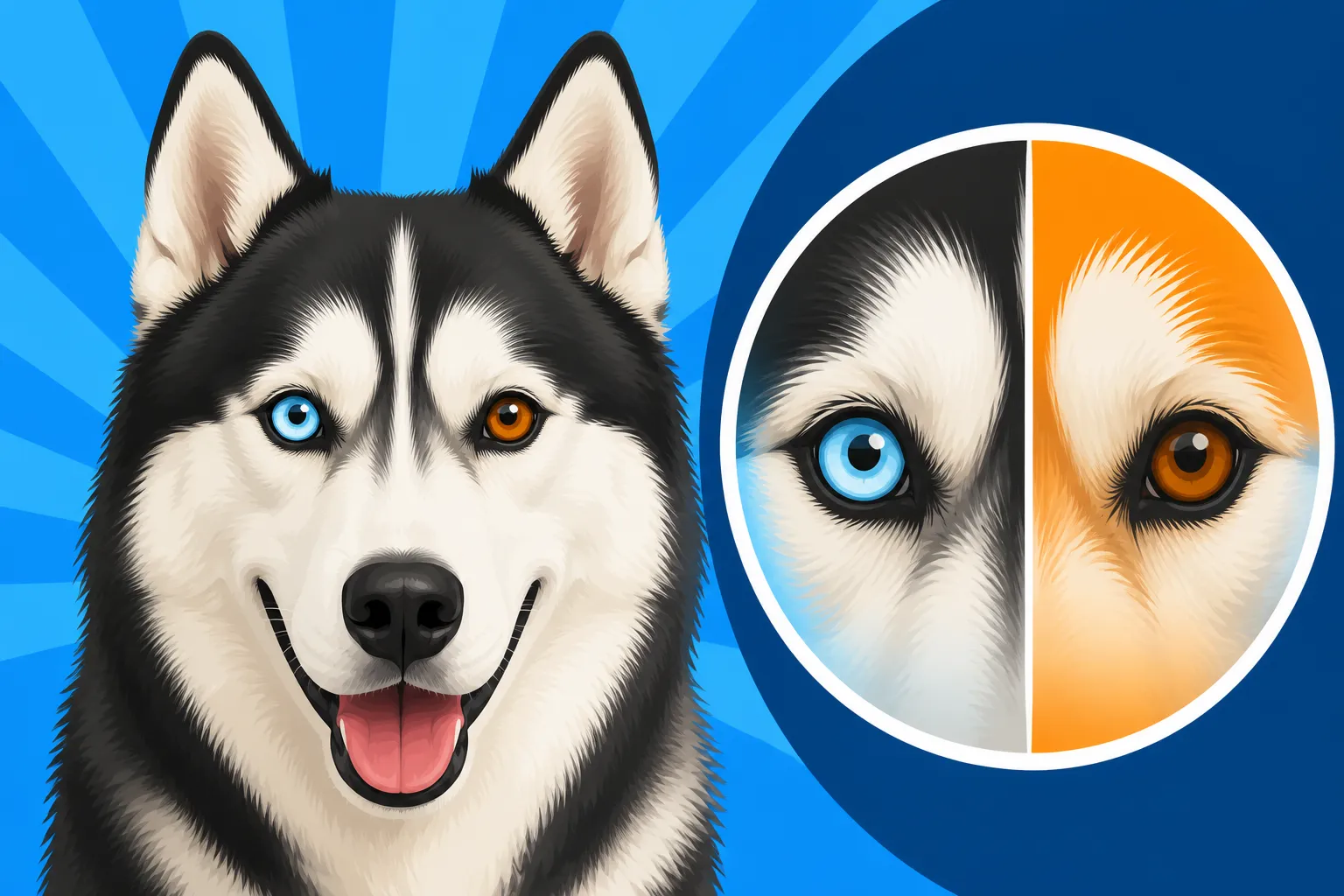
Many people often confuse "parti-eyed" with "bi-eyed" (also known as heterochromia), and it's an understandable mix-up because both involve multiple eye colors. However, there's a crucial distinction. A bi-eyed Siberian Husky, for instance, will have one blue eye and one brown eye. Each eye is a solid, single color, but the colors differ from eye to eye. It's like having one blue marble and one brown marble. This is a common and highly recognized trait in the breed, contributing to their exotic appeal. You might have seen dogs like this and thought, "Wow, those eyes are incredible!" And they are!
Now, a parti-eyed Siberian Husky takes that concept of varied coloration and applies it to one single iris. Imagine looking into one of their eyes and seeing a clear division—perhaps half of the iris is a brilliant blue, and the other half is a rich brown. Or maybe there's a distinct segment of blue in an otherwise brown eye, or vice-versa. It’s not a swirling blend but a definitive split, like someone painted two different colors directly onto the iris. This creates a captivating, often startling, visual effect that really makes a Husky stand out. It’s less common than bi-eyes, making those who possess this trait even more unique.
The Genetics Behind Parti-Eyes
The science behind parti-eyes, or sectoral heterochromia as it's known scientifically, is rooted in the distribution of melanin within the iris during development. Eye color in dogs, much like in humans, is determined by genetics, specifically the amount and type of melanin pigment present. Blue eyes, common in Huskies, occur due to a lack of pigment in the anterior stroma of the iris, allowing light to scatter and appear blue. Brown eyes, on the other hand, have more melanin.
Parti-eyes happen when there's an uneven distribution of this melanin within the cells of a single iris. Instead of the pigment genes acting uniformly across the entire eye, they express themselves differently in various sections. This isn't a genetic mutation or a health defect; it's simply a variation in how the genes express the pigment. It's a natural genetic lottery that results in these beautiful, patchy eyes. Think of it like a birthmark—it's a part of their unique physical makeup, completely natural, and not indicative of any underlying issue. Breeders aren't specifically breeding for parti-eyes, as it's a more unpredictable outcome compared to, say, solid blue or brown eyes, or even bi-eyes where the genetic pathways are better understood.
Common Parti-Eye Combinations in Siberian Huskies
While any combination of colors is theoretically possible with parti-eyes, some are definitely more frequently observed in Siberian Huskies. The striking contrast often found in their eyes is what really makes them unforgettable.
Blue and Brown Sections
By far, the most common and easily recognizable parti-eye combination in Siberian Huskies involves sections of blue and brown. This is because blue and brown are the predominant natural eye colors in the breed. You might see a Husky with an eye that is predominantly brown but has a distinct wedge or segment of bright blue, perhaps towards the pupil or along one edge of the iris. Conversely, an eye might be mostly blue with a segment of warm brown. The line between the two colors is often quite sharp and clear, making the distinction very obvious and visually stunning.
The vibrancy of these colors can also vary. Some Huskies will have incredibly vivid, almost electric blue alongside a deep chocolate brown, creating a high-contrast look that truly pops. Others might have softer, lighter blues or more muted browns, resulting in a more subtle, yet still distinctly parti-eyed appearance. Each dog’s parti-eyes are a unique piece of art, often making their face incredibly expressive and memorable. It’s one of those things that, once you see it, you never forget it.
Other Less Common Parti-Eye Shades
While blue and brown dominate the parti-eye landscape for Siberian Huskies, you might occasionally spot other, less common shades making an appearance. Amber eyes, for example, are a beautiful golden-yellow hue that can sometimes be seen in Huskies. It's not as prevalent as blue or brown, but when present, it can create a stunning effect. Imagine a brown eye with a streak of amber, or even a blue eye with a hint of this golden shade. These variations, while rare, are still within the natural spectrum of Husky eye colors.
Green eyes are even rarer in Siberian Huskies and are often a transient color seen in puppies before their permanent adult eye color sets in. However, in extremely rare cases, a Husky might retain a greenish tint into adulthood, or even display a green segment within a parti-eye. These variations occur due to specific genetic influences on pigment density and light scattering, making them truly unique finds. Again, these are not indicative of any health issues but rather a fascinating display of genetic diversity within the breed. Regardless of the exact colors, the sheer uniqueness of a parti-eyed Husky often draws admirers and sparks conversations, highlighting the breed's incredible visual appeal.
Health and Vision Concerns for Parti-Eyed Huskies
One of the biggest questions that often comes up when people see a parti-eyed Siberian Husky is, "Is there something wrong with their eyes?" It's a natural assumption when something looks so different from the norm. However, it's really important to clear up any misconceptions.
Dispelling Myths About Parti-Eyes and Vision Problems
Let's get this straight right off the bat: having parti-eyes does not mean your Siberian Husky has poor vision or any underlying health problems related to their eyes. This is a myth that needs to be thoroughly busted! The variation in eye color within the iris is purely a cosmetic trait, a result of how pigment develops. It does not affect the structure or function of the eye itself. A parti-eyed Husky sees the world just as clearly as a Husky with two brown eyes, two blue eyes, or one of each. Their visual acuity, depth perception, and overall eye health are entirely independent of this specific coloration.
I’ve met countless Huskies with the most incredible parti-eyes, and every single one of them had perfect vision, chasing squirrels and navigating trails with no issues whatsoever. It’s like a human having different colored patches on their skin – it’s a unique characteristic, not a medical condition. So, if you're lucky enough to have a parti-eyed Husky, or you're considering adopting one, rest assured that their unique gaze is just that: unique, not problematic. Don't let anyone tell you otherwise! All Huskies, regardless of eye color, benefit from regular veterinary check-ups to ensure their overall health, including their eyes. Siberian Husky Eye Disease and the Annual Exam is something every owner should be diligent about.
Routine Eye Care for All Siberian Huskies
While parti-eyes themselves aren't a health concern, that doesn't mean you can neglect your Siberian Husky's general eye health. Just like any dog, Huskies can be susceptible to various eye conditions, and routine care is paramount to catching any potential issues early. Regular veterinary check-ups are non-negotiable. Your vet will examine your Husky's eyes as part of their overall physical, looking for any signs of irritation, discharge, cloudiness, or changes in vision.
Beyond routine vet visits, it’s a good habit to keep an eye on your Husky's eyes yourself. Look for excessive tearing, redness, squinting, or pawing at the face, all of which could indicate an issue. A healthy Husky's eyes should be clear, bright, and free of any excessive discharge. If you notice anything unusual, don't hesitate to contact your vet. Specific breed-related concerns, like Corneal Dystrophy in the Siberian Husky, also highlight the importance of proactive eye care. Maintaining good hygiene by gently wiping away any occasional debris with a damp cloth can also help keep their eyes clean and comfortable. You can find gentle eye wipes and cleaning solutions at places like Chewy, which can be a real lifesaver for keeping those beautiful eyes pristine without causing irritation.
Parti-Eyes and the Siberian Husky Breed Standard
Understanding how a unique trait like parti-eyes fits into the established breed standards can sometimes be a little confusing. Owners often wonder if their uniquely marked dog meets the "ideal" defined by kennel clubs. For Siberian Huskies, the answer regarding eye color is quite liberating!
AKC and Other Registry Perspectives
For breed enthusiasts and those involved in showing, the American Kennel Club (AKC) standard is the definitive guide for Siberian Huskies in the United States. When it comes to eye color, the AKC standard for the Siberian Husky is wonderfully inclusive. It states: "Eyes almond shaped, moderately spaced and set slightly obliquely. Color brown or blue, one of each or parti-colored are acceptable." Did you catch that last part? "Parti-colored are acceptable." This is fantastic news for our parti-eyed beauties! It means that having multi-colored eyes within a single iris is not considered a fault or a disqualification in the show ring.
This acceptance reflects the natural genetic diversity within the breed and acknowledges that these unique eye patterns are a part of the Husky's historical makeup. Other reputable registries around the world generally follow similar guidelines, recognizing the wide array of eye colors and combinations that make the Siberian Husky so distinctive. So, whether your Husky has classic blue eyes, deep brown eyes, striking bi-eyes, or truly captivating parti-eyes, they can still be considered an excellent example of the breed based on this trait. This flexibility is a testament to the breed's origins and its appreciation for natural variety.
Does Eye Color Affect a Siberian Husky's Price?
This is a question many prospective Husky owners ask, especially when they see a puppy with particularly striking or unusual eye colors. The short answer is: sometimes, yes, it can, but it shouldn't be the primary driver of cost. Unfortunately, some less reputable breeders might try to capitalize on the "rarity" or "unique" appeal of parti-eyes (or even bi-eyes or pure blue eyes) by charging a premium for puppies with these traits. They know that aesthetically pleasing features can attract buyers who are willing to pay more for something that stands out.
However, an ethical and responsible Siberian Husky breeder will always prioritize health, temperament, and adherence to the overall breed standard above a specific eye color. They understand that a unique eye color, while beautiful, is a cosmetic trait and doesn't make a dog "better" or healthier. Such breeders will price their puppies based on their overall quality, health testing of the parents (like ensuring both parents have had their eyes checked, following guidelines like those mentioned in Health Testing Before You Buy a Siberian Husky), and the care invested in the litter, not just the color of their eyes. If a breeder is charging significantly more just for eye color, it might be a red flag. Focus on finding a puppy from a breeder who can provide excellent health records and demonstrate a genuine commitment to the welfare and future of their dogs, rather than someone who just highlights flashy looks. A puppy's health and disposition are far more valuable than the color of its eyes in the long run.
When choosing a Siberian Husky, remember that their eyes are just one small part of their incredible appeal. Their personality, energy, and unwavering loyalty are what truly define them.
| Eye Color Type | Description | Commonality in Huskies | Impact on Health | AKC Standard Acceptance |
|---|---|---|---|---|
| Brown Eyes | Both eyes are a solid shade of brown. | Very Common | None | Acceptable |
| Blue Eyes | Both eyes are a solid shade of blue. | Very Common | None | Acceptable |
| Bi-Eyed | Each eye is a different, solid color (e.g., one blue, one brown). | Common | None | Acceptable |
| Parti-Eyed | Sections of two different colors within a single iris. | Less Common | None | Acceptable |
| Amber/Green Eyes | Rare; often seen as a shade of brown or a puppy transition. | Rare | None | Acceptable (as variations of brown/blue) |
Disclaimer
This article is for general informational purposes only and does not constitute professional advice. Laws, prices and regulations vary by location and change over time. Consult a qualified professional for guidance on your specific situation.