The Coat Colors the Siberian Husky Standard Allows
It can be incredibly confusing to navigate the world of Siberian Husky coat colors, especially with so many striking variations and sometimes misleading terms floating around. You see gorgeous dogs online or at the dog park, and everyone seems to have a different name for their unique shades. This guide aims to clear up that confusion by diving deep into what the official Siberian Husky breed standard truly recognizes when it comes to their magnificent coats. We'll explore the accepted spectrum of colors and markings, discuss what makes certain patterns distinct, and help you understand why some popular "designer" colors aren't actually part of the breed's recognized appearance.
Decoding the Siberian Husky Coat Standard
When we talk about the "breed standard," we're referring to the official blueprint for what a Siberian Husky should look like, how it should move, and even its general temperament, as laid out by organizations like the American Kennel Club (AKC). For Siberian Huskies, this standard is incredibly important because it guides ethical breeders, judges in the show ring, and helps maintain the breed's historical integrity and working ability. Many people think the standard only covers things like height or ear set, but coat color and markings are also very specific components.
Why the Breed Standard Matters for Colors
The breed standard isn't just about aesthetics; it's about preserving the breed as it was originally developed. Siberian Huskies were bred by the Chukchi people in Siberia for endurance, speed, and their ability to thrive in harsh, cold environments. Their double coat, with its dense undercoat and protective guard hairs, is absolutely essential for their survival and performance in those conditions. While the color itself doesn't inherently change the coat's function, adhering to the standard helps ensure that breeders aren't introducing genetic traits that might compromise coat quality or overall health in favor of a "fad" color. A coat that isn't true to the standard might not offer the same level of protection.
Beyond function, the standard helps define the breed's identity. Imagine if suddenly a wide array of patterns not typically seen in Huskies were accepted; it could dilute what makes a Siberian Husky visually distinct. When you're looking at What the AKC Standard Asks of a Siberian Husky, you'll see how meticulously every detail, including color, is described to safeguard the breed's unique characteristics. It ensures that when you see a Siberian Husky, you recognize it as such, regardless of individual variations within the accepted range.
Understanding Color Descriptions Beyond "Pretty"
It's easy to just say a Husky is "pretty" or has "cool markings," but the breed standard uses precise language to categorize colors and patterns. This precision is vital for breeders and judges, but it also helps owners understand their dog's heritage. For instance, a "black and white" Husky isn't just a two-toned dog; the standard specifies the richness of the black and the clarity of the white, along with the patterns these colors form. You'll find terms like "saddle," "piebald," or "agouti" used, which refer to very specific distributions of color on the dog's body. These aren't just fancy words; they're descriptive tools that ensure consistency across the breed.
These descriptions often come with nuances. For example, a black and white Husky might have a different genetic makeup and visual appearance than a "wolf gray" one, even if both appear largely gray. The standard helps delineate these differences, ensuring that specific genetic lines can be tracked and preserved. This level of detail protects against casual mislabeling and maintains the integrity of the Siberian Husky as a distinct breed with its own unique visual signature.
The Spectrum of Accepted Siberian Husky Coat Colors
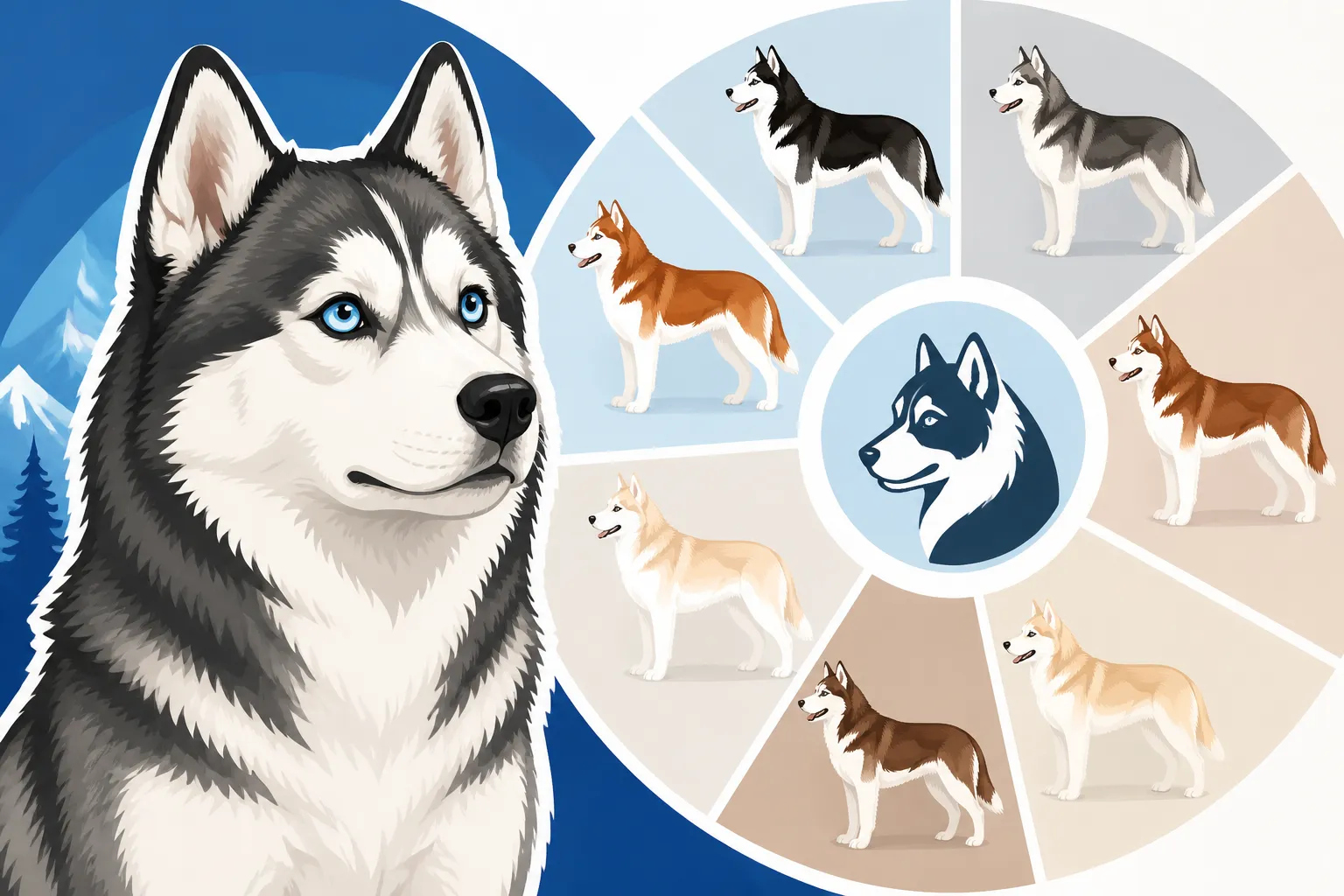
One of the most captivating aspects of Siberian Huskies is their incredibly diverse range of coat colors. From the darkest black to the purest white, and everything in between, there's a Husky shade to enchant everyone. What's important to remember is that while the variety seems endless, they all fall within a recognized spectrum defined by the breed standard.
The Range From Black to Pure White
Let's start with the extremes. You can find Siberian Huskies that are almost entirely black, with minimal white markings, usually on their chest, paws, and tail tip. This deep, rich black is striking, often showing very little, if any, brown or red undertones. On the other end of the spectrum, we have the Pure White Siberian Huskies. These dogs possess an all-white coat, sometimes with a very faint cream tint, but with no discernible patches or patterns of other colors. While stunning, it's crucial to understand that a pure white Husky is not an albino; they have pigment in their eyes (usually blue or brown) and on their nose and paw pads.
Most Huskies, however, fall somewhere in the middle, displaying combinations of black and white. These "black and white" variations can range from dominant black with white accents to dominant white with black patches. The distribution of these colors is what often creates the unique patterns and masks we love. A well-defined black and white Husky often looks like it's wearing a tuxedo, with clear lines separating the two shades. The vibrancy and depth of the black can vary too, from a jet black to a softer, almost charcoal hue.
Shades of Gray, Red, and Sable
Beyond black and white, the Siberian Husky standard embraces a beautiful array of grays, reds, and sables.
- Grays: Gray Huskies are incredibly common and popular. This category itself has a wide range, from very light, almost silver grays, to a darker, richer wolf gray. Agouti and the Wolf-Gray Siberian Husky is a specific type of gray where each hair strand has bands of different colors, usually black, tan, and cream, giving the coat a grizzled, wild appearance. This is often mistaken for just a dark gray, but it's genetically distinct and quite striking, reminiscent of their wild ancestors. Another common gray is simply 'gray and white', where the individual hairs are uniformly gray, not banded like agouti.
- Reds: Red and Copper Siberian Huskies are truly breathtaking. These range from a light, almost orange-cream color to a deep, dark copper or even a rich chocolate red. The red hues are typically paired with white markings. Sometimes, the intensity of the red can vary with the season, appearing brighter in warmer months and deeper in winter. It's important that the red is a true red, not just faded black or brown.
- Sables: Sable Siberian Huskies are a less common but equally stunning color. Sable is often described as a reddish-brown with black tips on the guard hairs. This creates a shaded, dynamic look that can change depending on how the light hits the coat. It’s similar to a wolf gray in its complexity but with a reddish base. The sable coloring is typically accompanied by cream or white markings. It’s a very natural, earthy color that gives the Husky an almost mystical appearance.
Unique Markings: Piebald, Pinto, and More
It's not just the base color that defines a Siberian Husky's coat; their markings are just as varied and distinctive. The standard allows for a wide array of patterns, and understanding these can help you appreciate the artistry of their appearance.
- Piebald and Pinto: These terms describe specific patterns of colored patches on a predominantly white background. Piebald and Pinto Siberian Husky Markings mean that large, irregular patches of any accepted color (black, gray, red, sable) appear on a white body. The difference between piebald and pinto is often subtle and debated, but generally, piebald refers to larger, more defined patches, while pinto might involve smaller, more scattered spots. These patterns give each Husky a truly unique, almost painted look.
- Saddle Markings: Many Huskies will have a "saddle" pattern, where a large patch of color (often black or gray) covers their back, resembling a saddle on a horse. The rest of the body, particularly the chest, legs, and underside, is usually white. This is a very classic and common marking that clearly delineates the body into distinct colored and white areas.
- Splashed Coats: Sometimes you'll hear the term "splashed" used to describe coats where white and color are unevenly distributed, almost like paint was splashed onto the dog. This often results in irregular patches and can be quite dramatic. It's a general term that encompasses many patterns where the transition between color and white isn't sharply defined.
These markings, combined with the base colors, are what create the individual artwork that is each Siberian Husky's coat. They're all part of the beauty recognized by the breed standard.
Facial Markings and Patterns: More Than Just a Mask
A Siberian Husky's face is arguably its most expressive feature, and a large part of that expression comes from its unique facial markings. These aren't just random splashes of color; they are distinct patterns that contribute significantly to the breed's iconic look. While some Huskies have very clear, defined patterns, others have more subtle or "open" faces.
The Classic Mask and Goggles
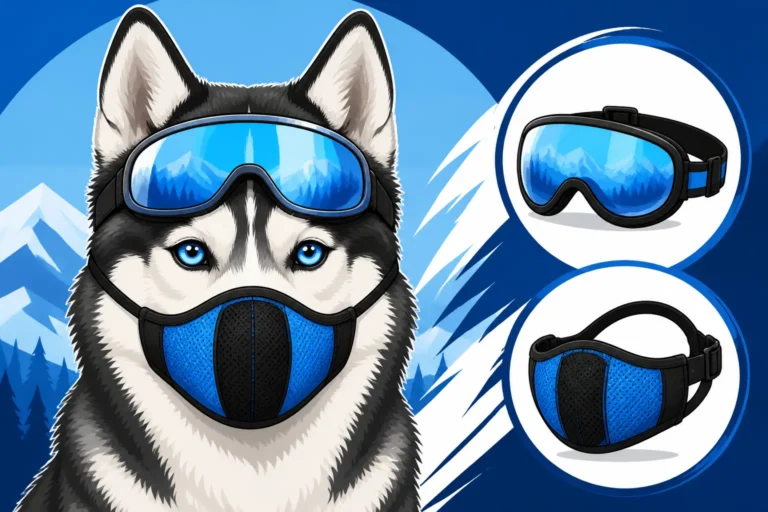
When many people picture a Siberian Husky, they often envision the classic "mask." This involves a distinct pattern of darker fur around the eyes, sometimes extending up the forehead, making the dog look as though it's wearing a mask. The mask can be incredibly intricate, creating shapes around the eyes that resemble spectacles or "goggles." Siberian Husky Face Masks and Goggles are a hallmark of the breed, giving them that intense, focused gaze. The mask can be a solid color or incorporate lighter shades within it, adding depth and dimension to their facial structure.
The intensity and shape of these masks vary greatly from dog to dog. Some masks are very full and cover a large portion of the face, while others are lighter and more delicate. The color of the mask usually corresponds to the dog's primary coat color – so a black and white Husky will have a black mask, while a red and white Husky will have a red mask. The contrasting white on the muzzle, cheeks, and between the eyes helps to make these masks stand out even more.
Open-Faced and Irish Marked Huskies
Not all Siberian Huskies sport a prominent mask, and that's perfectly within the breed standard. Many Huskies are described as "open-faced." This means they have less dark pigment on their face, often with more white extending up their muzzle and forehead, reducing or eliminating the distinct mask pattern. An open face can still be incredibly beautiful and allows for the dog's natural expressions to be even more visible. It's often paired with other white markings.
"Irish marked" Huskies typically have a solid color over their back and head, but with white extending up the legs, chest, and a full white collar. On the face, this can translate to a broader band of white up the muzzle and between the eyes, again creating a more "open" facial appearance compared to a heavily masked Husky. These variations in facial markings are what make each individual Husky so unique, even among those of the same primary color. Looking at the variety on a platform like Chewy, you'd find many Huskies with different facial patterns, each celebrated for their distinct charm.
What "Agouti" Really Means for a Husky's Appearance
We touched on agouti earlier when discussing gray coats, but it's worth a closer look, especially for its impact on facial appearance. The agouti pattern isn't just about a grizzled body coat; it significantly affects the face as well. Agouti and the Wolf-Gray Siberian Husky typically present with a darker, often "dirty" or smoky appearance on their face, rather than the clean, sharp lines of a traditional mask. Their masks tend to be less defined, often blending into the overall wolf-like coloring.
What's fascinating about agouti is how the banded hairs create a depth of color that changes with light and movement. On the face, this can mean a less distinct separation of colors, giving the Husky an even wilder, more primitive look. You might not see a stark white muzzle; instead, the muzzle area might be a lighter cream or tan, gradually blending into the darker face. This unique facial presentation is a direct result of the agouti gene and is a recognized, albeit less common, part of the Siberian Husky's diverse appearance.
Dispelling Myths About "Rare" and Unaccepted Colors
In the world of dog breeding, especially with popular breeds, there's often a lot of misinformation about "rare" colors. People hear a unique name and assume it's valuable or special, without understanding what the breed standard truly allows or the potential implications. For Siberian Huskies, it's particularly important to distinguish between accepted variations and colors that are not recognized or, worse, indicative of mixed breeding.
Why Merle is Not a Siberian Husky Color
One of the most persistent myths is the existence of "merle" Siberian Huskies. You might see puppies advertised with striking blue patches, marbled coats, or unusually patterned eyes, marketed as "rare merle Huskies." Let's be unequivocally clear: the merle gene does not naturally occur in the Siberian Husky breed. Whether Merle Siberian Huskies Are Legitimate is a resounding no when it comes to purebred status. The merle gene creates irregular patches of diluted color and can lead to serious health issues, particularly concerning vision and hearing, if a dog inherits two copies of the gene.
If you encounter a dog described as a "merle Husky," it is almost certainly a mixed breed. These dogs are typically the result of crossing a Siberian Husky with another breed that carries the merle gene, such as an Australian Shepherd, Border Collie, or Catahoula Leopard Dog. While these mixes can be lovely dogs, they are not purebred Siberian Huskies, and reputable breeders will never produce or claim to have merle Huskies. Being aware of this distinction is crucial for anyone looking for a healthy, ethically bred purebred Siberian Husky.
The Importance of a Double Coat for Health
While color is a visual trait, the underlying structure of the Siberian Husky's coat is paramount to their health and function. The breed standard meticulously describes the double coat: a soft, dense undercoat that provides insulation, and a medium-length, straight outer coat (guard hairs) that repels water and protects against snow and ice. This coat is designed to keep them warm in extreme cold and, surprisingly, to help them regulate body temperature in moderate heat.
Any deviation from this structure, such as an overly long or "wooly" coat, or a single coat, can compromise their ability to thrive in various weather conditions. While not directly a "color," understanding the coat's functional importance helps explain why the standard is so strict about all aspects of the coat. An improper coat might not insulate correctly, making the dog more susceptible to overheating or getting too cold. Therefore, while appreciating the vibrant colors, always remember that the health and integrity of that glorious double coat are what truly matter. Reputable breeders prioritize coat quality just as much as acceptable color. When choosing grooming tools for your Husky, whether from Chewy or another retailer, you'll want products specifically designed for a double coat to help maintain its health, regardless of its beautiful color.
The Nuance of Color Changes Over a Lifetime
Finally, it's worth noting that a Siberian Husky's coat color can subtly change throughout their life. A puppy's coat might be darker or lighter than its adult coat, and it's not uncommon for shades to shift during their first year or two. Additionally, sun exposure can lighten a Husky's coat, especially red and sable variations, making them appear more faded in the summer. During their Siberian Husky Coat Blow and the Six Weeks It Lasts, you might notice some temporary color variations as the old undercoat gives way to new growth. These natural changes are perfectly normal and part of owning a breed with such a dynamic and functional coat.
| Coat Color | Description | Common Mask/Markings | Rarity (General) |
|---|---|---|---|
| Black & White | Jet black to charcoal with distinct white areas. | Full masks, open faces, saddle. | Common |
| Gray & White | Light silver to dark wolf-gray. | Wolf gray often agouti-faced, traditional gray with various masks. | Common |
| Red & White | Light orange to deep copper/chocolate. | Red masks, sometimes open-faced. | Moderately Common |
| Sable & White | Reddish-brown with black tips on guard hairs. | Less defined, smoky masks. | Less Common |
| All White | Pure white, sometimes with a cream tint. | No mask (entirely white). | Less Common |
| Piebald/Pinto | Large, irregular patches of color on a white base. | Varies depending on color distribution. | Moderately Common |
| Agouti | Banded hairs (black, tan, cream), giving a grizzled, wild look. | Often "dirty" or smoky, less defined mask. | Less Common |
This article is for general informational purposes only and does not constitute professional advice. Laws, prices and regulations vary by location and change over time. Consult a qualified professional for guidance on your specific situation.