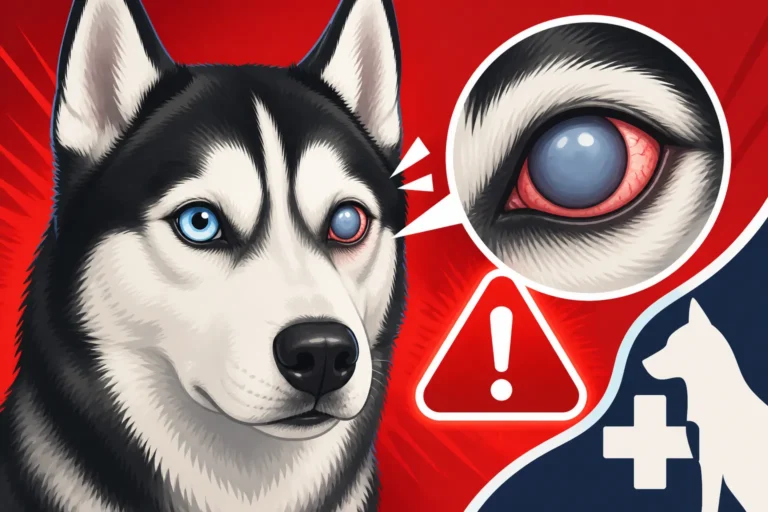
Saving Sight in a Siberian Husky Glaucoma Case
There are few things as terrifying as seeing your beloved Siberian Husky suddenly develop a painful, red, cloudy eye, often seemingly out of nowhere. The panic sets in, especially when you realize it might be something serious enough to threaten their vision. Glaucoma is one such emergency, a condition that can steal your husky's eyesight rapidly if not addressed with incredible speed and precision. This guide is here to walk you through understanding, identifying, and acting decisively to give your Siberian Husky the best chance at saving their precious sight.
Understanding Glaucoma in Siberian Huskies: A Silent Threat
Glaucoma is an incredibly painful and serious eye condition that can quickly lead to irreversible blindness. For husky owners, it’s not just a concern; it’s a specific breed predisposition that means you need to be extra vigilant. Understanding what it is and why it happens is the first step in being prepared to act.
What Glaucoma Is and Why Huskies Are at Risk
At its heart, glaucoma is caused by increased pressure inside the eye, known as intraocular pressure (IOP). Imagine your husky's eye as a tiny, perfectly pressurized balloon filled with fluid. This fluid, called aqueous humor, is constantly produced and drained, maintaining a healthy pressure. When the drainage system gets clogged or malfunctions, the fluid builds up, and the pressure skyrockets. This intense pressure damages the optic nerve and the retina, leading to severe pain and, eventually, permanent vision loss.
Siberian Huskies are unfortunately one of the breeds genetically predisposed to primary glaucoma, specifically primary angle-closure glaucoma. This means the drainage angle within their eye is anatomically abnormal, making it more likely to close off and cause pressure buildup, even without any other underlying eye issues. This genetic component makes diligent observation and quick action even more crucial for us husky parents. It's a cruel twist of fate for a breed known for its striking eyes, but it's a reality we must face head-on.
Beyond primary glaucoma, which is usually inherited, Siberian Huskies can also develop secondary glaucoma. This type is caused by another existing eye condition, such as advanced cataracts, inflammation (uveitis), trauma, or even tumors inside the eye. While primary glaucoma is a concern due to breed predisposition, it’s important for your vet to rule out these secondary causes, as treating the underlying issue might also help manage the glaucoma. This is why regular check-ups, including thorough eye examinations, are so vital for our breed, as detailed in our guide on Siberian Husky Eye Disease and the Annual Exam.
Recognizing the Alarming Early Signs of Glaucoma
One of the biggest frustrations with glaucoma is how quickly it can progress, and sometimes the early signs can be subtle, mimicking less severe issues. However, when a Siberian Husky's eye pressure spikes, it typically presents with distinct, alarming symptoms that demand your immediate attention. The most common signs you might notice are a sudden redness in the eye, often affecting the white part (sclera) and making it look very bloodshot. Your husky might also squint or keep the affected eye partially or fully closed, indicating intense pain.
Beyond redness and squinting, you might observe a cloudy or bluish appearance to the cornea, the clear outer layer of the eye, which can look like a film or haze over the eye. This cloudiness is often due to corneal edema, where fluid builds up in the cornea because of the high pressure. Your husky might also rub their eye or face against furniture or paw at their eye, further signs of discomfort. They may become lethargic, lose their appetite, or generally act "off" because of the severe headache-like pain associated with high intraocular pressure.
It’s easy to mistake a red eye for a simple irritation or conjunctivitis, but with glaucoma, the progression is usually much faster, and the pain is visibly more intense. If you notice these symptoms in your Siberian Husky, especially if they appear suddenly and acutely, do not wait. This is a medical emergency that can lead to irreversible blindness in as little as 24-48 hours. Every minute counts, and a delay in seeking veterinary care significantly reduces the chances of saving your husky’s sight.
The Critical Importance of Immediate Veterinary Attention
I cannot stress this enough: if you suspect glaucoma, your Siberian Husky needs to see a vet immediately. This isn't a "wait and see if it gets better" situation. It's truly a race against the clock to prevent permanent damage to the optic nerve. The longer the eye pressure remains elevated, the more optic nerve cells die, and once they're gone, they cannot regenerate. This means any vision lost due to glaucoma is typically lost forever.
Many general practice vets are equipped to handle initial glaucoma emergencies, but if possible, contacting an emergency veterinary clinic or a veterinary ophthalmologist directly is ideal. These specialists have the specific diagnostic tools and expertise to accurately diagnose and begin aggressive treatment right away. Think of it like a stroke or heart attack in humans – quick intervention is key to minimizing long-term damage.
Delaying treatment, even by a few hours, can be the difference between preserving some vision and complete blindness in the affected eye. Owners often feel guilty if they didn't realize the severity, but the important thing is that once you recognize the signs, you act without hesitation. It's an overwhelming moment, but your quick action can make all the difference in a Glaucoma as a Siberian Husky Emergency.
The Urgent Veterinary Response and Diagnostic Process
When you rush your husky to the vet with a suspected glaucoma crisis, the team will spring into action. It’s a high-stakes environment, and understanding what to expect can help you navigate the situation with a little less anxiety.
What Happens During an Emergency Vet Visit for Eye Pain
Upon arrival at the emergency vet or a veterinary ophthalmologist, your Siberian Husky will likely be triaged immediately due to the urgency of eye pain. The veterinary team will typically start with a thorough history, asking about the onset of symptoms, any previous eye issues, and medications your dog might be on. They'll perform a general physical exam to ensure your husky is otherwise stable, but their primary focus will swiftly shift to the affected eye.
The critical first step is usually to measure the intraocular pressure (IOP) using a tonopen or tonometer. This device gently touches the surface of the eye (after a numbing drop) and provides a pressure reading. Normal IOP in dogs is generally between 10-25 mmHg. Readings significantly higher than this, especially above 30-40 mmHg, are highly indicative of glaucoma. This measurement is not painful for your husky, thanks to the numbing drops, and it provides immediate, vital information that guides the next steps.
Following the IOP measurement, the vet will perform a comprehensive ophthalmic exam. This includes checking pupillary light reflexes, assessing for corneal edema, examining the front of the eye (anterior chamber) for inflammation or other abnormalities, and attempting to visualize the back of the eye (fundus) to check the optic nerve if possible. They might also do a fluorescein stain to check for corneal ulcers, which can sometimes accompany glaucoma or other eye injuries. This initial, rapid assessment is crucial for confirming glaucoma and determining its severity and potential underlying causes.
Diagnostic Tools and How They Confirm Glaucoma
While the tonopen provides the initial critical pressure reading, a full diagnosis of glaucoma involves several other diagnostic tools to assess the overall health of the eye and confirm the condition. Beyond the IOP measurement, the vet will use an ophthalmoscope to look inside your husky's eye, examining the retina and optic nerve. Damage to the optic nerve, often appearing as "cupping" or pallor, is a hallmark of advanced glaucoma.
Gonioscopy is another specialized technique often employed by veterinary ophthalmologists. After applying a topical anesthetic, a special lens called a goniolens is placed on the eye, allowing the vet to directly visualize the drainage angle of the eye. This is particularly important for differentiating between primary open-angle and primary angle-closure glaucoma, as well as identifying any abnormalities in the angle that could be contributing to the pressure buildup. This distinction is crucial for prognosis and treatment planning.
In some cases, especially if secondary glaucoma is suspected, further diagnostics might be needed. This could include ultrasound of the eye to look for masses, retinal detachment, or other internal structures that might be contributing to the problem. Blood work might also be run to check for systemic inflammatory conditions that could lead to uveitis and subsequent secondary glaucoma. All these diagnostic steps aim to provide the most complete picture of your husky’s condition, allowing for the most effective and targeted treatment plan. For more on these checks, refer to What an Ophthalmologist Checks in a Siberian Husky.
Decoding Glaucoma Pressure Readings in Your Siberian Husky
Understanding the intraocular pressure (IOP) readings is key to grasping the severity of your husky’s condition. As mentioned, normal IOP typically ranges from 10-25 mmHg. When your husky is diagnosed with glaucoma, their IOP will be significantly elevated. A reading of 30-40 mmHg might be considered moderately elevated, while anything above 40-50 mmHg is usually severely elevated and causes intense pain.
Here's a simplified look at how to interpret those numbers and what they mean for your husky's vision:
| IOP Reading (mmHg) | Interpretation | Urgency Level | Potential Impact on Vision |
|---|---|---|---|
| 10-25 | Normal | Low | Healthy vision |
| 26-35 | Mildly Elevated | Moderate | Early damage possible |
| 36-50 | Moderately Elevated | High | Significant damage, pain |
| 50+ | Severely Elevated | EMERGENCY | Rapid, irreversible blindness |
The vet will use these readings, along with other clinical signs and diagnostic results, to determine the stage of glaucoma. Early-stage glaucoma, caught when pressures are still moderately elevated and before extensive optic nerve damage, offers the best chance for vision preservation. However, many huskies are presented with severely elevated pressures and already compromised vision, making the battle to save their sight much harder. The goal of all initial treatments is to bring these dangerously high pressures down as quickly as possible to prevent further damage.
Immediate and Long-Term Treatments for Glaucoma
Once glaucoma is diagnosed, the veterinary team will move swiftly to lower the intraocular pressure and relieve your husky’s pain. Treatment typically involves a combination of medical and, often, surgical interventions.
Initial Medical Management: Eye Drops and Oral Medications
The very first line of defense against elevated IOP is usually a cocktail of eye drops and sometimes oral medications. These medications work in different ways: some decrease the production of aqueous humor, while others increase its drainage from the eye. Common eye drops used include carbonic anhydrase inhibitors (like dorzolamide or brinzolamide), beta-blockers (like timolol), and prostaglandin analogs (like latanoprost). These are often given frequently, sometimes every 15-30 minutes initially, to rapidly reduce pressure.
Oral medications, such as diuretics like methazolamide, might also be prescribed to further reduce fluid production in the eye. Pain management is also critical, so your vet will likely administer pain relief, either through injection or oral medication, to help alleviate your husky’s discomfort. It's truly heartbreaking to see them in such pain, so getting those initial drops in is a huge relief for them.
It's important to understand that medical management is often a race against time, particularly in acute cases. While these medications can bring down the pressure, they don't always address the underlying cause, especially in primary angle-closure glaucoma where the drainage angle is physically obstructed. They serve as a vital stop-gap measure to buy time and hopefully preserve remaining vision while more definitive plans are made. For many huskies, especially those with primary glaucoma, these drops will be a part of their daily routine for the rest of their lives, even if surgery is performed.
Understanding Surgical Options for Glaucoma
When medical management alone isn't enough, or if the glaucoma is advanced and aggressive, surgery often becomes the most viable option for saving sight or managing pain. There are several surgical approaches, each with its own goals and considerations. One common procedure is cyclophotocoagulation, which uses a laser to destroy some of the cells that produce aqueous humor, thereby reducing fluid production and pressure. This can be done with an endoscopic laser internally or a transscleral laser externally.
Another surgical option is the implantation of a glaucoma shunt or valve, such as an Ahmed valve. This device creates a new drainage pathway for the aqueous humor, diverting it from inside the eye to an external reservoir under the conjunctiva, where it is absorbed. These shunts are designed to provide long-term pressure control. These are complex surgeries, and success rates can vary, but for many huskies, they offer the best hope for maintaining vision in the affected eye, especially when caught early.
Unfortunately, if the eye is already blind and painful, and vision cannot be restored, surgical options shift to pain relief and quality of life. An enucleation, or removal of the eye, is a common procedure for blind, painful eyes. While it sounds drastic, it often brings immediate and profound relief to a dog suffering from chronic, uncontrolled glaucoma. Another option for blind, non-visual eyes is an intravitreal gentamicin injection, which helps to destroy the fluid-producing cells and reduces pain, allowing the eye to remain in the socket but without vision. Deciding About Surgery on an Old Siberian Husky can be particularly tough, balancing age and prognosis.
Beyond Treatment: Managing Chronic Glaucoma and Vision Impairment
For many Siberian Huskies, glaucoma is not a one-time event; it's a chronic condition that requires ongoing management. Even after successful initial treatment or surgery, regular follow-up appointments with a veterinary ophthalmologist are crucial. This often involves frequent IOP checks, adjustments to medication dosages, and monitoring for any signs of recurrence or progression. It can feel like a never-ending battle, but consistent care is paramount for their comfort and health.
If your husky has lost some or all vision in one or both eyes due to glaucoma, your focus will shift to helping them adapt and maintaining their quality of life. This includes establishing consistent routines, not moving furniture around unnecessarily, and using verbal cues to help them navigate their environment. Many dogs adjust remarkably well to vision loss, relying more on their other senses, especially their incredible sense of smell and hearing.
It’s a tough adjustment for us as owners, watching them bump into things or hesitate in new environments. But remember, your husky still has you, and your patience, understanding, and love are the most important tools in their adaptation toolkit. Our article on Keeping a Blind Siberian Husky Safely Contained offers more practical tips. This journey is as much about supporting you through the emotional challenges as it is about caring for your dog.
Supporting Your Husky Through Glaucoma: Home Care and Financial Realities
A glaucoma diagnosis means a significant shift in your daily routine and financial planning. But with commitment and the right approach, you can ensure your husky continues to live a full and happy life.
Daily Home Care and Lifelong Monitoring
After a glaucoma diagnosis and initial treatment, your primary role in your husky’s care shifts to diligent home management. This typically involves administering eye drops multiple times a day, often for the rest of their life. This can be a challenge with any dog, let alone an independent Siberian Husky! Patience, positive reinforcement, and making the process as stress-free as possible are key. Some huskies learn to associate the drops with feeling better and become more cooperative over time.
Beyond medication, close observation for any changes in your husky’s eye or behavior is paramount. Look for increased redness, cloudiness, squinting, or any signs of pain. Keep a detailed log of medication times and any observations to share with your vet. Regular follow-up appointments with your veterinary ophthalmologist are non-negotiable, often starting weekly or bi-weekly, then stretching out to every few months once the pressure is stable. These visits are essential for checking IOP, assessing vision, and adjusting treatment as needed.
Remember, glaucoma in one eye often means the other eye is at a higher risk, especially in cases of primary glaucoma. Your vet will likely prescribe prophylactic drops for the unaffected eye to try and delay or prevent the onset of glaucoma there. This proactive approach is crucial, as early intervention can make a huge difference in the outcome for the second eye.
Making Your Home Safe and Comfortable for a Vision-Impaired Husky
If your Siberian Husky experiences significant vision loss due to glaucoma, adapting your home environment becomes vital for their safety and confidence. Dogs thrive on routine and familiarity, so try to keep furniture and water/food bowls in consistent locations. Using tactile cues, like a rug at the top or bottom of stairs, can also help them navigate.
Verbal cues are incredibly powerful. Start teaching "step up," "step down," "wait," or "left/right" commands even before significant vision loss occurs, if possible. These commands can be invaluable for guiding them around obstacles. Consider adding baby gates to block off stairs or areas that could be dangerous. A "halo" harness, which provides a bumper around their head, can also help them avoid bumping into walls and furniture, slowly building their confidence to move independently.
Outdoor safety is just as important. Your Siberian Husky's natural wanderlust and prey drive don't disappear with vision loss, so a secure, escape-proof yard remains paramount. Even in a fenced yard, supervise them closely. If taking them on walks, use a consistent route, and always keep them on a leash. For more tips on keeping them safe, you might find our article on Whether a Blind Siberian Husky Can Still Run helpful, emphasizing safety precautions even during exercise.
Navigating the Costs: Pet Insurance and Financial Planning
Let's be realistic: treating glaucoma in a Siberian Husky can be incredibly expensive. Emergency vet visits, specialized diagnostic tests, ongoing medications, and potential surgeries can quickly accumulate to thousands of dollars. It's a huge financial burden that many owners aren't prepared for, adding immense stress during an already difficult time.
This is where pet insurance, like plans from Healthy Paws, can be an absolute lifesaver. If enrolled before any signs of glaucoma appear, a comprehensive pet insurance policy can cover a significant portion of the diagnostic, medical, and surgical costs associated with treating this condition. Imagine the relief of knowing you can pursue the best possible care for your husky without agonizing over every bill. However, it's critical to note that most policies, including those from Healthy Paws, consider pre-existing conditions. So, if your husky is diagnosed with glaucoma before you have insurance, or during the waiting period, it likely won't be covered. Our guide on Siberian Husky Pet Insurance and the Eye Clause provides more detail on what to look for.
If pet insurance isn't an option or only covers a portion, explore other avenues. Many veterinary clinics offer payment plans, and there are charitable organizations that assist pet owners with emergency veterinary costs. Building an emergency fund specifically for your pet's health is also a wise decision for any husky owner. While the financial strain can be daunting, remember that your husky's comfort and quality of life are priceless.
Disclaimer
This article is intended for informational purposes only and does not constitute medical advice. Always consult with a qualified veterinary professional for any health concerns or before making any decisions about your Siberian Husky's care.