Treat Spending Through Siberian Husky Training
Bringing a Siberian Husky into your life is an adventure, but one thing many new owners quickly realize is just how opinionated these intelligent dogs are when it comes to training. They're not your typical eager-to-please breeds, and that often means a significant investment in high-value treats to capture and hold their attention. This guide will walk you through understanding why treats are so vital for Husky training, how to budget for them effectively, and smart strategies to make your treat spending go further without sacrificing your training goals.
The Husky's Unique Relationship with Rewards
If you've ever tried to train a Siberian Husky, you've probably encountered that distinct, often charming, stubborn streak. Unlike some breeds that live to please their humans, Huskies are, by nature, independent thinkers. This isn't a flaw; it's a testament to their heritage as working dogs who had to make decisions far from their mushers in harsh conditions. This independence means that "good boy" or a pat on the head often isn't enough to motivate them, especially when there's an interesting smell, a rustling leaf, or another dog to investigate.
Why Treats Are Non-Negotiable for Husky Training
For many Siberian Huskies, the world is their oyster, full of fascinating distractions and opportunities for self-directed fun. When you're trying to teach a "stay" in a busy park or a reliable recall away from a tempting squirrel, you need something that can genuinely compete with those high-value environmental rewards. That's where treats come in. They are a tangible, immediate, and highly desirable currency that can convince your Husky that paying attention to you is the most rewarding thing they can do at that moment. Without them, you're often speaking a language your Husky isn't terribly interested in learning.
Think about it from your Husky's perspective. Why should they drop that fascinating stick when a boring piece of kibble is the reward? For successful training, especially for crucial behaviors like recall or loose-leash walking, the reward must be compelling enough to override their innate drives. This often means breaking out the really good stuff – the treats that smell amazing and are gone in a flash, leaving them wanting more. It's not about bribery; it's about making smart choices that leverage their natural instincts.
Understanding the "High-Value" Concept
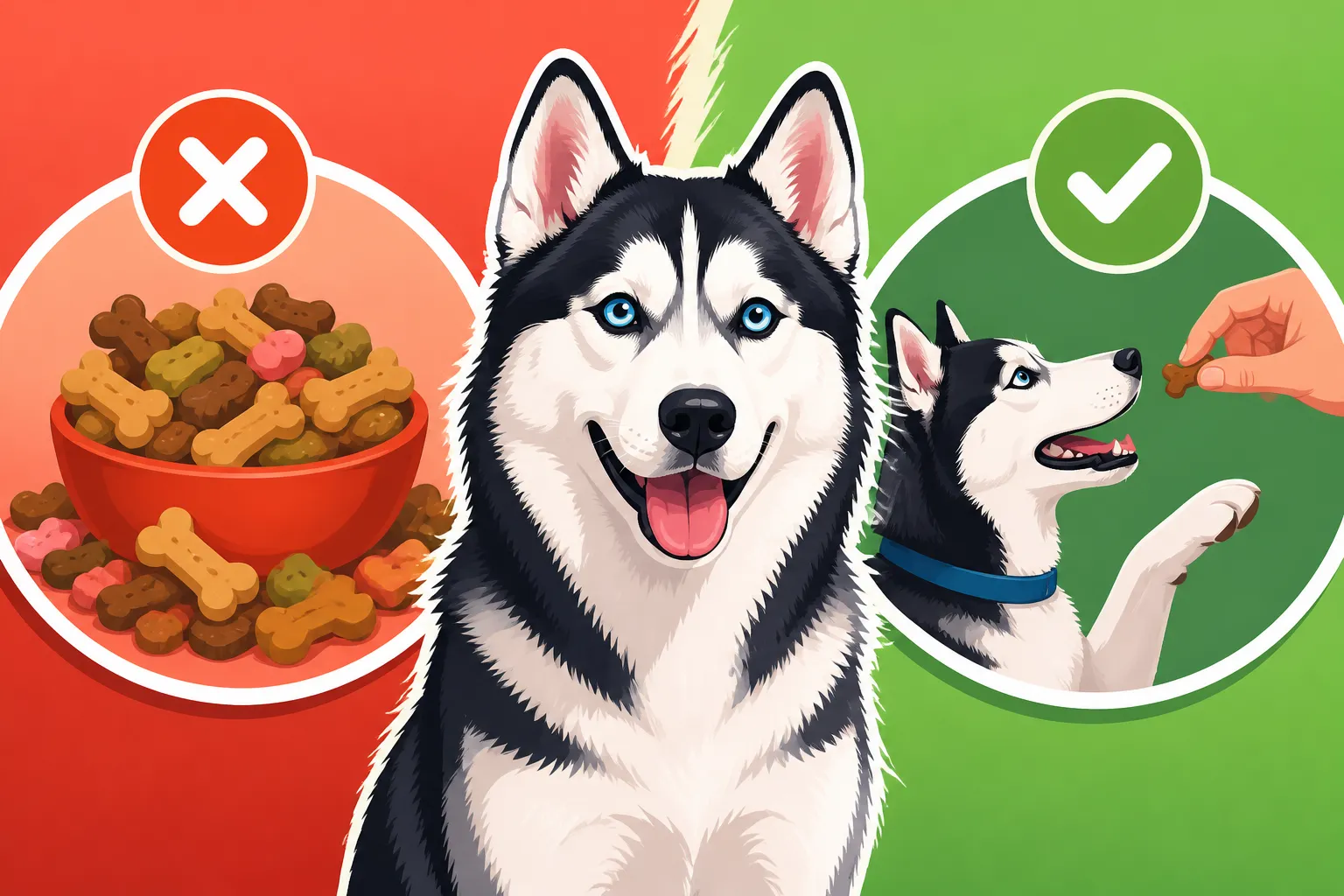
Not all treats are created equal in the eyes of a Siberian Husky. What one dog considers a high-value treat, another might turn their nose up at. For many Huskies, standard dry biscuits are barely worth the effort. We're talking about soft, chewy, pungent, and easily consumable items that can be quickly delivered and swallowed, allowing you to maintain momentum in your training sessions.
High-value treats often include things like boiled chicken breast, small pieces of cheese, hot dogs, freeze-dried liver, or commercially prepared soft training treats. The key is their palatability and how quickly your dog can eat them. You don't want your Husky spending minutes chewing a treat when you're trying to work on rapid-fire obedience cues. Experimentation is key to finding what truly makes your individual Husky's eyes light up, as this can be a game-changer for Training an Independent Siberian Husky.
Budgeting for High-Value Husky Treats
Once you understand the necessity of quality treats, the next step is to figure out how to incorporate them into your budget without feeling like you're constantly emptying your wallet. Husky training isn't a one-and-done deal; it's an ongoing conversation, and treats will be a consistent part of that dialogue, especially through the critical puppy and adolescent phases.
The Cost of Quality Training Treats
The price of high-value treats can vary dramatically. Commercial training treats, especially those made with limited ingredients or specific proteins, can be more expensive per ounce than regular kibble. For example, a bag of freeze-dried salmon treats might seem pricey upfront, but if your Husky goes bonkers for them, they are worth their weight in gold for breaking through stubbornness. You might find yourself spending anywhere from a few dollars to much more for a bag that lasts only a week or two, depending on your training frequency and your Husky's enthusiasm.
Many owners find themselves making trips to places like Chewy, stocking up on a variety of options to keep their Huskies engaged and guessing. Having a few different types of high-value treats on hand can prevent your dog from getting bored with the same old thing. Just like humans, Huskies can develop preferences, and sometimes a change in flavor or texture can reignite their motivation. This also gives you options for different training scenarios – maybe a medium-value treat for indoors, but the absolute best stuff for distracting outdoor environments.
DIY Treat Options to Save Money
One excellent way to reduce your treat spending is to make your own. Cooked meats like chicken, lean beef, or even fish can be diced into tiny, pea-sized pieces and stored in the fridge or freezer. These are often far more appealing to Huskies than anything store-bought, and they’re generally cheaper per serving. You have full control over the ingredients, ensuring there are no fillers or questionable additives.
Hard-boiled eggs or plain, unsweetened pumpkin purée (frozen into small cubes) can also be excellent, cost-effective options. Just remember to introduce any new food slowly and in small quantities to avoid upsetting your Husky's stomach. Preparing treats in batches at the beginning of the week can save you time and ensure you always have a stash of high-value rewards ready to go. You’ll be surprised how much your Monthly Food Spend for an Adult Siberian Husky can shift when you get creative with treats.
Smart Strategies to Optimize Treat Spending
Spending on treats is part and parcel of owning a Siberian Husky, but that doesn't mean you can't be strategic about it. A little planning and smart management can help you stretch your treat budget further without compromising your training effectiveness.
Portion Control and Treat Delivery
One of the biggest mistakes owners make is using treats that are too large. A high-value treat should be a tiny morsel, just enough for your Husky to taste and swallow quickly, making them eager for the next one. This isn't about satiating their hunger but about providing a rapid burst of positive reinforcement. If your treats are too big, you'll go through your supply much faster, and your Husky might get full or distracted from the training task.
Consider a treat pouch that allows for quick access and prevents you from fumbling. Brands like Ollie offer high-quality fresh food options that can be diced into perfect training treat sizes, offering superior palatability. Remember, the goal is to make the reward immediate and clear, linking the desired behavior directly to the positive outcome. If your Husky is taking too long to eat the treat, it breaks the training flow.
Rotating Treat Types and Value Levels
Not every training session requires the absolute highest value treat. You can create a hierarchy of treats. For basic commands in a low-distraction environment (like "sit" in your living room), a medium-value treat (perhaps a piece of their regular kibble or a slightly less exciting commercial treat) might be sufficient. Save the boiled chicken or freeze-dried liver for those challenging moments, like teaching a difficult recall at the dog park, or working on new skills where maximum motivation is needed.
This strategy not only helps your budget but also keeps your Husky from getting bored or desensitized to their "best" treats. By rotating what you offer, you maintain the novelty and excitement. It’s a bit like giving a child a favorite toy only on special occasions; it keeps it feeling special. This also prevents your Husky from becoming a one-trick pony, only working for one specific treat. This variety is key for Keeping a Siberian Husky Interested in Training.
| Treat Value Level | Examples of Treats | Cost Efficiency | Training Scenario |
|---|---|---|---|
| High Value | Boiled chicken/beef, cheese, hot dogs, freeze-dried liver, Ollie fresh food | Medium (can be costly if store-bought, high efficiency if DIY) | Crucial commands (recall), high distraction, new skills, overcoming stubbornness |
| Medium Value | Soft commercial training treats, Chewy brand treats, small pieces of hard kibble | High (often designed for training, good balance of cost/palatability) | Reinforcing known commands, moderate distraction, short attention spans |
| Low Value | Regular kibble, plain dog biscuits | Very High (most cost-effective) | Everyday reinforcement, very low distraction, maintaining attention |
Utilizing Training for Food Allocation
Since Huskies are known for their efficient metabolisms and can sometimes be picky eaters, integrating training into their meal times is a fantastic way to maximize your treat budget. Instead of simply putting down a bowl of food, use a portion of their daily kibble as training rewards. This turns mealtime into a series of mini-training sessions. You can have them perform "sits," "downs," or even practice polite leash manners before earning their bowl.
This not only saves you money on additional treats but also reinforces the idea that all good things come from you, the owner. It deepens your bond and makes them see you as the source of valuable resources. This approach can be particularly effective if you have a Husky who occasionally A Siberian Husky That Leaves Food in the Bowl. It teaches them to value their food more and associate it with positive interactions.
Beyond Just Treats: Other Training Motivators for Huskies
While treats are undoubtedly powerful, they shouldn't be your only tool in the training toolbox. Huskies are intelligent, and sometimes, a mix of motivators can be even more effective, helping you manage your treat spending and build a more rounded relationship with your dog.
The Power of Praise and Play
Don't underestimate the power of enthusiastic praise and engaging play, especially once a behavior is well-established. For some Huskies, a wild game of tug-of-war or a chase around the yard can be just as rewarding as a delicious treat, if not more so. Learn what truly excites your individual Husky. Is it a squeaky toy? A favorite ball? A joyful sprint with you?
Once your Husky understands a command, you can start to phase out food rewards by occasionally substituting them with praise, a quick game, or even the opportunity to engage with a favorite toy. This helps prevent your Husky from only working when food is present and builds a more intrinsic motivation to please you. Remember that even a seemingly independent Husky still craves interaction and connection with their pack leader.
Experiential Rewards
Huskies are dogs of purpose and activity. Using access to desired activities as a reward can be incredibly motivating. For example, if your Husky pulls on the leash at the start of a walk, a few steps of loose-leash walking, followed by the reward of sniffing a particularly interesting bush, can be highly effective. This is especially useful for Long Lines and Recall Gear for a Siberian Husky, where the ultimate reward might be the freedom of a long line run, earned through checking in with you.
Similarly, if your Husky loves car rides, making them "sit" patiently before jumping in can be an excellent way to use an experiential reward. The opportunity to explore a new park, to go for a run, or even just to be released from their crate can all be powerful motivators. These types of rewards tap into their natural drives and can often be even more potent than food, while costing you absolutely nothing.
Mental Stimulation and Puzzle Toys
Sometimes, the best way to train and manage a Husky, and indirectly reduce reliance on constant treats, is to provide ample mental stimulation. A bored Husky is a destructive Husky, and also one who is less likely to pay attention during training. Using puzzle feeders, like those available at Chewy, can turn mealtime into a challenging mental exercise, satisfying their problem-solving instincts.
These toys can be stuffed with a portion of their daily kibble or small, low-value treats, making their meals last longer and providing an outlet for their intelligence. This engagement can actually make your Husky more receptive to formal training sessions when they do occur, reducing the need for constant high-value food rewards. A tired Husky, both mentally and physically, is a well-behaved Husky who is more open to learning.
Health and Wellness as a Foundation
Finally, don't overlook the role of overall health and wellness in your Husky's trainability and their response to rewards. A dog that isn't feeling well, is in pain, or has underlying nutritional deficiencies might not be as motivated by treats or as responsive to training. Ensuring your Husky is on a high-quality diet, getting regular vet check-ups, and having any health issues addressed promptly can significantly impact their disposition and eagerness to learn.
Consider pet insurance from providers like Healthy Paws. While not directly related to treat spending, a comprehensive policy can help cover unexpected vet bills, ensuring your Husky stays in peak physical condition to participate fully in training. A healthy Husky is a happy Husky, and a happy Husky is much more likely to engage enthusiastically with you and respond to whatever motivators you offer, treats included. Ultimately, a balanced approach that combines the right treats with varied motivation techniques and a strong foundation of care will lead to the most successful and rewarding training journey with your incredible Siberian Husky.
Disclaimer
This article is for general informational purposes only and does not constitute professional advice. Laws, prices and regulations vary by location and change over time. Consult a qualified professional for guidance on your specific situation.