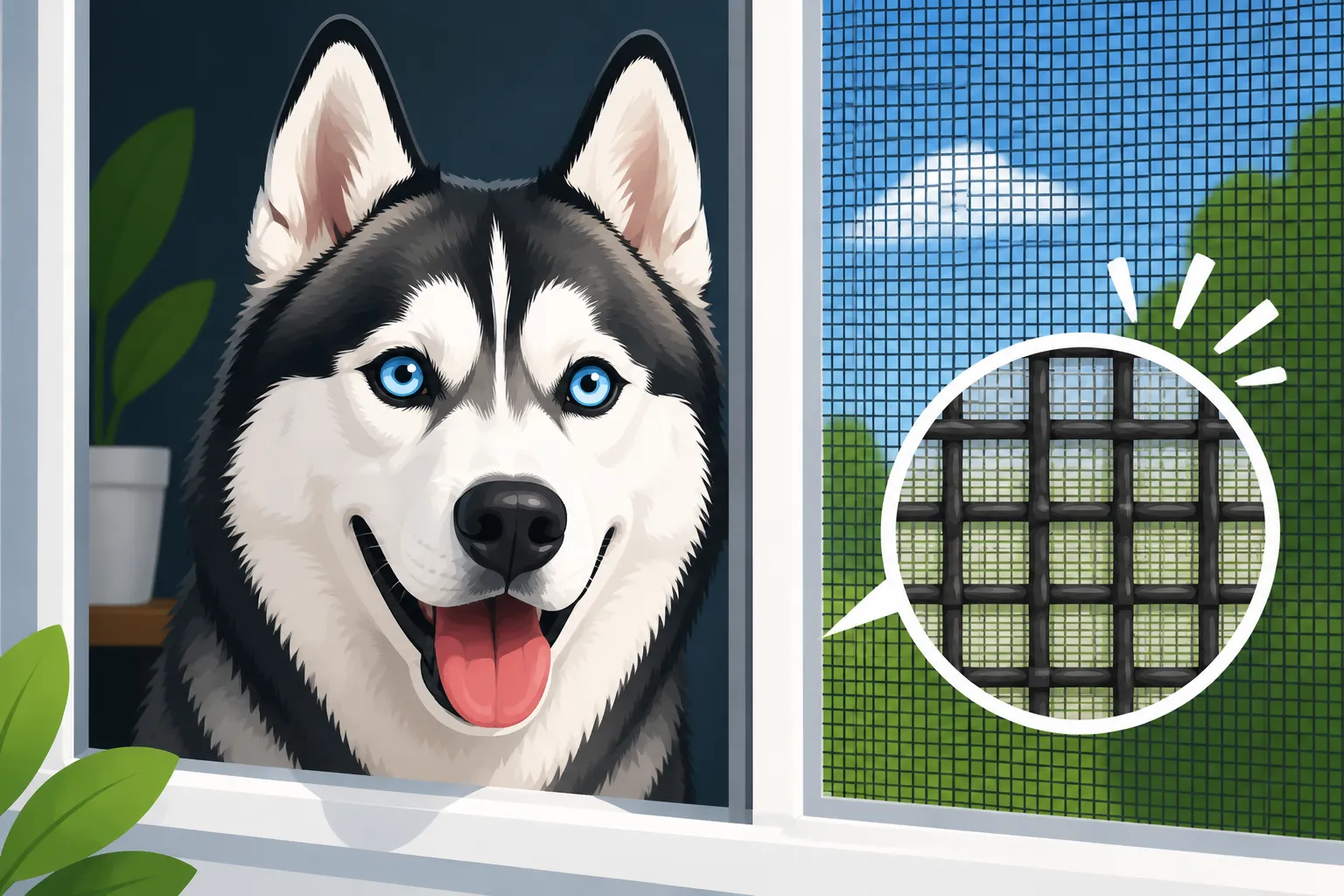
Window Screens and a Siberian Husky
It’s a familiar sight for many Siberian Husky owners: you walk in the door, and there’s a gaping hole in your window screen, or worse, the screen is completely ripped out and your clever canine is nowhere in sight. This can be incredibly frustrating, not to mention a safety hazard for your adventurous companion. This guide is here to help you understand why your Siberian Husky is targeting your window screens and, more importantly, what actionable steps you can take to prevent this destructive behavior, keeping both your home and your beloved husky safe and sound.
Why Your Siberian Husky Sees Window Screens as Opportunities
Let's be honest, Siberians are notoriously intelligent, independent, and driven dogs. They aren't just idly tearing up your screens; there's usually a strong motivation behind their actions. Understanding these root causes is the first step toward effective prevention.
The Irresistible Call of the Wild (or Just the Mailman)
Siberian Huskies have an incredibly strong prey drive and an ingrained roaming instinct. Their ancestors were bred to cover vast distances, and that urge to explore and chase is still very much alive in our modern pets. A window screen is often the only thing separating them from a world teeming with fascinating smells, sounds, and potential "prey"—whether that's a squirrel scampering across the lawn, a neighbor walking their dog, or even just a leaf blowing past.
Imagine your husky, cooped up inside, spotting a bird land on the window sill. That instinct to chase kicks in, and the flimsy screen becomes an obstacle, not a barrier. They might paw at it, try to push through, or even chew on it if they're particularly determined. This isn't naughtiness; it's deeply ingrained behavior meeting an enticing external stimulus. For more on this, you might want to read about Siberian Husky Prey Drive Around Small Animals.
Boredom and Pent-Up Energy
One of the most common culprits for destructive behavior in Siberian Huskies is simply boredom and a lack of adequate exercise. These are high-energy dogs, bred for endurance. A short walk around the block twice a day isn't going to cut it for most Huskies. If they don't have a productive outlet for their physical and mental energy, they will find their own "jobs," and often, those jobs involve redecorating your house or testing the structural integrity of your windows.
A husky with pent-up energy might start exploring boundaries, like your window screens, just to see what happens. The act of tearing, chewing, or digging at a screen provides a sensory and physical release, even if it's not the "job" you intended for them. Many owners underestimate just how much exercise a Siberian Husky really needs. Without it, the house becomes their personal playground for destructive endeavors, making your screens prime targets.
Separation Anxiety and Stress
While not as common as boredom or prey drive, separation anxiety can also manifest as destructive behavior, including targeting windows and doors in an attempt to escape and reunite with their owner. If your husky exhibits other signs of distress when left alone—such as excessive howling, pacing, house soiling, or frantic attempts to escape crates or rooms—then anxiety might be a factor.
A husky experiencing anxiety might fixate on windows as their only perceived escape route. The frantic scratching and tearing are not about being "bad" but about a profound sense of panic and a desperate need to get out. It's a heartbreaking situation for both dog and owner, and it often requires a multi-faceted approach, including behavior modification and sometimes veterinary intervention. You can learn more about this specific challenge by checking out Siberian Husky Separation Behavior.
The Vulnerabilities of Different Window Screen Types
Not all window screens are created equal, and understanding their strengths and weaknesses can help you choose the best defense against your persistent husky.
Standard Fiberglass and Aluminum Screens
The vast majority of residential window screens are made from fiberglass mesh or, less commonly these days, aluminum wire.
- Fiberglass screens are affordable and widely used. They are flexible and resistant to denting, but they are also incredibly easy for a determined husky to rip, tear, or chew through. A few good jabs with a paw or a strategic gnaw with those strong jaws, and suddenly you have a gaping hole. They offer virtually no resistance to a husky set on getting out or getting at something.
- Aluminum screens are more rigid than fiberglass. They don't tear as easily, but they can be bent, dented, or pushed out of their frames. A husky might not rip a hole, but they can definitely dislodge the entire screen from its track, especially if they lean into it with their body weight. Once the frame is bent, the screen is compromised, and replacement becomes necessary.
Pet-Resistant and Heavy-Duty Screens
For those with adventurous pets, a step up from standard screens is often necessary.
- Pet-resistant screens, often made from a heavier vinyl-coated polyester, are significantly more durable than standard fiberglass. They are designed to withstand scratching and chewing from pets without tearing. They offer a much better first line of defense, making it harder for a husky to rip through them. They aren't indestructible, however. A very determined husky, given enough time and motivation, can still damage them, but they buy you crucial time and deter casual attempts. Brands like Phifer PetScreen are well-known for offering these types of durable meshes.
- Heavy-duty aluminum or steel screens take pet resistance to a new level, often marketed as security screens. These are much thicker, stronger materials, sometimes resembling a fine mesh metal grate. They are designed to withstand significant force, including attempts by large dogs. These screens are much harder to bend, rip, or push out. The downside is that they are considerably more expensive and sometimes require custom installation. They also might slightly obscure your view or reduce airflow compared to standard screens, but for many husky owners, the peace of mind is worth it.
Here’s a quick overview of screen types and their husky resilience:
| Screen Type | Material | Husky Resistance Rating (1-5, 5 being highest) | Pros | Cons |
|---|---|---|---|---|
| Standard Fiberglass | Vinyl-coated fiberglass | 1 | Inexpensive, good airflow, easy to install | Very easy to tear/rip |
| Standard Aluminum | Aluminum wire | 2 | Stronger than fiberglass, resistant to tearing | Can bend/dent, still easily pushed out of frame |
| Pet-Resistant | Heavy-duty vinyl-coated polyester | 3-4 | Resists tearing/scratching, durable | More expensive, can slightly reduce airflow/visibility |
| Security/Heavy-Duty | Thick aluminum or steel mesh | 5 | Extremely strong, resists pushing, tearing, chewing | Most expensive, may reduce airflow/visibility, custom work |
Preventative Measures and Robust Solutions
Dealing with a husky's window screen obsession requires a multi-pronged approach that addresses both the behavior and the physical barriers.
Exhaustion is the Best Sedative (for a Husky, anyway)
The absolute cornerstone of preventing destructive behavior in a Siberian Husky is ensuring they get enough physical and mental exercise. A tired husky is a good husky, as the saying goes.
- Physical Exercise: This means vigorous activity, not just a leisurely stroll. Think long runs, bikejoring, canicross, or even just intense fetch sessions in a secure area. Many Siberians thrive on activities like those mentioned in Canicross and Bikejoring With a Siberian Husky. Aim for at least 60-90 minutes of high-intensity exercise daily, broken into sessions. If your husky is left alone for hours after only a short walk, they will find ways to entertain themselves, and your window screens are a prime candidate.
- Mental Stimulation: Huskies are smart, and their brains need a workout too. Puzzle toys, interactive feeders, scent work, and consistent training sessions can burn mental energy just as effectively as physical exercise. Consider stuffing Kongs or other toys with food (perhaps some delicious options from Chewy or Ollie) and freezing them to provide a long-lasting distraction. Regular, short training sessions, even 10-15 minutes a few times a day, can help satisfy their need to "work" and engage their minds.
Fortifying Your Fort: Secure Containment
If your husky is known for targeting screens, simply replacing them with the same type is asking for trouble.
- Upgrade Your Screens: As discussed above, investing in pet-resistant or even security screens for the windows your husky can access is a wise move. Focus on the most vulnerable windows, particularly those in rooms where your husky spends time alone or those that face exciting outdoor stimuli.
- Window Guards and Barriers: For extreme cases, or if you're concerned about your husky falling out of an open window, consider installing internal window guards or grates. These sturdy metal or plastic barriers fit inside the window frame, providing an additional layer of security. Ensure they are securely mounted and cannot be dislodged by a determined husky.
- Crate Training: For many husky owners, crate training is an invaluable tool for preventing destruction when they can't directly supervise their dog. A properly introduced and positively reinforced crate can be a safe, comfortable den for your husky, keeping them away from tempting windows. However, ensure the crate is robust enough for your husky, as some are known for their ability to escape or even damage standard crates. You might find insights in Crating a Siberian Husky That Bends the Bars.
Management and Training Strategies
Beyond physical barriers, managing your husky's environment and continuing their training are crucial.
- Supervised Access: If you know a specific window is a problem, simply don't allow your husky unsupervised access to it. Close the door to that room, use baby gates, or block off the area with furniture.
- Desensitization and Counter-Conditioning: If your husky is reacting to outdoor stimuli, you can work on desensitizing them. This involves gradually exposing them to the trigger (e.g., a person walking by) at a low intensity, while rewarding calm behavior. Pair the trigger with high-value treats (like those available from Chewy or Ollie) to create a positive association. The goal is to change their emotional response from excitement/frustration to neutrality.
- Attention and Redirection: If you catch your husky starting to paw at a screen, immediately redirect their attention to an appropriate toy or activity. Reward them heavily for engaging with the right object. Consistency is key here.
Dealing with Damaged Screens and Long-Term Prevention
Finding a torn screen is annoying, but it's an opportunity to assess your strategy and prevent future incidents.
Repair vs. Replace and Reinforce
If your screen is damaged, you have a few options:
- Patching: For small tears in fiberglass screens, a simple screen patch kit can offer a temporary fix. However, a husky who has successfully torn a screen once will likely find and exploit a patch again.
- Replacing with Better Material: If it's a standard screen, now is the time to replace it with a more durable, pet-resistant mesh. This is an investment that will save you headaches (and potentially vet bills) in the long run.
- Reinforcing Existing Screens: You can sometimes add a layer of mesh or a grid-like material to the inside of an existing screen for added strength, though this can be visually intrusive and may not hold up to truly determined efforts.
Holistic Husky Well-being and Your Budget
Preventing screen destruction often boils down to meeting your husky's fundamental needs. This includes a high-quality diet, consistent exercise, and appropriate mental stimulation. Providing these things helps create a calmer, more content dog less likely to resort to destructive behaviors. Many quality food brands, including Chewy and Ollie, offer options tailored to active breeds, contributing to their overall health and energy levels.
While pet insurance typically won't cover damage to your home, a plan from a provider like Healthy Paws can be incredibly valuable if your husky injures itself during an escape attempt or due to screen-related incidents. For example, if they cut a paw, get stuck, or swallow screen fragments, those unexpected vet bills can be substantial. Planning for the health costs of your adventurous husky is just as important as securing your home against their antics. You can read more about planning for these costs in Siberian Husky Pet Insurance and the Eye Clause.
Ultimately, living with a Siberian Husky means embracing their unique traits and setting them up for success. By understanding their motivations, fortifying your home, and providing ample outlets for their energy, you can protect your window screens and ensure your husky lives a happy, safe, and fulfilling life without constantly testing the barriers of your home.
Disclaimer
This article is for general informational purposes only and does not constitute professional advice. Laws, prices and regulations vary by location and change over time. Consult a qualified professional for guidance on your specific situation.