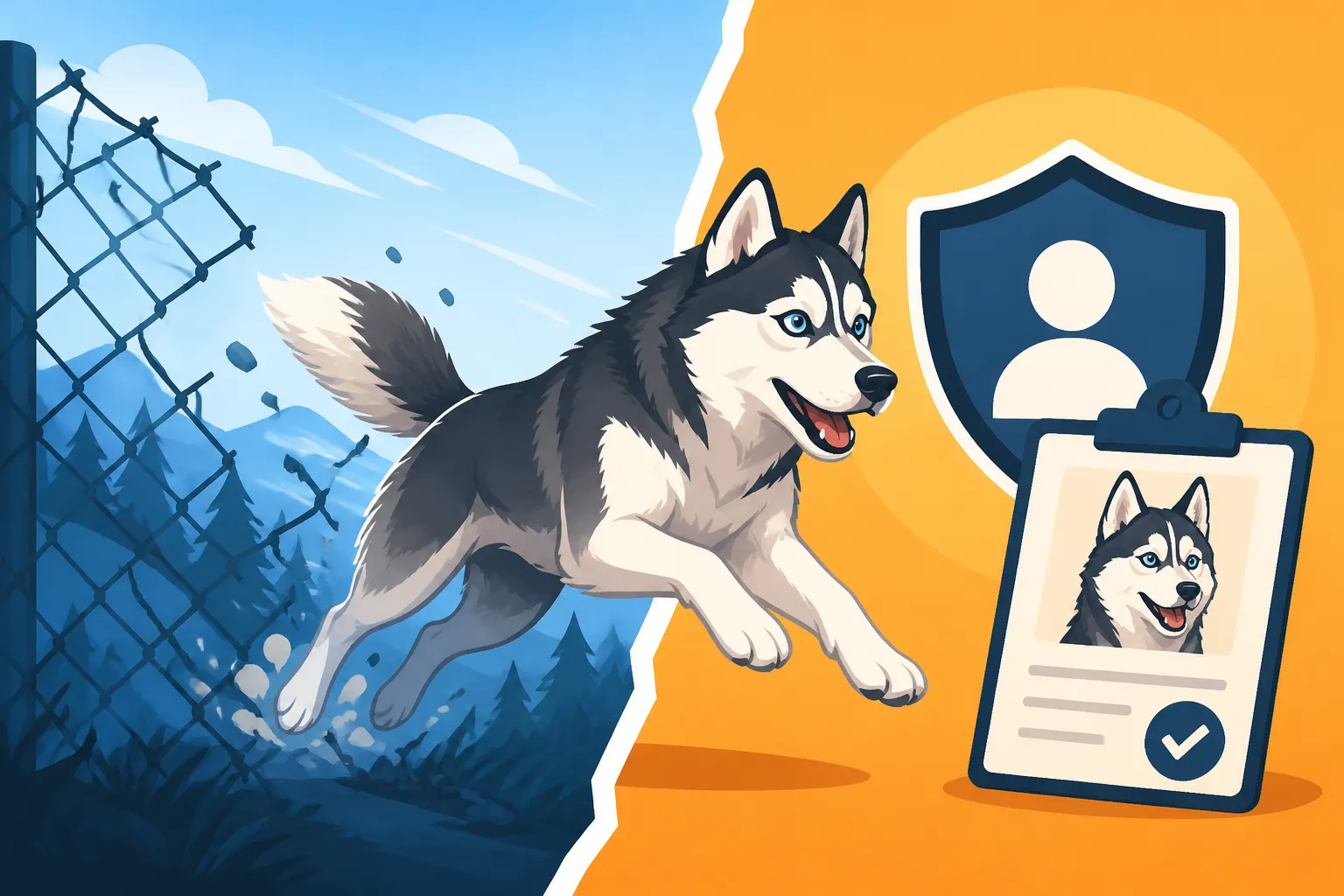
Whether an Escaped Siberian Husky Is a Claim
It's every Siberian Husky owner's worst nightmare: you open the door for a split second, or glance away in the yard, and suddenly, your adventurous, fleet-footed companion is gone. The heart-stopping panic that follows is agonizing, and beyond the immediate fear for their safety, a chilling thought often surfaces: "What if my Husky causes trouble out there?" This comprehensive guide will walk you through the complex landscape of liability and insurance claims when your beloved, but perhaps too curious, Siberian Husky makes an unscheduled excursion.
Understanding Your Liability When a Siberian Husky Escapes
The moment your Siberian Husky slips out of your sight and off your property, a whole new set of responsibilities and potential liabilities can kick in. This isn't just about finding them and bringing them home; it's about understanding the legal and financial repercussions if their independent spirit leads to an incident. Huskies are known for their wanderlust, their incredible athleticism, and their cleverness when it comes to escaping, and these traits, while endearing to us, can unfortunately lead to problems in the wider world.
The Legal Ramifications of an Off-Leash or Escaped Dog
First and foremost, virtually every community has leash laws or "at-large" ordinances. These laws stipulate that dogs must be on a leash or securely contained on their owner's property. When your Siberian Husky escapes, they are immediately in violation of these laws. Even if your Husky is the sweetest, most well-meaning dog on the planet, an animal control officer has the right to pick them up, and you'll likely face fines and impoundment fees. This is the simplest, most common ramification, but it can quickly escalate.
Consider a scenario where your Husky, in its excitement, crosses into a neighbor's yard and causes a commotion with their smaller, fenced-in cat. While your Husky might just be curious, the neighbor could perceive it as an attack or a severe threat, leading to significant stress for their pet and their family. The legal responsibility for your dog's actions, even if accidental, falls squarely on you as the owner. These situations can quickly sour neighborhood relations and lead to legal demands for veterinary bills or emotional distress claims.
Even more serious, imagine your escaped Siberian Husky runs into the street. Their sheer speed and sometimes erratic movements can cause a driver to swerve, leading to a traffic accident. Even if your dog isn't hit, if their presence directly caused another vehicle to crash or sustain damage, you could be held liable for property damage to vehicles, medical bills for injured parties, and even lost wages if someone is unable to work. It’s a terrifying thought, but it’s a very real possibility when a strong, fast dog like a Husky is loose. This is why understanding Siberian Husky Deaths From Trauma and Escape is so vital for every owner.
Property Damage Caused by an Escaped Husky
Beyond causing an accident, an adventurous Siberian Husky can inadvertently cause significant property damage. Their digging instincts, for example, are legendary. If your Husky escapes your yard and finds itself in a neighbor's beautifully manicured flower bed, you might find yourself responsible for replacing plants, repairing irrigation systems, or even fixing a broken decorative fence they may have jumped over or pushed through.
Another common scenario involves a Husky getting into an open garage or shed. Their curiosity can lead them to chew on various items, knock over tools, or even get into hazardous materials. A friend of mine once had their escaped Husky get into a neighbor's chicken coop, not to harm the chickens, but merely to investigate, resulting in a chaotic scene and a damaged coop door. The cost of repairs, replacement, and even preventative measures the neighbor might take afterward, could all be charged back to you.
The key here is often whether you, as the owner, took reasonable steps to prevent the escape. If your fence had a glaring hole you knew about, or if you consistently left the gate ajar, a court might find you negligent. Even without clear negligence, however, you are still generally responsible for the actions of your pet. This is why securing your own property is paramount, especially understanding the need for a robust containment system like The Six-Foot Fence a Siberian Husky Needs.
Bodily Injury Claims Involving an Escaped Husky
While Siberian Huskies are generally friendly dogs, any dog can cause injury, especially when disoriented or overly excited. An escaped Husky might dash unexpectedly across a sidewalk, knocking over a child or an elderly person. Even a playful jump or a friendly greeting could result in a fall, leading to broken bones, sprains, or other injuries. These incidents, while not malicious, can lead to substantial medical bills and claims for pain and suffering.
More seriously, even if your Husky isn't aggressive, a frightened person or another animal could react defensively, leading to a bite or scratch. Imagine your Husky, confused and running freely, corners a small dog in a park. While your Husky may not intend harm, the smaller dog might snap, or a person intervening could get injured. Even a minor nip during an excited greeting can be perceived as a serious bite by someone unfamiliar with dog behavior, particularly if they are afraid of large dogs.
The perception of "dangerous breeds" also plays a role, though Siberian Huskies are not typically on common "dangerous dog" lists from a legal standpoint, compared to some other breeds. However, any incident involving an escaped dog can be viewed more critically by the public or authorities, regardless of breed. The emotional distress and trauma experienced by victims can also be a significant factor in liability claims, sometimes even outweighing the physical injury itself. This is why preventing your dog from becoming A Siberian Husky That Guards Food From Another Dog is crucial, as even seemingly small behavioral issues can escalate when a dog is loose.
How Homeowners and Renters Insurance Handle Escaped Dog Incidents
When your Siberian Husky escapes and causes an incident, your homeowners or renters insurance policy often becomes your first line of defense against potentially devastating financial claims. It’s crucial to understand what these policies cover, and more importantly, what they might not. Don't assume you're fully protected without reading the fine print.
Liability Coverage on Your Policy
Most standard homeowners and renters insurance policies include personal liability coverage. This coverage is designed to protect you financially if you are found legally responsible for bodily injury or property damage to another person. Crucially, this often extends to incidents involving your pets, even if they occur off your property. So, if your escaped Siberian Husky causes a car accident or injures a person, your liability coverage is usually what would kick in to cover the costs.
For example, if your Husky, in a moment of pure joy and freedom, darts into traffic and causes a minor fender bender, your homeowners insurance would likely cover the repair costs for the vehicles involved and any minor medical expenses. If the situation is more severe and someone is seriously injured, the policy would also cover their medical bills, potential lost wages, and legal defense fees if you are sued. This is an enormous relief for many owners, as these costs can quickly spiral into hundreds of thousands of dollars.
However, it's vital to check your specific policy. Some insurance carriers have breed restrictions, and while Siberian Huskies are not universally excluded, some individual providers might have specific rules. It's best to be transparent with your insurance provider about your dog's breed when you first get your policy or acquire your Husky. This ensures you have adequate coverage and avoids any nasty surprises down the line. Many people think about Homeowners Carriers and the Siberian Husky only after an incident, but proactive understanding is key.
What an Insurance Claim Entails for an Escaped Husky
Making an insurance claim for an escaped Siberian Husky incident typically follows a standard process. First, you'll need to report the incident to your insurance company as soon as possible. They will usually assign a claims adjuster to investigate the circumstances, gather statements from all parties involved, and assess the damages. This investigation can be thorough, and it's important to cooperate fully and honestly.
The adjuster will determine if your policy covers the incident and to what extent. If the claim is approved, the insurance company will negotiate with the injured party or their legal representation to settle the costs. This might involve paying for medical bills, property repairs, or reaching a settlement for other damages. Your deductible for liability claims (which is often $0 or very low) would apply, but the significant worry is usually about potential increases in your premiums or even non-renewal of your policy in the future, especially if the claim is substantial.
For very minor incidents, like your Husky simply digging a small hole in a neighbor's yard, it might be more cost-effective to settle the damage directly out of pocket rather than involving your insurance. Weighing the cost of the damage against the potential long-term impact on your insurance rates is an important consideration. Every claim, big or small, goes on your record and can affect your insurability.
The Role of Breed Restrictions and Dog-Specific Clauses
Breed restrictions are a contentious issue in the insurance world. While many companies don't specifically list Siberian Huskies as a "dangerous" breed like some others, individual insurers, or even regional underwriting guidelines, can vary wildly. Some companies might have a blanket policy that excludes coverage for bites or related incidents from any dog, regardless of breed, if the dog is deemed to have a history of aggression or if the owner was negligent.
Some policies might include a specific dog liability clause that outlines what is and isn't covered. For instance, if you acquired your Husky and didn't disclose it to your insurer, or if you knowingly kept a dog with a bite history without informing them, your claim could be denied entirely. This emphasizes the critical need for transparency with your insurer from day one. If you're Renting With a Siberian Husky on the Lease, your landlord's insurance and your renters insurance will both have specific rules you must follow.
If you find that your current insurer has breed restrictions that impact your Siberian Husky, or if they refuse coverage, don't despair. There are often specialty insurance carriers or programs that will offer dog liability coverage, sometimes as a standalone policy or as an add-on. It might cost a bit more, but the peace of mind knowing you're covered in case of an unforeseen incident with your adventurous Husky is truly invaluable.
Pet Insurance and the Limits of Its Coverage
It's a common misconception that pet insurance will cover everything related to your dog, including any damage or injury they might cause to others. While pet insurance is an absolute lifesaver for your Husky's health, its scope is generally limited to your pet's medical care, not external liability.
Does Pet Insurance Cover Third-Party Liability?
For the vast majority of pet insurance policies, the answer is a resounding no. Standard pet insurance, like plans offered by Healthy Paws or similar providers, is designed to help you manage the costs of veterinary care for your dog due to accidents, illnesses, or sometimes routine wellness. It covers things like emergency surgeries, prescription medications, diagnostics, and treatments for your beloved Husky.
It does not typically include third-party liability coverage. This means if your escaped Siberian Husky causes property damage to a neighbor's garden, or worse, bites someone, your pet insurance policy won't pay for the resulting repairs, medical bills for the injured party, or legal fees. That financial responsibility falls back to you, which is why your homeowners or renters insurance is so critical in these scenarios. It's a clear distinction that many pet owners only realize when an incident actually occurs.
However, it's worth noting that a very small number of niche pet insurance providers or specialized policies might offer some form of limited third-party liability as an add-on. These are rare and usually come with strict limitations and higher premiums. Always read the policy documents carefully and ask specific questions about liability coverage if that's a concern for you, rather than assuming it's included.
Vet Bills for Your Husky's Injuries During an Escape
Where pet insurance does become incredibly valuable in an escape scenario is covering the costs associated with your Siberian Husky's own injuries. An escaped Husky faces numerous dangers: getting hit by a car, getting into a fight with another animal, running through hazardous terrain, or even ingesting something toxic. The stress of knowing your dog is missing is compounded by the fear of them being hurt.
If your Husky is found injured, perhaps with a broken leg after being hit by a car, or needing stitches after a scrap, your pet insurance policy will spring into action. Plans from providers like Healthy Paws can help cover emergency vet visits, diagnostic tests (X-rays, ultrasounds), surgery, hospitalization, and follow-up care. This can literally save your Husky's life and prevent you from facing thousands of dollars in unexpected veterinary expenses, which is a common and heartbreaking outcome for many escaped dogs.
It's important to understand your policy's specifics, such as your deductible, reimbursement rate (e.g., 80% or 90% of eligible costs), and annual limits. While it won't cover the damage your dog caused, knowing that you can afford the best possible care for your injured Husky when they return is a significant weight off your shoulders. This is why having robust pet insurance is part of responsible Siberian Husky ownership, preparing for the unexpected, especially given their high prey drive and roaming instincts, which makes Why an Escaped Siberian Husky Is a Health Risk a critical read.
Proactive Steps to Prevent Escapes and Mitigate Risks
Preventing your Siberian Husky from escaping is truly the best "insurance policy" you can have. Given their intelligence, athleticism, and innate desire to run, this breed requires a vigilant and proactive approach to containment and training. Investing time and resources upfront can save you untold stress, heartbreak, and financial strain down the line.
Secure Containment is Key for Siberian Huskies
The number one defense against an escaped Siberian Husky is a truly secure physical barrier. Standard fences often aren't enough for these Houdini hounds. Huskies are notorious for jumping, climbing, and digging. A six-foot solid privacy fence is a good starting point, but even then, many Huskies can clear it with a running start or scale chain-link. To combat digging, an "L-footer" or burying fence wire along the bottom of the fence line is absolutely essential, preventing them from digging their way out. This is why understanding Adding an L-Footer Against Siberian Husky Digging is so crucial.
Beyond the fence itself, gates are often the weakest link. Ensure all gates have secure, climb-proof latches that your Husky cannot manipulate. Double-latching mechanisms or even padlockable gates are highly recommended. Never, ever leave your Siberian Husky unattended in the yard for extended periods, especially if your fence isn't entirely escape-proof. Many escapes happen when owners believe their dog is "safe" in the yard for just a few minutes, giving the Husky ample opportunity to find a weak point or simply get bored enough to seek adventure.
Furthermore, be mindful of what's near your fence. Lawn furniture, woodpiles, or even large snowdrifts can become launchpads for an aspiring escape artist. Always assess your yard from a Husky's perspective – where might they climb? Where might they dig? This proactive vigilance is far more effective than trying to catch them after they've gone. It's also important to remember Why Invisible Fencing Does Not Hold a Siberian Husky, as these systems are rarely effective for the breed's strong drive to roam.
Training and Management for a High-Drive Breed
While physical barriers are critical, training and consistent management are equally important. A strong, reliable recall is perhaps the single most important command for any dog, but especially for a Siberian Husky. Even if you never plan to let your Husky off-leash, an emergency recall could be the difference between life and death if they accidentally get loose. Practice this in a secure, fenced area repeatedly, using high-value treats and enthusiastic praise. Always assume your Husky is "off-duty" regarding recall, and be pleasantly surprised if they respond.
When walking your Siberian Husky, always use a secure leash and collar. Many owners find martingale collars or well-fitting harnesses effective for preventing slips. Standard buckle collars can be easily backed out of by a determined Husky. Products found at retailers like Chewy can help you find high-quality, durable leashes and harnesses suitable for the breed's strength. Remember that a Husky's instinct to pull is strong, so teaching loose-leash walking, or even channeling their energy into harness sports, is beneficial. Consider Martingale Collars for a Siberian Husky to prevent slips.
Beyond basic commands, provide your Husky with plenty of mental and physical exercise. A bored Husky is a destructive Husky, and destructive behavior often leads to escape attempts. Long walks, runs, secure playdates, and puzzle toys can burn off their boundless energy and reduce the urge to seek adventure beyond your property. A high-quality diet, perhaps like those offered by Ollie, can also contribute to overall health and a well-adjusted temperament, which indirectly supports better behavior and less stress-induced destructive tendencies.
Identification and Emergency Preparedness
Even with the best precautions, accidents can happen. This is why proper identification for your Siberian Husky is non-negotiable. Microchipping your dog and ensuring your contact information is up-to-date with the microchip registry (like those listed on Chewy's informational pages) is perhaps the most critical step. Many lost dogs are reunited with their families thanks to a microchip scan at a vet or shelter. Make sure you check Microchip Registration for a Siberian Husky regularly.
In addition to a microchip, your Husky should always wear a collar with visible, legible ID tags that include your current phone number. Consider adding a tag that states they are microchipped. For the ultimate peace of mind, many Husky owners invest in a GPS collar. These devices allow you to track your dog's location in real-time via a smartphone app, dramatically increasing the chances of a swift recovery if they do manage to escape.
Finally, have an emergency plan in place. Know the contact information for your local animal control, shelters, and breed-specific rescues. Inform your neighbors about your Husky's escape tendency and ask them to call you immediately if they see your dog loose. Utilize social media groups for lost pets in your area. The faster you act, the higher the chance of a safe reunion. Your Husky relies on you for their safety and well-being, both on and off your property.
| Incident Type | Homeowners/Renters Insurance Coverage | Pet Insurance Coverage | Key Takeaway |
|---|---|---|---|
| Property Damage (Neighbor's yard, car) | YES (Liability) | NO (Typically) | Homeowners/Renters policy pays for damages your dog caused. |
| Bodily Injury (Person tripped, bitten) | YES (Liability) | NO (Typically) | Homeowners/Renters policy covers medical/legal costs for others. |
| Your Husky's Vet Bills (Injured in escape) | NO (Typically) | YES (Accident/Illness) | Pet insurance pays for your dog's medical treatment. |
| Fines from Animal Control | NO | NO | Owner is solely responsible for citations/fines. |
| Lost Wages for Affected Person | YES (Liability) | NO (Typically) | Homeowners/Renters policy may cover this. |
Disclaimer
This article is for general informational purposes only and does not constitute professional advice. Laws, prices and regulations vary by location and change over time. Consult a qualified professional for guidance on your specific situation.