Recovery After Siberian Husky Cataract Surgery
Siberian Husky cataract surgery recovery requires veterinary instructions, safe home spaces, and careful post-operative management.
Know what to watch for.
Breed-specific conditions, screening and DNA tests, what surgery actually costs, and the daily habits that stretch a healthy lifespan.

Siberian Husky cataract surgery recovery requires veterinary instructions, safe home spaces, and careful post-operative management.

Siberian Husky cataracts and lens cloudiness, explaining whether genetic or juvenile conditions in the breed always cause total blindness.

Siberian Husky cataracts occur with significant prevalence due to a genetic predisposition affecting young to middle-aged dogs.

Siberian Husky eye cloudiness involves identifying internal lens haziness and distinguishing cataracts from corneal dystrophy and nuclear sclerosis.

Siberian Husky cataracts typically appear in young dogs before two to three years old or in adulthood, affecting vision and causing blindness.
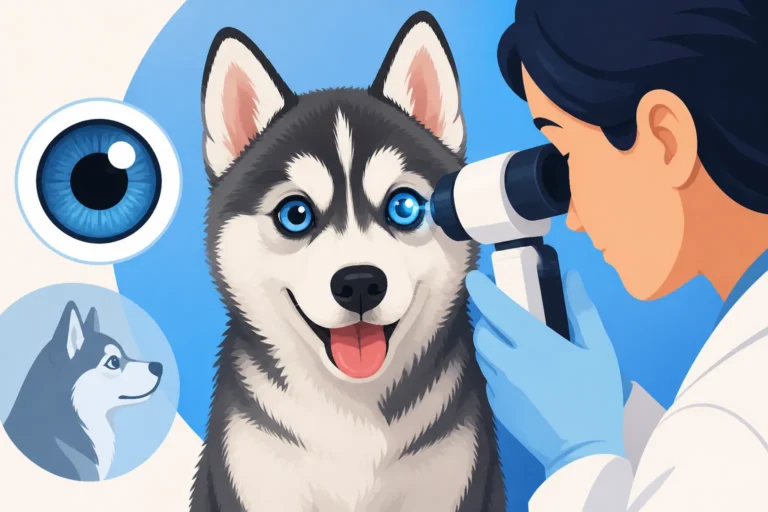
Siberian Husky puppy eye exams at three months detect juvenile cataracts and other inherited conditions early.

Siberian Husky eye exam certifications remain valid for one year from the examination date for breeding and health testing.

Siberian Husky OFA eye certificates list dog identification details, examination results, and breeder health data from veterinary ophthalmologists.
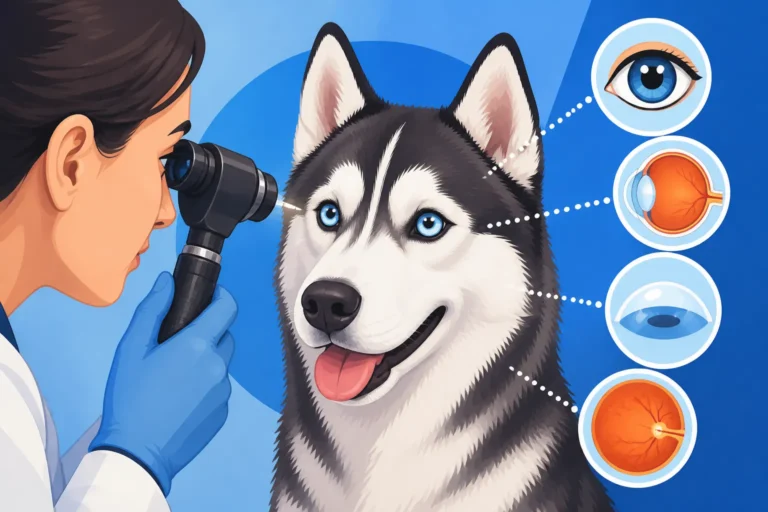
Veterinary ophthalmologic exams for Siberian Huskies detect early genetic eye diseases using specialized diagnostic tools.

Annual veterinary eye exams detect hidden genetic vision diseases, including progressive retinal atrophy and cataracts, in Siberian Huskies.