Siberian Husky Nails and How Thick They Get
One of the lesser-talked-about, yet consistently frustrating, aspects of Siberian Husky ownership is managing their nails. If you've ever wrestled a squirming, vocal husky, trying to trim those surprisingly thick, often black claws, you know the struggle is real. This guide is here to walk you through everything you need to know about your Siberian Husky's nails, why they're built the way they are, and how to conquer the dreaded nail trim without losing your sanity (or a finger!).
Understanding Siberian Husky Nails: More Than Just Claws
When you look at your husky's paw, you might just see "nails," but there's a whole lot more going on there, especially for a breed designed for pulling and covering vast distances over varied terrain. Their nails aren't just for decoration; they're an integral part of their foot structure, and understanding them is the first step to proper care.
The Anatomy of a Husky Nail
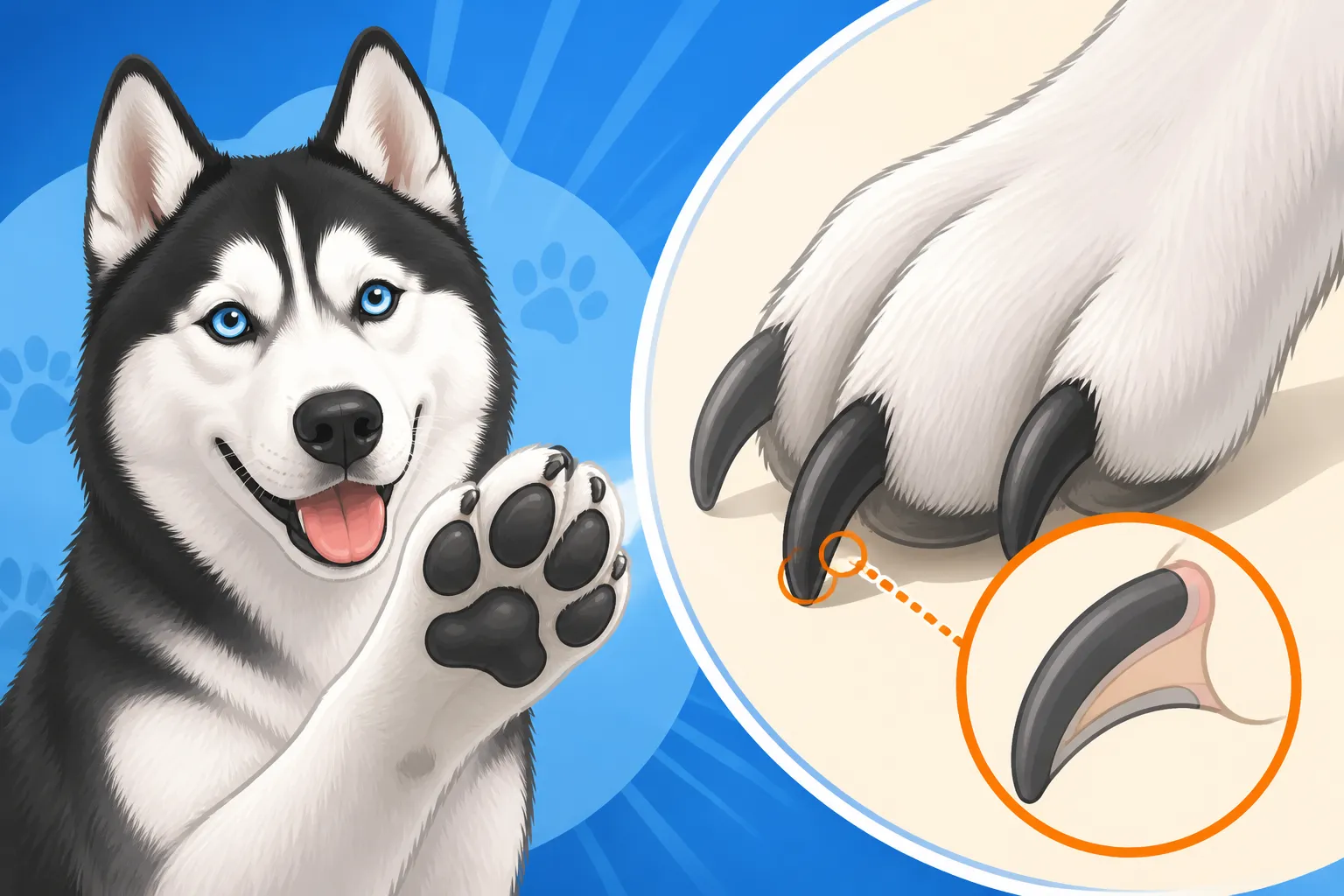
Unlike our fingernails, a dog's nail is a living part of their body, extending from the bone in their toe. Each nail consists of two main parts: the hard outer shell, which is what you see and trim, and the "quick." The quick is essentially the nail's sensitive core, containing blood vessels and nerve endings. Imagine accidentally cutting your own nail too short and hitting the sensitive part – that sharp sting and bleed? That's hitting the quick. With huskies, particularly those with darker nails, seeing where the quick ends is often a guessing game, adding a layer of anxiety to every trim.
This complex structure means that proper nail care isn't just about aesthetics; it's about comfort and preventing pain. A husky relies on their paws for everything from zooming around the yard to pulling in harness. Healthy, properly trimmed nails contribute significantly to their overall well-being and gait. Ignoring them can lead to discomfort and even more serious issues down the line.
Think about how much impact your husky's paws absorb every day. Whether they're galloping through a field or prancing on concrete, their nails are constantly interacting with surfaces. The structure needs to be robust, but also maintained, to support their active lifestyle.
Why Husky Nails Are So Strong
Siberian Huskies are built for endurance, for traversing icy, snowy, and sometimes rocky terrains for miles on end. Their nails reflect this heritage; they are naturally thick, strong, and incredibly hard. This isn't a flaw; it's a feature. These sturdy nails provide traction and grip, helping them maintain purchase on slick surfaces and dig into snow. However, what makes them excellent for their original purpose can make them a real pain for us owners when it comes to trimming.
Their robust nail growth is a testament to their working breed background. Many owners find that even with regular walks on pavement, their husky's nails don't wear down as much as you might expect from other breeds. This is partly due to their genetic predisposition for strong nails, and partly because their gait is often more "light-footed" and efficient, designed to glide rather than grind down their claws with every step.
This inherent strength means you can't just grab any old pair of clippers. Those cheap ones you picked up at the grocery store for your poodle mix might bend or struggle to get through a husky's nail, leading to splintering, crushing, and a truly awful experience for both of you. You need serious tools for serious nails, a topic we'll dive into soon.
The Quick: A Sensitive Zone
As mentioned, the quick is the living part of the nail, and it grows along with the outer nail. The unfortunate truth about dog nails, especially those that aren't trimmed regularly, is that the quick also grows longer as the nail grows longer. This means if your husky's nails have gotten a bit out of hand, the quick has likely elongated, making it even harder to trim them back without causing pain or bleeding.
The quick is surprisingly vascular and sensitive, which is why a painful "quicking" incident can set back your nail trimming efforts for months. Your husky remembers that pain, and they will fight you tooth and nail (pun intended!) next time. This makes positive reinforcement and careful technique absolutely crucial. Every positive experience you can create around nail care is an investment in future peaceful trims.
For huskies with black nails, the quick is completely hidden, adding to the challenge. With lighter-colored nails, you can often see the pink quick through the translucent nail, giving you a visual guide. For our dark-nailed beauties, it's a game of small, conservative clips and knowing the general shape of the quick's progression, or relying on a grinder which offers more control.
The Challenges of Trimming Siberian Husky Nails
Let's be real: trimming a husky's nails can feel like battling a furry, four-legged octopus with a megaphone. Many husky owners share similar frustrations, often stemming from the unique combination of their breed's physical traits and independent personality. It's not just you; it's a common struggle!
The Battle of the Black Nail
This is perhaps the single biggest hurdle for most husky owners. Dark nails, dark quick. It’s like trying to navigate a dark room without a flashlight. There’s no easy visual cue to tell you where to stop clipping. This lack of visibility significantly increases the risk of cutting too far and hitting the quick, leading to bleeding, pain, and a whole lot of drama.
The fear of hurting your dog is a powerful deterrent, and it can make owners hesitant, leading to longer intervals between trims and, consequently, longer quicks. It becomes a vicious cycle. You don't want to hurt them, so you wait; the nails get longer, the quicks get longer, and the risk of hurting them actually increases. This psychological barrier is tough to overcome, but understanding the tools and techniques that minimize this risk is key.
Some owners try to shine a bright light through the nail to locate the quick, and while this can sometimes work for very dark but still somewhat translucent nails, it’s not foolproof for all huskies. Often, the opacity of their thick black nails means you're still largely flying blind, relying on incremental cuts and listening for subtle changes in the nail's texture as you get closer to the quick.
Husky Resistance and Fear
Siberian Huskies are intelligent, independent, and often quite vocal. They are not known for their meek compliance when they don't want to do something, and nail trims often fall squarely into that category. Their resistance isn't always about aggression, but often about an ingrained aversion, perhaps from a past negative experience (like a quicking incident), or simply because they find the whole process invasive and unpleasant.
The dramatic "husky scream" or a full-body squirm and flop can be incredibly effective at making owners give up. They're smart enough to know what works! This resistance can start early in puppyhood if positive associations aren't built, or develop later in life. It's important to remember that this isn't personal; it's a canine instinct to avoid discomfort and retain control. For a breed that already requires a solid foundation in training and boundaries (see Training an Independent Siberian Husky), nail care is just another area where their strong will can shine.
Overcoming this resistance requires patience, consistency, and a healthy dose of high-value treats. Think beyond regular kibble; you'll need something truly irresistible to distract and reward them. Food Rewards a Siberian Husky Will Work For can give you some ideas for what might capture their attention and make them tolerate the process. Turning nail care into a positive, albeit short, interaction is essential for long-term success.
The Time Commitment of Nail Care
Let’s be honest, life with a Siberian Husky is already a time commitment. Between the exercise, the grooming during Siberian Husky Coat Blow and the Six Weeks It Lasts, and managing their strong will, adding regular nail care to the routine can feel overwhelming. Yet, it's critical. Husky nails grow continuously, and if left untrimmed, they can cause serious problems, from splayed toes and discomfort to painful walking and even permanent damage to their foot structure.
Many owners fall into the trap of only trimming when the nails are visibly too long, perhaps clicking on the floor. By then, the quick has likely elongated, making the trim more difficult and painful, perpetuating the cycle of resistance. The ideal is to trim little and often – every week or two – to gradually push the quick back and keep the nails at an optimal length. This "little and often" approach, while demanding, is far less stressful in the long run than trying to do a major overhaul once a month.
This consistent attention isn't just about the nails themselves; it also gives you a chance to regularly inspect your husky's paws for other issues, like cracks, cuts, or irritation, which is particularly important if they spend a lot of time outdoors (check out Siberian Husky Paw Care Through Snow and Salt for more on that). It integrates paw health into your general grooming routine, rather than treating it as an isolated chore.
Essential Tools for Siberian Husky Nail Care
You wouldn't use a butter knife to cut through a thick steak, right? The same principle applies to Siberian Husky nails. Their incredible thickness demands the right equipment. Investing in quality tools will not only make the job easier but also safer and more comfortable for your dog.
Choosing the Right Nail Clippers
There are generally two main types of clippers: scissor-style and guillotine-style. For huskies, many owners find scissor-style clippers, often called "plier-style," to be more effective due to their stronger leverage and ability to handle thicker nails. Brands like Safari or Miller's Forge often come recommended for their robustness. It’s important that the blades are sharp; dull blades can crush the nail rather than cut cleanly, causing pain and splintering.
When selecting clippers, consider your own hand strength and grip. You'll need a comfortable handle that allows you to apply sufficient pressure without straining. Large clippers designed for big dogs are a must. Don't skimp here; a flimsy pair will only add to your frustration and potentially injure your dog. You can often find a good selection on platforms like Chewy or Amazon, allowing you to compare user reviews for durability and sharpness.
Always keep your clippers clean and sharp. If they start to feel dull, replace them. A clean, sharp cut is less likely to cause discomfort and makes the experience far more tolerable for your husky. Remember, a quick, clean snip is always preferable to a slow, crushing pressure.
The Power of a Nail Grinder
For many husky owners, a nail grinder (often called a Dremel, after a popular brand) is a game-changer, especially for those with black-nailed huskies. Grinders use a rotating abrasive head to gently file down the nail, allowing for much finer control than clippers. You can remove tiny layers at a time, making it much easier to avoid the quick. As you grind, you can often see a small, dark circle appear in the center of the nail – that's your cue to stop, as you're getting very close to the quick.
The downside? The noise and vibration of a grinder can be unsettling for some dogs, and it takes time to get them accustomed to it. Introduce it slowly, turning it on briefly, offering treats, and gradually moving closer to their paws without actually touching their nails. Over time, many dogs tolerate grinding much better than clipping, especially if they've had a negative clipping experience.
If you opt for a grinder, look for models designed for pets, as they often have lower vibration and quieter motors. Cordless models offer greater flexibility. Again, online retailers like Chewy and Amazon offer a wide range of options, and it's worth reading reviews to find a durable, effective model. Some even come with safety guards to prevent you from taking off too much nail at once.
Styptic Powder: Your Best Friend
No matter how careful you are, accidents happen, especially when you're dealing with thick, dark husky nails. Having styptic powder on hand is absolutely non-negotiable. This powder (or gel, or pencil) quickly stops bleeding if you accidentally nick the quick. It works by constricting blood vessels and forming a clot. Trying to stop a bleeding nail with just a tissue is usually an exercise in futility and panic.
The moment you see a tiny spot of blood, firmly press a pinch of styptic powder onto the bleeding nail. Hold it there for a few seconds. The bleeding should stop almost immediately. This is crucial not only for your husky's comfort and health but also for your own peace of mind. Knowing you have an immediate solution to a "quicking" incident can help alleviate some of the anxiety associated with nail trims.
Having styptic powder on standby makes the whole process less stressful. It turns a potential crisis into a minor mishap. You can find styptic powder at any pet supply store or online, and it's a small investment that will save you a lot of worry.
| Tool Type | Pros | Cons | Ideal For |
|---|---|---|---|
| Scissor Clippers | Quick and efficient for cooperative dogs | High risk of quicking on dark nails | Quickly removing length, especially if quick is visible. |
| Strong leverage for thick husky nails | Requires more precision | Experienced owners or those with lighter-nailed Huskies. | |
| Guillotine Clippers | Often easier for one-handed operation | Less leverage for very thick nails | Smaller dogs, or huskies with less dense nails. |
| Blades can be replaceable | Can crush nails if dull or too much force used | Owners who prefer a quick, single-action cut. | |
| Nail Grinder | Precise control, less risk of quicking | Noise and vibration can be frightening | Dark-nailed Huskies, gradually shortening long quicks. |
| Smoothes edges, less prone to snagging | Takes longer than clipping | Owners willing to desensitize their dog to the tool, ongoing maintenance. | |
| Styptic Powder | Stops bleeding immediately | Can sting if applied to quick | Essential safety item for all nail care methods. |
| Boosts owner confidence during trims | Doesn't prevent quicking, only treats it | Every husky owner, regardless of chosen trimming method. |
A Step-by-Step Guide to Trimming Your Husky's Nails
Alright, now that you're armed with the right knowledge and tools, let's talk technique. Consistency and a positive approach are far more important than speed when it comes to husky nail care. Take your time, stay calm, and make it a good experience.
Creating a Positive Nail Care Routine
The biggest secret to successful husky nail trims is making it a non-event. Start early with puppies, handling their paws frequently, gently squeezing their toes, and touching their nails. Pair every positive interaction with high-value treats and praise. Even with adult huskies, you can slowly desensitize them. Don't rush into clipping; just handle their paws for a few seconds, give a treat, and release. Gradually increase the duration and intensity of the handling.
Introduce the tools gradually, too. Let them sniff the clippers or grinder. Turn the grinder on in another room, then closer, associating the sound with treats. Don't pressure them. The goal is to build trust and demonstrate that nail care isn't something to fear. This might take weeks or even months, but the payoff is immense. A calm dog is a safe dog when sharp tools are involved.
Consistency is paramount. A quick daily paw massage, a weekly "practice run" with the tools (even if you don't trim), and a routine of regular, short trims will prevent quicks from growing out and keep your husky more tolerant. Remember, a husky's independent nature means they'll push boundaries; a consistent, gentle routine reinforces that nail care is just a normal part of life, like meal times or walks.
The "Clip-and-Reveal" Technique
For those working with clippers, especially on dark nails, the "clip-and-reveal" technique is your safest bet. Instead of trying to take a big chunk off, take tiny, paper-thin slices from the tip of the nail. After each slice, look at the cut surface. You'll see white or gray dust. As you get closer to the quick, a small, slightly darker circle will appear in the center of the white. This dark circle indicates you are right at the edge of the quick, and it's time to stop.
It's better to take too little than too much. If you're unsure, stop. You can always come back and take another tiny slice later. The goal is to remove just the hook or tip of the nail, enough so that it doesn't touch the ground when your husky is standing naturally. This technique significantly reduces the risk of quicking and builds your confidence over time.
Work on one paw at a time, or even just one or two nails if that's all your husky tolerates. End on a positive note, with praise and a generous treat. Don't force a full trim if your husky is clearly stressed. Short, positive sessions are much more effective than one long, traumatic one. Patience truly is a virtue here.
Grinding for Smooth, Short Nails
If you're using a grinder, the process is similar to the clip-and-reveal, but with even finer control. Hold the paw firmly but gently, ensuring loose fur is out of the way (especially long feathery fur that some huskies have between their toes). Turn on the grinder and touch it lightly to the tip of the nail. Move it in short bursts, counting to 1 or 2, then lifting it off. This prevents heat buildup, which can be uncomfortable.
As you grind, you'll see the same progression as with clipping: white dust, then a dark circle appearing in the center. Stop when you see that dark circle. You can also round the edges of the nail with the grinder, which creates a smoother finish less likely to snag or scratch. This is particularly beneficial for active dogs who might chip or break sharp-edged nails.
Remember to take breaks, offer treats, and praise your husky throughout the process. Some dogs are more tolerant if you hold the grinder with one hand and offer treats with the other, or if a second person provides the treats and distraction. The key is to keep the experience calm and rewarding. This method can also be used to gradually push the quick back over time by consistent, small removals.
Dealing with Overgrown and Problematic Husky Nails
Sometimes, despite our best intentions, husky nails get a little (or a lot) too long. This isn't just an aesthetic issue; it can lead to real discomfort and health problems. Knowing how to address overgrown nails and when to seek professional help is vital.
Addressing the "Long Quick" Dilemma
When a husky's nails are allowed to grow excessively long, the quick inside the nail grows with them. This means you can't just hack off the entire overgrown portion without causing significant pain and bleeding. The good news is that with consistent, frequent trimming, you can gradually encourage the quick to recede.
The strategy for a long quick is to trim or grind a small amount off the very tip of the nail every few days, or at least weekly. By repeatedly trimming to just shy of the quick, the quick itself will slowly start to pull back. It's a slow process, sometimes taking weeks or months, but it's effective. You might only be able to take off a tiny bit at a time, but consistency is key. Think of it as "micro-trims."
This is where a grinder really shines, as it allows for those minuscule removals that gradually coax the quick to recede without causing trauma. It requires dedication, but the reward is a husky with properly short nails and improved comfort. Siberian Husky Weight and Joint Health is a good reminder that long nails can negatively impact their gait and put strain on their joints, so this effort is truly worthwhile for their long-term health.
Recognizing Signs of Pain or Injury
It's not always obvious when a husky's nails are causing them problems, especially with their stoic nature. However, there are signs to watch for. If their nails are clicking on hard floors when they walk, they're too long. Other indicators include:
- Limping or reluctance to walk: Long nails can push their toes back, causing discomfort and making walking painful.
- Swelling or redness around the nail bed: This could indicate an infection from a torn or ingrown nail.
- Excessive licking or chewing of paws: A clear sign of irritation or pain.
- Changes in gait: They might walk more on the backs of their paws or splay their toes.
A torn or broken nail can be incredibly painful and often bleeds profusely. If you notice any of these signs, especially a torn nail, it's time for immediate action. Siberian Husky Eye Pain and Sudden Squinting talks about recognizing pain in another area, but the principle is the same: pay attention to unusual behaviors or physical symptoms.
If a nail is torn and bleeding, apply firm pressure with a clean cloth, use styptic powder if available, and try to keep your husky calm. Even if the bleeding stops, a deeply torn nail might expose the quick and be prone to infection, warranting a vet visit to ensure it's clean and treated properly.
Professional Help: When to Call the Vet or Groomer
There's absolutely no shame in admitting that you can't tackle your husky's nails on your own. Sometimes, a professional touch is exactly what's needed. If your husky is extremely resistant, aggressive, or if their nails are severely overgrown and you're worried about hurting them, a vet or professional groomer is your best resource.
Veterinarians can trim nails, especially if sedation is required for extremely anxious or aggressive dogs. They can also address any underlying medical issues contributing to nail problems, such as infections or injuries. Groomers, particularly those experienced with independent breeds like huskies, often have specialized techniques and equipment to make the process smoother. Ask around for recommendations from other husky owners in your area, or check with local Siberian Husky rescues; they often know the best groomers for this specific challenge.
Remember, getting professional help is an investment in your dog's comfort and your own sanity. It can also be a stepping stone towards getting them more comfortable with home trims if you watch and learn techniques. Don't let pride get in the way of providing the best possible care for your beloved husky. Organizations like Chewy and Amazon also sell gift cards to local groomers or list mobile services, which could be an option if traditional clinics or salons are too stressful.
Disclaimer
This article is for general informational purposes only and does not constitute professional advice. Laws, prices and regulations vary by location and change over time. Consult a qualified professional for guidance on your specific situation.