Building a Siberian Husky Recall Word From Scratch
One of the most heart-stopping moments for any Siberian Husky owner is when their beloved dog, with that signature independent streak, decides a squirrel or an interesting scent is far more compelling than your desperate calls. It’s a frustrating, often terrifying reality that many of us face: building a reliable recall with a Husky feels like trying to catch the wind. This guide is here to walk you through building a solid, reliable recall word for your Siberian Husky from the ground up, acknowledging their unique nature every step of the way.
Understanding the Siberian Husky Mindset: Why Recall Is So Challenging
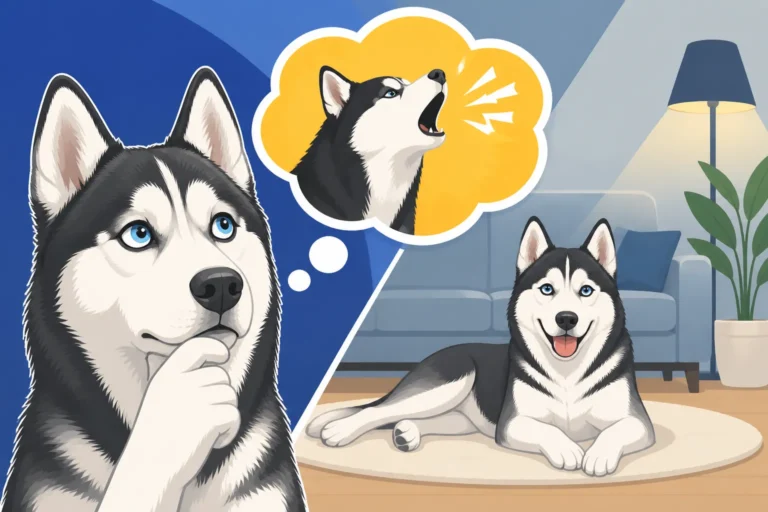
Let's be honest, trying to teach a Siberian Husky anything often feels like negotiating with a furry, four-legged teenager. They aren't inherently "stubborn" as much as they are incredibly independent and task-oriented, which traditionally didn't include running back to a human unless there was a very good reason. This deeply ingrained nature is why traditional recall methods often fall flat, leaving owners feeling defeated and their Huskies, well, still exploring.
The Ancestral Call: Independence and Prey Drive
Siberian Huskies were bred for thousands of years by the Chukchi people in Siberia to be sled dogs. Their primary job was to pull sleds over vast distances, often without direct human supervision. They needed to make decisions on their own, conserve energy, and follow a trail, not constantly check in with a handler. This means their genetic programming leans heavily towards independence and exploration. When you call your Husky, their instinct might be to weigh their current exciting activity against the perceived reward of returning to you. Spoiler alert: the running deer usually wins. This isn't a personal affront; it's simply The Chukchi Origins of the Siberian Husky playing out in your backyard.
Compounding this is their incredibly strong prey drive. Huskies have a natural inclination to chase, catch, and, unfortunately, dispatch small, furry creatures. A fluttering leaf, a bounding rabbit, or even a distant bird can trigger an immediate, all-consuming chase response. When this happens, their hearing for your recall word can effectively vanish. They enter a "zone" where the hunt is the only thing that matters, and no amount of yelling or pleading will break through. It's not malice; it's biology. Siberian Husky Prey Drive Around Small Animals is not something to be underestimated or untrained.
Building Value: Why Coming Back Must Be More Rewarding
For a Husky, simply "being a good dog" or getting a pat on the head often isn't enough to override their powerful instincts. To build a recall word from scratch, you need to convince your Husky, deep in their independent little soul, that coming back to you is the absolute best decision they can make in any given moment. This means making the act of returning incredibly high-value, exciting, and consistent.
Think of it this way: if you had to choose between a fascinating treasure hunt (the squirrel chase) and a quick, boring chat with your boss (your recall), which would you pick? You need to become the treasure at the end of their adventure, or even better, the start of an even more amazing adventure. This concept of building value is the cornerstone of effective Husky recall training. It’s about creating an irresistible magnet, not just issuing a command.
Laying the Foundation: Choosing Your Word and Rewards
Starting from scratch means building a strong positive association with your recall word in a controlled environment before you ever dream of using it outside the house. This phase is all about making the recall word synonymous with pure joy and incredible rewards.
Selecting Your "Magic" Word
Your recall word needs to be unique, used only for recall, and preferably something you don't use in everyday conversation. "Come" is common, but often overused and diluted. Consider words like "Here," "Front," "Touch," or even a specific whistle or sound. The key is consistency. Once you choose it, stick with it. Avoid using your recall word when you know your Husky won't respond, as this only teaches them to ignore it. Every time you say it, they need to hear it as a promise of something fantastic.
Discovering High-Value Rewards
This is where you need to get creative and truly understand what makes your Husky tick. A regular dry kibble might be fine for a "sit," but it won't cut it when their nose is glued to a scent trail. High-value treats are things your Husky goes absolutely bonkers for. This could be:
- Meat-based options: Cooked chicken breast (unseasoned!), tiny pieces of cheese, hot dogs, liver treats.
- Unique store-bought treats: Soft, chewy treats that smell strongly. Brands like Zuke's Mini Naturals or even some freeze-dried raw treats can be fantastic.
- Interactive play: A quick game of tug with a favorite toy, a short chase game, or even a burst of enthusiastic praise and petting, but only if they truly value it.
It's crucial to experiment. What one Husky finds irresistible, another might turn their nose up at. The reward should be delivered immediately upon them reaching you, and it should be a party!
| Reward Type | Examples | Husky Appeal | When to Use |
|---|---|---|---|
| High-Value Food | Cooked chicken, cheese, hot dogs | Irresistible, strong scent, immediate gratification. Overrides most distractions. | Initial training, high-distraction environments, emergency recall. |
| Medium-Value Food | Store-bought soft treats, kibble | Good for basic commands, less exciting but still positive. | Low-distraction environments, maintenance training. |
| Play/Toy | Favorite tug toy, squeaky ball | Engaging, good for Huskies who are very toy-motivated. Requires active participation. | As a primary or secondary reward, especially if food motivation is waning or during play sessions. |
| Praise/Affection | Enthusiastic "Good dog!", belly rubs | Builds bond, good for positive reinforcement. Less effective alone in high-distraction scenarios. | Always combine with other rewards, especially for initial recall training to reinforce the positive feeling. |
Remember, variety is your friend! Keep them guessing and excited about what amazing thing they might get for coming back. You can find a huge variety of high-value treats and even special recall-specific toys on platforms like Amazon.
The Initial Setup: Low-Distraction Zone
Start indoors in a quiet room with no distractions. You, your Husky, and your stash of super-delicious treats.
- Get their attention: Say your recall word once, clearly and cheerfully.
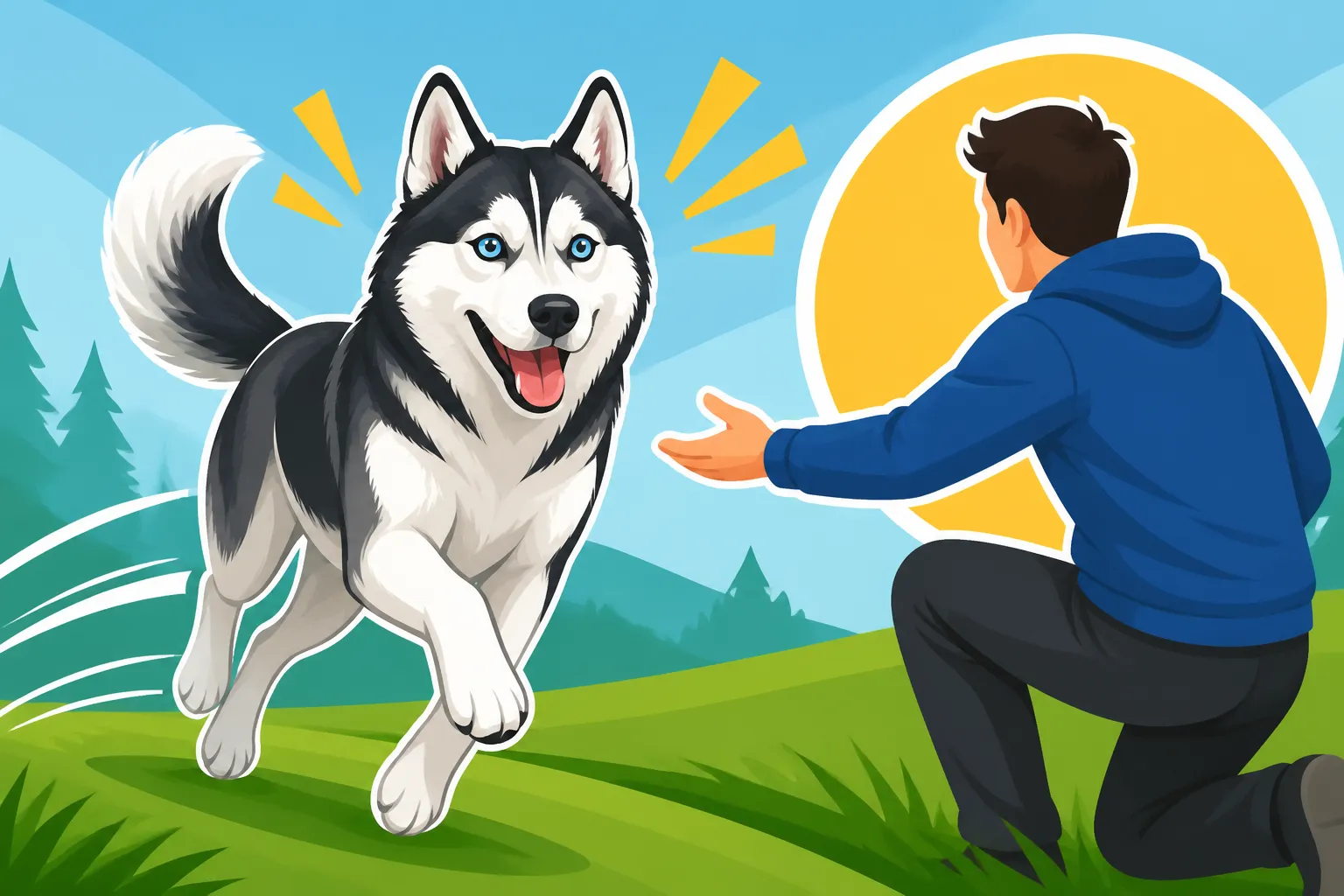
- Lure and reward: As soon as they turn their head or take a step towards you, make excited noises, drop to one knee, and offer the high-value treat right at your feet or hand. Make it easy for them to succeed.
- Repeat, repeat, repeat: Do this 5-10 times in short sessions throughout the day. The goal is to create an instant, joyful association: recall word = best treat ever!
- Introduce slight distance: Once they're reliably coming from a few feet away, increase the distance. Walk across the room, say your word, and reward heavily when they reach you.
- Add movement: Call them while you're walking away, making it a fun game of chase. Always reward at your location.
During this stage, never, ever use your recall word for something unpleasant, like calling them in for a bath, to leave the dog park, or for nail trims. That immediately devalues the word. For those instances, just go get them or use a different, neutral phrase.
Gradual Progression: Practice, Proofing, and Real-World Scenarios
Once your Husky is a recall superstar in the living room, it's time to slowly introduce them to the real world. This is a delicate dance, as you want to avoid setting them up for failure.
Mastering the Long Line
The long line is your absolute best friend for Husky recall training outside a secure, fenced area. It allows your Husky to explore and feel some freedom while giving you the ultimate safety net. You can find various lengths of long lines, from 15 to 50 feet, on Amazon.
- Start in a fenced area: Begin in a securely fenced yard or a quiet, contained park where you can still practice. Put your Husky on the long line, letting it drag initially.
- Practice randomly: Don't wait until they are heading for trouble. Randomly call them while they are sniffing or casually wandering. When they come, throw a party, lavish them with treats, and then immediately release them to go back to exploring. This prevents them from associating recall with the end of fun.
- Use the line gently: If they ignore your call, gently reel them in with the long line while continuing to make happy, encouraging noises. The line is not for corrections, but for guiding them to the reward. As soon as they reach you, the reward happens.
- Increase distractions slowly: Once they are solid in a quiet, fenced area, move to slightly more distracting environments – a park with distant people, then closer people, then other calm dogs. Always keep them on the long line. This is where you test how strong Rewards That Beat the Siberian Husky Chase Instinct really are.
Remember, the goal is to make coming back to you feel intrinsically good, even when there are tempting alternatives. Starting Long Line Work With a Siberian Husky can feel like a big step, but it's essential for safety and consistent training.
Proofing Your Recall in Varied Environments
Proofing means practicing your recall in every conceivable situation, with increasing levels of distraction. This is a long process and requires immense patience.
- Different locations: Practice in your yard, at a park, on a quiet trail, near a street (always safely on lead), at a friend's house. Each new place presents new smells and sights that can challenge your Husky's focus.
- Different distractions: Start with low-level distractions (a distant person walking), then medium (a child playing), then high (another calm dog, a bicycle). Never introduce a distraction you aren't confident your Husky can overcome with your recall.
- Different distances: Practice calling them from varying distances, ensuring they come reliably whether they are 5 feet or 30 feet away on the long line.
- Different people: Have trusted family members or friends practice the recall too, so your Husky learns the command isn't just for you.
Always set your Husky up for success. If you know they will fail in a certain situation, don't use your recall word. Instead, physically go get them. Every successful recall strengthens the behavior; every ignored recall weakens it. This is why Whether Any Siberian Husky Is Reliable Off Leash is such a complex question for our breed.
Troubleshooting Common Husky Recall Challenges
Even with the best intentions, Huskies will present challenges. It’s part of their charm (and their exasperating independence!). Knowing how to navigate these hurdles can prevent frustration and reinforce your progress.
The "Selective Hearing" Husky
Ah, the classic. Your Husky looks right at you, clearly hears your call, and then turns their head with an air of profound indifference, as if pondering the mysteries of the universe. This isn't "stubbornness" as much as it is a calculation: "Is what I'm doing now better than what they're offering?" If they consistently choose the alternative, it means your rewards aren't high enough, or the distractions are too great for the current stage of training.
- Increase reward value: Bring out the chicken, the cheese, the hot dogs! Make it so ridiculously good that they simply cannot refuse.
- Backtrack: Go back to a less distracting environment where they consistently succeed. Rebuild that confidence and positive association before moving forward again.
- Short, sharp bursts of training: Huskies have short attention spans for repetitive tasks. Keep recall sessions brief, fun, and end on a high note before they get bored.
- Body language matters: Get excited! Drop to a knee, clap your hands, use a happy, inviting tone. Make yourself seem like the most fun thing on earth. A Siberian Husky That Comes Only When It Suits needs motivation, not nagging.
Avoiding "Poisoning" Your Recall Word
This is critical. Never use your recall word when you are angry, frustrated, or about to do something your Husky dislikes. If your Husky only hears "COME!" when they're about to get a bath or leave the park, they'll quickly learn that "come" means "fun is over," and they will actively avoid you.
- Go get them: If you need to physically retrieve your Husky for something they won't like, simply go walk up to them and leash them. Don't use your recall word.
- Random "party" recalls: Even when you don't need them for anything, occasionally call them, give them a huge reward, and immediately release them back to whatever they were doing. This reinforces that coming to you often leads to more fun, not less. This is why Keeping a Siberian Husky Recall Alive Into Adulthood requires consistent positive reinforcement, not just during puppyhood.
Dealing with Real-World Escapes
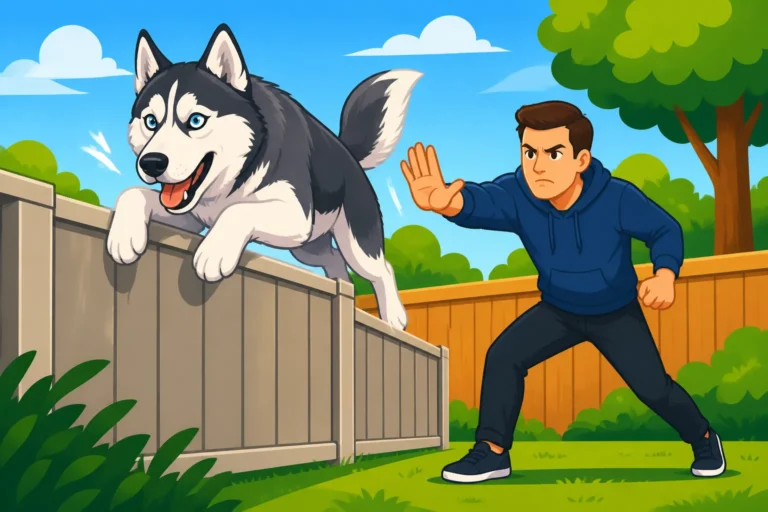
Despite your best efforts, sometimes a Husky will get loose. This is a common fear, and unfortunately, a reality for many owners given Siberian Husky Deaths From Trauma and Escape.
- DO NOT CHASE: This is the golden rule. Chasing a Husky turns it into a fun game of "keep away" for them. They are faster than you, and they will enjoy the chase.
- Run the other way: Instead, turn and run away from them, making excited, happy noises. Many Huskies will be instinctively curious and want to investigate why you're having so much fun without them.
- Drop to the ground: Lying down can sometimes pique their curiosity enough to come investigate.
- Pretend to find something amazing: Start rummaging around excitedly, as if you've found the most incredible treasure. Sometimes their FOMO (fear of missing out) will be stronger than their desire to run.
- Have an emergency treat stash: Always carry truly irresistible treats with you, even on quick walks.
- Consider an emergency stop cue: Beyond your regular recall, a separate, rarely used, extremely high-value "emergency stop" cue can be useful. This is reserved for truly dire situations. An Emergency Stop Cue for a Siberian Husky should be trained with the utmost care and only used when absolutely necessary.
Building a recall with a Siberian Husky is a marathon, not a sprint. It requires patience, consistency, an understanding of their unique personality, and a relentless supply of high-value rewards. It might take longer than with other breeds, and you may never achieve 100% off-leash reliability in every situation (many experienced Husky owners recommend avoiding off-leash freedom entirely unless in a truly secure area). But by putting in the work and understanding their motivations, you can significantly improve your Husky's responsiveness and strengthen the incredible bond you share. Consider exploring online resources like BAXTER & Bella for further guidance on positive reinforcement training methods specifically tailored to canine companions, which can be invaluable for understanding and managing the independent nature of a Siberian Husky.
Disclaimer
This article is for general informational purposes only and does not constitute professional advice. Laws, prices and regulations vary by location and change over time. Consult a qualified professional for guidance on your specific situation.