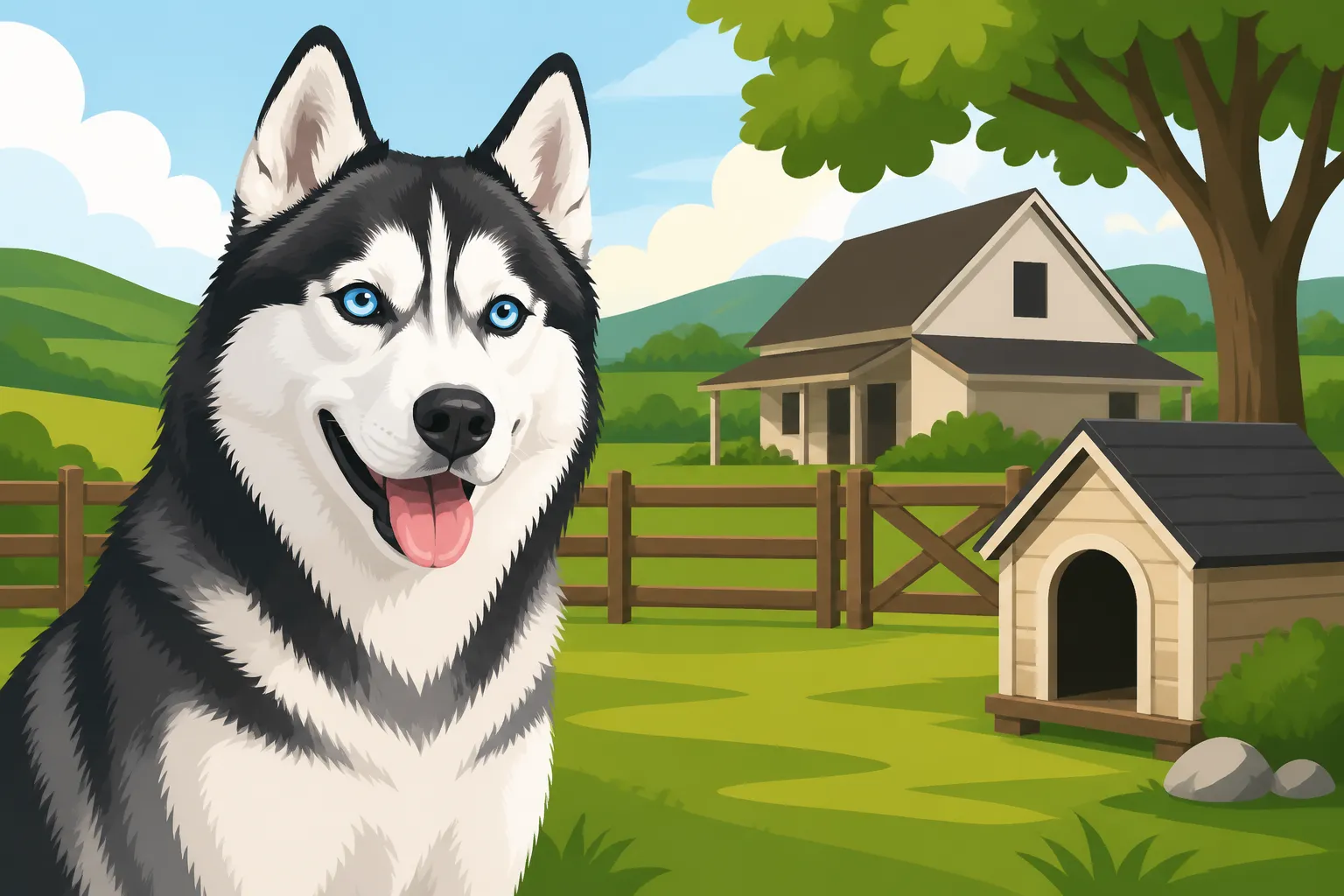
Managing a Siberian Husky in a Rural Yard
Living with a Siberian Husky in a rural setting can feel like a constant battle against their deepest instincts. You bought your dream property with space for your beloved companion, only to realize that boundless acreage often translates to endless opportunities for escape, chasing wildlife, or even conflicts with neighbors' livestock. This guide is here to help you navigate the unique challenges of keeping your independent, high-drive Siberian Husky safe and happy in a rural yard, without sacrificing your peace of mind or your neighbors' goodwill.
Understanding the Rural Yard Challenge for Huskies
Ah, the dream of wide-open spaces for your husky! It sounds idyllic, doesn't it? Plenty of room to run, fresh air, and natural beauty. But for a Siberian Husky, a rural yard isn't just a bigger version of a suburban one; it's a sensory wonderland that ignites their most primal instincts. These dogs were bred for endurance and independence, to travel vast distances, often without direct human supervision, and to hunt to survive. Your rural paradise, unfortunately, often provides the perfect stage for these traits to manifest in ways that can be challenging, to say the least.
The Allure of the Wild for a Siberian Husky
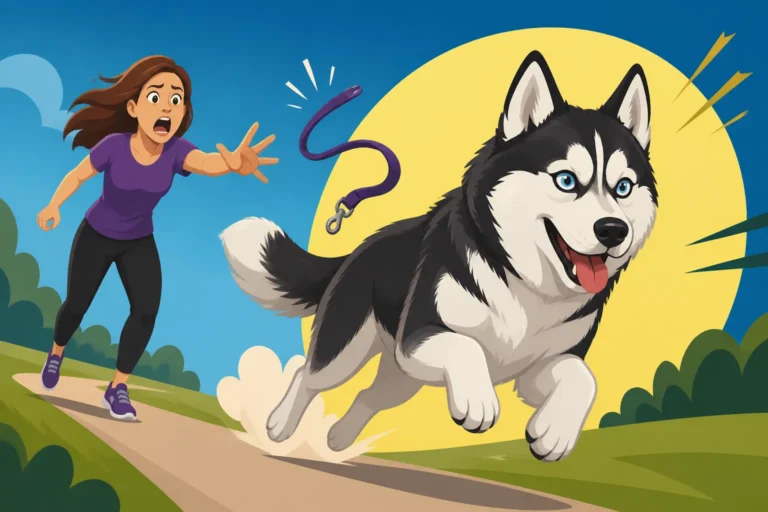
Think about what makes a husky a husky: that incredible drive to run, the keen senses, and that deeply ingrained prey drive. In a rural environment, these aren't just quirks; they're powerful forces. Every rustle in the underbrush, every deer scent carried on the breeze, every rabbit darting across the field acts as an irresistible invitation. This isn't your husky being "naughty" or disobedient; it's them being exactly what they were bred to be. The quiet woods behind your house? To a husky, that's not just trees; it's a vast, exciting hunting ground just waiting to be explored. This intense instinct to roam and investigate means that even the most well-loved husky can seem to vanish into thin air if given the slightest opportunity. It's why we always say, Why a Siberian Husky Cannot Be Trusted Off Leash.
Many husky owners in rural areas recount stories of their seemingly content dog suddenly finding a weakness in the fence or slipping out an open gate, disappearing for hours, sometimes days. They're not necessarily trying to abandon you; they're simply following that ancient call to explore, to chase, to see what's over the next hill. This deep-seated wanderlust makes traditional "boundaries" a mere suggestion in their minds. For them, a fence is a puzzle to solve, not an absolute barrier. It's a testament to their intelligence and determination, but also a source of immense stress for their human companions.
Identifying Local Risks Wildlife, Livestock, Roads
Beyond the sheer frustration of a runaway husky, the actual dangers in a rural setting are significantly higher than in a suburban one. Your husky isn't just running through a park; they're potentially encountering wildlife like deer, coyotes, foxes, or even bears, depending on your region. These encounters can be dangerous for both your husky and the wildlife. A husky's prey drive is incredibly strong, and they might pursue and injure smaller animals, leading to heartbreak and potentially legal repercussions.
Then there's the very real concern of livestock. If your neighbors have chickens, sheep, goats, or even horses, a curious or prey-driven husky can cause immense damage and distress. A Siberian Husky Loose Near a Neighbor's Livestock is a nightmare scenario that can lead to significant financial costs, strained community relations, and even the heartbreaking decision to have your dog declared dangerous. Furthermore, rural roads, while often less busy, frequently have higher speed limits and drivers unaccustomed to dogs suddenly darting out. The risk of a tragic accident involving a car is always present, making robust containment and management strategies not just advisable, but absolutely critical for the safety of your beloved companion.
Securing Your Rural Property Against Husky Escapes
Given the challenges, the first line of defense in a rural setting is always a robust physical barrier. An ordinary fence, even a tall one, often isn't enough for a determined Siberian Husky. These dogs are master escape artists, combining intelligence, agility, and sheer will to overcome obstacles that would stop most other breeds. If you’re serious about keeping your husky safely contained, you need to think beyond the basic fence.
Beyond the Six-Foot Fence Reinforcing Boundaries
When we talk about containing a Siberian Husky, a six-foot fence is usually the absolute minimum, but often, it's just the starting point. Many huskies can and will clear a six-foot fence with a running start or by scaling it using any footholds available, like a snowdrift, a woodpile, or even chain-link gaps. So, what do you do? Consider adding fence toppers that angle inwards, making it harder to get purchase and climb over. Some owners use "coyote rollers" – spinning PVC pipes attached to the top of the fence – to prevent dogs from getting a grip and pulling themselves over. These simple additions can make a surprising difference in deterring an aerial escape. For specific products, searching on Amazon for "dog fence rollers" or "coyote rollers for fences" can give you ideas for DIY projects or ready-made solutions.
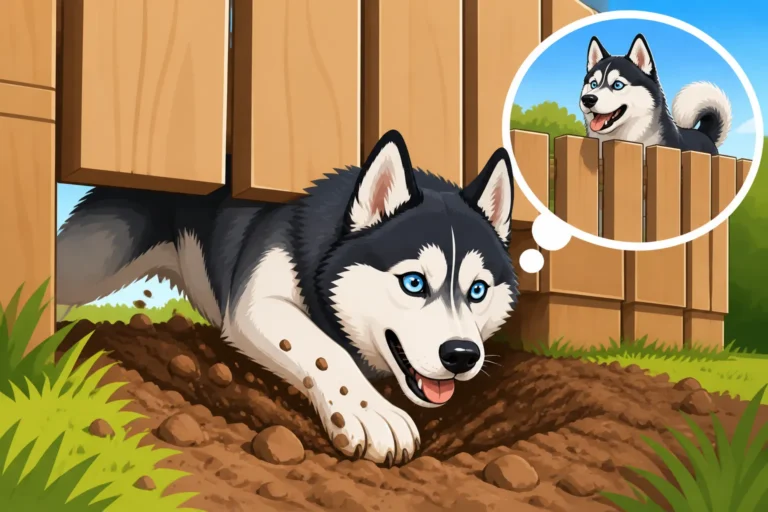
But the real secret weapon against a husky escape artist often lies under the fence, not just over it. Huskies are notorious diggers. They'll excavate tunnels that would impress an engineer if given half a chance, especially when bored or stimulated by a scent. To combat this, you need to bury hardware cloth, chicken wire, or a concrete footer along the entire fence line, extending inwards at least 18-24 inches. This "L-footer" or "dig guard" prevents them from digging directly down and out. This isn't a quick weekend project; it's a significant undertaking, but it's often the single most effective way to prevent underground escapes. Stopping a Siberian Husky Digging Along the Fence is a battle many rural husky owners know all too well, and reinforcement is key.
The Role of Supervision and Containment Strategies
Even with the most Fort Knox-like fencing, direct supervision remains paramount, especially during the crucial stages of a husky's development or when they are particularly energetic. A well-secured yard isn't a license to leave your husky unattended for hours on end, particularly in a rural environment where external stimuli are constant. Boredom is the enemy of containment, and a bored husky will find a way out, or at least a way to create mischief inside the yard. This means being outside with them, actively engaged, or at least observant, whenever they are in the yard.
For times when direct supervision isn't possible, or for new puppies still learning boundaries, secure kennel runs can be invaluable. These runs should also be constructed with escape prevention in mind: concrete slabs underneath to prevent digging, and sturdy wire tops to prevent climbing. Look for heavy-duty, welded wire panels rather than lighter chain link, as huskies have been known to bend or break weaker materials. Another key component of containment is the house itself. Many rural husky owners have learned the hard way that a loose husky inside can quickly become a loose husky outside if a door is left ajar or a window screen isn't secure. Siberian Huskies That Bolt Through Open Doors are a common occurrence, so diligent door manners and secure window screens are non-negotiable.
| Containment Method | Pros | Cons | Rural Husky Effectiveness (1-5, 5 being best) |
|---|---|---|---|
| Standard 6ft Fence | Common, relatively easy to install | Easily climbed, jumped, or dug under | 1 |
| 6ft Fence with L-Footer | Prevents digging escapes, good deterrent | Can still be climbed or jumped over | 3 |
| 6ft Fence with Rollers | Prevents climbing over, good deterrent | Can still be dug under | 3 |
| 8ft Solid Fence | Harder to climb, better visual barrier | Expensive, may still be dug under | 4 |
| Covered Kennel Run (Heavy Duty) | Highly secure, prevents all types of escapes | High upfront cost, limits roaming space, not for long periods | 5 |
| Invisible Fence | Aesthetic, covers large areas | Not physical, relies on pain, ineffective for high drive | 0 (Dangerous) |
| Tie-Out | Temporary solution, inexpensive | Dangerous, increases frustration, not recommended | 0 (Dangerous) |
Training and Management for Rural Living
While physical barriers are crucial, they are only one part of the equation. Your Siberian Husky's behavior and your ability to manage it effectively are equally, if not more, important, especially when dealing with the vast and stimulating environment of a rural property. Training an independent breed like a husky requires patience, consistency, and a deep understanding of their unique motivations.
Cultivating a Reliable Recall in a High-Distraction Environment
This is arguably the holy grail for any husky owner, especially those in rural areas. The phrase "reliable recall" can feel like an oxymoron when applied to a Siberian Husky. Their instinct is to run, and the distractions of squirrels, deer, or just the open field are incredibly powerful. Why Siberian Husky Recall Fails at the Worst Moment is something most owners have experienced. Building a truly reliable recall means more than just teaching them to come when called in your living room; it means proofing that command against the most tempting distractions.
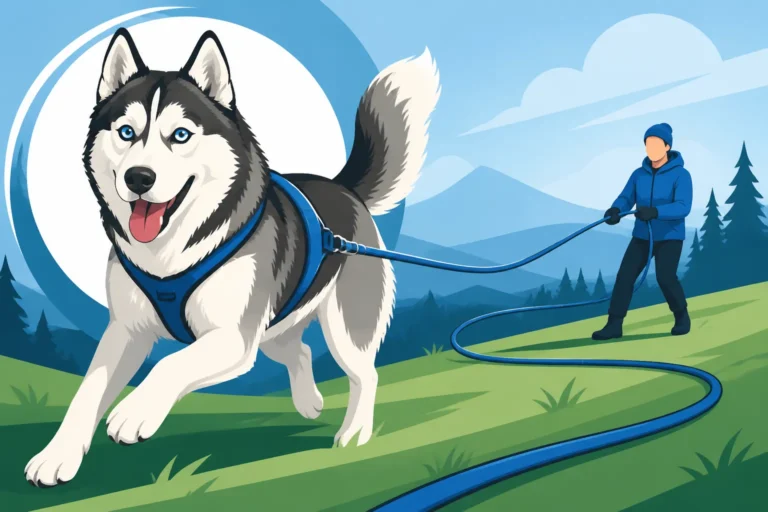
Start recall training in a completely secure, distraction-free environment, gradually introducing very minor distractions, then escalating. Use high-value rewards – think boiled chicken, cheese, or even small pieces of hot dog – things they never get otherwise. Your recall cue should always mean something amazing is about to happen. Practice on a long line, 30 to 50 feet long, so you can always physically prevent them from practicing ignoring you. A brand like Amazon offers a wide variety of long lines that are essential for safe, progressive recall training. An emergency stop cue, a sharp, distinct sound or word, can also be invaluable for those split-second decisions when you need to interrupt a chase. Remember, consistency is key, and every successful recall, even from a short distance, builds positive association. Online training programs, such as those from BAXTER & Bella, can also provide structured guidance on building a solid foundation for recall, especially useful if you don't have local husky-savvy trainers.
Managing Prey Drive Through Enrichment and Controlled Exposure
A Siberian Husky's prey drive is hardwired; you can't truly train it out of them. What you can do is manage it and redirect it into acceptable outlets. This means providing ample mental and physical enrichment to satisfy their natural instincts in a controlled environment. Puzzle toys, snuffle mats, and scatter feeding can engage their minds, simulating the "hunt" for food. Interactive play, such as flirt poles (a pole with a lure attached, great for controlled chasing), can burn off some of that intense energy and satisfy the urge to pursue.
Controlled exposure to distractions is also important. If your husky only ever sees a deer when they're off-leash and escaping, they'll learn that deer equals freedom and chase. Instead, practice parallel walking on a long leash or behind a secure fence where they can see wildlife but cannot act on their impulses. Reward calm observation. Over time, you might see a decrease in their frantic response, replacing it with a more measured curiosity. This is a long game, though, and requires unwavering consistency and vigilance. Never underestimate the power of that prey drive; always err on the side of caution.
Coexisting with Wildlife and Livestock
Living in a rural area means sharing your space with a myriad of creatures. Your Siberian Husky, with their strong prey drive and curious nature, can quickly find themselves in conflict with local wildlife or, more critically, your neighbors' livestock. This isn't just a nuisance; it can have serious consequences for your dog, your relationships with neighbors, and local ecology.
Protecting Your Husky and Your Neighbors' Animals
The best defense here is, again, prevention. Your secure fencing and diligent supervision are the primary tools. Even a husky with a low reported prey drive can be triggered by a flock of panicked chickens or a startled lamb. If you have any doubt about your husky's ability to safely ignore other animals, then never, ever allow them unsupervised access to areas where livestock or vulnerable wildlife might be present. This might mean having a completely separate, heavily fortified kennel run for outdoor time if your main yard shares a border with a farm.
Consider investing in proper identification for your husky – microchips are a must, but also make sure their collar tags are always up-to-date. Should the unthinkable happen and your husky escapes, these forms of ID can be crucial in recovering them quickly before they cause trouble. Why an Escaped Siberian Husky Is a Health Risk isn't just about their own safety, but also the potential harm they might cause to others. Building good relationships with your rural neighbors is also critical. Inform them about your husky's nature and your efforts to keep them contained. Open communication can go a long way in de-escalating potential issues if your husky is spotted near their property.
What to Do if Your Husky Has an Encounter
Despite all your best efforts, accidents can happen. If your husky does manage to get loose and has an encounter with wildlife or livestock, your immediate response is critical. First, prioritize safety: yours, your dog's, and the other animals involved. Do not blindly rush into a situation that could be dangerous. If your dog is in pursuit of wildlife, resist the urge to chase them; this often only encourages the chase. Instead, try to get their attention with your emergency recall word, and if they respond, reward them lavishly. If they're out of range, move to block their path or try to lead them back to safety.
If livestock is involved, the situation is even more delicate. Once your husky is safely contained, immediately assess the damage. Are any animals injured? Contact your neighbor right away, regardless of the severity. Being proactive and responsible can help mitigate the situation. Offer to cover veterinary costs or any damages. Ignoring the situation or trying to hide it will only make things worse. Depending on local laws and the extent of the damage, you could face legal action or even lose your dog. Knowing Liability When a Siberian Husky Kills a Neighbor's Cat or injures livestock is a sobering reality that underscores the importance of stringent containment and management in a rural environment. It's a tough lesson many learn the hard way, but with proper planning and vigilance, it's a scenario you can work hard to avoid.
Disclaimer
This article is for general informational purposes only and does not constitute professional advice. Laws, prices and regulations vary by location and change over time. Consult a qualified professional for guidance on your specific situation.