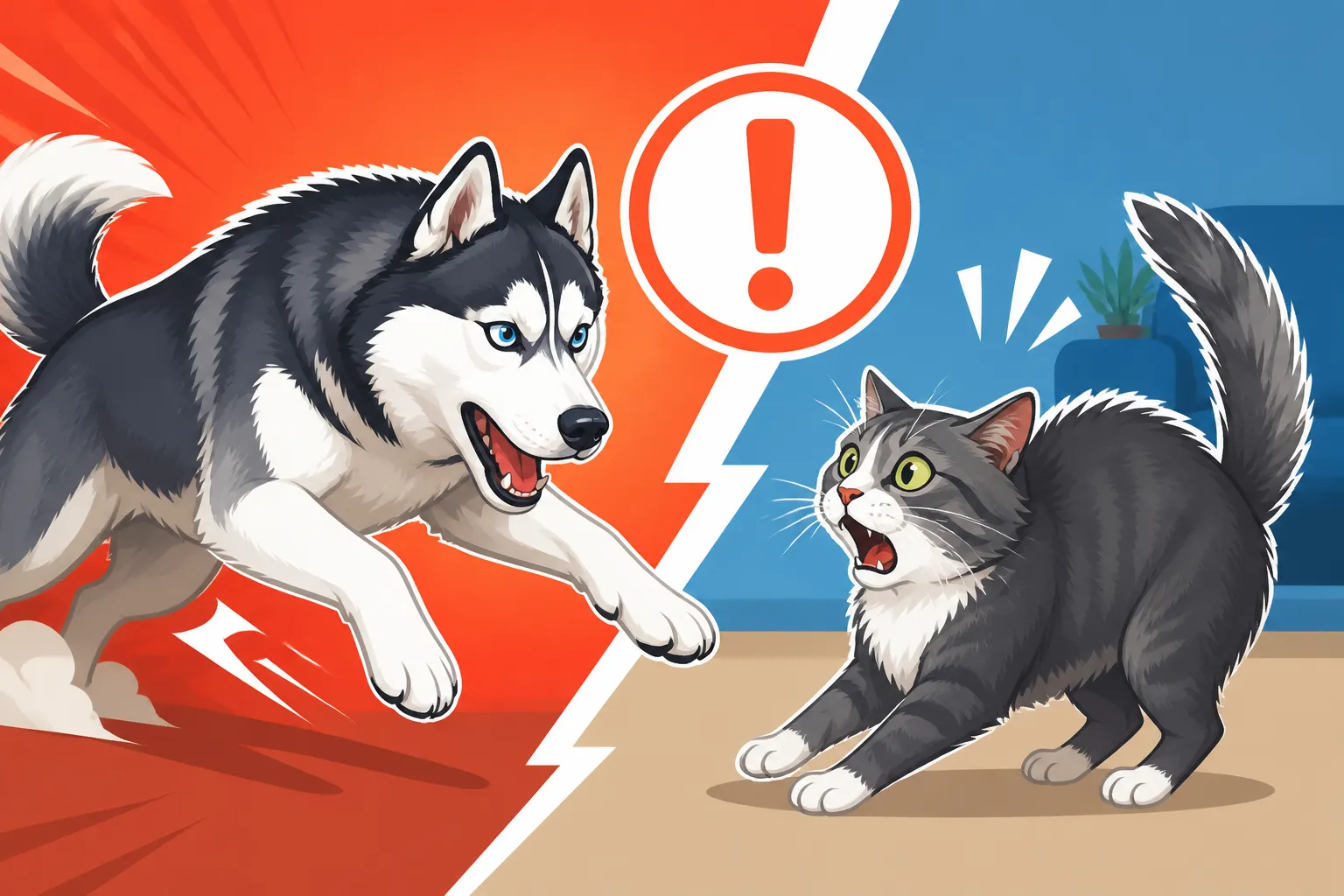
Why a Siberian Husky Should Not Meet a Cat Loose
The dream of a happy, multi-species household with a playful Siberian Husky and a purring cat often crashes head-first into a harsh reality: a Siberian Husky's powerful prey drive. Many well-meaning owners assume their dog will be different, only to discover, sometimes too late, that a loose introduction between these two distinct species can lead to tragic and heartbreaking consequences. This guide is here to shed light on why allowing a Siberian Husky to meet a cat without strict control is a gamble you simply cannot afford to take, and to explore safer, more realistic approaches to coexistence.
The Unyielding Power of Siberian Husky Prey Drive
Let's be brutally honest from the get-go: Siberian Huskies are not bred to be gentle guardians of small, furry creatures. Their very essence, etched into their genetic code over thousands of years, is that of an endurance runner and, yes, a hunter. This isn't a flaw in their character; it's a fundamental part of who they are, and understanding it is the first step toward responsible ownership.
Instincts Forged by Generations
Imagine a world where survival depends on wit, speed, and the ability to find food. That was the world of the Chukchi people in Siberia, who meticulously bred the ancestors of our modern Huskies. These dogs weren't just sled pullers; they were partners in survival, often tasked with hunting small game to supplement their diet. This deep-seated instinct to chase, capture, and dispatch small, fast-moving animals is not something you can simply train away with a few treats. It's a primal drive, a powerful force that lies just beneath the surface, waiting for the right trigger.
We often talk about how our dogs are members of our family, but it’s crucial to remember that they are still animals with instincts far removed from our human understanding of companionship. The swift movement of a squirrel, the flutter of a bird, or the darting dash of a feline companion can ignite this ancient drive in an instant. It’s not aggression in the typical sense; it's a predatory sequence that often unfolds with chilling efficiency. You can learn more about their heritage in The Chukchi Origins of the Siberian Husky and gain insight into What a Siberian Husky Was Bred to Do.
Reading the Signs of Predatory Behavior
For a human, observing predatory behavior can be subtle until it's too late. It doesn't always start with growling or barking. Often, it begins with an intense, silent focus – a still body, ears alert, eyes locked onto the target. This is the "fixate" stage. Then comes the stalk, a low, creeping approach, followed by the lightning-fast chase. If contact is made, the final stages involve capture and a "killing shake." While your Husky might not intend to kill, their instincts are geared towards it, and a cat's delicate body is no match for a Husky's strength.
It’s easy to mistake a Husky’s initial interest in a cat for curiosity or an invitation to play. However, play between a dog and a cat usually involves reciprocal actions, like playful pounces, mutual chases, and soft bites that don't cause harm. Predatory behavior, on the other hand, is one-sided and driven by the desire to catch. If you see your Husky stiffen, lower its head, and intensely stare at your cat, or if its tail is straight out rather than wagging loosely, these are red flags. It’s vital to recognize these signs immediately. For a deeper dive, read Reading a Siberian Husky Before It Fixates.
Why Small, Fast-Moving Animals Trigger It
Cats, unfortunately, are perfectly designed to trigger a Siberian Husky's prey drive. Their size, their quick, darting movements, their habit of running when startled – all of these are classic cues for a predator. A cat sprinting across a room isn't trying to be dinner; it's just being a cat. But to a Husky with a strong prey drive, that sudden movement is an irresistible invitation to chase.
This isn't to say that all Huskies will act on this instinct with every small animal. Some might have a lower drive, or it might be well-managed through rigorous training and environmental controls. However, assuming your Husky will be the exception without proper precautions is a dangerous gamble. Even Huskies raised with cats from puppyhood can have this instinct surface later in life, especially if triggered by specific circumstances, like a cat running away in fear. The inherent nature of Why Siberian Husky Prey Drive Around Small Animals means you must always be vigilant.
The Grave Risks of a Loose Introduction
The appeal of letting your Husky and cat "figure it out" on their own, or hoping they'll become best friends instantly, is understandable. We all want our pets to get along. But with a Siberian Husky and a cat, a loose introduction isn't just risky; it can be catastrophic. The potential consequences far outweigh any perceived benefit of letting them interact without a barrier.
Immediate Danger to the Cat
This is the most critical and heartbreaking risk. A Siberian Husky, even one that seems gentle, possesses considerable strength and a powerful bite. What might start as a "playful" chase can escalate to a fatal encounter in mere seconds. A cat's bones are fragile, its organs delicate. A single shake or bite, even if not intended to kill, can cause severe internal injuries or spinal trauma. We've heard too many stories of owners leaving their pets alone for "just a minute" or assuming a supervised interaction was sufficient, only to return to a horrific scene.
Even if the Husky doesn't immediately inflict a fatal injury, the stress and terror can be immense for the cat. A frightened cat might hide, refuse to eat, or develop behavioral issues from the constant anxiety. Beyond the immediate physical harm, there's the emotional toll on all involved. The owner, the surviving pets, and the profound guilt that follows. Consider the legal and emotional implications, as covered in Liability When a Siberian Husky Kills a Neighbor's Cat, should the worst happen.
Reinforcing Unwanted Behavior
If a Husky successfully chases or, worse, injures a cat during a loose introduction, it inadvertently reinforces that predatory behavior. Every time the prey drive is "rewarded" – even if the reward is just the thrill of the chase – it makes it stronger. The Husky learns that chasing small, fast things is a rewarding activity. This can then generalize to other small animals, making walks a nightmare and potentially putting neighborhood wildlife, and even other small dogs, at risk.
This reinforcement creates a dangerous cycle that is incredibly difficult to break. Once a Husky has experienced the full predatory sequence, the urge to repeat it becomes even more powerful. It transforms from a latent instinct into a practiced behavior, making the hope of peaceful coexistence even more remote.
Risk to the Husky and Owner
While the cat is at the greatest risk, the Husky and owner are not immune to danger. A cornered or terrified cat can lash out, inflicting deep scratches or bites on the Husky. These injuries, especially if they occur near the eyes or mouth, can lead to serious infections, costly vet bills, and even permanent damage. A cat's claws are sharp, and a defensive swipe can cause significant pain and injury to your dog.
Furthermore, if an owner tries to intervene in a predatory event, they risk being bitten or scratched by either animal in the chaos. The adrenaline and instinct in both animals can override their usual docile nature, putting the intervening human in harm's way. This isn't just about protecting the cat; it's about creating a safe environment for everyone in the home, including yourself.
When Coexistence is the Goal: Strategies for a Controlled Environment
Given the inherent risks, the goal when introducing a Siberian Husky to a cat should never be a "loose" interaction, especially not at first. Instead, the focus must be on creating a controlled, safe environment that prioritizes the safety and well-being of both animals. This often means permanent management rather than full integration.
Strict Containment and Supervision
The absolute golden rule for a multi-species household with a Husky and a cat is never leave them unsupervised, and never allow loose introductions without extensive, safe conditioning. This requires rigorous management. Your home must be set up so that the cat has multiple escape routes and high perches that the Husky cannot access. The Husky, in turn, needs designated safe spaces, typically a sturdy crate, for when you cannot actively supervise.
When direct interaction is even being considered, it must be through a barrier. This could be a sturdy baby gate that prevents the Husky from jumping over, or even a glass door. The idea is to allow them to see each other, but without any physical contact that could escalate. Investing in a high-quality, escape-proof crate for your Husky is crucial. Many owners trust brands available on Amazon for robust crating solutions that can withstand a determined Husky. Remember, Crates a Siberian Husky Cannot Break Out Of are a necessary investment for safety.
Desensitization Through Controlled Exposure
If you decide to pursue coexistence, it must be a slow, methodical process focused on desensitization and positive reinforcement, always with a barrier. Start with scent swapping: exchange blankets or beds so each animal can get used to the other's smell without the stress of a direct encounter.
Once scents are familiar, move to supervised visual introductions, always with a sturdy barrier. The goal is for both animals to remain calm in each other's presence. Reward calmness from the Husky with high-value treats and praise. The moment the Husky shows signs of fixating or high arousal, the session ends. Never punish the Husky for its instincts, but manage the situation to prevent reinforcement of unwanted behavior. BAXTER & Bella, an online training program, often emphasizes positive reinforcement and building a strong bond with your dog, which can be invaluable in teaching a Husky to focus on you rather than a potential prey item during these controlled sessions.
Creating a positive association is key. Every time the cat is in view, good things happen for the Husky (treats, praise). The cat, too, should receive positive reinforcement for remaining relaxed. It’s a lengthy process, often taking weeks or months, and it requires immense patience and consistency. For further guidance on early introductions, consider Raising a Siberian Husky Puppy Beside a Cat.
| Feature | Loose Introduction (NOT Recommended) | Controlled Coexistence (Recommended) |
|---|---|---|
| Initial Contact | Unrestricted, immediate | Through sturdy barriers (crate, gate) |
| Supervision | Often none, or inconsistent | 100% active, vigilant supervision |
| Cat Safety | Extremely high risk of injury/death | Minimized risk, escape routes provided |
| Husky Behavior | Reinforces prey drive | Rewarded for calm, ignored if aroused |
| Environment | Unmanaged, equal access for both | Structured, separate spaces, high perches for cat |
| Outcome Expectation | Unpredictable, often negative | Managed safety, potential for tolerance, not necessarily friendship |
| Emotional Impact | High stress, potential trauma | Reduced stress through predictability |
Managing the Environment for Success
Beyond direct introduction sessions, the entire household environment needs to be tailored for coexistence. This means creating "cat zones" – areas that are exclusively for the cat and inaccessible to the Husky. Cat trees, shelves, and even high furniture can serve as safe havens. Ensure the cat has multiple routes to escape if it feels threatened.
Separate feeding areas are non-negotiable. Huskies can be food-motivated, and resource guarding can escalate tensions. Provide ample mental and physical enrichment for your Husky to help burn off energy and redirect their natural drives. Long walks, puzzle feeders, and training sessions can make a big difference. A tired Husky is a less reactive Husky. For outdoor management, strategies discussed in Managing a Siberian Husky in a Rural Yard might offer valuable insights, even for indoor contexts, regarding containment and safety.
Realistic Expectations and Long-Term Management
The reality check is often the hardest part for owners: not all Siberian Huskies can safely live loose with cats. Even with the most diligent training and management, some Huskies' prey drive is simply too strong to ever fully trust them alone with a feline. This isn't a failure on your part, nor is it a fault of the dog; it's simply an acknowledgment of deep-seated genetics.
Acknowledging the Limitations
It's crucial to understand that "coexistence" might mean permanent separation when unsupervised. For many Husky-cat households, the safest long-term solution is a carefully managed system of separate living spaces, rotation, and strict supervision during any shared time. This means the cat might live primarily in one part of the house, while the Husky has access to others, with gates and doors always securing the boundaries.
Setting realistic expectations from the beginning will save you a lot of heartache. The goal isn't always for them to cuddle on the couch, but for them to share a home safely, each respecting the other's space. It's about preventing tragedy, not forcing an unlikely friendship. Whether an Adult Siberian Husky Can Learn to Ignore Cats often comes down to this kind of strict, ongoing management.
The Role of Professional Guidance
If you are struggling with managing your Husky's prey drive around your cat, or if you're uncertain about how to proceed safely, do not hesitate to seek professional help. A certified professional dog trainer or a veterinary behaviorist experienced with high-prey-drive breeds and multi-species households can provide invaluable guidance tailored to your specific situation. They can observe your dog's behavior, help you set up your home, and teach you effective training techniques.
Avoid trainers who advocate for harsh or confrontational methods, as these can exacerbate fear and aggression, especially in an independent breed like the Husky. Positive reinforcement, patience, and consistency are key.
Commitment to Safety First
Ultimately, owning a Siberian Husky, especially in a home with other small animals, is a commitment to lifelong vigilance and responsible management. Your primary responsibility is the safety and well-being of all your pets. This might mean making difficult choices, such as rehoming a cat if the risk is too high, or recognizing that your Husky's temperament simply isn't suited for a multi-species household.
It means accepting that your Husky's instincts are powerful and that asking them to completely suppress those instincts is often unfair and unrealistic. By understanding their nature, implementing strict safety protocols, and being realistic about outcomes, you can strive to create a harmonious and, most importantly, safe home for everyone.
Disclaimer
This article is for general informational purposes only and does not constitute professional advice. Laws, prices and regulations vary by location and change over time. Consult a qualified professional for guidance on your specific situation.