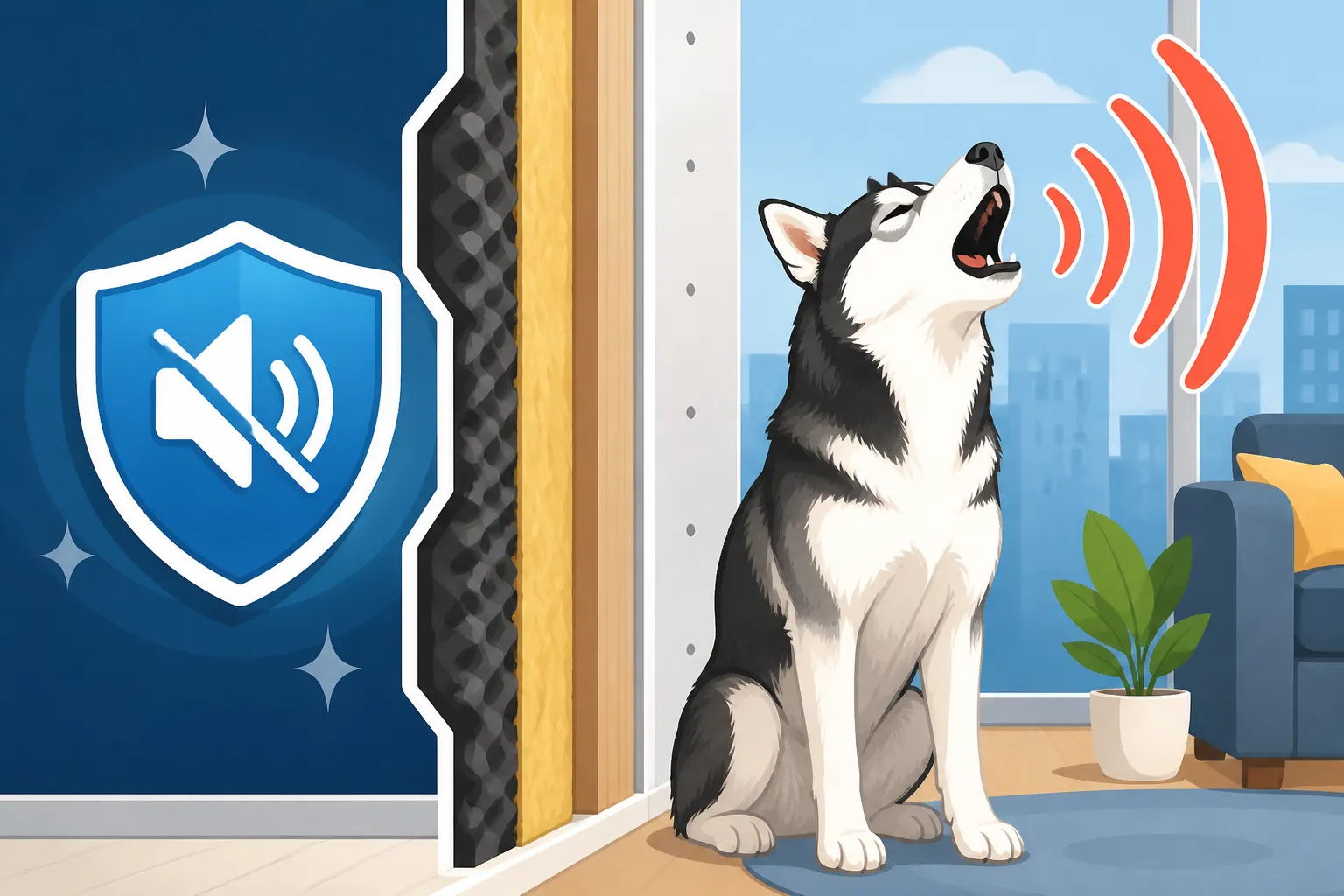
Soundproofing an Apartment for a Siberian Husky
Living in an apartment with a Siberian Husky is a unique adventure, but one challenge that often catches new owners off guard is their incredible vocal range. From mournful howls that could be straight out of the wilderness to enthusiastic "conversations" and the occasional piercing "Siberian scream," these dogs are far from quiet. The worry about neighbor complaints, eviction notices, or just general stress over constant noise can really impact your peace of mind. This comprehensive guide will walk you through practical strategies to help soundproof your apartment and manage your husky's vocalizations, aiming for a happier, quieter home for everyone.
Understanding the Siberian Husky's Vocal Nature
Before you can tackle the noise, it helps to understand why your Siberian Husky is so vocal in the first place. These aren't just regular dogs with a barking habit; they come from a long lineage of working dogs bred to communicate in unique ways. Their vocalizations are deeply ingrained and serve different purposes than what you might expect from other breeds.
The Husky Howl: A Breed Trait, Not Just a Bad Habit
The signature howl of a Siberian Husky is perhaps their most famous, and sometimes most problematic, vocalization in an apartment setting. Unlike a bark, which is often a territorial alert, a howl is a long-range communication tool, echoing their wolf ancestors. They use howls to communicate with their pack (you!), express loneliness, signal excitement, or respond to high-pitched sounds in their environment.
Think about it: in the vast, open tundras of Siberia, a howl carries for miles, letting other pack members know where they are. In a cramped apartment building, that same instinct translates to a sound that travels through walls, floors, and ceilings with surprising efficiency. Common triggers in an urban environment can include sirens from emergency vehicles, the ice cream truck, other dogs barking down the hall, or even just the sudden silence when you leave. It's not usually an act of defiance; it's an instinctual form of expression. Understanding this helps manage frustration and frames the issue as a breed-specific trait, not a behavioral flaw. Many owners report Why Your Siberian Husky Howls and Talks incessantly.
Beyond the Howl: Barks, "Talking," and the Siberian Scream
While less common than howling, Siberian Huskies do bark. However, their barks often sound different, more abrupt or singular, and they don't usually engage in sustained, repetitive barking like some other breeds. When they do bark, it might be an alert bark at something outside a window, or a frustration bark when they can't reach a toy. More often, you'll hear what's affectionately known as "husky talking." This can be a range of grumbles, groans, playful woos, or exaggerated sighs that sound uncannily like they're trying to have a conversation with you. It's endearing, but in a small space, it can still contribute to the overall noise level.
Then there's the infamous "Siberian scream." This is a high-pitched, often ear-splitting shriek that Huskies deploy when they are extremely excited, frustrated, or sometimes even in pain or distress. It's not a common occurrence for most, but when it happens, it can be startling and definitely neighbor-alerting. The Siberian Husky Scream and What Sets It Off can be a major issue in apartment buildings, making effective sound management crucial. While some breeds are largely silent, you should expect your husky to be vocal, even if it's just "talking back" to you.
Immediate & Behavioral Solutions for Apartment Living
Physical soundproofing can only do so much. The most effective way to manage a vocal Siberian Husky in an apartment begins with understanding and addressing their needs through training and environmental management. These behavioral adjustments are often more impactful than any material barrier.
Managing Triggers and Enrichment
One of the first steps is to become a detective: what sets your husky off? Is it the sight of other dogs from the window? The sound of the elevator? Once you identify these triggers, you can start to manage them. For window-watching, consider using privacy film, frosted glass clings, or simply keeping blinds and curtains drawn during peak activity times. For sound triggers, white noise machines or quiet music can help mask external sounds.
Crucially, a tired husky is often a quieter husky. Siberian Huskies were bred for endurance and need significant physical exercise, usually more than a simple walk around the block. Aim for at least one to two hours of vigorous activity daily. This could include running, hiking, dog park visits (if appropriate for your individual husky and their social skills), or harness sports like canicross or bikejoring. Equally important is mental enrichment. Puzzle toys, KONGs stuffed with treats, and sniff-based games can exhaust them mentally and help them settle when you're away. Look on platforms like Amazon for a wide variety of puzzle feeders; finding one that your Puzzle Feeders a Siberian Husky Cannot Beat can keep them engaged for a good while. A mentally stimulated husky is less likely to resort to vocalizations out of boredom or frustration.
Training for Quiet: Realistic Expectations
Training is absolutely key, but you need realistic expectations for an independent breed like the Siberian Husky. They are intelligent but can also be notoriously stubborn. While you might not eliminate howling entirely, you can work on decreasing its frequency and intensity. Positive reinforcement methods are most effective. This means rewarding calm, quiet behavior rather than scolding or punishing noise. If your husky starts to vocalize, wait for a moment of silence, no matter how brief, and then reward them. You can teach a "quiet" cue by holding a treat near their nose when they are vocalizing, waiting for them to stop to sniff, then immediately marking and rewarding the silence.
Consistency is vital. Everyone in the household needs to be on board with the training plan. For more advanced or persistent issues, consulting with a professional dog trainer who has experience with northern breeds can be invaluable. Online training programs, such as those offered by BAXTER & Bella, can provide structured guidance and support, helping you navigate the unique challenges of training an independent dog. They often emphasize positive, force-free methods that resonate well with a husky's sensitive nature. While Whether a Husky Can Be Taught to Stop Howling completely is debatable, significant reduction is often achievable with dedication.
Crating and Safe Spaces
A properly introduced crate can become a valuable tool in managing apartment living with a vocal husky. It's not a punishment; rather, it should be a safe, comfortable den where your husky feels secure. Many huskies appreciate having their own space, especially if it’s covered to feel more den-like. This can help reduce anxiety when you leave, as they have a predictable, safe place to relax.
Introduce the crate gradually with positive associations, like feeding meals inside, offering high-value chews, and never using it for punishment. When your husky is comfortably crated, it can limit their ability to window-surf and bark at passersby, or pace and howl due to separation anxiety. Ensuring they are well-exercised before crating for periods alone can also help them settle and sleep. However, remember that some huskies can be escape artists, so choose a sturdy, high-quality crate, especially if you have a husky that tends to bend bars or escape wire crates. Even with a crate, consider Hours a Siberian Husky Copes With Alone carefully, as prolonged isolation can exacerbate vocalizations.
Physical Soundproofing Strategies for Apartments
Even with the best behavioral management, some sound will inevitably escape a vocal husky. This is where physical soundproofing comes into play. While you can't build a recording studio in your rental, there are many practical and affordable modifications you can make to significantly reduce noise transmission.
Addressing Windows and Doors
Windows and doors are often the weakest links in an apartment's sound barrier, allowing external sounds in and internal sounds out.
- Windows: Heavy, insulated curtains or drapes made of thick material can absorb a surprising amount of sound. Look for "thermal" or "sound-blocking" curtains. You can also add secondary glazing film or even install soundproof blinds, though some landlords may not allow permanent fixtures. For a temporary solution, heavy blankets or moving pads can be tacked up when you leave. Using a draft stopper or seal around the window frame can also help block small gaps.
- Doors: The main entry door and any interior doors (especially to a room where your husky might be crated) can be major sound leaks. Add a door sweep at the bottom to block sound from traveling under the door. Weatherstripping around the door frame creates a tighter seal when the door is closed. If your interior doors are hollow-core, consider hanging a heavy sound-absorbing blanket or tapestry on the inside face. For your main apartment door, if it's hollow, heavy-duty door insulation panels can be adhered, again, with landlord permission.
- Shared Walls: For walls shared with neighbors, strategic placement of furniture can help. A tall, packed bookshelf against a shared wall can act as a decent sound barrier. Large, thick tapestries or acoustic panels (often sold in decorative patterns) can be hung on the walls to absorb sound within your apartment, preventing it from bouncing around and amplifying, thus reducing what travels through.
Floor and Ceiling Solutions
Sound travels downward through floors and upward through ceilings, impacting both your downstairs and upstairs neighbors.
- Floors: This is perhaps the easiest and most effective area to address in an apartment. Lay down thick area rugs, especially in high-traffic areas or where your husky spends most of its time. Underneath these rugs, use high-quality rug pads made of felt or rubber. These not only prevent slipping but add another layer of sound absorption. The thicker the rug and pad, the better the sound insulation. Carpeting is the ultimate floor soundproofing, but it's rarely an option in a rental. Even a few strategically placed dense rugs can make a significant difference to absorb vibrations from paws, toys, and vocalizations.
- Ceilings: Addressing ceilings in a rental is trickier. If your husky's noise is primarily affecting an upstairs neighbor, improving your floor's sound absorption is the best bet. If you're concerned about noise from upstairs, hanging acoustic panels or heavy fabric from your ceiling can help reduce echo and airborne sound within your apartment, making it feel quieter to you. Always check your lease for rules regarding modifications before affixing anything to walls or ceilings.
| Soundproofing Method | Effectiveness (Apartment) | Cost (Relative) | Ease of Implementation | Notes |
|---|---|---|---|---|
| Heavy Curtains/Drapes | Moderate-High | Low-Medium | Easy | Best for windows, significant sound absorption. |
| Door Sweeps/Weatherstripping | Moderate | Low | Easy | Targets gaps around doors, very cost-effective. |
| Thick Area Rugs + Pads | High | Medium-High | Easy | Excellent for floors, absorbs impact and airborne sound. |
| Bookshelves (packed) | Moderate | Medium-High | Moderate | Good for shared walls, also provides storage. |
| Acoustic Panels/Art | Moderate-High | Medium-High | Moderate | Absorbs echo, can be decorative, check landlord policy. |
| White Noise Machine | Low-Moderate | Low | Very Easy | Masks sound, doesn't block it, effective for light nuisance. |
White Noise and Sound Machines
While not true sound blocking, white noise or sound machines are fantastic tools for sound masking. By creating a consistent, low-level background sound (like static, rain, or ocean waves), these machines can effectively drown out sudden or intermittent noises that might trigger your husky's vocalizations. They also make your husky's sounds less jarring for your neighbors.
Many owners find success placing a white noise machine near the door or window, or even right next to the husky's crate when they leave. Playing classical music or specific "dog relaxation" playlists on a low volume can also have a calming effect and serve a similar masking purpose. This approach helps create a more consistent sound environment, which can be less stimulating and stressful for your husky, potentially leading to less vocalization overall. It’s a simple, non-invasive method that can yield surprisingly good results for both you and your neighbors.
Living with a Vocal Husky in an Apartment: Neighbor Relations
Beyond the physical and behavioral changes, a crucial part of successfully living with a vocal Siberian Husky in an apartment is fostering good relationships with your neighbors. Communication and proactive measures can turn potential conflicts into understanding and cooperation.
Proactive Communication with Neighbors
One of the biggest mistakes owners make is waiting until a complaint comes in. Instead, be proactive! When you first move in, or when you notice your husky is becoming more vocal, have an open and honest conversation with your immediate neighbors. Explain that you have a Siberian Husky, a breed known for its vocal nature, and that you are actively working on training and soundproofing.
Give them your contact information and encourage them to reach out to you directly if the noise becomes an issue, rather than going straight to management. This open line of communication builds trust and shows you're a responsible owner. It allows you to address problems quickly and often before they escalate. You might even offer a small gesture, like a homemade treat or a gift card, as a goodwill offering, recognizing that having a dog next door can sometimes be a challenge. Discussing Whether Neighbors Can Complain About Husky Howling openly is far better than waiting for a formal complaint.
Documenting Efforts and Seeking Feedback
Keep a record of your efforts. Log when you exercise your husky, what training you're doing, and what soundproofing measures you've implemented. If a neighbor does contact you, listen to their feedback without being defensive. Ask for specifics: what time of day is the noise worst? What does it sound like? This information can help you refine your strategies.
You might even ask a trusted neighbor if they'd be willing to briefly record the noise when you're out, so you can hear what they're experiencing. This kind of collaborative approach shows respect for their peace and quiet and can be instrumental in finding solutions. Remember, your goal is not to silence your husky completely, but to manage their vocalizations to a level that is acceptable within a shared living space.
When Professional Help is Needed
Sometimes, despite all your best efforts, a husky's vocalizations might stem from deeper issues, like severe separation anxiety or other underlying behavioral problems. If your husky's howling or destructive behavior when left alone seems extreme, or if you're feeling overwhelmed and unable to make progress, it might be time to bring in professional help.
A certified professional dog trainer specializing in behavioral issues, or even a veterinary behaviorist, can assess the situation, identify root causes, and develop a tailored plan. They might suggest specific behavioral modification techniques, anti-anxiety aids, or in some cases, medication to help manage anxiety that fuels excessive vocalization. Don't hesitate to seek this level of support; it's a sign of a responsible owner committed to their husky's well-being and their community's peace. A professional can also help if you're considering Whether an Epileptic Siberian Husky Can Still Work or manage other health-related anxieties.
Disclaimer
This article is for general informational purposes only and does not constitute professional advice. Laws, prices and regulations vary by location and change over time. Consult a qualified professional for guidance on your specific situation.