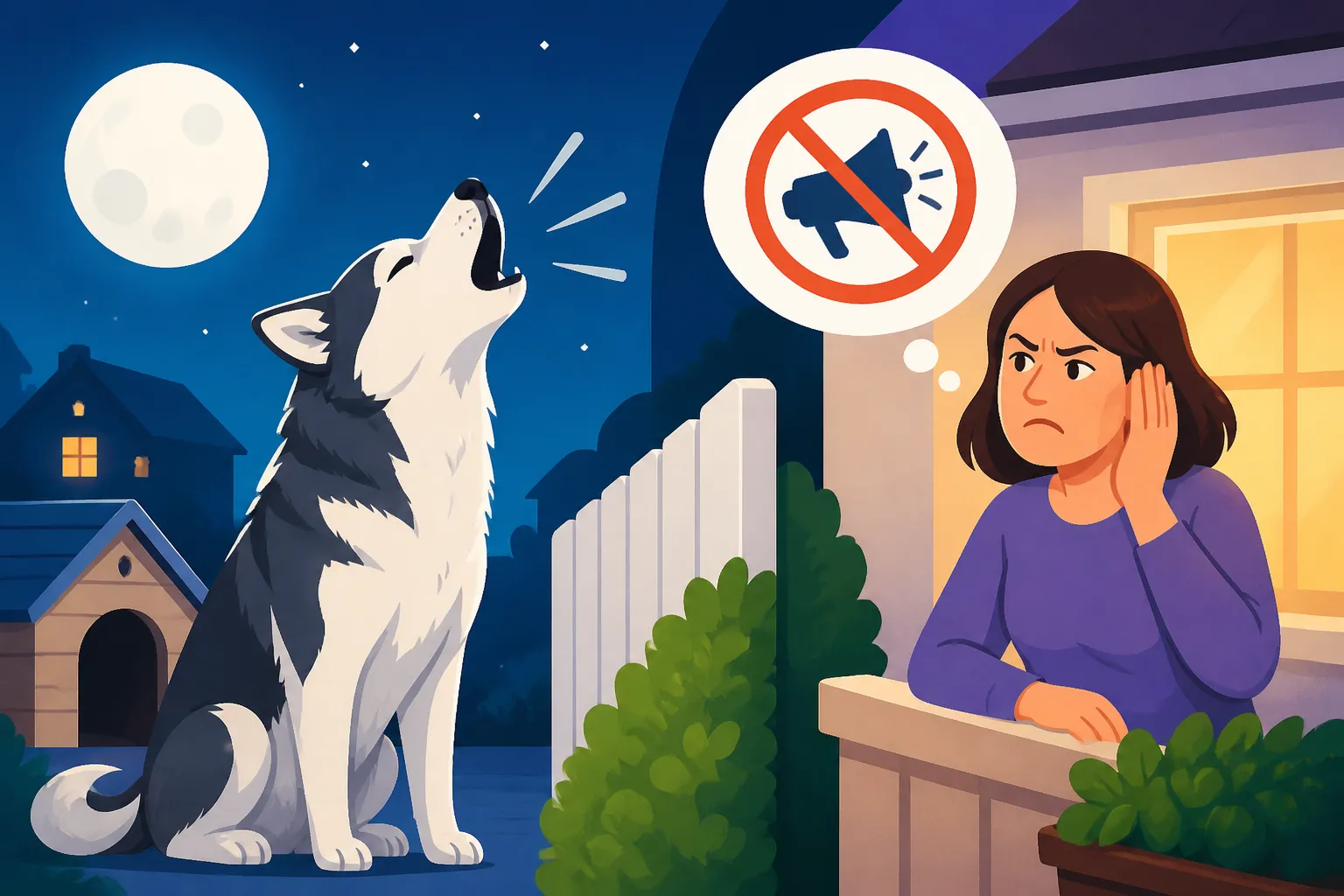
Whether Neighbors Can Complain About Husky Howling
One of the most common, and frankly, loudest, frustrations for Siberian Husky owners is the breed's incredible vocalizations. You adore your Husky's "woo-woos" and dramatic sighs, but what happens when those charming conversations turn into full-blown choruses that echo through the neighborhood? It's a genuinely stressful situation when you start to wonder if your neighbors are silently seething, or worse, making plans to complain. This guide is here to walk you through the realities of neighbor complaints about Husky howling, what local laws might say, and practical steps you can take to foster peace (and quiet) in your community.
Understanding the Husky's Instinctual Howl
Before we delve into complaints, it’s crucial to understand that howling isn't just your Husky being "naughty." It's deeply ingrained in their genetic makeup, a powerful form of communication inherited from their wolf ancestors and honed by their history as sled dogs. Trying to silence a Husky completely is often like trying to stop a bird from singing—it goes against their very nature.
The Instinctual Language of a Husky
Imagine your Husky as a descendant of ancient sled dogs traversing vast, silent landscapes. How did they communicate across distances, or signal their presence to their pack? Not with barks, primarily, but with howls. These long, sustained vocalizations travel further and mean different things: "I'm here," "Where are you?" or "There's something interesting over here!" When your Husky throws its head back and lets out a mournful, melodious howl, it's often tapping into this ancient lineage. It's a way to connect with you, with other dogs they hear in the distance, or simply to express a strong emotion. We dive deeper into this unique trait in Why Your Siberian Husky Howls and Talks.
It's not usually an aggressive sound, nor is it typically meant to be purely disruptive. For them, it's just talking. Unfortunately, what's natural for a Husky can be quite grating for a human neighbor who isn't prepared for the acoustics of a canine choir practice. Recognizing this fundamental difference can help you approach the problem with more patience and empathy, both for your dog and, ideally, for your neighbors.
Triggers for Excessive Howling
While howling is natural, excessive howling often points to an underlying trigger. Identifying these triggers is your first step toward managing the noise.
- Separation Anxiety or Loneliness: This is a big one. Huskies are pack animals and form deep bonds with their human families. When left alone, especially for long periods, some Huskies experience genuine distress. The howling becomes their desperate cry for connection, a plea for their pack to return. Imagine being isolated and feeling vulnerable; that's often the root of a Husky's separation-induced vocalizations. It’s not about being vindictive; it’s about deep emotional discomfort. If this sounds familiar, you might find valuable insights in A Siberian Husky That Howls When You Leave.
- Boredom and Lack of Stimulation: A bored Husky is a destructive Husky, and often, a noisy Husky. These intelligent, energetic dogs need a job, or at least plenty of physical and mental exercise. If they're not getting enough walks, runs, or engaging activities, they will find their own entertainment, and that often involves creative vocalizations. A yard, no matter how large, isn't enough on its own. They need interaction and engagement.
- Response to Environmental Stimuli: Sirens, other barking dogs, passing trains, or even certain sounds from your TV can set off a chain reaction in a Husky. They're responding to sounds in their environment, communicating back to what they perceive as another "pack member" or an interesting occurrence. This isn't usually an emotional howl but a communicative one, like saying, "Hey, I hear that too!"
- Attention Seeking: Sometimes, your Husky learns that howling gets your attention. Even negative attention, like you rushing in to tell them to be quiet, is still attention. If they howl and you appear, they've successfully trained you. This can be a tough habit to break because it's been reinforced, often unintentionally.
- Medical Issues or Discomfort: While less common for persistent howling, sudden onset howling or whining could indicate pain, discomfort, or an underlying medical condition. Always rule out health issues with your vet, especially if the behavior is new or unusual for your dog.
Local Ordinances and Nuisance Laws
Now, let's talk about the legal side of things, because this is where neighborly good intentions can quickly turn into official complaints. While you understand your Husky's natural tendencies, your local government operates on rules and regulations designed to maintain peace and quiet in residential areas.
What Constitutes a "Nuisance" Dog
Most cities, towns, and even homeowners' associations (HOAs) have ordinances regarding animal noise. The exact definitions can vary widely, but generally, a "nuisance" dog is one whose vocalizations disrupt the peace and quiet of the neighborhood. This isn't usually about a few barks when the mailman comes, but rather persistent, prolonged, or frequent howling or barking.
Common elements of nuisance animal ordinances include:
- Duration: How long does the noise last? Many ordinances specify a continuous period, such as 10 to 20 minutes, or even intermittent noise over a longer period, like 30 minutes within an hour.
- Frequency: How often does it happen? Is it a one-off occurrence, or a daily serenade?
- Time of Day: Noise complaints are often taken more seriously during "quiet hours," which typically include early mornings, evenings, and overnight. A Husky howling at 3 AM is likely to draw more ire than one howling at 3 PM, even if the duration is the same.
- Impact on Neighbors: The core of a nuisance complaint is usually that the noise is disturbing others. This could mean preventing them from sleeping, working from home, or simply enjoying their own property.
It's vital to research your specific local ordinances. A quick search on your city or county government website for "animal noise ordinance" or "nuisance animal law" should give you the specifics. HOAs often have their own, even stricter, rules that supersede or complement municipal laws, so check your CC&Rs (Covenants, Conditions, and Restrictions) if you live in a planned community.
The Complaint Process
When neighbors reach their breaking point, they typically won't just tell you they're upset in many cases. They'll often go directly to the authorities. Here's a general outline of how the complaint process might unfold:
- Initial Complaint: A neighbor contacts animal control, code enforcement, or sometimes even the police department, depending on local jurisdiction. They'll usually provide details about the dates, times, and duration of the howling.
- Investigation and Warning: Animal control officers may visit your property. They might try to observe the howling directly, or they might simply inform you of the complaint. Often, the first step is a warning, giving you an opportunity to address the issue. They might also provide you with resources or advice. This is your chance to take immediate action and show good faith.
- Further Complaints and Citations: If the howling continues and more complaints are filed, you could receive a formal citation or fine. These can escalate, with subsequent fines increasing in amount.
- Legal Action and Court: In persistent, unresolved cases, the issue can move to a municipal court. You might be required to appear before a judge. This is where things get really serious, as a judge can impose significant fines, mandate specific actions (like professional training), or, in extreme cases, order the removal of the animal.
Imagine receiving a notice from animal control; it's startling and can feel very personal. But remember, the system is designed to address a problem, not necessarily to punish you. Your response at this stage is critical.
Documenting the Problem
While you're trying to figure out how to manage your Husky's vocalizations, remember that your neighbors might also be documenting their experience. Many nuisance ordinances require proof of the disturbance, so neighbors are often advised to keep a log of incidents, including:
- Dates and Times: Specific start and end times of howling episodes.
- Duration: How long each episode lasted.
- Description: What type of noise it was (howling, barking, whining).
- Impact: How it affected them (e.g., woke them up, prevented them from working, couldn't enjoy their yard).
- Evidence: Many neighbors will resort to recording the noise with their phones. These audio or video recordings can be powerful evidence in a complaint case.
This documentation serves as concrete evidence, moving a complaint from "he said, she said" to a verifiable issue. It's why taking proactive steps yourself is so much better than waiting for the official knock on the door.
Proactive Steps to Prevent Complaints (and Save Your Sanity)
The best defense against neighbor complaints is a good offense—meaning, getting ahead of the problem before it escalates. This involves understanding your Husky, managing their environment, and being a good neighbor.
Addressing the Root Cause
Since excessive howling is usually a symptom of something deeper, tackling the root cause is paramount.
- Exercise, Exercise, Exercise: I cannot stress this enough for a Siberian Husky. A tired Husky is a quiet Husky. These dogs were bred to run for miles, so a simple walk around the block twice a day just won't cut it. Aim for at least 1-2 hours of vigorous exercise daily. This could mean long runs, bikejoring (cycling with your dog pulling), canicross (running with your dog pulling), or serious hiking. If you're a runner, a Husky makes an amazing partner! Check out How Much Exercise a Siberian Husky Really Needs for more details. A physically exhausted Husky is far less likely to have the energy or inclination to howl for hours.
- Mental Stimulation is Key: Huskies are intelligent and need to use their brains. Boredom quickly leads to destructive behavior and incessant vocalizations. Incorporate puzzle toys, like those found on Amazon, that dispense treats slowly and require problem-solving. Rotate toys frequently to keep things interesting. Engage them in training sessions, even short ones, throughout the day. Learning new tricks, practicing obedience cues, or even scent work can be incredibly satisfying for them.
- Addressing Separation Anxiety: If loneliness or true separation anxiety is the trigger for the howling, this requires a more structured approach. Start with very short absences, gradually increasing the time you're away. Provide high-value chew toys or treat-dispensing toys right before you leave. Consider giving your Husky a designated "safe space," like a comfortable crate, where they feel secure. For serious cases, consulting a professional trainer or veterinary behaviorist is essential. Online training programs, like those offered by BAXTER & Bella, can provide structured guidance and support for tackling separation anxiety and building confidence in your dog. They often have specific modules dealing with alone-time issues.
- Consistency and Routine: Huskies thrive on routine. A predictable schedule for feeding, exercise, and training can reduce anxiety and lead to a more settled dog. They like knowing what to expect.
Soundproofing and Containment
Sometimes, even with the best efforts, some howling will occur. Minimizing its impact on your neighbors can make a huge difference.
- Indoor Management During Your Absence: If your Husky howls when left alone, it's best to keep them indoors. An outdoor Husky is often an unsupervised Husky, and sounds travel far more easily. Indoors, sounds are somewhat muffled. Crating can be an effective management tool, but ensure it's a safe, comfortable, and appropriately sized crate, not a punishment. Some Huskies are escape artists, so investing in a heavy-duty crate that they can't bend the bars of might be necessary. This is especially relevant if you're dealing with a Husky who gets stressed when left alone, as discussed in Crating a Siberian Husky That Bends the Bars.
- Creating a Den-like Space: Dogs often feel more secure in smaller, enclosed spaces. A crate covered with a blanket, or a small room with their bed and toys, can offer comfort. Play calming music or turn on a white noise machine to block out external triggers (like sirens) and provide a soothing background.
- Sound Barriers: For truly persistent problems, you might look into actual soundproofing options, especially for rooms where your Husky spends time when you're out. While full soundproofing can be expensive, even heavy curtains, rugs, and strategically placed furniture can help absorb some sound. For those living in closer quarters, like apartments, checking out Soundproofing an Apartment for a Siberian Husky can offer specific strategies.
- Fence Considerations: If your Husky is in the yard, ensure your fence is secure. Huskies are notorious escape artists, and a loose Husky can quickly become a much larger problem than a noisy one. They can climb, jump, and dig. Make sure your fence is at least 6 feet high and consider adding an L-footer or burying wire to prevent digging out.
Communicating With Your Neighbors
This might be the most uncomfortable step, but it's often the most effective in preventing formal complaints. Open, honest communication can defuse tension before it boils over.
- Be Proactive, Not Reactive: If you know your Husky is a vocal one, talk to your neighbors before they complain. A simple conversation, like, "Hey, I know my Husky can be quite vocal sometimes, especially when I'm out. I'm actively working on it, but please let me know directly if it's bothering you," can go a long way. This shows you're aware and responsible.
- Apologize and Show Empathy: A sincere apology can work wonders. "I'm so sorry if Rex's howling has been disrupting your peace. I really value our neighborly relations and I'm committed to finding a solution." Even if you feel your dog isn't that bad, acknowledging their perception is important.
- Share Your Action Plan: Tell them what you're doing. "We've started working with a trainer on his separation anxiety, and we're ensuring he gets an extra long run every morning. We've also put up some heavier curtains to help muffle the sound." This demonstrates you're not ignoring the problem and are actively seeking solutions.
- Ask for Their Patience and Feedback: Request that they come to you directly if there's an issue, rather than going straight to animal control. Offer to provide your phone number. This can help you address concerns immediately and prevent formal escalation.
- Offer Solutions (if appropriate): While not always necessary, if a neighbor works from home and your Husky is noisy during their meetings, perhaps you can adjust your dog's schedule on those specific days, or offer to pay for a sound machine for their window. Creative solutions show immense goodwill.
A little neighborly goodwill can make a massive difference. Most people are more understanding when they know you’re trying.
When a Complaint Becomes a Legal Issue
Despite your best efforts, sometimes a complaint still lands on your doorstep. It’s important to know how to navigate this situation calmly and effectively.
Navigating Animal Control Visits
If animal control officers show up, it can feel intimidating. Here's how to handle it:
- Stay Calm and Courteous: Panicking or becoming defensive won't help your case. Be polite, listen to what they have to say, and ask clear questions.
- Understand the Complaint: Ask for specifics: dates, times, and the nature of the alleged disturbance. This information is vital for you to understand the problem and show you're taking it seriously.
- Explain Your Efforts: Clearly articulate all the steps you've already taken to address the howling (increased exercise, training, puzzle toys, communicating with neighbors). Show them your commitment to solving the problem.
- Ask for Guidance: Animal control officers often have resources or suggestions for dealing with nuisance barking/howling. They may even have information on local trainers or behaviorists. Take advantage of their knowledge.
- Avoid Admission of Guilt Without Understanding: You can acknowledge the complaint and express your desire to resolve it without necessarily admitting fault for every single alleged instance. Stick to the facts you know.
- Follow Through: If they give you a warning and suggest specific actions, do them. Animal control will likely follow up, and demonstrating progress is crucial.
| Stage of Complaint | Common Action Taken | Owner's Best Response |
|---|---|---|
| Informal Concern | Neighbor mentions casually | Engage openly, apologize, share action plan |
| Initial Complaint | Animal Control (AC) visit/call, verbal warning | Be polite, get details, explain efforts, ask for advice |
| Formal Complaint | AC issues written warning or citation/fine | Take immediate steps, document changes, seek professional help |
| Escalated Issue | Multiple citations, court summons | Consult legal advice, hire professional trainer/behaviorist |
Potential Penalties and Fines
The consequences of unresolved nuisance complaints can range from mild to severe:
- Fines: The most common penalty. These can start relatively small for a first offense and increase significantly for repeat violations.
- Mandatory Training or Intervention: Some jurisdictions might order you to enroll your Husky in an obedience class or consult with a certified professional dog trainer. This can be a great opportunity to get expert help if you haven't already.
- Abatement Orders: You might be ordered to take specific steps to stop the noise, such as keeping the dog indoors during certain hours.
- Loss of Dog: In very rare, extreme, and persistent cases where an owner continually fails to address severe nuisance issues and other factors like neglect or cruelty are present, a dog could potentially be removed. This is a last resort, but it highlights the seriousness of ignoring ongoing complaints.
These penalties are designed to encourage compliance, not just to punish. The goal is to restore peace to the neighborhood.
Seeking Professional Help
When you're struggling to manage your Husky's howling on your own, don't hesitate to call in the cavalry.
- Certified Professional Dog Trainers: A good trainer can help you identify the specific triggers for your Husky's howling and develop a tailored training plan. They can teach you techniques for behavior modification, impulse control, and building your dog's confidence. Look for trainers experienced with working dogs or Northern breeds, as their approach to Huskies might differ from other breeds. For training specifically, resources like BAXTER & Bella can offer comprehensive guidance on positive reinforcement and behavior modification, which is crucial for independent breeds like Huskies.
- Veterinary Behaviorists: For severe cases, especially those involving significant separation anxiety, compulsive behaviors, or aggression, a board-certified veterinary behaviorist is the gold standard. These are veterinarians with advanced training in animal behavior, who can prescribe medication if necessary (alongside behavior modification) and develop a holistic treatment plan. They understand the physiological and psychological components of behavior.
- Your Veterinarian: Always start with your regular vet to rule out any underlying medical issues that could be contributing to the howling. They can also often provide referrals to trusted trainers or behaviorists in your area.
Remember, a professional isn't an admission of failure; it's an investment in your Husky's well-being and your peace of mind (and your neighbors'!). It might feel like an expense, but it's far less costly than repeated fines or strained relationships with your community. While not directly about howling, the general need for professional guidance for these intelligent dogs is covered in Trainer Rates for a Siberian Husky That Bolts. Ultimately, managing a Husky's howling is about creating a harmonious environment for everyone involved.
Disclaimer
This article is for general informational purposes only and does not constitute professional advice. Laws, prices and regulations vary by location and change over time. Consult a qualified professional for guidance on your specific situation.