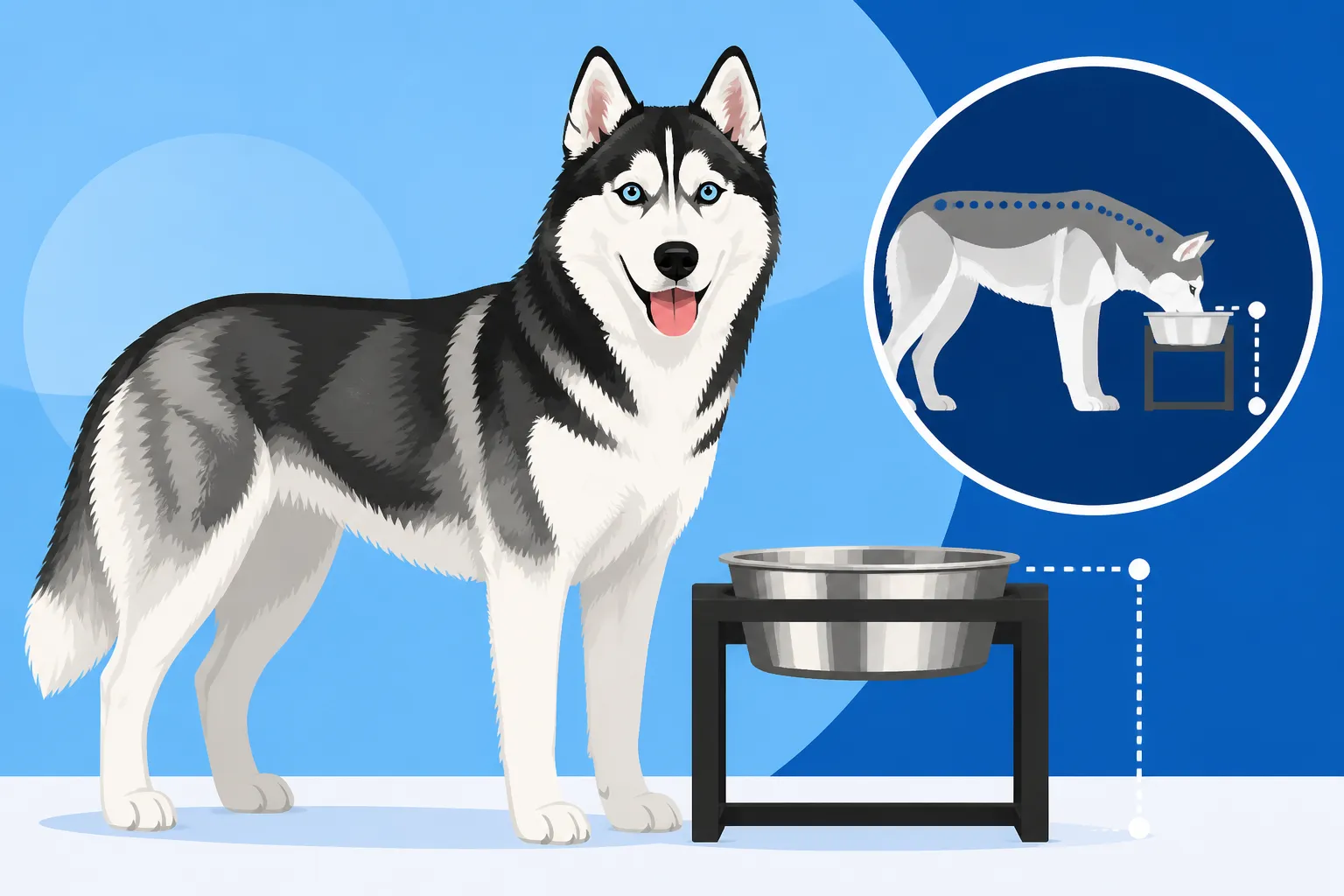
Bowl Height for a Siberian Husky
It can be incredibly confusing to figure out something as seemingly simple as where your Siberian Husky should eat. You’ve probably heard all sorts of advice floating around – from "always use an elevated bowl for digestion" to "never use one because of bloat risk." It’s enough to make any diligent Husky parent feel overwhelmed when all you want to do is make sure your furry companion is comfortable and healthy. This guide is here to clear up the confusion, specifically for our independent, energetic Siberian Huskies, so you can confidently set up their feeding station.
Understanding the Great Elevated Bowl Debate: What It Means for Huskies
For years, the conventional wisdom for feeding dogs suggested that elevated food and water bowls were the way to go. The idea was that raising the bowls would make eating more comfortable, especially for larger breeds, by reducing strain on their neck and joints, and potentially aiding digestion. It sounded logical, right? We see ourselves eating at a table, so why wouldn't our dogs benefit from a similar ergonomic setup? This belief became quite widespread, and many dog product manufacturers began producing various styles of elevated feeders, from simple stands to elaborate dining stations, readily available on sites like Chewy and Amazon.
The Historical Belief: Better Digestion and Ergonomics
The initial premise behind elevated bowls was fairly straightforward: if a dog didn't have to bend their neck and back as much to eat, it would be easier on their joints and spine. For older dogs or those with conditions like arthritis, this seemed like a no-brainer. Imagine trying to eat your dinner off the floor when your back is aching – it's not ideal. Proponents also suggested that a more upright eating posture could help food travel down the esophagus more smoothly, reducing gulping and potentially improving overall digestion. Owners imagined their dogs enjoying a more "natural" and comfortable mealtime experience, free from strain. This notion often led people to invest in adjustable feeders, hoping to find that perfect height for their growing puppy or aging companion.
However, many of these initial thoughts were based more on human intuition than solid scientific evidence. While reducing neck strain for a severely arthritic dog might be helpful, for the average healthy Siberian Husky, bending down to eat is a perfectly natural and comfortable posture they've evolved to handle. Think about how they drink from puddles or scavenge for treats in the yard – it's always from ground level. Their bodies are built for it. The idea of "digestion improvement" without more specific health issues at play largely remains unsubstantiated in healthy dogs.
The Bloat Connection: A Misguided Fear for Huskies
The conversation around elevated bowls took a significant turn when studies began to emerge suggesting a potential link between elevated feeders and an increased risk of Gastric Dilatation-Volvulus (GDV), commonly known as bloat. Bloat is a life-threatening condition where a dog's stomach fills with gas, twists, and cuts off blood supply, requiring immediate emergency surgery. It's a terrifying prospect for any dog owner, and naturally, people became very concerned about anything that might contribute to it.
The initial research, particularly one study in the late 1990s, did indeed suggest a correlation between elevated feeders and bloat risk in certain large, deep-chested breeds. This led to a widespread recommendation by many veterinarians and breed clubs to avoid elevated bowls, especially for breeds like Great Danes, Weimaraners, and German Shepherds, who are statistically much more prone to bloat. This advice was, and still is, critical for those at-risk breeds.
However, this is where the specific characteristics of our beloved Siberian Huskies come into play. Siberian Huskies, while medium-to-large dogs, are not considered a deep-chested breed in the same way Great Danes are. They have a lean, athletic build, and their chest conformation is different. Critically, Siberian Huskies are statistically not a breed predisposed to bloat. Why Siberian Huskies Bloat Less Than Their Build Suggests explains this in more detail. The risk factors for GDV are complex, involving genetics, rapid eating, exercise around meals, and stress, but for Huskies, their breed physiology generally works in their favor against this particular emergency. So, while the bloat concern is very real for some breeds, it's largely a misguided fear when it comes to Siberian Huskies and elevated bowls. This doesn't mean it's impossible, but it's not a primary concern that should dictate your bowl choice.
Dispelling Myths: Why Huskies Aren't "Bloat-Prone" Like Other Breeds
Let's really hit this home: Siberian Huskies do not typically suffer from bloat at rates comparable to truly deep-chested breeds. Their ancestral background as efficient, endurance sled dogs has shaped a body type that is less susceptible to the mechanics of gastric torsion. While no dog is entirely immune, the statistical risk is significantly lower for a Husky than, say, a Saint Bernard. This is an important distinction because it means owners of other breeds might genuinely need to avoid elevated feeders, but Husky owners don't need to panic about this specific risk factor.
So, if you’ve been worrying about whether an elevated bowl might cause bloat in your Husky, you can likely put that specific fear to rest. The more pertinent factors for a Husky's digestive health will be related to their diet, eating speed, and overall activity level, rather than the height of their bowl. For instance, a Husky that inhales their food in thirty seconds might benefit more from a slow-feeder bowl on the ground than a regular bowl elevated. A Siberian Husky That Leaves Food in the Bowl and A Siberian Husky That Skips Meals touch on other aspects of Husky feeding behavior. Understanding these breed-specific nuances helps us make informed decisions without getting caught up in general advice that might not apply.
Finding Your Siberian Husky's Optimal Eating Position
Now that we've cleared up some of the common misconceptions, let's focus on what truly works best for a Siberian Husky. The goal is always comfort, good digestion, and a positive feeding experience. For most healthy Huskies, simplicity and natural posture are key.
The Natural Ground Level Preference
When you observe a dog in the wild or even just in a relaxed home environment, you'll notice they naturally eat and drink with their heads lowered. Their skeletal structure, esophagus, and digestive system are designed to function efficiently in this position. Bending down to the ground is not an awkward or strained posture for them; it's what their bodies are made for. For a lean, athletic breed like the Siberian Husky, eating at ground level encourages a natural neck and spine alignment during mealtime.
Think about how your Husky enjoys exploring the scent trails on the ground or digging for a forgotten toy. They spend a lot of time with their head down, and it's not causing them discomfort. Similarly, when they eat from a bowl on the floor, their body mechanics are working as intended. This also promotes a slower eating pace for some dogs, as they might have to adjust their head position slightly more to scoop up kibble, which can be beneficial. It's about letting their instincts guide them. You can find a huge variety of simple, sturdy bowls at pet stores or online retailers like Ollie, perfect for ground-level feeding.
When an Elevated Bowl Could Still Be Beneficial (and when it's not)
While ground-level feeding is ideal for most healthy Siberian Huskies, there are specific circumstances where an elevated bowl might offer some comfort or benefit:
- Senior Huskies with Arthritis or Mobility Issues: As our beloved Huskies age, conditions like arthritis can set in, making it painful to bend their necks and lower their bodies repeatedly. For a senior Husky struggling with Pain Management for an Arthritic Siberian Husky or general stiffness, an elevated bowl can genuinely reduce physical strain. If your older Husky shows reluctance to lower their head, or struggles to get up after eating, raising the bowl could make a significant difference in their daily comfort.
- Huskies with Megaesophagus or Swallowing Difficulties: These are specific medical conditions where the esophagus doesn't properly move food to the stomach. In such cases, a veterinarian might recommend an elevated bowl or even a special feeding chair to use gravity to help food descend. This is a rare and specific medical need, not a general recommendation.
- Post-Surgery Recovery: After certain surgeries, particularly those involving the neck or spine, a vet might temporarily recommend an elevated bowl to minimize movement and aid healing. This is a short-term, medically advised solution.
It's crucial to understand that these are exceptions, not rules. For a young, healthy, active Siberian Husky, an elevated bowl is generally unnecessary and offers no proven advantage over a floor-level bowl. In fact, if your Husky tends to push their bowl around or play with it, an elevated feeder might become a tipping hazard. Always consult with your veterinarian if you suspect your Husky has any health issues that might warrant a special feeding setup.
Observing Your Husky for Signs of Discomfort
The best approach is always to observe your individual Husky. They are excellent communicators if we pay attention. Here's what to look for:
- Reluctance to Eat or Drink: Does your Husky hesitate before approaching their bowl? Do they eat slowly, even for a Husky (who might already be a bit of a picky eater)?
- Stiffness or Pain: Do they seem stiff when bending down, or do they groan or whine? Do they struggle to stand up after finishing their meal?
- Changes in Posture: Are they trying to brace themselves against something while eating, or adjusting their position frequently?
- Digestion Issues: While less common to link directly to bowl height, if you notice excessive gulping, coughing during meals, or significant gas, it's worth a vet check regardless of bowl height.
If your Husky is eating comfortably, with no signs of strain or pain, then their current bowl height (whether on the floor or slightly elevated for specific reasons) is likely working well for them. Don't fix what isn't broken! But always keep an eye out for changes, especially as they age, as their needs might evolve. Siberian Husky Weight and Joint Health is another good resource for monitoring your Husky's comfort as they get older.
Practical Considerations for Siberian Husky Feeding Stations
Beyond the height of the bowl, there are other practical aspects of a feeding station that Husky owners need to consider. Our Huskies are unique creatures with specific behaviors that can make mealtime a little… interesting!
Bowl Types and Materials That Work Best
When it comes to the actual bowls, durability and ease of cleaning are paramount for Siberian Huskies. They are often strong, sometimes rambunctious, and can be quite clever.
- Stainless Steel: This is hands down the best option. Stainless steel bowls are incredibly durable, easy to clean, non-porous (so they don't harbor bacteria), and generally heavy enough to resist being easily pushed around or picked up. You can often find multi-packs of these on Amazon or Chewy, which is great for water bowls, food bowls, and even travel.
- Ceramic: While attractive and heavy, ceramic bowls can chip or break if dropped or if your Husky decides to "play" with them. Chipped ceramic can have sharp edges that could injure your dog's mouth. If you choose ceramic, ensure it's lead-free and regularly inspect it for damage.
- Plastic: Avoid plastic if possible. It scratches easily, creating nooks and crannies where bacteria can thrive. Some Huskies can also develop chin acne from plastic bowls. They're also often too light, making them easy targets for a bored or playful Husky to bat around the kitchen.
For Huskies who eat too fast, a slow-feeder bowl is an excellent tool. These bowls have ridges or obstacles inside that force your Husky to eat around them, significantly slowing down their mealtime. This can reduce gulping and improve digestion, regardless of whether the bowl is on the floor or slightly elevated. Brands like Outward Hound make popular slow feeders that can be a game-changer for a fast eater.
Managing Mess and "Bowl Games"
Ah, the joys of a Siberian Husky's mealtime! If your Husky is anything like mine, they might view their food bowl as a challenging puzzle, a fun toy, or simply an object to push around the kitchen floor. This isn't necessarily about bowl height, but more about their playful, independent nature.
- Non-Skid Bases: Look for bowls with rubber rings on the bottom. These significantly reduce the amount of "bowl surfing" your Husky can do across your kitchen tiles.
- Mats and Trays: A waterproof mat placed under the bowls can catch spilled kibble and splashed water. These come in various sizes and materials, from silicone to rubber, and are a lifesaver for keeping your feeding area cleaner. For the truly messy eaters, a deep-lipped tray can contain even more of the chaos.
- Heavy Bowls/Stands: If your Husky insists on picking up or knocking over their bowl, a heavier stainless steel bowl or a very sturdy, weighty elevated feeder (if you've chosen one for health reasons) can help deter this behavior. Sometimes a feeder that locks the bowls into a frame can also work.
- Supervision: Especially with puppies or newly adopted Huskies, supervising mealtime can help. If they start playing with their food, calmly take it away for a few minutes and then offer it again. They'll quickly learn that mealtime is for eating, not for games. Raising a Siberian Husky Puppy Through the First Year might offer more insights into their early habits.
Feeding on the Go: Travel and Outdoor Scenarios
Siberian Huskies are built for adventure, and that often means feeding them away from home, whether it's on a camping trip, a long hike, or just a day out at the park. Convenience and hygiene are key here.
- Collapsible Bowls: These are indispensable for travel. Made from silicone or fabric, they fold down flat or collapse into a small disc, making them easy to pack. They're perfect for offering water on a hike or a meal during a road trip stop. Just be sure to clean them thoroughly after each use, as they can harbor bacteria if left damp. You can find these at virtually any pet store, or readily available on Amazon.
- Portable Water Bottles with Attached Bowls: Many brands offer water bottles with an integrated drinking trough that folds out. This is fantastic for quick hydration stops during walks or runs, eliminating the need for a separate bowl.
- Hydration Packs: If you're undertaking long treks, a dog-specific hydration pack or a larger water reservoir can ensure your Husky stays well-hydrated without you having to carry multiple bottles. For active Huskies, proper hydration is just as important as the right meal, especially if they are involved in activities like canicross or bikejoring. Feeding a Siberian Husky Before or After a Run highlights the importance of timing meals and hydration.
Remember, even when traveling, try to maintain a consistent feeding schedule and offer food and water in a way that minimizes stress and mess. A familiar bowl, even if it's a collapsible one, can offer a sense of routine and comfort in new environments.
Disclaimer
This article is for general informational purposes only and does not constitute professional advice. Laws, prices and regulations vary by location and change over time. Consult a qualified professional for guidance on your specific situation.