Agouti and the Wolf-Gray Siberian Husky
It's incredibly common for new and even experienced Siberian Husky owners to get caught up in the mesmerizing variety of their coats. You often hear terms like "wolf-gray" or "agouti" thrown around, sometimes interchangeably, and it can leave you scratching your head, wondering if your beautiful pup fits one of these elusive descriptions. This guide is going to clear up that confusion, diving deep into what truly defines an agouti Siberian Husky and how it differs from, or sometimes overlaps with, the broader term of wolf-gray. We'll explore the genetics, the visual cues, and help you understand the stunning nuances of these wild-looking coats.
Decoding Siberian Husky Coat Genetics
Before we can truly appreciate the distinctive agouti or the descriptive "wolf-gray" in a Siberian Husky, it's really helpful to understand a tiny bit about the fascinating genetic lottery that goes into making their coats so diverse. Think of it like a recipe with several key ingredients that can be combined in countless ways, leading to all those gorgeous patterns and colors we adore. It's not just about the pigment itself, but how that pigment is distributed along each individual hair shaft and across the entire body.
The Basic Building Blocks of Color
When we talk about canine coat colors, a couple of "loci" (or genetic locations) are particularly important for Huskies. One of the big players is the 'A' locus, which dictates the distribution of red and black pigments. Within this locus, you'll find genes like 'Ay' for fawn or sable, and 'aw' for agouti. Another crucial gene is at the 'K' locus, which determines whether the dog is solid black (dominant black, 'K'), brindle (Kbr), or allows the 'A' locus to express itself (ky). These genes aren't working in isolation; they're constantly interacting to produce the final masterpiece that is your Husky's coat.
For instance, a dog might carry the genetic potential for a black coat, but if other genes are present that dilute that black or prevent its full expression, you get different shades of gray. The presence of 'ky' is what allows the agouti pattern to even show up, letting those banded hairs become visible. It's a complex dance, and it's why two puppies from the same litter can look so incredibly different, from a striking black and white to a subtle wolf-gray, or even a true agouti. Understanding these basic building blocks helps us move beyond just looking at the surface color and appreciate the intricate genetics underneath.
Understanding the Agouti Gene
The term "agouti" might sound scientific, but it actually describes a very specific and ancient pattern of pigment distribution found in many wild canids, like wolves. For a Siberian Husky, an agouti coat isn't just a color; it's a pattern where each individual hair shaft has alternating bands of dark and light pigment. Imagine tiny stripes along a single strand of hair – that's agouti in action! This banding creates a really unique grizzled or peppered effect, giving the coat a multi-tonal, deep, and often raw appearance that's quite different from a solid color or a clear black and white.
This genetic patterning usually comes with a host of other visual markers that contribute to that distinctive "wild" look. You'll often see what's called a "mask" on the face, typically dark and extending around the eyes and sometimes even further. The legs and tail are also usually darker, creating a kind of shadow effect. It’s this combination of banded hairs and specific darker points that really defines an agouti Husky, setting it apart from other gray or black coat variations. It’s a truly fascinating genetic expression that connects our beloved Huskies back to their wilder ancestors.
What Exactly is an Agouti Siberian Husky?
When people talk about a Siberian Husky looking truly "wolf-like," they are very often, perhaps unknowingly, describing an agouti. This coat color and pattern truly epitomizes the raw, untamed beauty that many people associate with the breed's origins. It's not just a dark coat; it's a statement, a nod to the breed's ancestral ties and working heritage. The agouti Husky feels ancient, powerful, and deeply connected to the wild landscapes from which it emerged.
The True "Wild Type" Appearance
The true agouti Siberian Husky is characterized by a "wild type" appearance, meaning it strongly resembles the coat patterns found in their wolf ancestors. This isn't a coat that typically has crisp, clean white markings like many other Huskies; instead, the lighter areas are often a creamy, dirty white or a very pale tan, sometimes with some flecking of darker hair. The overall impression is one of natural camouflage, blending seamlessly into rugged environments. The banded hairs create a depth that a solid color just can't achieve, making the coat appear to shift and change with the light.
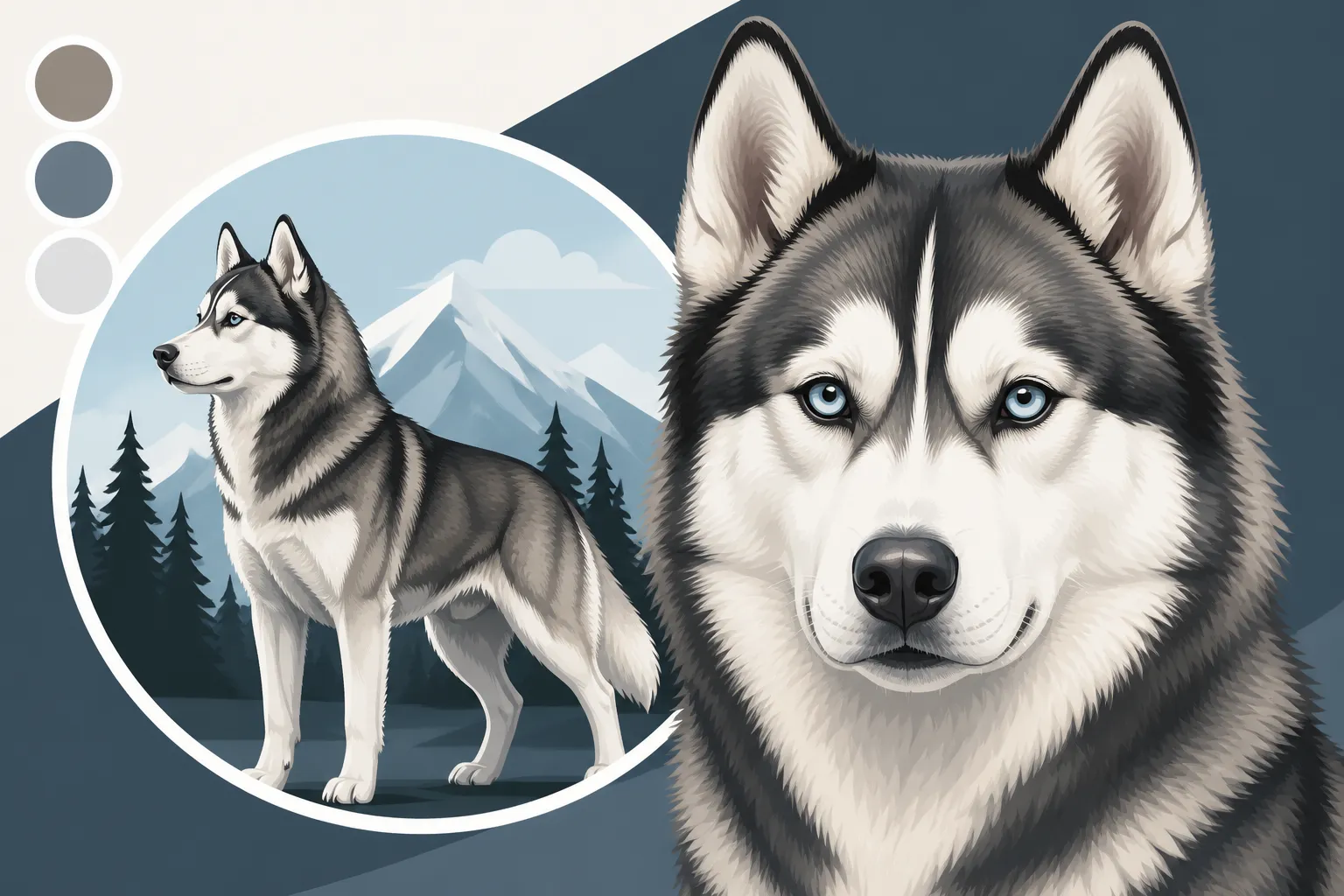
One of the most defining features of a true agouti is the characteristic "mask" on the face. This is typically a very dark mask, often black or deep gray, that covers the muzzle and extends around the eyes, sometimes giving the dog a somewhat stern or intense expression. The legs, hocks, and tail tip also tend to be noticeably darker than the main body, further enhancing that primitive aesthetic. The overall coat color can vary quite a bit, from a dark, almost black-agouti to shades of reddish-brown agouti, but the underlying pattern of banded hairs and the distinctive mask remain consistent. This wild patterning is a direct link back to The Chukchi Origins of the Siberian Husky and their deep connection to nature.
Distinguishing Features of Agouti
So, how do you really tell an agouti Siberian Husky apart from, say, a standard black and white, or even another dark-colored Husky? It really comes down to scrutinizing the individual hairs and the overall patterning. A black and white Husky will have clearly delineated patches of solid black and solid white. An agouti, however, doesn't have those sharp, distinct lines. Instead, its coat has a blended, almost smoky appearance, without any stark contrasts. The key is that each hair isn't just one color; it's striped with multiple colors along its length.
Beyond the banded hairs, pay close attention to the mask. While some gray and white Huskies can have a dark mask, the agouti mask is often more extensive and intense, almost as if painted on. The belly and chest, while lighter than the back, won't typically be pure white but rather a cream or grizzled gray. Even the eyes often appear darker, though blue eyes can certainly occur in agoutis. The overall impression is less "domesticated" and more rugged. It's truly a marvel to see how the coat comes together, blending guard hairs and undercoat to create this unique look. You might notice similar deep pigmentation in other areas, such as the nose and paw pads, which are usually jet black. If you're looking at pictures online, or at a litter of puppies, knowing these hallmarks can help you spot a true agouti from a distance.
Exploring the Wolf-Gray Siberian Husky
Now, let's talk about "wolf-gray," a term that causes a fair bit of confusion because it's often used quite loosely. Unlike agouti, which refers to a specific genetic pattern, "wolf-gray" is more of a descriptive term for a shade of gray that evokes a wolf-like image. It's less about the genetic mechanism and more about the overall impression the coat makes on the viewer. This means that a lot of Huskies could arguably be called "wolf-gray," even if they aren't genetically agouti.
The Range of "Wolf-Gray"
"Wolf-gray" is essentially an umbrella term for various shades of gray that appear natural, wild, and reminiscent of a wolf's coat. Genetically, a wolf-gray Husky could actually be a dilute black, meaning the genes responsible for black pigment are present but are "diluted" to a lighter shade of gray. It could also be a silver or even a sable (a reddish-brown base with black tips) that presents as a rich, deep gray depending on modifier genes. The beauty of "wolf-gray" is in its variation: you might see deep charcoal grays, lighter silvery grays, or warm, almost brownish grays, all of which fall under this descriptive category.
The key characteristic is that the color isn't a stark, uniform gray like you might see on some other breeds. Instead, there's often a subtle mottling or variation in tone throughout the coat, lending to that natural, wild appearance. These Huskies typically have white or cream markings, which, while present, aren't always as crisply defined as in a standard black and white Husky. Their facial markings can vary wildly too – some might have a faint mask, others a saddle-back pattern, or just a generally darker topcoat with lighter undersides. It's this broad spectrum of natural-looking grays that makes the term so appealing to those who love the breed's ancestral aesthetic.
Common Misconceptions and Overlap
Here's where things get a little muddy. Because "wolf-gray" sounds so appealing and conjures up that primal image, it's often used interchangeably with "agouti" by people who don't know the genetic distinctions. You might even hear breeders or owners describe their agouti Husky as "wolf-gray" because it fits the visual description, even if it's not the most precise genetic term. The truth is, an agouti Husky can indeed be wolf-gray in its overall tone and appearance, but not all wolf-gray Huskies are genetically agouti.
The biggest misconception is assuming that any Husky with a gray coat that looks "wild" is automatically an agouti. Many Huskies have stunning gray coats that evoke a wolfish charm, but upon closer inspection, their individual hairs lack the distinctive banding that defines agouti. Their gray might be a beautiful, rich color, but it's often a solid color per hair shaft, rather than the multi-banded agouti hair. This distinction is subtle but important, especially if you're interested in understanding the specific genetics of your dog's coat, or if you're looking at What the AKC Standard Asks of a Siberian Husky regarding color classifications. It's a testament to the Husky's incredible coat diversity that so many different genetic combinations can result in that captivating "wolf-gray" look.
Agouti vs. Wolf-Gray: A Comparative Look
Given all the overlap and the desire for that "wild" look, it’s understandable why the terms agouti and wolf-gray often get mixed up. However, there are some pretty clear distinctions that, once you know them, will help you appreciate the specific beauty of each. It's about looking beyond the first impression and understanding the details that truly differentiate these stunning coats.
Key Visual Differences
To really nail down the differences, let's break down the key visual cues you should look for when trying to identify an agouti versus a broader wolf-gray coat. This table can be a handy reference point, especially when you're admiring different Huskies or trying to understand your own pup's unique coloration.
| Feature | Agouti Siberian Husky | Wolf-Gray Siberian Husky (General) |
|---|---|---|
| Genetic Basis | Specific genetic pattern (aw allele at A-locus) | Descriptive term; can be various genetic combinations |
| Hair Structure | Individual hairs are banded with light and dark pigment | Individual hairs are usually a solid shade of gray |
| Face Mask | Typically a distinct, extensive dark mask | Variable, can be present but often less defined |
| Eye Color Tendency | Often darker eyes (amber, brown), but blue is possible | Wide range of eye colors, including blue, amber, brown |
| Body Markings | Lighter areas often grizzled, dirty white, or cream | Lighter areas usually cleaner white or cream |
| Legs/Tail | Darker points on legs and tail tip | Variable, can match body or be slightly darker/lighter |
| Overall Aesthetic | Primitive, wild, rugged, deep, multi-tonal, grizzled | Natural, wolf-like, can be sleek or mottled gray |
As you can see, the agouti is much more defined by the pattern of pigment on each hair, resulting in that unique grizzled look and strong mask. A wolf-gray, on the other hand, is a more general descriptor for the shade of gray, which can come from a variety of genetic backgrounds and may not have the same banded hairs or intense masking. Both are incredibly beautiful and contribute to the Husky's iconic appearance, but they arrive at that look through different genetic pathways.
Why the Confusion Lingers
So, why do these terms continue to be a source of confusion, even among dedicated Husky enthusiasts? A big part of it is simply the natural human tendency to simplify and categorize. The word "wolf-gray" is highly evocative; it instantly paints a picture of a majestic, wild animal, which is precisely what many people adore about Siberian Huskies. It's a very effective descriptor for the aesthetic, even if it's not always genetically accurate. Breeders, pet owners, and even online communities often use it because it conveys the general look and feel they're trying to describe.
Another factor is the sheer diversity within the Siberian Husky breed itself. There's such a wide spectrum of grays, from silvers to charcoals to warmer reds and sables, all of which can be considered "wolf-like" in their own way. When you look at Siberian Husky Coat Colors and Markings, you realize just how many variations exist. The lines can get blurry, especially to the untrained eye, making it easier to fall back on a general term. Ultimately, while precision in genetics is valuable, the desire to communicate a certain aesthetic often wins out in everyday conversation, ensuring that "wolf-gray" will likely remain a popular, if sometimes imprecise, term for these stunning dogs.
Caring for These Unique Coats
Whether your Siberian Husky is a true agouti, a beautiful wolf-gray, or any other of the breed's incredible colors, one thing remains constant: their magnificent double coat needs proper care. This isn't just about aesthetics; it's about their health, comfort, and ability to regulate their body temperature, no matter the season. Neglecting their coat can lead to uncomfortable matting, skin issues, and reduced effectiveness of their natural insulation.
Grooming Agouti and Wolf-Gray Coats
The good news is that the specific color or pattern of your Husky's coat doesn't change its fundamental grooming needs. All Siberian Huskies have that incredible double coat – a soft, dense undercoat for insulation and longer, tougher guard hairs that protect against the elements. This means consistent grooming is essential, especially during their "coat blows" when they shed their entire undercoat. These periods can last for Siberian Husky Coat Blow and the Six Weeks It Lasts, and they demand serious dedication!
During a coat blow, daily brushing with an undercoat rake or a high-velocity dryer is your best friend. These tools help remove the vast amounts of loose fur, preventing mats and keeping their skin healthy. You can find excellent grooming supplies, from sturdy undercoat rakes to powerful blow dryers, on sites like Chewy. Outside of a full coat blow, a thorough brushing session once or twice a week is usually sufficient to keep things tidy and prevent tangles, particularly around their ears and hindquarters. Remember, you're helping their coat do its job by keeping it clean and free of dead hair, ensuring those Guard Hairs and Undercoat in a Siberian Husky work together effectively.
Sun Exposure and Pigmentation
Just like human hair, a Siberian Husky's coat can be affected by prolonged exposure to the sun, especially for darker or red-based coats. While their double coat does offer some natural protection against UV rays, intense sun can sometimes cause the darker pigments in an agouti or wolf-gray coat to lighten or develop a reddish tint, often referred to as "rusting." This is purely cosmetic and doesn't harm the dog, but it's something owners of these darker-coated Huskies might notice.
It's also another important reminder of why you should Why You Must Never Shave a Siberian Husky. Their coat is a complex system designed to protect them from both heat and cold. Shaving removes this natural barrier, leaving their skin vulnerable to sunburn and potentially causing irreversible damage to their coat growth. For any Husky, but especially those with darker, richer pigments, ensuring they have access to shade during peak sun hours and avoiding prolonged exposure during the hottest parts of the day is always a good practice, regardless of coat color. Their coat is a marvel of nature, and our job is to help it do its best work.
Disclaimer
This article is for general informational purposes only and does not constitute professional advice. Laws, prices and regulations vary by location and change over time. Consult a qualified professional for guidance on your specific situation.