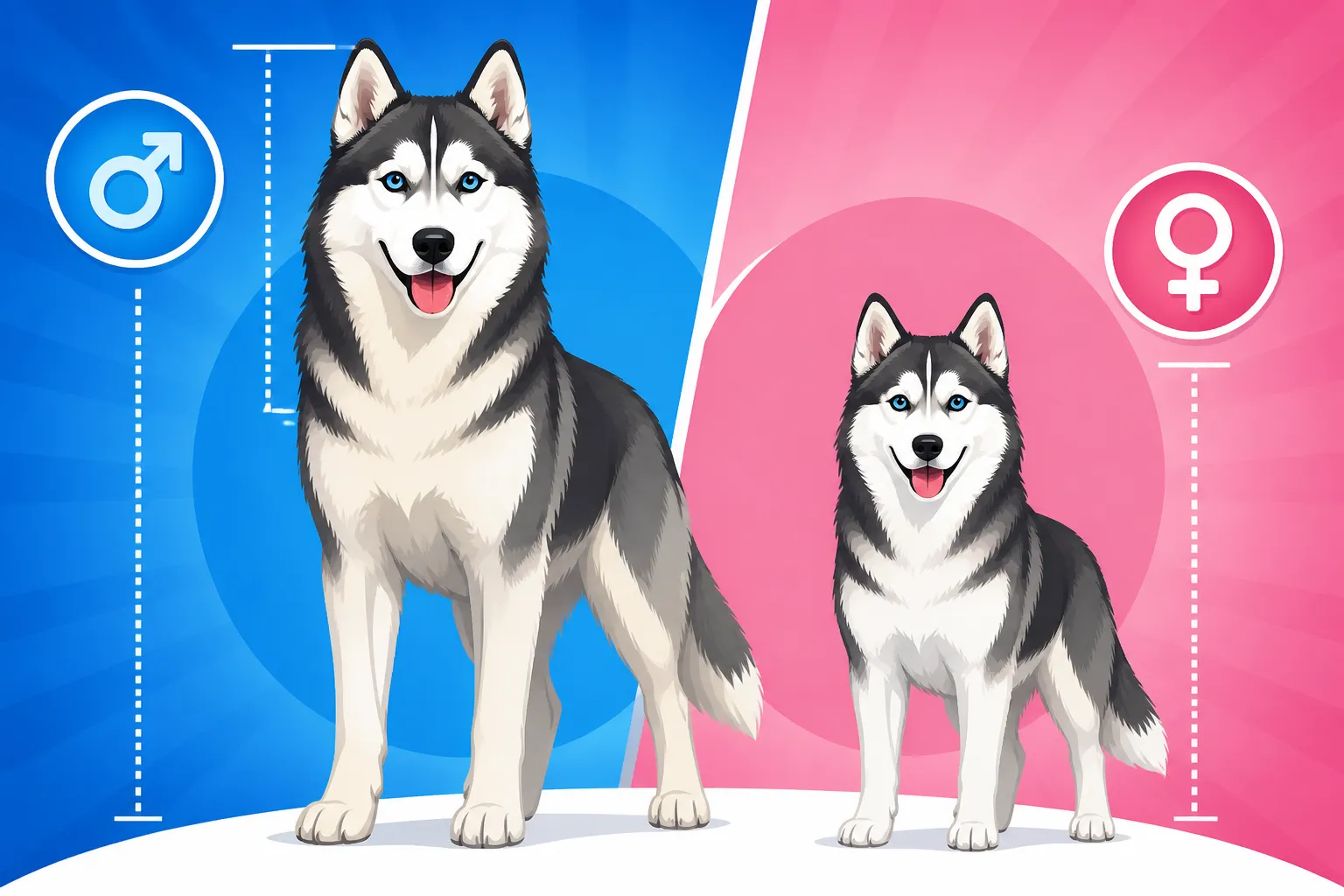
The Size Difference Between Male and Female Huskies
It’s a common moment for new and prospective Siberian Husky owners: you're looking at pictures online, visiting breeders, or even just admiring a stunning Husky at the dog park, and you can’t help but notice the sheer variety in their sizes. One male might look like a compact, athletic runner, while another seems significantly larger, almost approaching a Malamute in presence. Then there are the females – some appear quite dainty, while others carry a surprising amount of substance. This can leave you wondering what the "normal" size truly is and how much difference there really is between male and female Huskies. This guide will walk you through the standard expectations for Siberian Husky size, explore the real-world variations you’re likely to encounter, and help you understand what contributes to these differences so you can better prepare for your own magnificent companion.
Understanding the Siberian Husky Breed Standard for Size
When we talk about the size of any purebred dog, the first place we usually look is the breed standard. This isn't just some arbitrary set of rules; it's a carefully crafted description that reflects the breed's historical purpose and ideal characteristics. For Siberian Huskies, a breed renowned for its endurance and athleticism, the standard outlines a specific range for both height and weight that helps ensure they can perform the tasks they were originally bred for. It's a blueprint, if you will, that helps preserve the integrity and function of the breed.
What the AKC and Other Registries Say
The American Kennel Club (AKC) breed standard, which many breeders and owners refer to, provides clear guidelines for the size of mature Siberian Huskies. For males, the standard specifies a height range of 21 to 23.5 inches at the shoulder (withers) and a weight range of 45 to 60 pounds. Females are typically smaller, with a height range of 20 to 22 inches at the shoulder and a weight range of 35 to 50 pounds. It's crucial to understand that these are not just suggestions; they are the benchmarks against which dogs are judged in the conformation ring, and they reflect the ideal structure for a working sled dog.
These numbers might seem quite precise, but they represent a range, not a single target. A male at 21 inches and 45 pounds is just as "standard" as one at 23 inches and 58 pounds. The emphasis is on balance and proportion. A dog that falls outside these ranges, either significantly larger or smaller, would be considered a fault in the show ring. However, for a beloved pet, being a little outside these numbers usually doesn't impact their quality of life, provided they are healthy and well-exercised. What truly matters is a dog that is well-proportioned for its individual frame, avoiding extremes that could hinder its movement or health. What the AKC Standard Asks of a Siberian Husky delves deeper into these specific requirements.
It’s worth noting that while the AKC standard is widely recognized in North America, other international registries like the Fédération Cynologique Internationale (FCI) might have slightly different phrasing or emphasis, but the core size expectations for the Siberian Husky generally remain consistent across the board. They all aim to describe a medium-sized, athletic dog built for sustained endurance over speed, which is why excessive size or daintiness would be detrimental to their working ability.
Why the Difference Matters for Function
The difference in size between male and female Siberian Huskies isn't just about aesthetics; it's deeply rooted in their historical working function. When the Chukchi people bred these dogs, they were looking for efficient, powerful, and durable animals capable of covering vast distances in harsh Arctic conditions while pulling light loads. The slight differentiation in size often meant a subtle difference in role within a sled team.
Males, being typically larger and heavier, often had a bit more raw power and stamina for sustained pulling. They could handle heavier individual loads over time, contributing to the team's overall strength. Imagine a long-distance run across frozen tundra; that extra muscle and bone density in a male could make a difference in enduring the journey day after day. This isn't to say females weren't powerful, but their build often lent itself to other advantages.
Females, on the other hand, tended to be lighter and often more agile. While they might not have had the sheer brute strength of the largest males, their efficiency, speed, and sometimes finer bone structure made them invaluable. In some teams, their quicker reflexes and lighter step might have made them ideal for lead positions or for tasks requiring more finesse. It's a testament to the intelligent breeding practices of the Chukchi that they developed a breed where both sexes contributed uniquely to the success of the sled team, with their size differences playing a subtle but important role. This division of labor, if you will, highlights the thoughtful way the breed was developed for maximum effectiveness.
Typical Size Ranges and What to Expect in the Real World
While the breed standard gives us a blueprint, the reality of dog ownership often involves a bit more variation. Genetics are complex, and even within the purest lines, you'll find a spectrum of sizes. When you're welcoming a Siberian Husky into your home, you're bringing in an individual, and their specific dimensions might fall anywhere within—or even slightly outside—those published ranges. This is perfectly normal and rarely a cause for concern as long as your dog is healthy and happy.
Male Siberian Husky Dimensions
Male Siberian Huskies typically stand at about 21 to 23.5 inches at the shoulder. To put that in perspective, that’s roughly knee-to-mid-thigh height on an average adult human. Weight-wise, you're usually looking at somewhere between 45 and 60 pounds. Now, 60 pounds might not sound like a lot when you compare it to some larger breeds, but for a Husky, it's a very substantial and muscular dog. They carry their weight with an incredible athletic grace, making them seem lighter than they are.
You might encounter males on the lower end of the weight spectrum who are incredibly lean, almost appearing lanky. These dogs might come from more performance-oriented lines, where speed and endurance are prioritized over mass. Conversely, you’ll see males at the higher end, often from show lines, who present a more robust, "stockier" appearance. Neither is inherently "better" or "worse" as long as they are healthy. It's important to be able to feel their ribs easily, but not see them prominently. If you’re ever unsure about your Husky’s ideal weight, your vet can help you assess their body condition score. The Weight a Siberian Husky Should Hold further explores ideal weight management.
When you're outfitting your male Husky, remember this size range. A harness that fits a 45-pound male might be too snug for a 60-pound one, even if they're both technically "standard." Shopping for gear, whether it's a sturdy leash or a comfortable bed from a retailer like Chewy, means keeping your specific dog's build in mind. That extra few pounds or an inch of height can make a difference in comfort and fit for everyday items.
Female Siberian Husky Dimensions
Female Siberian Huskies generally present a more compact and refined physique compared to their male counterparts. They typically range from 20 to 22 inches at the shoulder and weigh between 35 and 50 pounds. This makes them noticeably smaller and lighter than males on average, a difference that becomes quite apparent when you see a male and female standing side-by-side. They retain all the athleticism and power of the breed, just in a slightly smaller package.
Many people are surprised by how relatively petite a fully grown female Siberian Husky can be, especially if they’ve mostly encountered larger males or other medium-large breeds. A 35-pound female is still incredibly strong and capable, but she might feel much less "imposing" than a 60-pound male. This smaller stature often translates to a perception of greater agility and quickness, which historically made them excellent lead dogs or lighter haulers.
Just like with males, there’s a range within females. You'll see some very slender, graceful females, particularly from working lines where minimal weight is an advantage for speed. Others might be a bit more robust, aligning closer to the upper end of the weight and height range, perhaps reflecting show line genetics. Regardless of where they fall within the standard, a healthy female Husky should always appear athletic and well-muscled, never frail or excessively heavy. When picking out items like a comfortable travel crate for your female, checking the specific dimensions of the product and comparing them to your dog's measurements is always a good idea. Many online retailers, like Chewy, provide detailed product specs to help you choose the right fit.
Factors Influencing a Siberian Husky's Adult Size
While genetics lay down the fundamental blueprint for a Siberian Husky's size, it's not the only piece of the puzzle. A multitude of factors, particularly during their formative puppy months and early adulthood, can influence whether a Husky reaches the upper or lower end of their genetic potential. Understanding these elements can help you better anticipate your puppy's eventual size and ensure they grow up as healthy and strong as possible.
Genetics and Lineage
The most significant predictor of a Siberian Husky's adult size is, without a doubt, its genetics. Just like in humans, puppies tend to inherit traits from their parents, including their general size and build. If both parents are on the smaller, lither side of the breed standard, their offspring are more likely to follow suit. Conversely, if the parents are larger, more robust specimens, their puppies often grow to be larger adults. This is why responsible breeders are so important and why Reading a Siberian Husky Puppy's Health Paperwork is crucial. Good breeders will be transparent about the size of their breeding stock and can often give you an educated estimate of how large a particular puppy is likely to become.
Beyond the immediate parents, the entire lineage or "lineage" of a dog plays a role. Different lines of Siberian Huskies have been selectively bred for slightly different purposes over generations. For example, some "racing lines" might favor dogs that are on the lighter, more agile end of the spectrum to maximize speed and endurance in competitive sledding. "Show lines," on the other hand, might sometimes lean towards a slightly more substantial build, as long as it adheres to the breed standard, often for a more striking presence in the show ring. These subtle differences in breeding focus can contribute to the variations in size you see, even among well-bred Huskies. Always discuss the parents' size and the kennel's breeding goals with a potential breeder to get a clearer picture of what to expect.
Nutrition and Growth
Proper nutrition throughout a Siberian Husky's growth stages is paramount to achieving their full, healthy adult size. Puppies, in particular, need a carefully balanced diet that supports their rapid development without causing them to grow too quickly. Overfeeding a puppy, especially with high-calorie foods, can lead to excessively fast growth. While this might sound appealing to someone who wants a "big" Husky, it can actually be detrimental to their developing bones and joints, increasing the risk of orthopedic issues later in life. Conversely, underfeeding can stunt growth, preventing a dog from reaching its genetic potential.
The type of food also matters. High-quality puppy food, formulated for medium-sized breeds, provides the necessary nutrients in the correct ratios. It's not just about protein; the balance of calcium and phosphorus is particularly important for bone development. Many owners find trusted brands readily available through pet supply retailers like Chewy, but always ensure it's appropriate for your Husky's life stage. Consult your veterinarian for guidance on the best feeding plan, paying close attention to portion sizes as advised by your vet rather than solely relying on the bag's recommendations, as Huskies often have incredibly efficient metabolisms. You might be surprised to learn that Feeding a Siberian Husky on 60 Percent of the Label is sometimes all they need.
Beyond food, controlled exercise is also crucial during puppyhood. While Huskies need a lot of physical activity, excessive, high-impact exercise (like long, strenuous runs or repeated jumping) should be avoided when their growth plates are still open. These soft areas at the ends of long bones are vulnerable to injury, and damage can lead to irregular growth and potential lameness. Gradually increasing activity as they mature ensures their musculoskeletal system develops properly. This careful balance is key to Protecting a Siberian Husky Puppy's Growth Plates and ensuring a healthy adult size.
Spaying and Neutering Considerations
The timing of spaying or neutering can also subtly influence a Siberian Husky's final adult size, particularly their height. Sex hormones (estrogen and testosterone) play a role in the closure of growth plates, which are the soft, cartilaginous areas at the ends of long bones that allow bones to lengthen. Once these growth plates "close" or ossify, the bones stop growing.
When a dog is spayed or neutered at a very young age, before puberty and before their growth plates have naturally closed, the removal of sex hormones can sometimes delay this closure. This delay can lead to the long bones continuing to grow for a longer period, potentially resulting in a slightly taller, more "leggy" dog than they might have been if left intact. While the difference might be subtle and often goes unnoticed by the average owner, it's a recognized physiological effect.
Conversely, dogs spayed or neutered later in life, after their growth plates have already closed, typically do not experience this effect on height. It's one of the many factors owners weigh when deciding the best time for their dog's spay or neuter surgery, alongside considerations for behavior, cancer risk, and coat changes. For a deeper dive into this topic, you might find Neutering a Siberian Husky and the Coat Question helpful, as it discusses how these decisions can impact various aspects of your Husky's development and appearance.
Practical Implications of Size Differences for Owners
Understanding the size differences between male and female Siberian Huskies isn't just an academic exercise; it has very real, practical implications for daily life with your furry companion. From the gear you buy to the space you provide, your Husky’s size will influence many choices you make as an owner. Being prepared for these considerations ensures both you and your Husky are comfortable and well-accommodated.
Gear and Equipment Sizing
One of the most immediate practical impacts of your Husky's size is the selection of appropriate gear. This isn't just about aesthetics; ill-fitting equipment can be uncomfortable, ineffective, or even unsafe. For instance, a harness designed for a 35-pound female will likely be far too small for a 60-pound male, potentially chafing or restricting movement. Conversely, a harness made for a large male would be too loose on a smaller female, allowing her to slip out easily, which is a major concern for a breed prone to escaping.
You’ll encounter these sizing challenges with almost every purchase:
- Collars and Harnesses: Measure your dog accurately! A male might need a size large or even extra-large in some brands, while a female could comfortably fit a medium. Always refer to the brand's specific sizing chart, whether you're buying from a local pet store or an online retailer like Chewy. A martingale collar, often recommended for Huskies, also needs to be perfectly sized to work correctly without causing discomfort.
- Crates: A larger male will require a substantially bigger crate than a smaller female. Ensure the crate is large enough for your Husky to stand up, turn around, and lie down comfortably. Choosing a Crate a Siberian Husky Cannot Bend offers valuable insights into selecting a durable crate that can stand up to Husky ingenuity.
- Car Restraints and Seat Covers: A larger Husky will take up more space in your vehicle and might require a larger car seat belt attachment or a more robust travel crate. You might also need larger, more durable seat covers to protect your upholstery from shedding and dirt, regardless of their specific size, because all Huskies shed!
- Beds: A larger dog needs a larger bed to support their joints and provide adequate space for sprawling. Investing in a good quality, appropriately sized bed can significantly contribute to your Husky's comfort and joint health.
Always err on the side of measuring your individual dog rather than guessing based on average breed size. Huskies can vary quite a bit, even within the same sex.
Space and Housing Considerations
While Siberian Huskies are often adaptable and can thrive in various living situations with sufficient exercise, their size does play a role in how comfortable they are in different spaces. A robust 60-pound male will simply take up more physical room than a 35-pound female. This might influence choices regarding:
- Indoor Living: Even if you have a spacious home, a larger Husky might feel more confined in smaller rooms or narrow hallways. They need space to stretch out, especially when resting. Their double coat means they can sometimes appear even bigger than they are. While both sexes need ample exercise, a larger male might feel the pinch of a small living space more acutely if he's not getting enough outdoor activity.
- Yard Size and Fencing: Regardless of sex, all Huskies are escape artists, but a larger male might have an easier time clearing certain fence heights or digging a bigger hole faster. The need for secure containment remains paramount for both.
- Vehicle Space: If you frequently travel with your Husky, the size difference will be noticeable in your car. A larger dog might require folding down back seats or necessitate a larger SUV or van for comfortable and safe transport, particularly if using a crate.
- Pet-Friendly Housing: In some rental situations or HOAs, there might be weight limits for pets. While most Huskies fall within typical "medium-large" categories, a very large male might push the upper boundaries of these limits in some stricter communities. It's always wise to check any restrictions carefully before bringing a Husky home.
Ultimately, providing ample exercise and mental stimulation is far more important than the exact square footage of your home. However, understanding how their physical size translates into their spatial needs helps you create a more harmonious environment for your Husky.
Exercise Needs and Handling
The size difference between male and female Huskies can also impact their handling and the perception of their strength, though their underlying exercise needs remain universally high. Both sexes are bundles of energy, bred for endurance, but a larger male might bring more raw power to the equation, making leash manners even more critical.
- Leash Walking and Pulling: A 60-pound male Husky can generate a significant amount of pulling force. If you’re not prepared, he can easily pull an unprepared adult off their feet. While a 35-pound female is also incredibly strong for her size and can certainly pull, the sheer mass of a larger male makes his pulling more impactful. Consistent leash training from a young age is non-negotiable for both sexes. Using appropriate training tools, such as a front-clip harness or a head halter, can help manage stronger pullers. Holding a Siberian Husky That Outweighs Your Grip is a post that directly addresses the challenges of managing a powerful Husky on leash.
- Exercise Volume and Intensity: Regardless of their specific size, both male and female Huskies require a tremendous amount of daily exercise. They are not content with a simple walk around the block. They need opportunities to run, explore, and expend their boundless energy. The larger males might seem like they need more, but a smaller female, particularly one from a high-drive working line, can easily match or even exceed the energy levels of a male. How Much Exercise a Siberian Husky Really Needs is a must-read for any Husky owner.
- Working in Harness: For owners interested in harness sports like canicross, bikejoring, or even recreational sledding, the size difference can play a role in team dynamics. A larger male might be placed in a position requiring more brute strength, while a female might excel in a lead position due to her agility. However, suitability for these sports is more about individual drive and training than just pure size.
- Overall Management: Simply put, a larger dog is more difficult to physically manage if they are not well-trained. Picking them up, redirecting them if they fixate on something, or bathing them can all be more challenging with a bigger, stronger animal. This underscores the importance of consistent positive reinforcement training, regardless of whether you have a male or female Husky, ensuring you have a well-behaved and manageable companion.
| Feature | Male Siberian Husky (Typical) | Female Siberian Husky (Typical) |
|---|---|---|
| Height | 21-23.5 inches at shoulder | 20-22 inches at shoulder |
| Weight | 45-60 pounds | 35-50 pounds |
| Build | Generally more substantial, muscular | More refined, agile, lighter built |
| Pulling Power | Higher raw strength | Strong for size, often quick and efficient |
| Space Needs | Requires slightly more room due to size | Generally more compact, but still needs ample space |
| Equipment Size | Typically needs larger sizes for harnesses, crates | Often fits medium sizes for equipment |
Disclaimer
This article is for general informational purposes only and does not constitute professional advice. Laws, prices and regulations vary by location and change over time. Consult a qualified professional for guidance on your specific situation.