Siberian Huskies That Grow Past the Standard
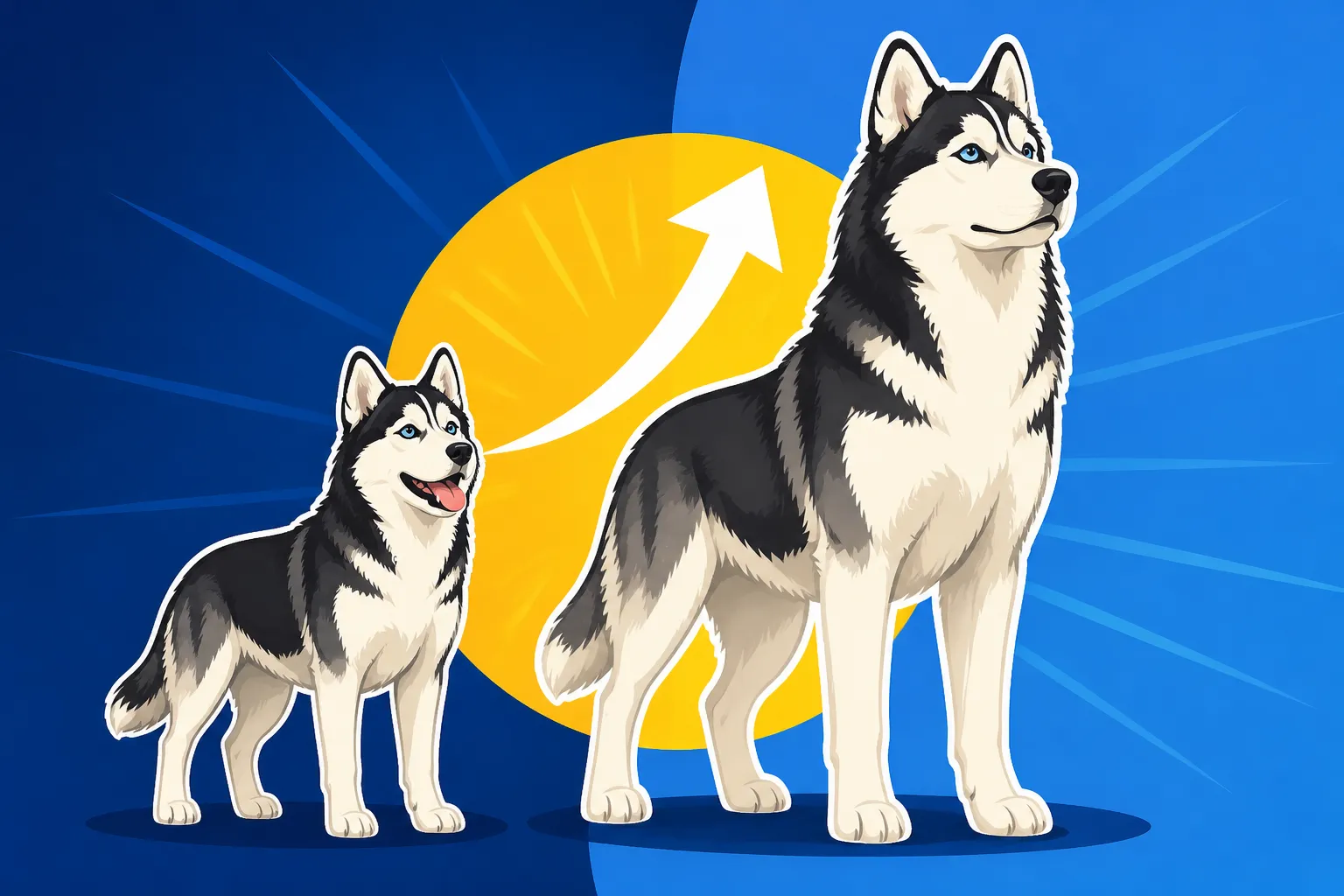
It can be quite a surprise when your adorable Siberian Husky puppy grows up to be significantly larger than you anticipated, often towering over the breed standard you diligently researched. This guide will delve into why some Siberian Huskies grow past the typical size, what implications that might have for their health and lifestyle, and how to best care for a husky that breaks the mold.
The Official Word: Siberian Husky Size According to the Breed Standard
When you first start looking into Siberian Huskies, one of the first things you learn about is their official breed standard. This isn't just some arbitrary set of rules; it's a blueprint for what a Siberian Husky should look like and how it should perform, based on its original purpose. The standard ensures the breed maintains its unique characteristics and working ability. For size, there are very specific guidelines.
The AKC Standard: Male and Female Heights and Weights
The American Kennel Club (AKC) breed standard, which many breeders and enthusiasts adhere to, provides clear parameters for the ideal size of a Siberian Husky. For males, the desired height at the withers (the highest point of the shoulder blades) ranges from 21 to 23.5 inches, with a weight range of 45 to 60 pounds. Females are typically a bit smaller, standing 20 to 22 inches tall and weighing between 35 and 50 pounds. These aren't just pretty numbers; they reflect the breed's historical role.
These ranges were established for a reason: they represent the optimal size for a husky to be an efficient, agile sled dog. A dog within these parameters possesses the necessary strength to pull a light load over long distances at a moderate speed, without being so heavy that it becomes inefficient or so small that it lacks endurance. It’s about balance, power, and sustained performance. When you look at a well-bred husky, you're seeing centuries of intentional selection for these traits. You can read more about what's expected in general by checking out What the AKC Standard Asks of a Siberian Husky.
Why Breeders Aim for the Standard
Responsible breeders take the breed standard seriously because it's a commitment to preserving the integrity and health of the Siberian Husky. They carefully select breeding pairs that not only embody the desired physical traits but also carry a history of good health and sound temperament. Deviating significantly from the standard, especially in size, can introduce various issues that impact the dog's well-being.
For instance, an oversized husky might put more strain on its joints, potentially increasing the risk of orthopedic problems later in life, even if the breed generally has good hips. While Siberian Huskies are known for Siberian Husky Hips and Why the Rate Is Low, larger dogs of any breed can face challenges. Maintaining the standard helps ensure the breed remains robust and functional, rather than becoming prone to issues that could arise from extreme proportions. Breeders strive to produce puppies that will mature within these healthy guidelines.
Why Some Huskies End Up Bigger Than Expected
So, if there's a standard, why do some Huskies grow past it? It's a common question, and there are several factors at play that can lead to a husky that’s a little, or even a lot, larger than what the rulebook suggests. It’s often not a simple answer, but rather a combination of genetics, ancestry, and even how they’re raised.
Genetic Predisposition and Outliers
Even in the most carefully planned litters from champion lines, genetics can sometimes throw a curveball. Just like in human families where a child might be significantly taller than their parents, dogs can have "outlier" genes that express themselves in unexpected ways. A puppy might inherit genes from a distant ancestor who was slightly larger, or a combination of genes might lead to a larger growth spurt. This isn't necessarily a sign of poor breeding, but rather the natural variation that can occur in any gene pool.
Sometimes, a husky might be perfectly purebred, with all the right paperwork, but still grow a bit bigger. These individual variations can occur without any ill effect, and the dog might still be a healthy, happy companion. The key is understanding that the standard is an ideal, and nature doesn't always adhere strictly to ideals. As long as the dog is healthy and proportionate, a few extra pounds or an inch or two in height beyond the standard often doesn't impact their quality of life as a pet.
Mixed Breeds and "Husky-Type" Dogs
One of the most frequent reasons people encounter an "oversized" Siberian Husky is that their dog isn't actually a purebred Siberian Husky at all. The striking appearance of the husky – those piercing eyes, thick coats, and wolf-like features – makes them highly desirable, and many mixed-breed dogs are often mistaken for purebreds. If your husky-looking dog is significantly larger, especially if you adopted them without verifiable pedigree, there's a good chance they have some other breed mixed in.
Common mixes include Alaskan Malamutes, German Shepherds, or even various retriever breeds. Alaskan Malamutes, for example, are much larger and heavier than Siberians, built for pulling heavier freight, not speed. A Malamute-Husky mix would almost certainly exceed the Siberian Husky standard. Without proper health paperwork like OFA certifications for the parents, or DNA testing, it's difficult to be certain of a dog's exact heritage. Always verify a breeder's claims, including looking up their dogs in the OFA database, to ensure you're getting a true Siberian Husky within standard expectations.
Nutrition and Growth Rate
While genetics primarily dictate a dog's maximum size, how a puppy is fed during its crucial growth phases can also play a role in its development. Overfeeding a puppy, especially with diets too rich in calcium or calories, won't necessarily make it grow taller than its genetic potential, but it can make it grow faster. Rapid growth, particularly in large breeds, can sometimes contribute to developmental orthopedic issues, even if the dog doesn't end up significantly oversized.
It's tempting to want your puppy to grow big and strong quickly, but a slow, steady growth rate is actually healthier. Ensuring your Siberian Husky puppy is fed an appropriate diet, often one formulated for large breed puppies or simply a high-quality adult food with controlled protein and fat, can help prevent unnecessary stress on developing bones and joints. Many experienced owners recommend Feeding a Siberian Husky on 60 Percent of the Label amount compared to typical breed guidelines, as Siberians have incredibly efficient metabolisms. Always consult your vet for the best dietary advice for your growing husky.
Navigating Life With a Larger-Than-Standard Siberian Husky
So, you've got a husky that's a bit of a giant among its peers. Congratulations, you've got more dog to love! But seriously, living with a larger-than-standard Siberian Husky does come with its own set of unique considerations and adjustments. From daily care to the practicalities of fitting them into your home and vehicle, it's worth thinking through how their size impacts your shared life.
Health Considerations for Larger Huskies
A larger body often means more stress on a dog's internal systems and skeletal structure. Even with the Siberian Husky's generally robust health, an oversized individual might be more prone to certain health concerns. Joint health, for example, becomes even more critical. While hip dysplasia isn't prevalent in the breed, a heavier dog naturally puts more pressure on its hips, elbows, and knees, potentially accelerating the onset of arthritis or exacerbating any existing, even minor, conformational flaws. Regular check-ups and being vigilant for Early Arthritis Signs in a Siberian Husky are key.
Beyond orthopedic issues, a larger husky will naturally require more food to maintain its body condition, though Siberians are known for their efficient metabolisms, so don't just double the portions! You'll need to carefully monitor their weight to ensure they maintain a healthy lean physique. You might also find that medication dosages, if ever needed, will be higher, leading to increased veterinary costs over their lifetime. It’s all part of the commitment to a larger companion, ensuring their comfort and longevity.
Management and Training Adjustments
Imagine trying to walk a regular Siberian Husky on a leash – now add 20 or 30 pounds of pure, independent pulling power to that equation. Managing a larger husky on a leash requires even more strength and consistent training. Their instinct to pull in harness is strong, so teaching them the difference between "pull" for sport and "loose leash walk" for daily strolls becomes absolutely essential. A good quality, comfortable harness that distributes pressure evenly is a must, and you might find yourself needing a sturdier leash than you originally planned.
Crating can also become a challenge. A standard large dog crate might not be sufficient for an oversized husky, meaning you'll need to invest in an extra-large or even giant-sized crate. These bigger crates take up more space and come with a higher price tag. Finding appropriate beds, toys, and even car restraints that safely and comfortably accommodate a larger dog can also be a quest. When shopping for these essentials, look to trusted pet retailers like Chewy, which often stock a wide range of sizes for all your husky's needs, including Crates a Siberian Husky Cannot Break Out Of.
Beyond the Standard: Impact on Health and Activities
When a Siberian Husky grows significantly past the established standard, it's not just about aesthetics or convenience; it can have tangible effects on their health, their working capabilities, and even how they are perceived within the breed community. Understanding these impacts is crucial for any owner of an oversized husky.
Show Ring Implications
For those interested in conformation shows, an oversized Siberian Husky will almost certainly face penalties, if not outright disqualification. The breed standard clearly defines size parameters, and dogs that fall outside these ranges are considered faults. The intention of dog shows is to evaluate how closely an individual dog conforms to the breed standard, thus demonstrating its quality as a breeding animal. A dog that is too large, or too small, is seen as deviating from the ideal representation of the breed.
This isn't about shaming the dog, but about preserving the breed's functional type. An oversized husky might not move with the same efficiency or possess the exact proportions deemed ideal for sustained light-load pulling. This is why breeders who focus on showing are meticulous about adhering to the standard, not just for the ribbons, but for the health and functional preservation of the breed itself. If your husky is oversized, the show ring might not be their arena, but they can still excel in many other activities.
Functional Considerations for Working Dogs
While a larger husky might seem more powerful, especially for pulling, in the context of traditional sled dog work, extreme size can actually be a disadvantage for a Siberian Husky. The breed was developed for speed and endurance, pulling light loads quickly over long distances. An overly large dog can be less efficient, expending more energy to move its own body weight before even considering the sled. Their stride might be less agile, and they could overheat more quickly due to a larger body mass.
Think about it this way: a marathon runner isn't typically built like a weightlifter. Each build is optimized for a different kind of performance. For a Siberian Husky, a smaller, leaner, and incredibly efficient metabolism is key to their success on the trail. While a larger husky could certainly enjoy recreational pulling sports like canicross or bikejoring, they might not possess the same competitive edge as a dog perfectly within the standard's Weight Limits for a Siberian Husky in Harness. It all comes back to the historical purpose and how closely an individual dog aligns with that original design.
Siberian Husky Size Comparison: Standard vs. Oversized
To help clarify the differences, here's a simple comparison of what the AKC breed standard defines versus what you might encounter with an oversized Siberian Husky.
| Characteristic | AKC Breed Standard (Males) | AKC Breed Standard (Females) | Potential Oversized Husky |
|---|---|---|---|
| Height (Withers) | 21-23.5 inches | 20-22 inches | 24+ inches |
| Weight | 45-60 pounds | 35-50 pounds | 65+ pounds, sometimes 70-80+ |
| Body Proportions | Balanced, agile, moderate bone | Balanced, agile, moderate bone | Heavier bone, less refined |
| Movement | Smooth, effortless, free-moving | Smooth, effortless, free-moving | Can appear heavier, less agile |
| Primary Concerns | Maintaining conditioning | Maintaining conditioning | Joint strain, overheating |
| Dietary Needs | Lean, efficient calories | Lean, efficient calories | Higher calorie intake, still efficient |
Ultimately, whether your Siberian Husky fits precisely into the breed standard or is a bit larger, the most important thing is their health, happiness, and your commitment to providing them with the best care. Many magnificent huskies live long, fulfilling lives even if they're a little bigger than expected. As long as they're healthy and loved, that's what truly matters. Just be prepared to buy those slightly bigger beds and a heftier bag of food from Chewy! You can also consult resources on The Weight a Siberian Husky Should Hold for guidance.
Disclaimer
This article is for general informational purposes only and does not constitute professional advice. Laws, prices and regulations vary by location and change over time. Consult a qualified professional for guidance on your specific situation.