What Makes a Siberian Husky Agouti
It’s easy to look at a stunning Siberian Husky with a darker, wilder appearance and assume you know what you're seeing, often using terms like "wolf-gray" or just "dark gray." But for those truly fascinated by the breed's unique genetics, there's a specific term that describes a particular pattern and coloration: agouti. This guide is going to peel back the layers of that dense double coat and explain exactly what makes a Siberian Husky agouti, going beyond surface-level observations to understand the intricate details of this beautiful and often misunderstood color.
Decoding the Agouti Gene in Huskies
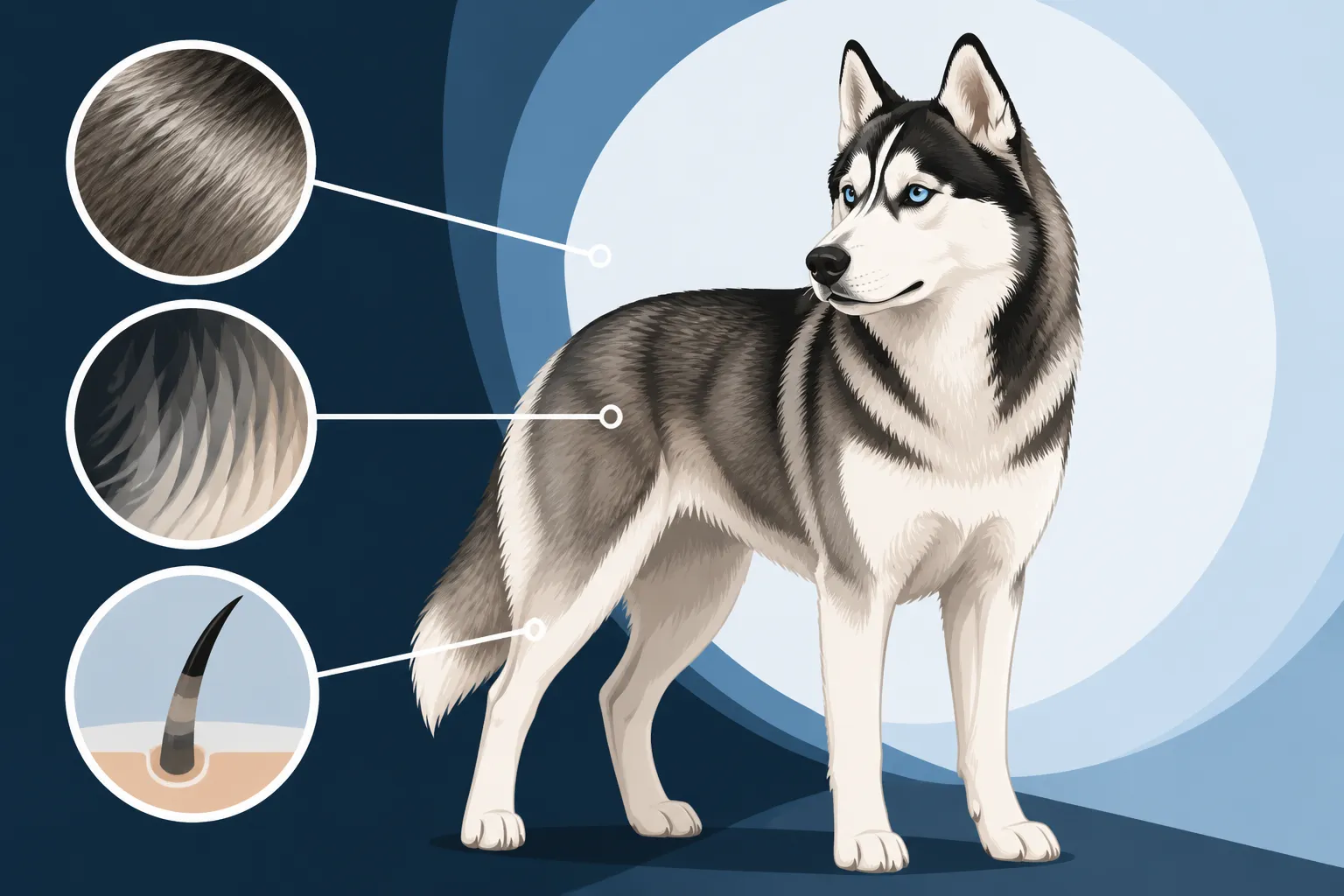
The term "agouti" often conjures images of wild canids, and for good reason. It refers to a specific banding pattern on individual hair shafts, not a solid color. This banding creates a dynamic, multi-tonal effect that changes with light and movement, making agouti huskies particularly captivating. It's a hallmark of their wild ancestry, setting them apart from many other domestic dog breeds.
Beyond the Basic Gray: What Agouti Really Means
When we talk about a "gray" Siberian Husky, it can encompass a broad spectrum from light silver to charcoal. However, agouti isn't just a shade of gray; it's a pattern of pigmentation on each hair strand. Think of it like this: if you were to pluck a single hair from an agouti husky, you'd notice bands of different colors – typically black, red, yellow, or tan – along its length, rather than being one solid color from root to tip. This genetic magic creates a depth and richness that you don't typically see in a solid gray or even sable coat. It gives the coat an almost grizzled or salt-and-pepper look up close, but from a distance, it blends into that striking "wild" appearance. It's a genetic throwback, a nod to their ancient lineage, and something truly special to behold.
The Visual Cues of an Agouti Siberian Husky
So, how do you spot an agouti husky amidst a sea of beautiful Siberians? Look for a combination of specific visual markers. The most defining characteristic is that banded hair shaft we just discussed, resulting in a rather "dirty" or "muddy" appearance compared to the clean, crisp lines of a black-and-white or pure gray husky. Agoutis often have a darker overall presentation, frequently exhibiting black or very dark points on their ears and tail. Their masks are typically heavy and dark, often resembling a classic "wolf mask" that extends around their eyes and sometimes even down their muzzle, though this can vary. You might notice a reddish or tan undercoat peeking through the darker guard hairs, especially on their legs, shoulders, and behind the ears. This gives them a rich, complex color profile that can shift from deep charcoal to earthy brown depending on the light.
Why Agouti Isn't Always "Wolf-Like"
It's tempting to immediately equate "agouti" with "wolf-like," and while there's certainly a strong aesthetic connection, it's not a universal rule. Many people envision a truly wild, untamed animal when they hear "wolf-like," and while agouti huskies often embody this look, it's important to remember that coat color is just one aspect. Some agouti huskies might have lighter shading or a less pronounced mask, making them appear less overtly "wolfish" than others. Conversely, some non-agouti huskies, particularly those with a very strong black and white pattern and specific facial markings, can also strike a very "wolf-like" pose. The key is understanding that "agouti" is a genetic description of hair banding, not merely a subjective assessment of how much a husky resembles its wild cousins. It's a specific pattern that contributes to a wolf-like aesthetic, but it's not the only factor.
The Unique Appearance of Agouti Huskies
The agouti coat is a chameleon of the canine world, shifting and changing not only with the light but often with the seasons. It's truly mesmerizing to watch an agouti husky's coat evolve throughout the year. Many owners initially get confused about what they have, only to learn later that their "extra dark" or "muddy" husky is, in fact, an agouti.
The Signature Mask and Darker Points
One of the most striking features of an agouti Siberian Husky is its mask. Unlike the sometimes delicate or partial masks seen in other color patterns, the agouti mask is typically deep, broad, and dark. It often extends around the eyes, giving them a very intense, almost predatory gaze. This dark pigmentation usually continues over the muzzle and forehead, framing the face dramatically. You'll also notice consistently dark pigmentation on the eye rims, nose, and lips, which often appear black, even if the overall coat has reddish tones. Their ears often have dark tips and a solid dark color on the back, and their tails are usually well-plumed with dark fur, often with a black tip. This consistent dark coloring on the extremities and face truly defines the agouti look.
Variations in Agouti Intensity and Shading
Within the agouti spectrum, there's a surprising amount of variation. You might see some agoutis with a very dark, almost charcoal-black base, while others lean more towards a grizzled brown or even a reddish-tan hue. The intensity of the banding on each hair shaft plays a huge role here. Some might have very distinct, contrasting bands, while others have more subtle transitions, creating a softer, blended effect. It's also common for an agouti husky's coat to change dramatically with the seasons. During their famous "coat blow" in spring and fall, when they shed their dense undercoat, the remaining guard hairs might appear darker or lighter, and the underlying tones might become more apparent. Siberian Husky Coat Blow and the Six Weeks It Lasts discusses this phenomenon in depth. Younger agouti puppies often start off looking extremely dark, almost black, only for their true multi-tonal agouti pattern to emerge as they mature. This means a puppy you bring home could look quite different as an adult, adding to the marvel of the color.
Comparing Agouti to Other Husky Coat Colors
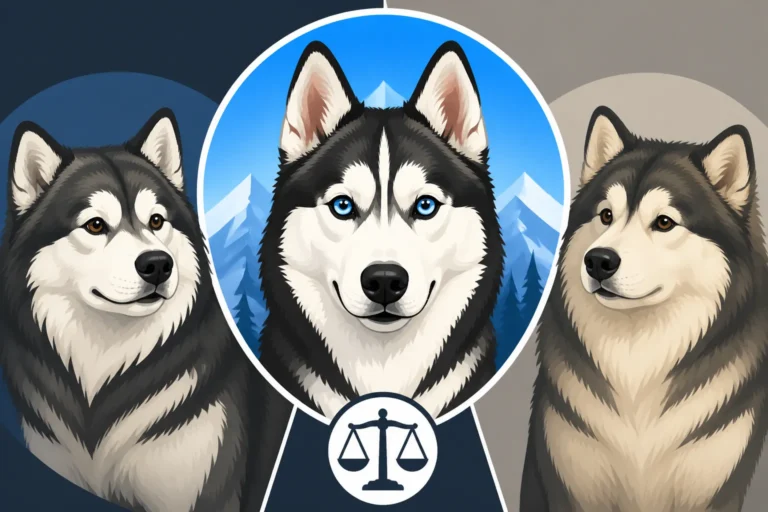
To really appreciate agouti, it helps to understand how it differs from other common husky colors. It's not the stark contrast of a black-and-white husky, where distinct patches of solid black and white fur define the pattern. Nor is it the uniform shading of a pure gray husky, which has hairs that are typically a solid shade of gray from root to tip, even if varied throughout the body. Agouti also stands apart from Red and Copper Siberian Huskies, which are characterized by warm, reddish tones throughout their coat, and typically lighter pigmentation on the nose and eye rims, often liver or flesh-colored. Sable Siberian Huskies can sometimes be confused with agouti, as they also have banded hairs. However, sable typically features a warmer, more reddish-brown base with black tipping, and the overall effect is usually less "wild" and more "warm" than an agouti. The mask on a sable is often less heavy and can be more fawn-colored. And of course, it's a world away from The All-White Siberian Husky, which lacks almost all pigment in its coat. Understanding these distinctions helps illuminate just how special the agouti pattern truly is. For more on the array of colors, check out Siberian Husky Coat Colors and Markings.
| Feature | Agouti Siberian Husky | Standard Gray Siberian Husky | Red/Copper Siberian Husky | Sable Siberian Husky |
|---|---|---|---|---|
| Hair Shaft | Banded (multiple colors on each hair: black, tan, cream) | Solid gray or gray with white/black tips | Solid reddish/copper with potential black tipping | Banded (red/tan base with black tips) |
| Overall Look | "Dirty," grizzled, wild, often darker | Clean, silvery, wolf-gray, or charcoal | Warm, rich, earthy | Warm, often more brown-red with black overlay |
| Mask/Facial | Heavy, dark, often extended "wolf mask" | Clearer, defined mask (black, gray, or sometimes white) | Often open-faced or lighter, minimal mask (fawn) | Distinct, often fawn-colored or less heavy mask |
| Points (Nose/Rims) | Typically black | Black or sometimes blue/gray | Liver, flesh-colored, or black | Black or liver |
| Undercoat | Often reddish, tan, or cream | Gray or white | Cream or white | Cream or white |
| Common Misconception | Simply "wolf-gray" | Can be mistaken for light agouti | Can be mistaken for light sable | Can be mistaken for agouti (but warmer) |
The Genetics Behind the Agouti Coloration
Understanding agouti isn't just about what you see; it's about what's happening at a genetic level. The coat color of any dog, including the Siberian Husky, is a complex interplay of several different genes, each located at a specific "locus" on their chromosomes. For agouti, we're primarily looking at two key players: the A-locus and the K-locus.
Understanding the A-Locus and K-Locus
The "A-locus" (Agouti locus) is probably the most direct influencer for the agouti pattern. It dictates how pigment is distributed along the hair shaft. Dogs inherit two copies of each gene, one from each parent. For a dog to express the agouti pattern, it typically needs at least one copy of the "aw" allele (for wild agouti) at the A-locus. This "aw" allele is what causes the banding of pigments, switching between eumelanin (black/brown pigment) and phaeomelanin (red/yellow pigment) production along the hair.
The "K-locus" (Dominant Black locus) also plays a critical supporting role. The K-locus can "override" or modify the expression of the A-locus. If a dog inherits two copies of the dominant black gene (K/K or K/kbr) at the K-locus, it will be solid black regardless of what alleles are present at the A-locus. However, if a dog has k/k (non-dominant black) at the K-locus, then the A-locus genes can be expressed. This means an agouti husky needs to have the right combination at both loci to display its characteristic pattern. It's like a complex recipe where you need all the right ingredients and the oven set correctly for the dish to turn out as intended.
How Dominant and Recessive Genes Play a Role
In basic terms, dominant genes will express themselves even if only one copy is present, while recessive genes require two copies (one from each parent) to be expressed. For the A-locus, the order of dominance for common husky alleles generally goes: Ay (sable) > aw (agouti) > at (tan points) > a (recessive black). So, for a husky to be agouti, it usually needs to inherit at least one "aw" allele and not inherit a dominant "Ay" allele that would result in sable, or a dominant "K" allele that would result in solid black. This is why you can sometimes see Why Two Siberian Husky Littermates Look Nothing Alike – they've simply inherited different combinations of these genes from their parents. It's a fascinating roll of the genetic dice!
Breeding Considerations for Agouti Huskies
For breeders, understanding these genetic nuances is crucial. If a breeder aims to produce agouti puppies, they need to ensure that both parent dogs carry the necessary "aw" allele at the A-locus and are "k/k" at the K-locus, allowing the agouti pattern to express. Knowing the genetic makeup of the parent dogs through DNA testing can help predict the likelihood of agouti offspring. Sometimes, agouti puppies can appear in litters where neither parent outwardly appears agouti, which simply means both parents were carriers of the recessive "aw" allele. Responsible breeders prioritize health and temperament above all else, but understanding coat color genetics allows them to predict and appreciate the diversity within their litters. The beauty of the agouti coat is a testament to the rich genetic heritage of the Siberian Husky.
Living With and Appreciating an Agouti Husky
If you're lucky enough to share your life with an agouti Siberian Husky, you know they are truly special. Beyond their captivating looks, they come with all the wonderful, spirited traits of the breed. But like any husky, their care requires understanding their unique coat and recognizing the wild beauty they bring into your home.
Grooming Needs and Coat Care for Agouti Huskies
The agouti coat, like all Siberian Husky coats, is a magnificent double coat designed for insulation and protection. It consists of a soft, dense undercoat and coarser guard hairs. This means regular grooming is essential, especially during their intense shedding seasons, often called "coat blows." During these times, you'll be amazed at the sheer volume of fur that comes off. Daily Raking Through a Siberian Husky Blow will become your new meditation! You'll need high-quality grooming tools like an undercoat rake and a slicker brush to get through that thick fur and remove the loose undercoat. Undercoat Rakes and Slickers for a Siberian Husky are absolute essentials. I often recommend looking for durable grooming tools from reputable brands like Chewy, as they tend to hold up to the demands of a husky coat.
It’s crucial to remember that you should never shave a Siberian Husky, even an agouti one. Their double coat is vital for regulating their body temperature, keeping them cool in summer by trapping air and warm in winter by insulating. Shaving can disrupt this natural system, leading to skin issues, sunburn, and an inability to properly cool themselves. The agouti's banded guard hairs are part of this sophisticated system, and damaging them can alter the coat's natural function and appearance.
The Agouti Husky in Popular Culture and Beyond
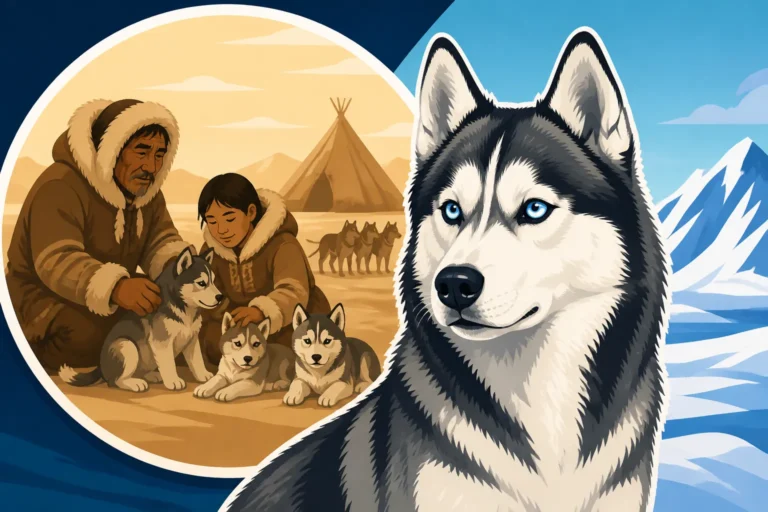
The striking, wild appearance of the agouti husky has naturally made it a favorite in media and art that seeks to evoke a sense of wilderness or adventure. Their resemblance to wolves has often led to them being cast in roles that require a majestic, untamed canine presence. Beyond the silver screen, agouti huskies are celebrated by enthusiasts for their historical significance, embodying a closer link to the breed's origins with the Chukchi people. For many owners, an agouti husky isn't just a pet; it's a living piece of history, a dog that carries the visual legacy of its ancestors in every banded hair. Whether you see them trekking through snow, curled up on the couch, or simply watching the world go by with those intense, dark-rimmed eyes, an agouti Siberian Husky is a truly stunning and unique companion. They represent a beautiful connection to the natural world and the enduring spirit of the breed.
Disclaimer
This article is for general informational purposes only and does not constitute professional advice. Laws, prices and regulations vary by location and change over time. Consult a qualified professional for guidance on your specific situation.