Corneal Dystrophy Rings in a Siberian Husky Eye
It can be incredibly unsettling to look into your beloved Siberian Husky's bright, intelligent eyes and notice something out of place – perhaps a hazy film or, more specifically, strange, shimmering rings. These visual changes can make any dedicated owner anxious, immediately sparking fears about their dog's vision and overall health. This guide is here to demystify those peculiar rings, explaining exactly what corneal dystrophy is in Siberian Huskies, how to recognize it, what causes it, and most importantly, how to approach its management and care to ensure your Husky's comfort and quality of life.
What Exactly is Corneal Dystrophy in Siberian Huskies?
When you notice an unusual appearance in your Husky's eyes, particularly those distinct rings, you're likely observing a condition known as corneal dystrophy. It's not an infection, nor is it typically something caused by an injury. Instead, it’s a genetic condition where abnormal material accumulates within the cornea, the clear, outermost layer of the eye. This accumulation is usually made of lipids, like cholesterol or fatty acids, or sometimes calcium, leading to areas of cloudiness or, more specifically, ring-like patterns. While it sounds alarming, for many Siberian Huskies, corneal dystrophy is often benign and doesn't severely impact their vision, though it’s crucial to understand what you’re seeing.
Defining the Condition and Its Appearance
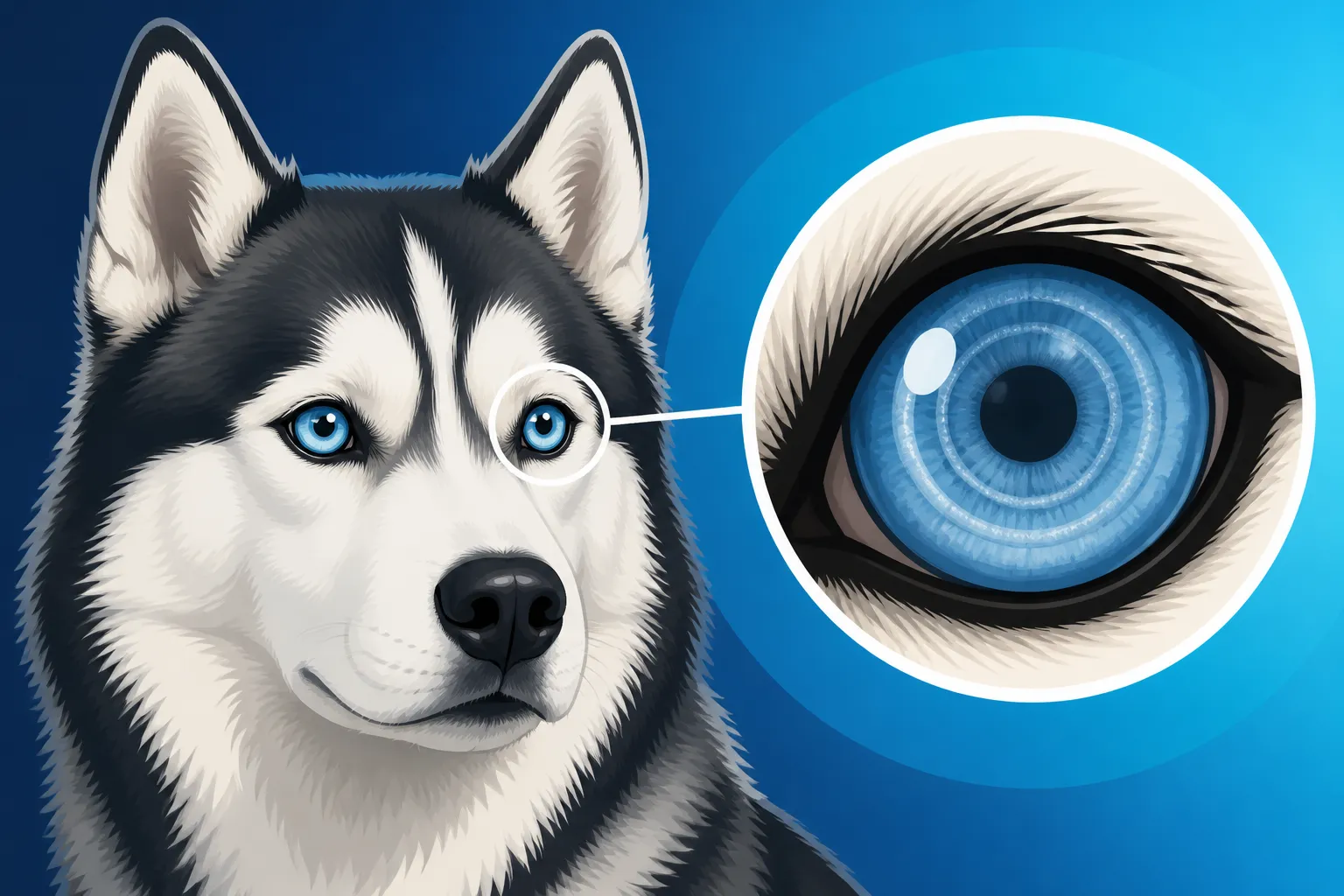
Corneal dystrophy is primarily an inherited, non-inflammatory condition. This means it's not something your Husky "catches" or that flares up due to external factors like allergies. Instead, it's a predisposition passed down through generations. The defining characteristic is the deposition of metabolic products within one or more layers of the cornea. For Siberian Huskies, these deposits often present as opaque, grayish-white to crystalline rings, crescents, or oval shapes. These rings are typically found in the central or paracentral (slightly off-center) region of the cornea.
Imagine a perfectly clear windowpane, and then envision small, almost iridescent smudges or lines appearing on it, slowly forming a pattern. That's a good visual analogy for how these rings might look on your Husky's cornea. They can range from very faint, barely noticeable opacities to more pronounced, milky white or crystalline patterns. Often, these rings are symmetrical, appearing in both eyes, though one eye might show more advanced changes than the other. The key takeaway is that these aren't "floaters" inside the eye, nor are they on the surface where they could be wiped away; they are embedded within the corneal tissue itself. Owners often describe them as looking like a "target" or "bullseye" in the eye, which accurately captures the ring-like appearance that gives the condition its common name.
Different Types Affecting Your Husky's Eyesight
While the term "corneal dystrophy" is broad, veterinary ophthalmologists classify it into different types based on which layer of the cornea is affected. In Siberian Huskies, the most common form is stromal corneal dystrophy, specifically lipid corneal dystrophy. The cornea has three main layers: the outer epithelium, the thick middle stroma, and the inner endothelium.
Stromal corneal dystrophy involves the middle layer, the stroma, which is the thickest part of the cornea and responsible for maintaining its shape and clarity. When lipid deposits accumulate here, they cause the characteristic rings or oval opacities. These opacities are generally non-painful and often do not progress to cause significant vision impairment. Think of it like a minor imperfection in a window pane – you can still see through it, but it's not perfectly clear. In very rare, severe cases, the opacities could become dense enough to obstruct vision, but this is uncommon in Siberian Huskies.
Other, less common forms of corneal dystrophy can affect the epithelial layer (outermost) or endothelial layer (innermost). Epithelial dystrophies might lead to recurrent erosions, which are painful ulcers that heal and then recur. Endothelial dystrophies primarily affect older dogs, causing fluid accumulation in the cornea (corneal edema) leading to a diffuse blue haze, often called "blue eye." However, when we talk about those distinct "rings" in a Siberian Husky, we are almost always referring to the stromal lipid deposits. Understanding this distinction is important because while the rings themselves are typically harmless, if your Husky starts showing signs of pain like squinting, rubbing their eye, or excessive tearing, it could indicate a more problematic epithelial erosion or another underlying issue requiring immediate veterinary attention. This is a good reason why your Siberian Husky needs an eye exam every year.
Identifying Corneal Dystrophy Rings and Early Signs
Spotting corneal dystrophy in your Siberian Husky often starts with a casual observation. You might notice a subtle change in the sparkle of their eye or a slight cloudiness that wasn't there before. Because Huskies have such expressive eyes, any alteration tends to catch an owner's attention quickly. Early detection is key, not necessarily for aggressive treatment, but for monitoring and ruling out other, more serious conditions. It's easy to worry, but knowing what to look for can help you communicate effectively with your vet.
How to Spot the Characteristic Rings
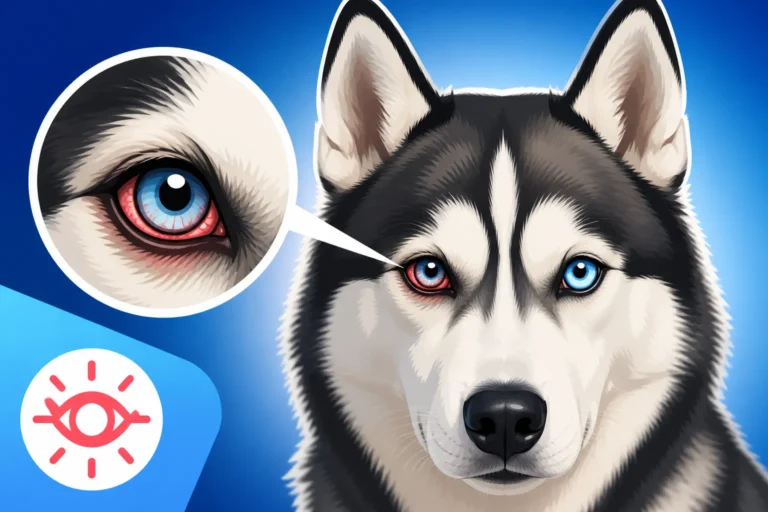
The rings of corneal dystrophy are typically a grayish-white, sometimes crystalline or iridescent, and often symmetrical in both eyes. They usually appear in the central or slightly off-center part of the cornea. They can vary in size and density; some might be very faint, looking like a hazy fingerprint, while others can be quite distinct, resembling a series of concentric circles or an oval. Many owners first notice them when their Husky is between 2 and 4 years old, though they can appear earlier or later.
To get a good look, try observing your Husky in good, natural light. Sometimes, using a small flashlight (like the one on your phone) angled across the eye can help illuminate the corneal surface and make the opacities more visible. Look for uniformity across both eyes – if the changes are present in both and appear similar, it strengthens the likelihood of corneal dystrophy. Pay close attention to whether the surface of the eye appears smooth or if there are any irregularities. Corneal dystrophy typically does not cause surface changes; the cornea remains smooth and shiny. If the surface looks rough, cloudy, or if there's any redness in the white part of the eye, this could point to a different problem like an ulcer or inflammation, which needs prompt vet care. Also, observe if your Husky is showing any signs of discomfort. With simple corneal dystrophy, there usually isn't any pain, squinting, or excessive tearing.
Distinguishing Dystrophy from Other Eye Issues
One of the biggest anxieties for a Husky owner is confusing a benign condition like corneal dystrophy with something more severe. The rings are quite distinctive, but other eye conditions can cause cloudiness or changes in eye appearance.
For instance, Juvenile Cataracts in the Siberian Husky are a completely different condition. While both can cause opacities, cataracts affect the lens inside the eye, not the cornea. A cataract looks like a cloudiness behind the iris (the colored part of the eye), deep within the eye, whereas corneal dystrophy is on the very surface, the clear window. An ophthalmologist can easily differentiate these using special instruments.
Another common aging change is nuclear sclerosis, which causes a bluish-gray haze in the pupil of older dogs. This is a normal part of aging and doesn't usually impair vision significantly, but it can be mistaken for a cataract. Again, this is a lens issue, not a corneal one.
Then there are corneal ulcers or injuries, which cause acute pain, redness, squinting, and often a very noticeable cloudiness or white spot where the injury occurred. This would be unilateral (affecting one eye) and accompanied by obvious signs of distress. Glaucoma, a condition of increased eye pressure, also presents with pain, redness, and a diffuse blue haze, but it's an emergency requiring immediate veterinary attention. You might see a red painful eye in a Siberian Husky that needs urgent care, which is very different from the subtle, non-painful rings of dystrophy.
If you're ever in doubt, the best course of action is to consult your veterinarian, or even better, a board-certified veterinary ophthalmologist. They have the specialized equipment and expertise to diagnose the condition accurately. During an annual eye exam, which is something every Siberian Husky should have, they can easily confirm if what you're seeing is indeed corneal dystrophy and not something more problematic. They can also provide you with a baseline for future monitoring and offer peace of mind.
| Feature | Corneal Dystrophy (Siberian Husky) | Cataracts | Nuclear Sclerosis | Corneal Ulcer (Injury) | Glaucoma |
|---|---|---|---|---|---|
| Location of Opacity | Cornea (outer surface) | Lens (inside the eye, behind iris) | Lens (inside the eye, behind iris) | Cornea (outer surface) | Cornea (diffuse haze), entire eye |
| Appearance | Gray-white/crystalline rings/ovals | White/cloudy spot, can obscure pupil | Bluish-gray haze in older dogs | White/hazy spot, often irregular | Diffuse blue haze, pupil dilated |
| Pain | Generally none | Generally none (unless secondary issues) | None | Significant (squinting, rubbing) | Significant (squinting, redness) |
| Redness | Generally none | Generally none | None | Often present around cornea | Often present in the whites of eyes |
| Onset | Usually 2-4 years old | Variable, can be juvenile or adult | Older dogs (6+ years) | Acute, after injury | Acute or chronic, can be sudden |
| Progression | Slow, can stabilize | Progressive, can lead to blindness | Non-progressive, doesn't cause blindness | Heals with treatment, can leave scar | Rapid, sight loss if untreated |
| Symmetry | Often bilateral (both eyes) | Can be unilateral or bilateral | Always bilateral | Usually unilateral (one eye) | Can be unilateral or bilateral |
Understanding the Causes and Genetic Predisposition
It’s natural to wonder why your Husky might develop corneal dystrophy. Did you do something wrong? Is it their diet? The good news is, no, it's not typically due to anything you've done or not done. Corneal dystrophy in Siberian Huskies is overwhelmingly an inherited condition, meaning it’s part of their genetic makeup. This makes it a fascinating, albeit sometimes frustrating, aspect of owning this specific breed.
The Inherited Nature in Siberian Huskies
Siberian Huskies have a well-documented genetic predisposition to corneal dystrophy. This isn't a random occurrence; it's a trait that can be passed down from parent to offspring. While the exact mode of inheritance (whether it's dominant, recessive, or more complex) for all forms of corneal dystrophy in all breeds isn't always fully understood, it's widely accepted that genetics play a primary role in Huskies. This means that if your Husky has corneal dystrophy, it's likely they inherited the genetic markers for it from one or both of their parents.
Responsible breeders are very aware of this genetic component. They often screen their breeding dogs for various inherited eye conditions as part of their health testing regimen. Organizations like the Orthopedic Foundation for Animals (OFA) maintain a database for canine health information, including eye certifications. A clear OFA eye certification means a dog has been examined by a board-certified veterinary ophthalmologist and found free of observable genetic eye diseases at the time of the exam. However, because corneal dystrophy can develop later in life, a puppy from "clear" parents might still develop it, though the risk is reduced. If you're considering a Siberian Husky puppy, asking a breeder about their dogs' eye certifications and history of corneal dystrophy in their lines is a crucial step in Reading a Siberian Husky Puppy's Health Paperwork. While there isn't a specific DNA test for the form of corneal dystrophy common in Huskies, reputable breeders strive to minimize its incidence through careful selection.
The Role of Diet and Environment
Given its inherited nature, environmental factors and diet generally play a minimal, if any, direct role in causing corneal dystrophy in Siberian Huskies. Unlike some health conditions that can be heavily influenced by nutrition, exercise, or exposure to toxins, corneal dystrophy is primarily "hardwired" into the dog's genes. The deposits are metabolic products, but their accumulation is driven by an inherent genetic predisposition rather than dietary excess or deficiency.
However, while diet doesn't cause it, maintaining a balanced, high-quality diet is always crucial for your Husky's overall health, including their eyes. A healthy body can better manage any condition, genetic or otherwise. There's no scientific evidence to suggest that altering your Husky's diet (e.g., low-fat, specific supplements) will prevent, reverse, or significantly improve existing corneal dystrophy. Attempting to drastically change a dog's diet based on a corneal dystrophy diagnosis without veterinary guidance could even lead to nutritional imbalances that create other health problems.
Similarly, the environment plays no direct role in causing the deposits. Exposure to sunlight, dust, or particular climates won't make the condition appear. However, a dusty or windy environment could irritate eyes that already have corneal changes, potentially leading to secondary issues like discomfort or abrasions if the corneal surface isn't perfectly smooth. In such cases, artificial tears or lubricating eye drops, prescribed by a vet, might help keep the eyes comfortable. For the most part, though, if your Siberian Husky has corneal dystrophy, it’s not because you did anything wrong or didn't provide a perfect environment; it's simply a part of their unique genetic heritage.
Managing Corneal Dystrophy and Maintaining Eye Health
Discovering corneal dystrophy in your Siberian Husky can bring a sigh of relief once you understand it's usually not painful or vision-threatening. However, that doesn't mean you can ignore it entirely. Proper management often involves watchful waiting, monitoring for changes, and occasionally, supportive care. The goal is always to ensure your Husky remains comfortable and enjoys excellent quality of life. Understanding when intervention might be needed, and how to plan for potential costs, is part of responsible Husky ownership.
When and If Treatment Becomes Necessary
For the vast majority of Siberian Huskies with corneal dystrophy, active treatment is simply not necessary. Since the condition is typically non-painful and doesn't significantly impair vision, the best approach is often "wait and see." Regular veterinary check-ups, including specialized eye exams, are highly recommended. These annual exams allow a veterinary ophthalmologist to monitor the progression of the deposits, note any changes in their size or density, and, critically, ensure that no other, more serious eye conditions are developing alongside the dystrophy. What an Ophthalmologist Checks in a Siberian Husky goes into detail about these important examinations.
Very rarely, if the lipid deposits become excessively dense or large, they could theoretically interfere with vision, or in extremely rare cases, cause inflammation or discomfort. In such exceptional circumstances, a veterinary ophthalmologist might discuss potential interventions. These are not common for the typical lipid dystrophy seen in Huskies. Surgical options, like a superficial keratectomy (removing the outer layer of the cornea containing the deposits), are usually reserved for cases where vision is severely compromised or the eye is persistently painful due to recurrent erosions associated with other types of dystrophy, not the lipid stromal type common in Huskies. These surgeries carry risks and are not undertaken lightly. Laser ablation (phototherapeutic keratectomy) is another advanced technique, but again, typically not for the run-of-the-mill Husky corneal dystrophy. The key message here is: don't panic. If your vet confirms it's standard corneal dystrophy, invasive treatments are highly unlikely to be recommended.
Long-Term Care and Prognosis for Affected Dogs
The long-term prognosis for a Siberian Husky with corneal dystrophy is generally excellent. Most dogs live full, happy lives without any vision problems or discomfort from the condition. Your primary role as an owner will be diligent observation and regular veterinary care.
Here’s what you can do for long-term care:
- Regular Eye Exams: Continue with routine vet check-ups and consider yearly visits to a veterinary ophthalmologist. This helps track any changes and catch other issues early.
- Monitor for Discomfort: Watch for any signs that your Husky might be experiencing pain or irritation. This includes squinting, excessive tearing, rubbing at the eyes, redness, or a change in behavior (e.g., shying away from light). If these signs appear, it's not likely due to the corneal dystrophy itself, but rather an unrelated issue like an injury or infection, and warrants immediate vet attention.
- Gentle Cleaning: If your Husky gets discharge or debris in their eyes, gently clean around the eyes with a soft, damp cloth. Always wipe away from the eye.
- Protection: While not directly related to dystrophy, protecting your Husky's eyes from trauma (e.g., branches, sand) is always wise, especially if they are highly active.
Financially, corneal dystrophy itself usually doesn't incur significant costs beyond the routine check-ups. However, if any rare complications or other eye issues arise, having a robust pet insurance plan can be incredibly helpful. Many owners find peace of mind with providers like Healthy Paws, which can cover unexpected veterinary costs, including those related to eye health. It’s always smart to research pet insurance options like Healthy Paws when your Husky is young, before any conditions are considered "pre-existing." This way, if a more serious condition like Glaucoma as a Siberian Husky Emergency or a severe injury were to occur, you'd be better prepared for the financial burden. Overall, living with a Husky with corneal dystrophy often means simply appreciating their unique eyes and continuing to give them the adventurous, loving life they deserve.
Disclaimer
This article is intended for informational purposes only and does not constitute medical advice. Always consult with a qualified veterinarian or veterinary ophthalmologist for any health concerns or before making any decisions about your pet's medical care.