Glaucoma Pressure Readings in a Siberian Husky
It's absolutely terrifying when you hear your vet use words like "glaucoma" and "high eye pressure" in the same sentence as your beloved Siberian Husky. The thought that your vibrant, active companion could be in pain or losing their sight can send a shiver down any Husky parent's spine. Understanding exactly what those pressure readings mean for your dog is critical for making informed decisions and acting quickly, which is why this guide is here to walk you through everything about glaucoma pressure readings in Siberian Huskies.
The Silent Threat of Glaucoma in Siberian Huskies
Glaucoma is one of those words that immediately makes you brace yourself. It’s a serious, progressive eye condition that can lead to irreversible blindness and significant pain if not managed swiftly and effectively. For us Siberian Husky owners, it hits even harder because our breed is particularly predisposed to certain forms of this disease. It's not just an "old dog" problem; it can strike at surprisingly young ages.
What Glaucoma Is and Why Huskies Are Prone
At its core, glaucoma is characterized by an increase in intraocular pressure (IOP) within the eye. Think of your Husky’s eye like a balloon that needs a constant, healthy amount of air to maintain its shape and function. Inside the eye, a clear fluid called aqueous humor is continuously produced and drained. When this delicate balance is disrupted – either too much fluid is produced, or more commonly, the drainage system (the iridocorneal angle) becomes blocked – the fluid builds up. This accumulation causes the pressure inside the eye to rise dramatically. This elevated pressure then puts immense strain on the optic nerve, which is responsible for transmitting visual information from the eye to the brain. Damage to this nerve is permanent and leads to vision loss.
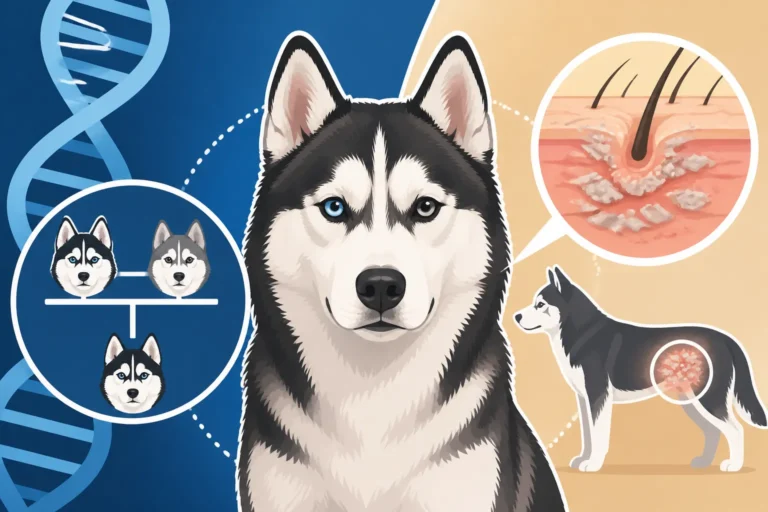
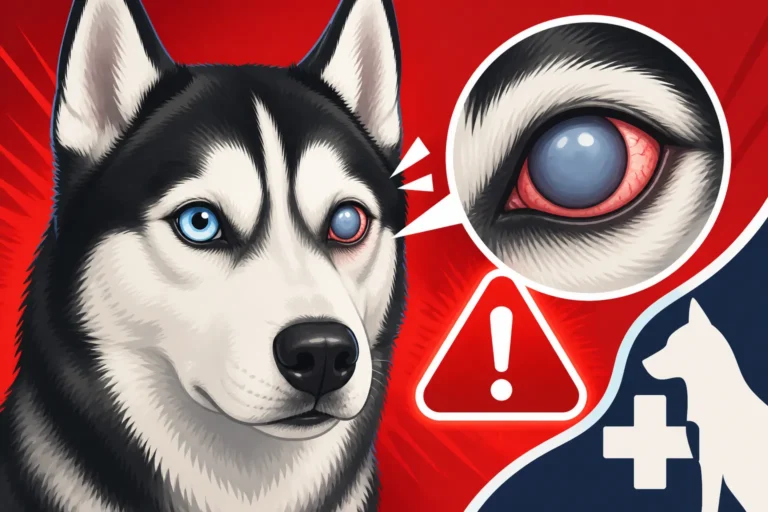
What makes this particularly distressing for Siberian Huskies is their genetic predisposition to what's known as primary glaucoma. Unlike some breeds where glaucoma is almost always a secondary symptom of another issue, Huskies can inherit the structural abnormalities in their eyes that lead to poor fluid drainage. This means that even a perfectly healthy Husky, seemingly out of nowhere, can suddenly develop this devastating condition. It’s a cruel twist, and it means we as owners always need to be vigilant for subtle signs. You might notice your Husky suddenly squinting, or their eye might appear red and painful, sometimes with a cloudy or bluish tint. If you ever see A Red Painful Eye in a Siberian Husky or Siberian Husky Eye Pain and Sudden Squinting, it’s an immediate emergency.
Primary vs. Secondary Glaucoma
Understanding the distinction between primary and secondary glaucoma is crucial for your vet, as it guides the diagnostic and treatment approach.
- Primary Glaucoma: This is the form most commonly associated with Siberian Huskies and is often inherited. It occurs without any identifiable underlying eye disease. The issue is typically within the eye's drainage angle itself, which can be abnormally narrow or malformed, preventing the aqueous humor from exiting properly. Primary glaucoma is almost always bilateral, meaning it will eventually affect both eyes, though one eye usually presents symptoms earlier than the other. This makes proactive monitoring of the unaffected eye incredibly important, even when only one eye is showing signs of trouble. This is why regular screening is emphasized in our breed, tying into the broader topic of Siberian Husky Eye Disease and the Annual Exam.
- Secondary Glaucoma: This type develops as a direct consequence of another eye condition or injury. Common culprits include severe inflammation within the eye (uveitis), advanced cataracts, intraocular tumors, or trauma. For example, if your Husky has Juvenile Cataracts in the Siberian Husky that progress to a certain stage, they could potentially lead to secondary glaucoma. Similarly, a condition like Uveodermatologic Syndrome and the Siberian Husky can cause significant inflammation that may disrupt fluid drainage. Treating secondary glaucoma often involves addressing the underlying cause alongside managing the elevated eye pressure.
Knowing which type your Husky has influences the long-term prognosis and the treatment plan. With primary glaucoma, the focus is often on managing a genetic predisposition, while secondary glaucoma requires a more holistic approach to treat the root issue.
How Intraocular Pressure IOP Is Measured in Your Husky
When you're dealing with a potential eye issue, especially one as serious as glaucoma, getting an accurate measurement of the pressure inside your Husky's eye is the first and most critical step. This measurement, known as tonometry, is how your vet determines if the IOP is within a healthy range or dangerously high.
The Tonometry Process: Gentle but Crucial
The idea of someone touching your Husky's eye, even a vet, might sound intimidating. But I promise you, tonometry is a relatively quick, painless, and gentle procedure. Most Huskies tolerate it very well, often with just a little topical anesthetic applied to the eye surface to numb it. This ensures they don’t blink or react when the instrument briefly touches the cornea.
There are primarily two types of tonometers commonly used in veterinary practices:
- Applanation Tonometers (e.g., Tonopen): This small, handheld device has a tiny probe that gently taps the surface of the cornea a few times. It measures the force required to flatten a small area of the cornea, which correlates to the intraocular pressure. It gives a digital reading almost instantly.
- Rebound Tonometers (e.g., TonoVet): This type works by launching a tiny, lightweight probe at the cornea and measuring its rebound speed. It's often favored because it requires minimal calibration and can be less intimidating for some dogs (and owners!) as the probe is even lighter and often delivers multiple readings very quickly.
During the procedure, your vet or a veterinary technician will gently hold your Husky's head still, usually with one hand supporting the jaw and the other guiding the tonometer. They’ll usually take a few readings from each eye to ensure accuracy and then average them out. The whole process takes only a minute or two per eye. Because stress can sometimes artificially elevate readings, a calm environment and a relaxed Husky are always preferred to get the most accurate results. This is just one of the reasons why routine Why Siberian Huskies Need Their Eyes Checked Yearly is so important—it gets them used to the process before an emergency arises.
Understanding Normal and Abnormal IOP Ranges
Once the readings are taken, the numbers are what really matter. Understanding what's considered "normal" and what signals trouble is key to grasping your Husky's situation.
For most dogs, including Siberian Huskies, the normal intraocular pressure typically ranges between 10 to 25 millimeters of mercury (mmHg). However, this is not a hard and fast rule, and context is everything. What’s considered healthy can sometimes vary slightly based on the tonometer used, the individual dog, and even the time of day.
Here's a general guideline for interpreting those numbers:
| IOP Reading (mmHg) | Interpretation for Siberian Huskies | Action Required |
|---|---|---|
| 10-25 | Normal Range: Suggests healthy fluid balance. | Routine monitoring, especially if there's a family history of glaucoma or other eye concerns. If one eye is consistently at the higher end while the other is lower, further investigation may be warranted. |
| 26-35 | Borderline/Mild Elevation: This is a red flag. | Close monitoring, repeat readings, and often diagnostic tests to determine the cause. Prophylactic (preventative) eye drops might be considered for the "good" eye if primary glaucoma is suspected in the other. |
| 36+ | Significantly Elevated/Glaucoma Indication: This is highly indicative of glaucoma. | Immediate veterinary intervention is crucial. This is an emergency that requires prompt medication to lower pressure and potentially further diagnostics to assess damage. |
| Significant difference between eyes (e.g., >5-8 mmHg) | Strong Indicator of Developing Issue: Even if both eyes are within the "normal" range, a notable difference between the two eyes can signal a problem in the eye with higher pressure. | Urgent veterinary consultation, even if the higher reading is technically still within the normal range. The trend and comparison are often more telling than a single number. |
It's vital to remember that these readings are just one piece of the puzzle. Your vet will also consider other clinical signs such as redness, corneal edema (cloudiness), pupil dilation, and your Husky's pain level. A single high reading doesn't automatically seal a diagnosis, but it does trigger an urgent and thorough investigation, typically with a veterinary ophthalmologist, especially for a breed like the Siberian Husky that has specific genetic predispositions to eye conditions, which are part of The Three Eye Diseases a Siberian Husky Faces.
The Urgency of High IOP and Treatment Options
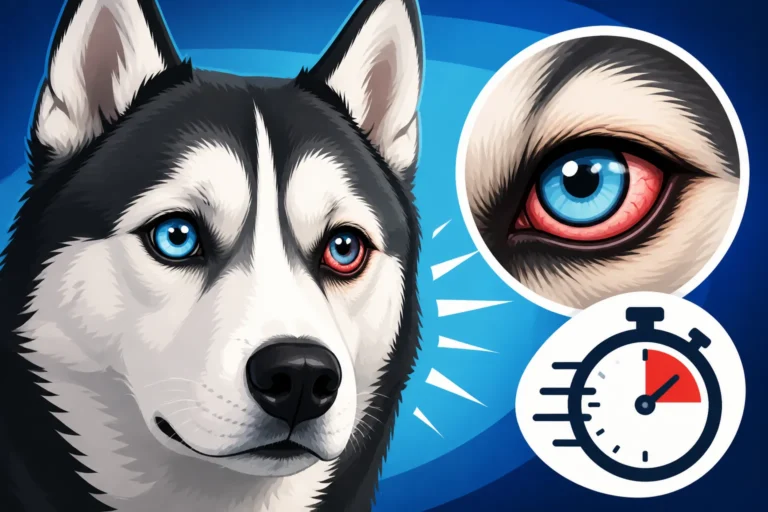
If your Husky's IOP readings come back high, you're likely feeling a knot in your stomach. And for good reason. Glaucoma is not a "wait and see" kind of problem. The clock starts ticking the moment that pressure begins to climb.
Why Every Minute Counts When Pressure is High
The panic you feel when your vet says "emergency" is completely valid. With glaucoma, time truly is vision. Every hour that the intraocular pressure remains elevated, irreparable damage is being done to the delicate cells of the retina and, most critically, to the optic nerve. This nerve is the communication cable between the eye and the brain; once it's damaged, that vision is gone forever. This rapid progression is why a diagnosis of high IOP, especially acute onset, is considered a true Glaucoma as a Siberian Husky Emergency.
Immediate intervention is non-negotiable. Your vet will typically start your Husky on medication right away, often even before you leave the clinic, to begin bringing that pressure down. These medications usually come in the form of eye drops and work in various ways:
- Prostaglandin Analogs (e.g., Latanoprost, Travoprost): These are often the first line of defense. They work by increasing the outflow of aqueous humor from the eye, effectively draining the excess fluid. They can be incredibly potent and fast-acting.
- Carbonic Anhydrase Inhibitors (e.g., Dorzolamide, Brinzolamide): These drops reduce the production of aqueous humor, thus lessening the amount of fluid building up inside the eye.
- Beta-Blockers (e.g., Timolol): Similar to carbonic anhydrase inhibitors, these also work to decrease fluid production.
- Osmotic Diuretics (e.g., Mannitol): In very acute, severe cases, your vet might administer intravenous mannitol to rapidly draw fluid out of the eye and reduce pressure. This is typically done in an emergency setting.
The goal of these medications is two-fold: to preserve vision and to alleviate pain. Glaucoma is not only blinding but also incredibly painful for dogs. Imagine a constant, severe headache behind your eye – that’s what your Husky is experiencing.
Surgical Interventions for Sustained Pressure
While eye drops are crucial for initial management, they are often not a permanent fix, especially for primary glaucoma in breeds like the Siberian Husky. If the pressure cannot be adequately controlled with medication, or if the disease is aggressively progressing, surgical options become necessary.
- Laser Cyclophotocoagulation: This procedure uses a laser to destroy some of the cells in the ciliary body, which are responsible for producing aqueous humor. By reducing fluid production, the laser helps to lower and stabilize intraocular pressure. This is often performed by a veterinary ophthalmologist.
- Gonioimplants (Shunts): These are small, artificial drainage devices (shunts) that are surgically implanted in the eye to create an alternative pathway for the aqueous humor to drain, bypassing the compromised natural drainage system. They act like a tiny plumbing system to relieve pressure.
- Cryosurgery: Similar to laser surgery, cryosurgery uses extreme cold to destroy fluid-producing cells.
- Enucleation (Eye Removal): This is, understandably, the most heartbreaking option for any owner. However, if the eye is completely blind, consistently painful, and unresponsive to medical and surgical efforts to save it, enucleation becomes the most humane choice. It provides permanent pain relief for your Husky, allowing them to live a comfortable life, even with one eye gone. While it's a difficult decision, sometimes it's the kindest one.
The path your Husky's treatment takes will depend on the type of glaucoma, how advanced it is, and how well they respond to initial medications. The overarching aim is always to save vision if possible, but failing that, to ensure your Husky lives pain-free. Early detection and consistent treatment give your Siberian Husky the best chance at either Saving Sight in a Siberian Husky Glaucoma Case or maintaining comfort throughout their life.
Living with Glaucoma: Managing a Husky's Vision and Comfort
A glaucoma diagnosis, even with successful treatment, often means a significant shift in how you and your Siberian Husky navigate daily life. Whether your Husky retains partial vision or loses sight entirely, adaptations at home and consistent ongoing care are paramount for their comfort and well-being.
Adapting Your Home for a Vision-Impaired Husky
If your Siberian Husky has suffered vision loss due to glaucoma, your home will need some adjustments to ensure their safety and confidence. Huskies are incredibly resilient and adaptable, but they rely heavily on familiarity and scent when their vision diminishes.
- Consistency is Key: Avoid rearranging furniture or leaving obstacles in pathways. Your Husky will create a mental map of your home. Any sudden changes can cause anxiety and lead to bumps or falls.
- Clear Pathways: Keep floors clutter-free. Pick up shoes, bags, and anything else that might become a tripping hazard for a dog who can't see them.
- Safety Gates: Block off staircases, swimming pools, or any other areas that pose a danger. This is especially important for our adventurous Huskies who might try to explore despite their vision limitations.
- Leashed Walks: Even in a familiar backyard, a vision-impaired Husky should always be on a leash. Their incredible sense of smell and hearing can still lead them towards interesting scents or sounds, potentially into harm's way.
- Verbal Cues: Start using clear verbal cues for approaching obstacles or stairs (e.g., "step up," "watch out," "slow"). Your Husky will quickly learn to associate these with actions.
- Scent Markers: Some owners use essential oils (diluted and dog-safe, like lavender) on furniture legs or doorways to provide scent markers, helping their dog navigate. Place a small drop on a cotton ball and tape it discreetly.
- Consistent Routines: Huskies thrive on routine, and a vision-impaired Husky will benefit even more from a predictable schedule for feeding, potty breaks, and playtime.
By creating a safe and predictable environment, you empower your Husky to live a full and happy life, even with reduced vision. It's about helping them build confidence in their new way of experiencing the world. This plays directly into the advice on Keeping a Blind Siberian Husky Safely Contained, ensuring their safety inside and out.
Ongoing Care, Monitoring, and Support
Living with glaucoma is a marathon, not a sprint. It requires a lifelong commitment to care, monitoring, and emotional support for both you and your Husky.
- Lifelong Medication: Your Husky will likely be on eye drops for the rest of their life, even if surgery was performed. These drops need to be administered diligently, exactly as prescribed by your vet, often multiple times a day. Missing doses can cause pressure to spike again, leading to further vision loss.
- Regular Vet Visits: Frequent follow-up appointments with your general vet and a veterinary ophthalmologist are crucial. They will monitor the pressure in both eyes, assess any changes in vision, and adjust medications as needed.
- The Financial Burden: Let’s be realistic: managing chronic glaucoma can be expensive. The cost of daily eye drops, regular specialist visits, and potential surgeries can add up quickly. This is where pet insurance can be a genuine lifesaver. Companies like Healthy Paws, for instance, can help cover a significant portion of these ongoing veterinary bills, alleviating some of the financial stress during an already challenging time. Investigating pet insurance early on, especially before any pre-existing conditions develop, is always a wise move for Husky owners.
- Monitoring the Other Eye: Remember that primary glaucoma is almost always bilateral. Even if only one eye is currently affected, the other eye is at high risk of developing the condition. Consistent monitoring and, in some cases, prophylactic treatment for the "good" eye are often part of the long-term management plan. Your vet will guide you on how frequently you should be checking for subtle signs in the unaffected eye.
- Emotional Toll and Support: Dealing with a chronic illness, especially one that affects vision, takes an emotional toll on owners. It’s okay to feel sad, frustrated, or overwhelmed. Seek support from your vet, fellow Husky owners, or online communities. Sharing experiences and getting advice from others who understand can be incredibly comforting. Your Husky relies on you, and taking care of yourself helps you better care for them.
While a glaucoma diagnosis is daunting, with dedication, consistent care, and a loving environment, your Siberian Husky can continue to enjoy a good quality of life. Your commitment to their ongoing health and comfort is the most important treatment of all.
Disclaimer
The information provided in this article is for educational purposes only and is not intended to be a substitute for professional veterinary advice, diagnosis, or treatment. Always seek the advice of your veterinarian or other qualified health provider with any questions you may have regarding a medical condition. Never disregard professional veterinary advice or delay in seeking it because of something you have read in this article.