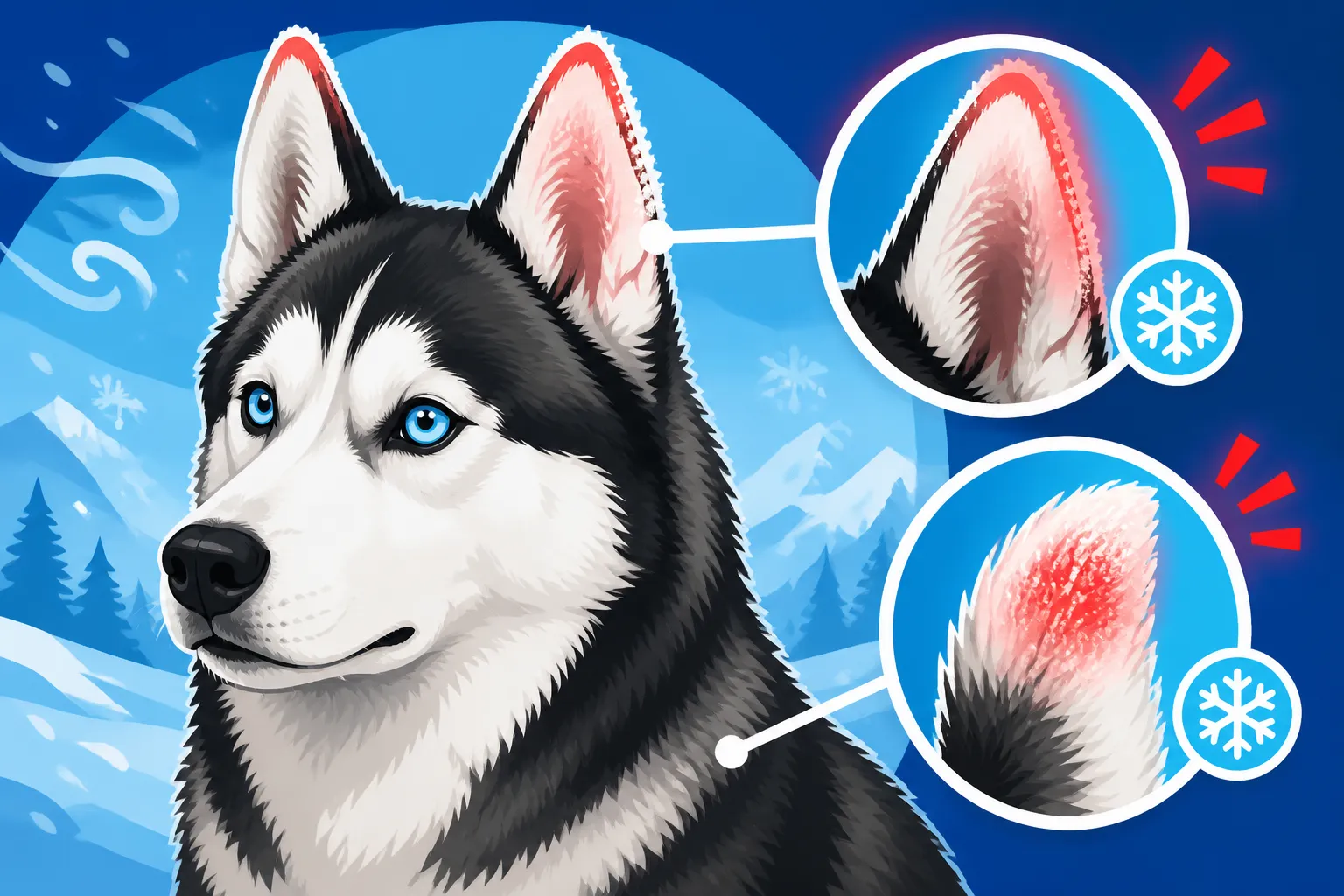
Frostbite on Siberian Husky Ears and Tails
It's a common misconception that because Siberian Huskies hail from the frozen tundras, they're completely immune to winter's bite. While these incredible dogs are certainly built for cold, facing extreme temperatures, especially with wind chill or wet conditions, can still lead to serious issues like frostbite. This guide is here to walk you through understanding, identifying, and preventing frostbite on your Husky's vulnerable ears and tail, ensuring your adventure buddy stays safe and healthy through the colder months.
Understanding Frostbite and Why Huskies Face Risk
You’ve seen your Siberian Husky frolic in what seems like impossibly cold weather, digging tunnels in the snow, or even choosing to nap outside in a blizzard. It’s easy to think they’re invincible against the cold, but that's a dangerous assumption. Frostbite isn't just a human concern; it's a real and painful threat to any animal exposed to severe cold, including our thick-coated Huskies.
What Happens During Frostbite
At its core, frostbite occurs when body tissues literally freeze. When exposed to extreme cold, your Husky’s body, in an attempt to protect vital organs, restricts blood flow to the extremities – the ears, tail, and paws are usually the first to be affected. This is a brilliant survival mechanism, but prolonged constriction means these areas don't receive enough warm blood, causing their temperature to drop drastically. Eventually, ice crystals can form within the cells, damaging them permanently.
The severity of frostbite depends on several factors: how cold it is, the wind chill, how long your Husky was exposed, and if the affected areas were wet. Wet fur loses its insulating properties quickly, making a Husky far more susceptible to cold damage. You might be surprised at Cold Tolerance Limits for a Siberian Husky, but even with their impressive double coat, those thinner-skinned areas like the ear tips and the end of the tail are not as insulated as their main body.
Why Husky Extremities Are Vulnerable
Despite their lineage, a Siberian Husky’s ears, tail, and paw pads are just as susceptible to frostbite as any other breed's.
The ears are thin, with relatively little fur coverage at the very tips, and are directly exposed to the elements. Imagine walking outside with no hat on – that’s essentially what your Husky’s ears are experiencing. The tail, especially the tip, also has less dense fur compared to the rest of the body. When a Husky is active, running and wagging their tail in the snow, it's constantly exposed to cold air and can get wet easily. If your Husky spends a significant amount of time outdoors, particularly during deep winter, understanding Siberian Husky Cold Weather Care and Its Limits is absolutely essential. Don't let their hardy appearance fool you into thinking they are immune to the dangers of the elements.
Recognizing the Signs of Frostbite on Ears and Tails
Spotting frostbite early is absolutely crucial for minimizing damage. The challenge with Huskies is their thick fur can hide some of the initial signs, and their stoic nature might mean they don’t show obvious pain until the problem is quite advanced. That's why diligent checks after any prolonged cold exposure are so important.
Early Warning Signs: Frostnip
The mildest form of cold injury is often called frostnip. This is where the superficial tissues are affected, but without permanent damage. On your Husky’s ears, you might notice the tips becoming pale or grayish, appearing waxy or unusually hard to the touch. The same goes for the tip of the tail. Initially, your dog might not show much discomfort, but as the affected area rewarms, it can become painful, red, and swollen. This stage means you've caught it early, which is fantastic, but it's a clear warning that conditions were too harsh, and your Husky needs closer monitoring in the cold.
Progressing to Superficial and Deep Frostbite
If exposure continues, frostnip can quickly escalate. Superficial frostbite involves freezing of the skin and underlying tissues, but not the deep structures. The affected areas on the ears or tail will feel cold, firm, and perhaps numb. As the tissue rewarms, blistering can occur, similar to a burn, and the skin might turn dark or purple.
Deep frostbite is the most severe and damaging form. Here, the tissues are frozen solid, and there’s usually a complete loss of sensation. The skin will appear white, waxy, or bluish, and feel very cold and hard. Critically, as the area warms, it often turns black and can remain cold for a prolonged period. This indicates severe tissue damage and necrosis. In these serious cases, the tissue will eventually die and fall off, leading to permanent disfigurement or loss of parts of the ear or tail. This is when your Husky really needs immediate veterinary attention.
Knowing The Temperature a Siberian Husky Starts Struggling At can help prevent these scenarios entirely. Always be mindful of the conditions and your dog's behavior.
A Quick Comparison of Frostbite Stages
| Symptom / Stage | Frostnip | Superficial Frostbite | Deep Frostbite |
|---|---|---|---|
| Appearance | Pale, waxy, slightly firm | Waxy, firm, sometimes bluish, swelling, blisters | White, blue-gray, hard, cold, numb, eventually black |
| Touch | Cold, firm, pliable underneath | Hard, rubbery, cold | Rock hard, cold, no sensation |
| Sensation | Painful upon rewarming | Stinging, burning, then numb | Complete numbness |
| Rewarming | Redness, swelling, mild pain | Blistering, significant swelling, dark skin | Tissue turns black, mummification, tissue loss |
| Outcome | Full recovery expected | Potential for some scarring, infection | Severe tissue damage, necrosis, amputation likely |
Always err on the side of caution. If you suspect any level of frostbite, it’s best to contact your veterinarian immediately.
First Aid and Veterinary Care for Frostbite
Discovering your Siberian Husky has frostbite can be incredibly alarming. Your immediate, calm actions are crucial, but remember that veterinary intervention is almost always necessary, especially for anything beyond very mild frostnip.
Immediate First Aid at Home
The first thing to do is get your Husky out of the cold environment and into a warm, dry space. Do NOT rub the affected areas, as this can cause further tissue damage. Also, avoid using direct dry heat sources like hair dryers or heating pads, as these can easily burn skin that has lost sensation.
The goal is gentle and gradual rewarming. Wrap the affected ears or tail loosely in a warm, dry towel, or use lukewarm (not hot!) water compresses. A great method is to immerse the affected area (if possible, such as a paw or tail tip) in lukewarm water, around 100-104°F (38-40°C), for about 20-30 minutes. If you’re dealing with ears, gently apply warm, moist cloths. Rewarming will likely be painful as sensation returns, so be prepared to comfort your Husky.
Once the areas are rewarmed, gently pat them dry and keep your Husky warm and comfortable. Prevent them from licking or chewing at the affected areas, as this can introduce infection. An Elizabethan collar (cone) might be necessary.
When to Seek Veterinary Care
Frankly, any suspected frostbite beyond the very mildest frostnip warrants a trip to the vet. This isn't something to "wait and see" with. The damage from frostbite can be progressive and severe. Even what looks like mild frostnip can sometimes mask deeper issues.
Your veterinarian will be able to properly assess the extent of the damage. They might prescribe pain medication to manage the discomfort of rewarming and prevent your dog from self-mutilating. Antibiotics are often necessary to prevent or treat secondary infections, which are very common with frostbite injuries as the compromised tissue becomes an easy target for bacteria. In severe cases, especially deep frostbite where tissue has died, surgery might be required to remove necrotic tissue or even amputate part of an ear or tail to prevent the spread of infection. Dealing with frostbite can be emotionally draining and financially challenging, especially when emergency vet visits are involved. Having robust pet insurance, like a plan from Healthy Paws, can make a significant difference in managing these unexpected costs.
Remember to review your pet insurance policy, such as those offered by Healthy Paws, to understand what is covered regarding emergency treatments and specialist consultations for frostbite or other cold-related injuries. Early intervention can prevent more severe complications and improve your Husky's long-term outcome. Even minor frostbite can lead to secondary infections, which will also require veterinary attention and medication. This is where pet insurance, like policies from Healthy Paws, can provide crucial support.
Prevention is Key: Protecting Your Husky from Frostbite
The best treatment for frostbite is to prevent it from happening in the first place. Siberian Huskies might be born for the cold, but their limits are real, and responsible ownership means understanding those boundaries.
Limiting Exposure to Harsh Conditions
This is the most straightforward and effective prevention method. On extremely cold days, especially when factoring in wind chill or if it’s wet snow/freezing rain, outdoor time should be severely limited. Short, supervised potty breaks are fine, but prolonged play or runs should be postponed until conditions improve. Don't assume that because your Husky wants to stay out, they should.
Always check the weather forecast for actual temperatures, wind chill, and precipitation. Consider the relative humidity too; damp cold can penetrate fur much faster than dry cold. If you live in an area with brutal winters, even a few hours outside can be too much when temperatures dip significantly below freezing. Think about the overall Siberian Husky Lifespan and What Shortens It – preventable injuries like severe frostbite can certainly have long-term impacts.
Providing Adequate Shelter and Warmth
If your Siberian Husky spends any amount of time in a yard during cold weather, they must have access to adequate shelter. This means more than just a roof. A proper dog house should be insulated, slightly elevated off the ground to prevent cold seeping up, and have a flap over the entrance to keep out wind and snow. Adding straw or cedar shavings inside provides extra insulation. For some, investing in Insulated Houses for an Outdoor Siberian Husky is a game-changer.
However, even with the best dog house, it’s generally not advisable to leave your Husky outside for extended periods in freezing temperatures, particularly overnight. Their double coat is amazing, but it has limits. Consider their age and overall health too; Caring for a Siberian Husky Past Ten often means a lower tolerance for extreme weather.
Protective Gear and Nutritional Support
While Siberian Huskies don't typically need sweaters for their bodies, their paws can benefit from protection. Booties for a Siberian Husky in Winter can shield paw pads from ice, snow, sharp objects, and chemical de-icers which can cause irritation or burns. If your Husky tolerates them, booties are a fantastic preventative measure, especially for longer walks or runs. Always make sure they fit properly and don’t restrict circulation. You should also remember to be diligent about Checking Siberian Husky Pads After Trail Runs to look for any signs of cracking or injury.
A balanced, high-quality diet is also important. A Husky with proper nutrition will have a healthier coat and better overall health, which helps their body regulate temperature more effectively. While food won't prevent frostbite on its own, a well-nourished dog is better equipped to handle cold stress.
Finally, just like humans, a Husky needs to stay hydrated. Make sure they always have access to fresh, unfrozen water, even outdoors. Proactive care can prevent many issues, but accidents happen. Knowing you have a plan with providers like Healthy Paws can offer peace of mind when it comes to covering unexpected vet bills. By being vigilant and taking these preventative steps, you can help ensure your Siberian Husky enjoys the winter wonderland safely, without the painful threat of frostbite.
Disclaimer
The information provided in this article is for general informational purposes only and is not a substitute for professional veterinary advice. Always consult with a qualified veterinarian for any health concerns or before making any decisions related to your Siberian Husky's health or medical care.