Canicross and Bikejor Kit for a Siberian Husky
For those of us with Siberian Huskies, the urge to channel their incredible energy and innate desire to run is strong. But if you’ve ever tried to run with your Husky just using a regular leash and collar, you know it quickly devolves into a chaotic tug-of-war, leaving both of you frustrated and potentially sore. This guide dives deep into the specific Canicross and bikejoring kit you need to safely and effectively engage your Husky in these exciting pulling sports, ensuring a smooth and enjoyable experience for everyone involved.
Understanding Why Specialized Gear Matters for Canicross and Bikejoring
It’s easy to look at a regular leash and harness and think it’ll do the trick for running with your Husky. After all, they’re just pulling, right? But the reality is far more complex, and using the wrong equipment can lead to discomfort, injury, and a completely unenjoyable experience for both you and your canine athlete. These aren't just walks; they're high-intensity activities that tap into your Husky's primal instincts.
The Husky's Natural Pulling Instinct and Its Impact
Siberian Huskies were quite literally bred to pull. Their ancestors, developed by the Chukchi people, were efficient, tireless sled dogs. This isn't just a learned behavior; it's deeply ingrained in their genetic makeup. When a Husky feels resistance, their instinct isn't to stop or walk politely; it's to lean into it and pull harder. This drive is magnificent to witness in the right context, but in the wrong gear, it becomes problematic.
Imagine trying to run a marathon in dress shoes – it just doesn’t work. Similarly, a Husky trying to pull effectively in a traditional collar puts immense strain on their throat and neck. Even a standard walking harness, designed to discourage pulling by distributing pressure across the chest, isn't built for sustained, powerful forward momentum. It can restrict shoulder movement, chafe, and redistribute pressure in ways that are uncomfortable or even harmful during a sprint or a long pull. This is why proper specialized gear is not just a recommendation but a necessity when you're looking to start Teaching a Siberian Husky to Pull in Harness.
Without the correct harness, your Husky could develop soft tissue injuries, neck problems, or even tracheal damage over time. The wrong equipment can also lead to an inefficient pulling gait, wasting their energy and making the activity less enjoyable for them. A dog that is uncomfortable will be less enthusiastic, and ultimately, less willing to participate.
Safety for Both Dog and Human in High-Speed Activities
Canicross and bikejoring are, by their very nature, high-speed sports. You're moving faster than a leisurely jog, often over varied terrain, and your Husky is providing a significant amount of the power. This dynamic creates unique safety considerations that demand specialized equipment designed to manage force, maintain control, and prevent accidents.
A standard leash held in your hand offers very little leverage or shock absorption when your 50-pound Husky suddenly surges forward or veers to chase a squirrel. The sudden jerk can lead to dropped leashes, pulled muscles in your arm or shoulder, or a nasty fall. For the dog, the sudden stop or redirection caused by a hand-held leash can cause whiplash or joint strain.
Specialized gear, however, is engineered with these forces in mind. Bungee lines absorb shock, reducing harsh jerks on both ends. Hands-free belts for Canicross keep your center of gravity stable, and bike attachments for bikejoring prevent tangles and provide a safer connection point to your bike. These pieces of kit are designed to allow fluid movement and distributed force, which is crucial when you're moving at speed and dealing with the powerful, instinctual pull of a Siberian Husky.
Essential Gear for Canicross with Your Siberian Husky
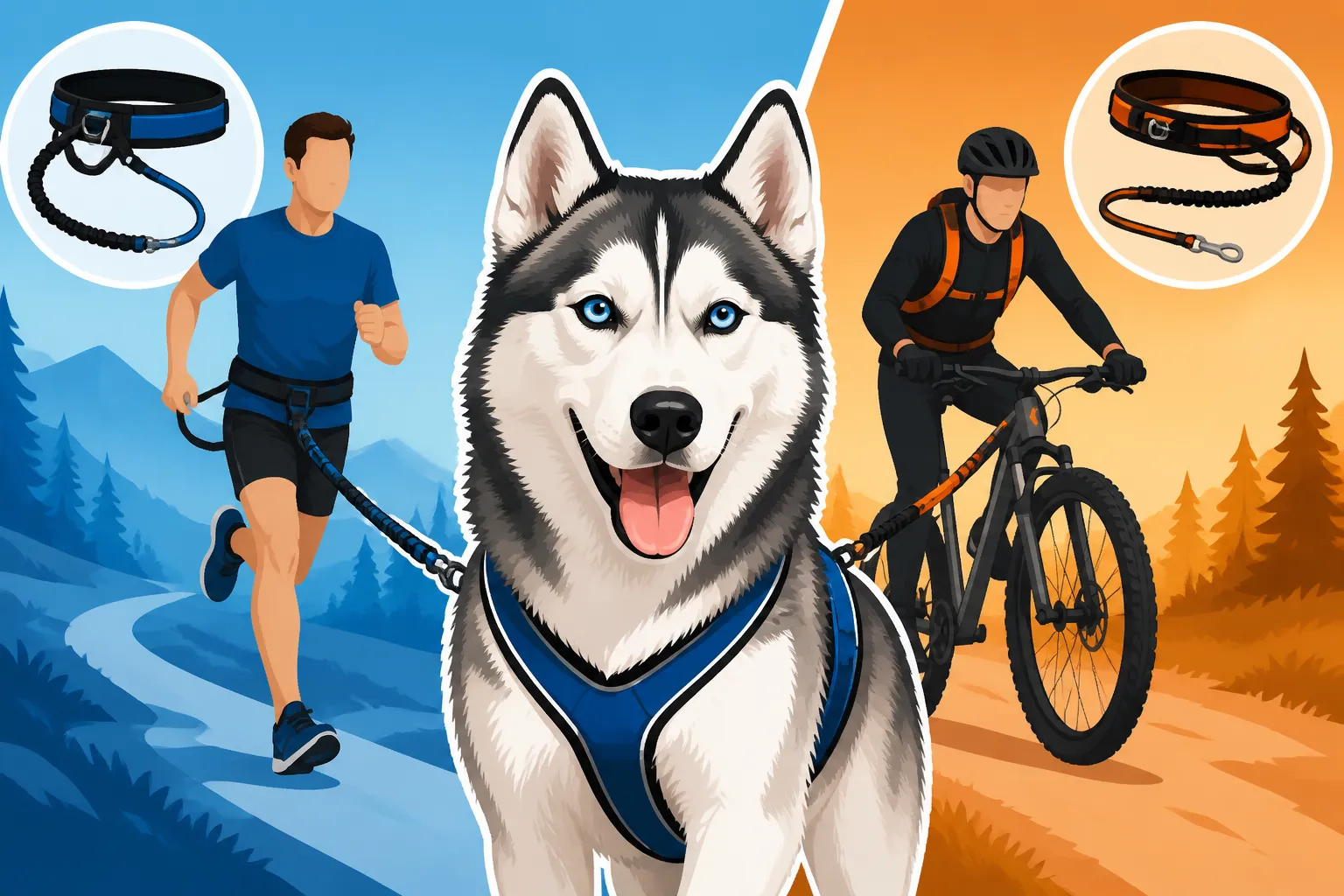
Canicross is essentially cross-country running with your dog pulling you along, connected by a specialized belt and bungee line. It's a fantastic way to bond with your Husky, give them a job, and get an incredible workout yourself. But to do it right, you need the right tools.
The Canicross Harness: Fit, Function, and Features
The cornerstone of your Canicross setup is the harness, and it's worlds apart from what you'd use for a casual walk around the block. A proper Canicross harness, often called a pulling harness, is designed to allow your Husky to pull with maximum comfort and efficiency, distributing the load evenly across their strongest pulling points without restricting their natural gait.
Look for a harness with a "Y-front" design that allows for full shoulder movement. This is crucial because a Husky's powerful front legs drive their pull, and any restriction around the shoulders or chest can lead to injury and reduce their power output. The harness should be well-padded, especially across the chest, neck, and sides, to prevent chafing during sustained effort. Brands like Non-Stop Dogwear, Manmat, and Hurtta are well-regarded in the Canicross community for their ergonomic designs and durability.
A key feature is the length of the harness. Unlike walking harnesses that end abruptly behind the front legs, a pulling harness extends along the dog's back, often ending near or past the base of the tail. This length ensures that the pulling force is distributed over a larger area of the dog’s body, preventing pressure points and allowing the pull to originate from the strongest part of their back and hips, not just their shoulders. Getting the fit right is paramount; a harness that's too loose can shift and rub, while one that's too tight can restrict movement and breathing. It’s an investment, but a well-fitting, high-quality harness is the single most important piece of equipment for your Husky's safety and comfort in this sport.
The Canicross Belt: Distributing the Pull for Human Comfort
While your Husky has the raw power, you need a way to manage that power without sacrificing your own comfort or risking injury. That's where the Canicross belt comes in. This isn't just a fanny pack; it's a specialized piece of equipment designed to distribute the pulling force from your dog across your hips and glutes, rather than concentrating it on your lower back or arms.
A good Canicross belt features a wide, padded back panel that wraps comfortably around your waist and hips. Many models also include leg loops, which are incredibly important. These loops prevent the belt from riding up your back when your Husky pulls hard or when you're running downhill, keeping the pulling force consistently low and stable. This lower center of gravity improves your balance and reduces strain on your spine.
The belt will have one or more attachment points, typically a large ring or a carabiner clip, where you connect the bungee line. Some belts have a fixed attachment, while others feature a sliding ring, which allows the line to move from side to side as your dog shifts direction, providing a more fluid pull and reducing lateral jerking. Think of it as an ergonomic extension of your body, allowing you to run freely while your Husky does what they love best.
The Bungee Line: Shock Absorption for Smooth Runs
The connection between your Canicross belt and your Husky's harness is the bungee line. This isn't just a fancy leash; it's a critical component specifically designed to absorb the shocks and jolts that occur when a powerful dog like a Siberian Husky pulls. Without a bungee section, every surge, every change in pace, would send a harsh jolt through both you and your dog, leading to discomfort and potential injury.
The elasticized section of the line acts like a shock absorber, cushioning the transitions and allowing for a smoother, more continuous pull. This smooth transmission of force is beneficial for your Husky's joints and spine, and for your own back and shoulders. Canicross lines come in various lengths, typically ranging from 6 to 10 feet when extended, with shorter lines often preferred for tighter, technical trails and longer ones for open paths where your Husky has more room to range.
Safety features are also paramount here. A good bungee line will have high-quality, durable hardware, often with quick-release clips on the human end. This quick-release mechanism is a non-negotiable safety feature, allowing you to instantly detach from your dog in an emergency, such as a sudden obstacle, a tangled line, or an unexpected encounter with another dog or person. Always choose a line with robust construction that can withstand the powerful Canicross and Bikejoring With a Siberian Husky demands.
Diving into Bikejoring Equipment for Your Siberian Husky
Bikejoring takes the pulling concept up a notch, literally, by having your Husky pull you while you ride a bicycle. This sport allows for faster speeds and covers more ground, providing an even more exhilarating workout. As with Canicross, specialized gear is not just recommended, but essential for safety and performance.
The Bikejoring Attachment: Keeping the Line Clear and Safe
When you’re moving at speed on a bike with your Husky pulling in front, the last thing you want is for the towline to get caught in your front wheel. This is a recipe for a nasty accident, potentially injuring both you and your dog. The bikejoring attachment, often called a "bike antenna" or "bikejor arm," is a simple yet indispensable piece of safety equipment that prevents this very scenario.
This attachment is essentially a flexible, usually spring-loaded, arm that extends from the front of your bike, keeping the towline clear of the wheel and front fork. It mounts securely to your bike's frame, typically around the head tube or handlebars. The flexibility of the arm allows for some give and movement as your Husky changes direction or speed, preventing rigid tugs on the bike.
Different models offer various attachment methods, some quick-release for easy removal, others more permanent. When selecting one, ensure it’s robust enough to withstand the forces exerted by a strong pulling dog. Brands like Non-Stop Dogwear, Dog Powered Scooter, and Manmat produce reliable bikejoring arms. This piece of kit is non-negotiable for safe bikejoring, turning a potentially hazardous situation into a streamlined, enjoyable activity.
The Dog's Harness: Similarities and Differences from Canicross
For bikejoring, the type of harness your Siberian Husky needs is largely the same as for Canicross: a properly fitting, full-bodied pulling harness. The principles of load distribution, unhindered shoulder movement, and comfort remain paramount, perhaps even more so given the higher speeds involved in bikejoring.
The forces exerted during bikejoring can be greater and more sustained than in Canicross, so the harness must be exceptionally durable with robust stitching and high-quality materials. It needs to stand up to the constant, powerful pull of your Husky without chafing or digging in. A poorly fitting harness can not only cause discomfort and injury but can also lead to an inefficient gait, reducing your Husky's power output and making the activity less fun for them.
Always double-check the connection points on the harness itself to ensure they are secure and reinforced, as they will bear the brunt of the pulling force. Just as in Canicross, it's about channeling their natural drive into a safe and productive outlet, and the harness is the most direct interface for that power. Investing in a top-tier harness will protect your dog and maximize their performance, allowing them to truly shine in The Cues a Siberian Husky Needs in Harness as they zoom ahead.
The Bike Itself: Considerations for Mushing
While not strictly "kit for a Siberian Husky," the bicycle you choose for bikejoring is absolutely critical to the experience and safety of the sport. You're not just riding; you're essentially being pulled by a powerful animal, so your bike needs to be up to the task. Using your grandmother's cruiser bike is definitely not an option here!
Most experienced bikejorers opt for a mountain bike or a fat bike. Mountain bikes offer robust frames, excellent suspension systems to absorb bumps and roots on trails, and powerful disc brakes—all essential for navigating varied terrain and controlling your speed when your Husky is pulling hard. You’ll want reliable stopping power, especially if your Husky has an intense prey drive and might lunge after wildlife, requiring quick deceleration.
Fat bikes, with their oversized tires, offer incredible stability and traction, making them excellent for sand, snow, or extremely rough trails. They provide a smoother ride and better control in challenging conditions, which can be particularly advantageous when your Husky is at full throttle. Regardless of the type, ensure your bike is in excellent working order, especially the brakes. You need to be able to safely stop both yourself and your canine partner. A regular check-up on your bike's components, much like a regular vet check for your Husky, ensures that everything is running smoothly and safely. For high-energy Huskies, ensuring they're fueled with appropriate nutrition, like that offered by Ollie, can significantly contribute to their stamina and recovery after intense sessions on any bike setup.
Additional Safety and Comfort Accessories
Beyond the core Canicross and bikejoring gear, there are several other accessories that can significantly enhance the safety, comfort, and longevity of your pulling adventures with your Siberian Husky. These items address common challenges and help prepare you for various conditions.
Paw Protection: Booties for All Terrains
Siberian Huskies have tough paws, no doubt about it. But even the toughest pads can be vulnerable to extreme conditions or prolonged activity on harsh surfaces. When you're running or biking on asphalt, sharp gravel, ice, or abrasive trails, paw protection becomes absolutely crucial to prevent injury.
Dog booties come in various materials and designs, tailored for different purposes. Some are thin and flexible, offering protection against hot pavement or minor abrasions, while others are robust and insulated, designed for deep snow, ice, or extremely rocky terrain. For the latter, features like waterproof materials and grippy soles are essential. Think of them as high-performance athletic shoes for your dog. Brands like Ruffwear and Neopaws are popular for their durable and well-fitting options.
Introducing booties to your Husky might require some patience and positive reinforcement, as many dogs initially find them strange. Start with short periods around the house and gradually increase wear time during walks before hitting the trails. Just as you protect your own feet, protecting your Husky's paws is vital for their long-term health and ability to participate in these activities. Remember, addressing Siberian Husky Paw Care Through Snow and Salt is just as important as protecting them from summer's scorching pavement.
Reflective Gear and Lights: Visibility for Early Morning/Late Evening Runs
Many Husky owners find that the coolest parts of the day—early morning or late evening—are the best times for intense exercise, especially when considering Running a Siberian Husky in Summer Heat. However, these times often come with low light conditions, making visibility a primary safety concern. Reflective gear and lights for both you and your Husky are non-negotiable for anyone venturing out during dawn, dusk, or night.
For your Husky, reflective harnesses, collars, and even full-body vests are available. Many pulling harnesses now incorporate reflective elements as a standard feature. Additionally, clip-on LED lights that attach to their collar or harness provide active illumination, making them visible from a greater distance. Flashing lights can be particularly effective at catching the attention of drivers or other trail users.
For yourself, wear reflective clothing, a headlamp, and perhaps a clip-on light for your Canicross belt or bike. The more visible you both are, the safer your outing will be. Always assume that others might not see you, especially at high speeds, and equip yourselves accordingly. This proactive approach significantly reduces the risk of accidents and ensures peace of mind during those essential low-light training sessions.
Hydration Solutions: Water for the Long Haul
Intense physical activity, especially for an athletic dog like a Siberian Husky, demands proper hydration. A Husky working hard in Canicross or bikejoring will burn a lot of calories and lose a significant amount of water. Waiting until you get home to offer water is simply not enough; you need to provide hydration on the go.
Carrying water for both of you is essential. For yourself, a hydration pack or a running belt with water bottles is ideal. For your Husky, collapsible travel bowls are incredibly convenient. Simply unfold, fill, and offer water during planned breaks. Some specialized Canicross belts or running packs even have pockets specifically designed to hold a water bottle for your dog.
It's not just about carrying water, but also about knowing when and how to offer it. Plan regular, short water breaks, especially on longer runs or in warmer weather. Watch for signs of dehydration or overheating in your Husky, such as excessive panting, lethargy, or reluctance to continue. Providing water frequently and proactively is key to preventing heatstroke and maintaining their stamina and health, allowing them to give their best performance every time they hit the trail, which is crucial for their overall Siberian Husky Weight and Joint Health.
Choosing and Maintaining Your Siberian Husky's Gear
Investing in specialized Canicross and bikejoring gear is a significant commitment, both financially and in terms of your Husky's well-being. Knowing how to choose the right items and properly maintain them will ensure their longevity, maximize performance, and most importantly, keep your Husky safe and comfortable for years of adventures.
Sizing and Fitting: Avoiding Injury and Maximizing Performance
The single most critical aspect of any pulling gear for your Siberian Husky is fit. A perfectly designed harness will be useless, or even harmful, if it doesn't fit your individual dog correctly. Every Husky's build is slightly different, even within the breed standard, so generic sizing charts are only a starting point.
To measure for a pulling harness, you’ll typically need to take several measurements: neck circumference (at the base, like a collar), chest girth (around the widest part of the rib cage), and the length of their back (from the base of the neck to the base of the tail). Always consult the manufacturer's specific sizing guide for the harness you intend to buy, as measurements can vary. When trying on a harness, ensure it:
- Allows full shoulder movement: There should be no restriction or rubbing around their shoulders or armpits.
- Distributes pressure evenly: When your Husky leans into the pull, the pressure should be spread broadly across their chest and back, not concentrated on one spot.
- Doesn't impede breathing: The neck opening should be snug but not tight, allowing full range of motion for their head and neck without pressing on their throat.
- Sits correctly along the back: The back strap should extend far enough to distribute the load effectively, without riding up or slipping.
It's always a good idea to test a new harness on a short, easy run before committing to a long session. Look for any signs of rubbing, irritation, or an altered gait. A proper fit not only prevents chafing and injury but also empowers your Husky to pull more efficiently and comfortably, truly enjoying their work in harness. This attention to detail contributes directly to their long-term health, helping to prevent issues like Cruciate Tears in Working Siberian Huskies.
| Gear Type | Key Features | Sizing Considerations | Maintenance Tips |
|---|---|---|---|
| Canicross Harness | Y-front, padded, long-bodied, durable webbing | Neck, chest girth, back length. Test for shoulder mobility. | Rinse after muddy runs, air dry. Check for frayed stitching. |
| Canicross Belt | Wide padded back, leg loops, hip-level attachment | Waist/hip circumference. Ensure comfortable and doesn't ride up. | Wipe clean, air dry. Check leg loop integrity. |
| Bungee Line | Shock-absorbing elastic, durable clips, quick-release (human end) | Length for terrain (6-10 ft). Test quick-release function. | Rinse off dirt/mud. Check bungee for wear and clips for rust. |
| Bikejoring Arm | Flexible, clear-line design, secure bike mount | Fits bike frame/handlebars securely without obstruction. | Wipe clean, check mounting hardware tightness. |
| Booties | Durable material, grippy sole, secure fastening | Paw width and length. Test for snug but comfortable fit. | Rinse, air dry. Check for holes or worn soles. |
| Reflective Gear | High visibility fabric, LED lights | Fits over harness/coat without restricting movement. | Wipe clean, replace batteries for lights. |
Durability and Materials: Investing in Long-Lasting Equipment
Siberian Huskies are powerful dogs, and any equipment used for pulling sports needs to be able to withstand significant force and regular use. This isn't the place to cut corners on quality. Investing in durable, well-made gear will not only last longer but also offer superior safety and performance. When evaluating Harness Sport Gear a Siberian Husky Owner Buys, look for certain characteristics:
- High-Quality Webbing: The straps and main body of the harness should be made from strong, robust nylon or similar synthetic webbing that can resist tearing and abrasion. Double or triple stitching in stress areas is a good indicator of quality.
- Robust Hardware: Clips, buckles, and rings should be made from strong metal (e.g., stainless steel, aluminum alloys) or heavy-duty, cold-weather-resistant plastics. Cheap plastic buckles can become brittle in cold weather or snap under sudden tension.
- Padding: Look for dense, breathable padding, often made from closed-cell foam or fleece, which won't absorb excessive water and will dry quickly. It should be securely sewn in place and not shift or bunch up.
- Weather Resistance: The materials should be able to withstand various weather conditions—rain, snow, mud, and sun—without degrading quickly. Many quality products are designed to shed water and dry efficiently.
While high-quality gear might seem like a larger upfront expense, it will often outlast cheaper alternatives many times over, saving you money in the long run. More importantly, it provides a much higher degree of safety and comfort for your Husky, reducing the risk of equipment failure during a high-speed activity. You wouldn't trust a cheap parachute, so don't trust cheap gear when your Husky's well-being is on the line. Ensuring you have proper gear can also help reduce unexpected vet bills, a point that Healthy Paws pet insurance policyholders often appreciate.
Regular Inspection and Cleaning: Extending the Life of Your Kit
Even the most durable gear won't last forever without proper care and maintenance. Regular inspection and cleaning are crucial for extending the lifespan of your Canicross and bikejoring kit, ensuring it remains safe and effective for every adventure with your Siberian Husky.
After every run:
- Shake out debris: Remove any dirt, mud, leaves, or burrs that may have collected on the harness or line.
- Wipe down: Use a damp cloth to wipe off surface grime. For muddy equipment, a quick rinse under a hose is often sufficient.
- Air dry: Always allow equipment to air dry completely before storing to prevent mildew and odors, which can also degrade materials over time. Never put it in a dryer, as high heat can damage webbing and padding.
Regular, deeper cleaning (as needed, perhaps weekly or bi-weekly depending on use):
- Hand wash: Most harnesses and lines can be hand washed in a tub or large sink with mild soap (like dish soap or a pet-safe detergent) and warm water. Pay extra attention to areas that come into direct contact with your Husky’s fur and skin.
- Check hardware: Inspect all buckles, clips, and rings for signs of rust, cracks, or damage. Ensure quick-release mechanisms are functioning smoothly.
- Inspect webbing and stitching: Look for any fraying, tears, or loose stitches on the webbing, especially in high-stress areas like where the line attaches to the harness or belt. Even small areas of wear can quickly become larger problems under pressure.
- Examine bungee elasticity: Over time, the bungee section of the line can lose some of its elasticity. If it feels less "springy" or stretched out, it might be time for a replacement.
By being proactive with maintenance, you can spot potential issues before they become safety hazards, ensuring that your Siberian Husky Lifespan and What Shortens It is spent on many happy, safe runs. Properly maintained gear also smells better and feels more comfortable for both you and your Husky, making every outing a pleasure. This diligent care allows you to continually enjoy these rewarding activities with your energetic companion, keeping them active and healthy, with the right energy support from high-quality food available on Chewy.
Disclaimer
The information provided in this article is for general informational purposes only and does not constitute professional veterinary advice. Always consult with a qualified veterinarian or certified canine physical therapist for any health concerns or before starting any new exercise regimen for your Siberian Husky, especially if they have pre-existing conditions. The author and publisher are not responsible for any injuries or damages that may result from the use of this information.