Raising a Siberian Husky Puppy Beside a Cat
Siberian Husky puppy and cat cohabitation requires managing strong prey drives and using thoughtful introductions for safety.
Work with the temperament you have.
House-training and crate work, recall, leash manners, separation anxiety, and the behaviors this breed is wired for.

Siberian Husky puppy and cat cohabitation requires managing strong prey drives and using thoughtful introductions for safety.

Siberian Husky shutdowns occur when sensitive dogs feel overwhelmed, displaying subtle stress cues instead of responding to traditional force training methods.

Siberian Husky shock collar use involves breed temperament analysis, high prey drive traits, and humane training alternatives.
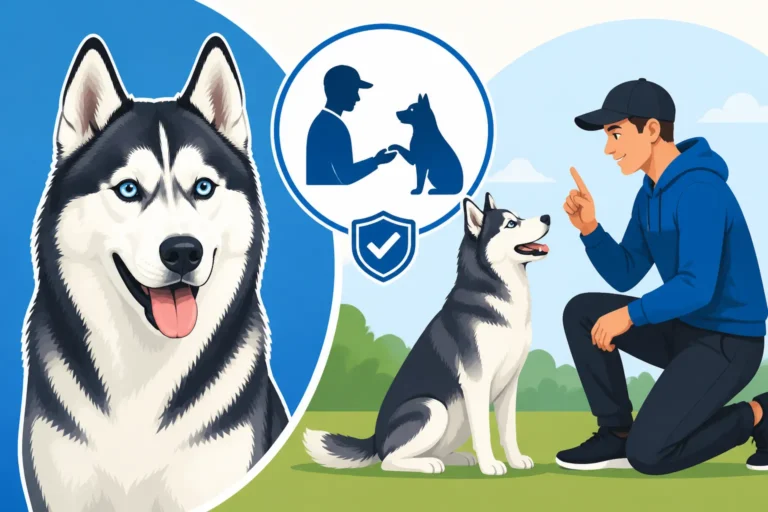
Finding a dog trainer experienced with Siberian Huskies helps owners navigate independent traits and manage escape behaviors.

Siberian Husky training requires understanding their independent mindset and using reward-based strategies to maintain engagement.
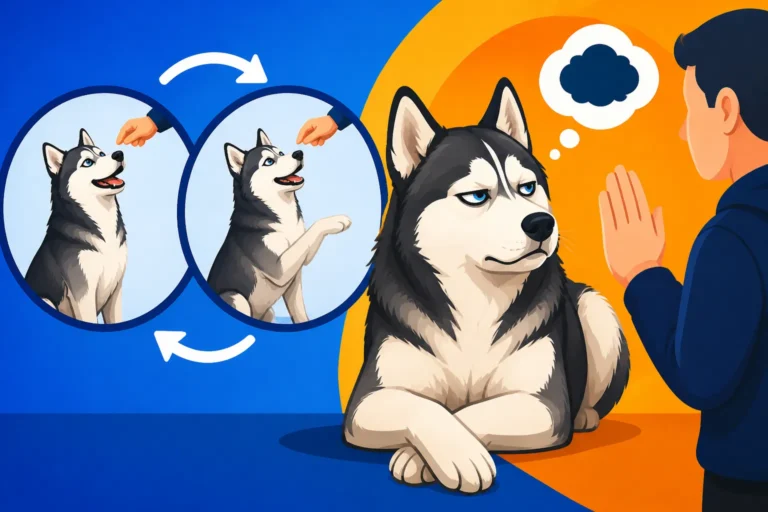
Siberian Huskies repeat a cue twice and then quit because independent working dogs analyze costs, benefits, and rewards.

Siberian Huskies need tangible benefits instead of praise alone because centuries of independent work shaped their unique motivation.

High value meaty treats and strong savory aromas motivate independent Siberian Huskies during reward based training sessions.

Clicker training for Siberian Huskies uses positive reinforcement and clear signals to improve communication and build trust.

Siberian Husky independence and intelligence explain why these sled dogs often appear stubborn during training sessions.