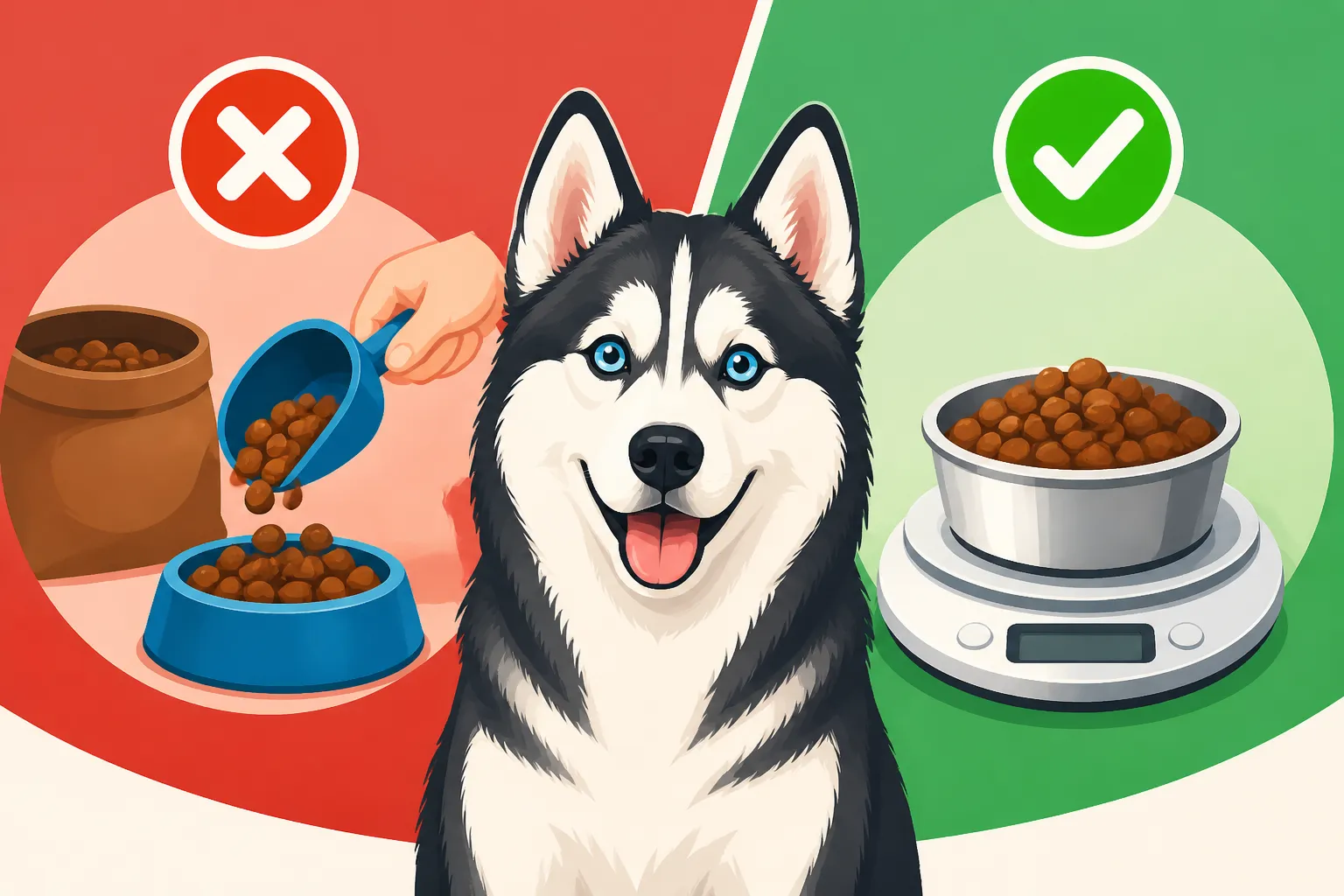
Weighing a Siberian Husky’s Ration Instead of Scooping
It’s a scenario many Siberian Husky owners know all too well: you’re standing in the kitchen, dog food bag open, and you reach for the trusty scoop. A quick fill, a satisfying clatter into the bowl, and you feel like you’ve done your duty. But what if that seemingly innocent scoop is actually making it harder to manage your Siberian Husky's weight and overall health? This guide is going to dig deep into why ditching the scoop for a digital scale can be a game-changer for your furry companion, ensuring they get exactly what they need, every single time.
The Problem with Scooping for Siberian Huskies
It feels convenient, doesn't it? Just dip the scoop, fill it, and consider dinner served. But for a breed like the Siberian Husky, convenience often comes at the cost of precision, and precision is paramount when it comes to their unique nutritional needs. Scooping can lead to wildly inconsistent meal sizes, and over time, these small variations add up to significant health implications for a dog known for its efficient metabolism.
Why Huskies Have a Unique Metabolism
Siberian Huskies are not your average dog. They were bred for endurance, to run for miles on minimal fuel across harsh, cold landscapes. This history has endowed them with an incredibly efficient metabolism, one that can extract every last calorie from their food and convert it into energy without storing much as fat. It's a marvel of canine evolution, but it also means they don't process food in the same way many other breeds do. Standard feeding guidelines found on the back of a dog food bag, which are often generalized for a broad range of breeds, can easily overfeed a Husky. We've talked before about Feeding a Siberian Husky on 60 Percent of the Label because their metabolic rate is simply different.
Think about it: a less active Siberian Husky might only need 60% of the calories a similarly sized dog of another breed requires to maintain a healthy weight. If you're scooping based on a generic recommendation, or even just eyeballing it, you're almost certainly giving your Husky too much. This excess caloric intake can quickly lead to weight gain, putting unnecessary strain on their joints and overall health. On the flip side, an active working Husky might need precisely more calories on certain days, and inaccurate scooping could leave them under-fueled for their tasks. Finding that sweet spot is crucial for their long-term well-being.
Inconsistent Measurements and Their Impact
Have you ever noticed how different kibble brands have different densities? Or how a full scoop one day might be slightly less full the next, depending on how you "pack" it? These aren't minor details when you're dealing with a Siberian Husky's finely tuned system. Even a small difference in the volume of food, day after day, can throw their calorie intake out of whack. A scoop can vary significantly based on the shape and size of the kibble, how level you make it, or even the humidity affecting the kibble's density. This human error is completely unintentional but can still have consequences.
This inconsistency means your Husky might be getting an extra 50 calories one day and missing 30 the next. Over weeks and months, these discrepancies can contribute to chronic issues. For instance, consistent overfeeding, even by a small margin, can lead to your Husky creeping into an unhealthy weight range. You might then find yourself asking Whether Siberian Huskies Get Overweight Easily, and the answer is yes, particularly if their unique metabolism isn't respected with precise feeding. This added weight puts stress on their joints, potentially leading to issues later in life, and can impact their energy levels, making them less enthusiastic about the exercise they so desperately need. Conversely, consistent underfeeding can lead to a lack of stamina, a dull coat, or an inability to maintain muscle mass, especially in active dogs.
The Precision of Weighing and How to Do It
The solution to these inconsistencies isn't complicated, but it does require a slight shift in routine: weighing your Siberian Husky's food. It’s a simple change that can have profound positive impacts on their health, vitality, and even your peace of mind.
The Benefits of Accurate Portion Control
When you weigh your Husky's food, you eliminate all the guesswork. A gram is a gram, regardless of kibble shape or how enthusiastic you are with the scoop. This accuracy ensures that your dog receives the precise calorie count they need to maintain their ideal body condition, which we delve into more deeply when we talk about The Weight a Siberian Husky Should Hold. This consistency is key for energy levels, digestive health, and preventing weight-related issues.
Beyond health, there's an economic benefit. By preventing overfeeding, you'll find your dog food lasts longer, saving you money in the long run. More importantly, maintaining a healthy weight through accurate feeding can reduce the risk of costly health problems down the road, such as joint issues or conditions exacerbated by obesity. This practice also empowers you to make informed adjustments to their diet. If your Husky is more active one week, or perhaps slows down a bit as they age, you can precisely tweak their caloric intake without playing a guessing game. This can be especially helpful if your vet suggests dietary changes for conditions like Siberian Husky Hypothyroidism and Coat Change, where precise nutrient and calorie control is essential for managing symptoms effectively.
Step-by-Step Guide to Weighing Your Husky's Food
Getting started with weighing food is surprisingly straightforward. Here’s how you can make the switch:
- Get a Digital Kitchen Scale: This is your most important tool. You don't need anything fancy, just a reliable digital scale that measures in grams and ounces. Many great options are available from retailers like Amazon and Chewy.
- Find Your Dog Food's Calorie Count: Look on the bag or the manufacturer's website for the "calories per cup" or "calories per gram." This is usually expressed as kcal/kg or kcal/cup. If it’s only in cups, you'll need to weigh a single cup once to find out how many grams are in it. For example, if it says 350 kcal/cup, and one cup weighs 100 grams, then your food has 3.5 kcal/gram. This is vital to understanding Calories a Fifty-Pound Siberian Husky Needs Daily accurately.
- Calculate Your Husky's Daily Needs: Work with your veterinarian to determine the ideal daily caloric intake for your specific Siberian Husky. This will depend on their age, activity level, and current body condition. Once you have this number, divide it by the calories per gram of your food to get the total grams your Husky needs per day. For instance, if your Husky needs 1200 calories a day and your food is 3.5 kcal/gram, they need 1200 / 3.5 = 343 grams per day.
- Weigh Each Meal: Place your dog's empty bowl on the scale and hit the "tare" button to zero it out. Then, carefully pour the kibble until you reach the precise gram measurement for that meal. If your Husky eats two meals a day, you'd divide the total daily grams by two.
This simple process takes a few extra seconds but provides unparalleled accuracy. It makes managing their weight much easier and gives you confidence that you're providing optimal nutrition.
Choosing the Right Food Scale
When you're ready to make the switch, choosing the right digital kitchen scale is key. You don't need a professional-grade lab instrument, but a reliable, easy-to-use model will make your life much simpler.
Look for a scale that measures in grams, as this provides the most granular and accurate measurements for kibble. A "tare" function is non-negotiable; this allows you to place the bowl on the scale and zero it out before adding food, so you're only measuring the kibble itself. You’ll also want a scale with a decent capacity, enough to hold your Husky’s full meal without overflowing, but not so large that it takes up half your counter space. Washability is another practical consideration – accidents happen, and being able to wipe it down easily is a huge plus.
There are many affordable and effective digital kitchen scales available. You can often find them at major retailers or online marketplaces. For instance, sites like Chewy and Amazon have a wide selection of highly-rated kitchen scales that are perfect for this task. You might even find some designed specifically for pet food, though a standard kitchen scale works just as well. The key is to prioritize accuracy and ease of use. Once you have one, you'll wonder how you ever managed without it, and you'll immediately appreciate the precision it brings to your Husky's feeding routine.
Adjusting Rations and Troubleshooting
Even with the precision of weighing, your Siberian Husky’s nutritional needs aren't set in stone. Life happens, activity levels change, and sometimes, you'll need to make adjustments to their daily rations. This isn't a "set it and forget it" system, but rather a dynamic approach to ensure your Husky's optimal health.
When and How to Adjust Your Husky's Food Intake
Several factors should prompt you to re-evaluate your Siberian Husky's food intake. Age is a big one: puppies need more calories for growth, while senior Huskies, who might be less active, often require fewer. A Caring for a Siberian Husky Past Ten article would emphasize this shift. Their activity level is paramount; a Husky enjoying daily bikejoring sessions will need significantly more fuel than one whose exercise is limited to leisurely walks around the block. Seasonal changes can also play a role; some Huskies might burn more calories in colder weather, though their double coats make them incredibly efficient in the cold.
The best way to know if an adjustment is needed is by regularly monitoring your Husky's body condition. You should be able to easily feel their ribs when you run your hands along their side, without them being visible. They should have a clear waist when viewed from above and a tuck-up from the side. If you can't easily feel their ribs, or if they're looking a bit too padded, it's time to slightly decrease their daily grams. If they're looking too thin, increase it. Remember, this is why weighing is so powerful: you can make precise, small adjustments of just 10 or 20 grams, rather than guessing with a scoop. Always consult your veterinarian before making significant dietary changes, especially if your Husky is rapidly gaining or losing weight, or if you suspect an underlying health issue contributing to weight changes.
Common Mistakes and How to Avoid Them
Even with the best intentions, it's easy to fall into some common pitfalls when weighing food. Being aware of them can help you maintain consistency and avoid unintentional issues.
One of the most frequent mistakes is not re-weighing when you open a new bag of food, especially if it's a different brand or even a different formula from the same brand. Calorie density can vary significantly, so always check the new bag's kcal/cup or kcal/gram information. Another major oversight is forgetting to account for treats. Those handfuls of training treats or evening chews add up quickly and can easily push your Husky over their daily caloric needs. We explore this in more detail in Treat Spending Through Siberian Husky Training. If you're using treats, factor them into the daily allowance by subtracting their caloric value from the main meal.
A common temptation is to "just add a little more" if your Husky looks particularly hungry or has been extra active. While well-intentioned, these small, impulsive additions undermine the precision you've worked to achieve. If you suspect your Husky needs more food, calculate the exact increase needed and add it to their weighed portion, rather than eyeballing. Finally, many owners neglect to adjust food intake when a Husky's activity level changes. If you go from daily long runs to a few weeks of shorter walks, their caloric needs will drop. Failing to adjust can lead to slow, steady weight gain that's harder to reverse later. Staying mindful of these factors will help you leverage the full benefits of weighing your Siberian Husky's food for a lifetime of health.
Weighing vs. Scooping: A Clearer Picture
To truly appreciate the value of weighing your Siberian Husky's food, let's look at a direct comparison of the two methods. This table highlights the core differences and why one method stands out as superior for a breed with such specific needs.
| Feature | Scooping Method | Weighing Method |
|---|---|---|
| Accuracy | Highly variable, prone to human error | Highly precise, consistent every time |
| Consistency | Inconsistent due to kibble density, scoop size | Perfectly consistent, exactly the same amount daily |
| Effort | Quick and easy initially, but guesswork | Takes a few extra seconds, but removes guesswork |
| Health Impact | Risk of over/underfeeding, weight fluctuations | Optimal weight management, better health outcomes |
| Adjustments | Difficult to make precise changes | Easy to make precise, small adjustments |
| Cost Efficiency | Potential for overfeeding, wasted food | Reduces waste by preventing overfeeding |
| Understanding | Relies on vague "cups" or "scoops" | Based on exact grams and calorie counts |
This table clearly illustrates that while scooping might feel faster in the moment, it sacrifices accuracy and consistency, which are critical for a Siberian Husky's health. Weighing, on the other hand, provides the control and precision needed to properly manage their unique metabolism and ensure they thrive. It’s an investment in their long-term well-being that pays dividends in vitality and peace of mind.
Disclaimer
This article is for general informational purposes only and does not constitute professional advice. Laws, prices and regulations vary by location and change over time. Consult a qualified professional for guidance on your specific situation.