Whether Air Filters Help in a Siberian Husky House
If you live with a Siberian Husky, you know the struggle is real when it comes to keeping your home free of fur. It's not just the tumbleweeds of undercoat that seem to magically appear; it's also the invisible dander and allergens that can affect air quality and irritate sensitive noses. Many of us wonder if air filters can truly make a significant dent in this furry challenge, and this guide will explore how effective various filtration systems are for a home shared with a Siberian Husky.
The Reality of Siberian Husky Shedding and Allergens
Let's face it: living with a Siberian Husky means living with fur. A lot of it. It's a hallmark of the breed, a testament to their incredible adaptations for cold climates, and often, a surprising discovery for new owners. Understanding the mechanics of their shedding is the first step in tackling the issue of airborne particles in your home.
Understanding the Double Coat and Its Impact
Siberian Huskies are famous for their magnificent double coats. This isn't just a pretty feature; it's a vital survival mechanism. They have a soft, dense undercoat that acts as insulation, trapping warm air close to their body, and a longer, coarser outer coat, or guard hairs, which protects against wind, snow, and rain. This setup works wonderfully in Arctic conditions, but in your living room, it translates to a prodigious amount of shedding, especially during their "coat blows."
These coat blows are periods, typically twice a year (spring and fall), where your Husky will shed an astonishing amount of undercoat to adapt to seasonal temperature changes. During these times, it can feel like you're literally brushing out a whole new dog every day. Even outside of these major shedding seasons, a Husky still sheds continuously, albeit at a lower volume. All this loose fur, particularly the fine undercoat, easily becomes airborne, settling on every surface, clinging to clothes, and getting sucked into your HVAC system. You might feel like you're constantly battling to keep up, wondering How Much Undercoat Comes Off a Siberian Husky during these periods.
Beyond the Fur: Dander and Other Invisible Irritants
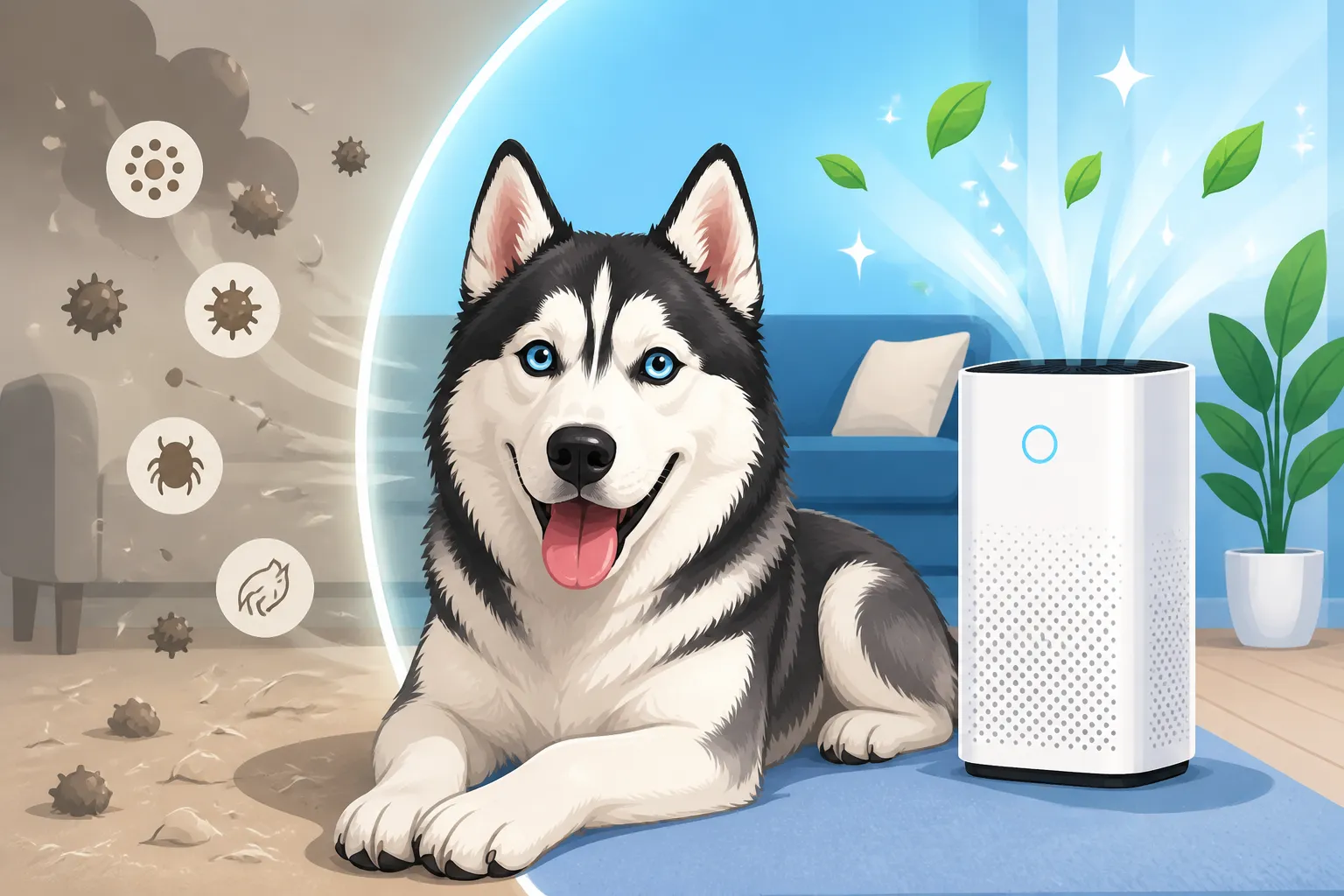
While the visible fur is what often catches our eye, it's actually the microscopic dander that causes most allergic reactions in humans. Dander consists of tiny flakes of skin, similar to dandruff, that dogs shed constantly. These flakes carry proteins that are common allergens. Because Siberian Huskies have such dense coats, dander can get trapped within the fur, only to be released into the air as they move, shake, or are brushed.
Beyond dander, your Husky also brings in other invisible irritants. Outdoor Huskies, especially those who love to dig or roll in the dirt, can track in pollen, dust, mold spores, and other environmental allergens on their fur. These particles can then become airborne in your home. Even indoor Huskies can pick up dust mites and other microscopic debris. All of these contribute to the overall particulate load in your air, making your home feel less fresh and potentially triggering allergy or asthma symptoms for sensitive individuals. For those contemplating, Whether Anyone Allergic Can Live With a Siberian Husky, managing these airborne irritants is key.
How Air Filters Work and What They Can (and Cannot) Do for Husky Homes
Air filters are designed to trap airborne particles as air passes through them. In a Husky home, the goal is often to reduce the amount of fur, dander, and other allergens circulating in the air. But it's important to have realistic expectations about their capabilities.
Capturing Airborne Particles: The Basics
At its core, an air filter is a fibrous material that creates a barrier to airflow. As air is pulled through, particles suspended in that air get caught in the fibers. The effectiveness of an air filter is measured by its Minimum Efficiency Reporting Value (MERV) rating for HVAC filters, or by CADR (Clean Air Delivery Rate) for portable air purifiers. Higher MERV ratings indicate a greater ability to trap smaller particles, including pet dander, pollen, mold spores, and even some bacteria and viruses.
For a Husky home, filters with a MERV rating of 8 to 11 are generally recommended. These are efficient enough to capture most pet dander without unduly restricting airflow in your HVAC system. Filters rated MERV 13 or higher, often labeled as HEPA-type or true HEPA, are even more effective at trapping ultrafine particles, which can be particularly beneficial for severe allergy sufferers. However, it's crucial to ensure your HVAC system can handle the denser material of higher MERV filters, as they can sometimes strain older systems if not compatible. You'll find a wide range of these filters readily available on platforms like Amazon and specialized pet stores on Chewy.
Limitations: What Filters Don't Solve
While air filters are a powerful tool, they are not a magic bullet for a Husky-filled home. They primarily deal with airborne particles. This means they won't pick up the fur that has already settled on your furniture, embedded itself in your carpets, or clung to your curtains. For those larger, settled particles, regular physical cleaning is still absolutely essential.
Furthermore, air filters do not eliminate odors directly. While some higher-end filters include activated carbon layers to absorb odors, their primary function is particulate removal. If your home has a distinct "dog smell," filters might help a little by removing some odor-carrying particles, but they won't address the root cause, which often involves dander buildup on surfaces, dirty bedding, or even a dog's natural oils. Living With Siberian Husky Undercoat in the House involves a multi-pronged approach, and air filters are just one part. They are also less effective against particles that cling to surfaces and are not easily aerosolized, meaning you can't just run your HVAC fan and expect pristine surfaces.
Types of Air Filters and Filtration Systems for Pet Owners
When it comes to filtering the air in your Husky home, you have several options, each with its own advantages and considerations.
HVAC Filters: Your First Line of Defense
Your home's heating, ventilation, and air conditioning (HVAC) system is your primary tool for circulating and filtering air throughout the entire house. The filter slot in your furnace or air handler is where you'll place these crucial filters. As mentioned, aiming for a MERV 8-11 filter is a good starting point for pet owners. These filters are relatively affordable and easy to replace.
The key to their effectiveness in a Husky home is consistency. You cannot just "set it and forget it." With the sheer volume of fur and dander a Husky produces, these filters will clog much faster than in a pet-free home. While a standard recommendation might be to change filters every 1-3 months, with a Siberian Husky, you might find yourself needing to swap them out monthly, especially during coat blows. A clogged filter not only stops filtering effectively but can also restrict airflow, making your HVAC system work harder and potentially increasing energy bills. It's a small but mighty change that can significantly improve your indoor air quality. Remember to check your specific furnace manual for the maximum MERV rating it can comfortably handle without causing damage or reducing system efficiency.
| MERV Rating | Particle Size Filtered (microns) | Effectiveness for Pet Owners | Considerations |
|---|---|---|---|
| 1-4 | >10 (pollen, dust mites, carpet fibers) | Minimal for dander, mainly large particles | Economical, minimal airflow restriction |
| 5-8 | 3-10 (mold spores, pet dander, hair spray) | Good for basic dander removal | Standard choice, good balance of cost/performance |
| 9-12 | 1-3 (legionella, auto emissions, lead dust) | Excellent for pet dander and common allergens | Better air quality, slightly more restriction |
| 13-16 | 0.3-1 (bacteria, sneeze droplets, smoke) | Superior for allergies/asthma (HEPA-type) | Significant airflow restriction, check HVAC compatibility |
| 17-20 | <0.3 (viruses, carbon dust) | Hospital-grade (True HEPA) | Very restrictive, typically only in specialized systems |
Portable Air Purifiers: Targeted Solutions
For specific rooms where your Husky spends a lot of time, or for bedrooms where allergy sufferers sleep, a portable air purifier can be a fantastic supplement to your HVAC system. These standalone units draw in air, pass it through multiple filter layers (often including a pre-filter for large particles like fur, a true HEPA filter for dander and fine allergens, and an activated carbon filter for odors), and then release cleaner air.
When choosing a portable air purifier for a Husky home, look for units with a high CADR (Clean Air Delivery Rate) for the room size you intend to use it in. This rating tells you how quickly the purifier cleans the air of smoke, pollen, and dust. Many models are specifically marketed towards pet owners and include robust pre-filters to capture large amounts of fur before they reach the more expensive HEPA filter. Brands like Coway, Levoit, and Blueair offer popular pet-friendly options. While these can be an additional investment, their ability to continually scrub the air in a concentrated area can make a noticeable difference in reducing airborne allergens and maintaining freshness.
Whole-House Filtration Systems: The Ultimate Upgrade
For homeowners committed to the highest level of air quality, especially those with severe allergies or multiple Huskies, a whole-house air purification system can be installed directly into your HVAC ductwork. These systems are more sophisticated than simple furnace filters and often incorporate advanced filtration technologies like electronic air cleaners, UV-C light sanitizers, or media filters with extremely high MERV ratings (up to MERV 16 or higher) that are designed to work with your existing system.
The advantage of a whole-house system is that it cleans all the air circulating through your home, rather than just in individual rooms. This means a consistent level of clean air everywhere. While the initial cost and installation are significantly higher than just upgrading your furnace filter or buying a portable unit, the long-term benefits for severe allergy sufferers and the overall comfort of your home can be substantial. These systems typically require professional installation and can range in complexity, but for dedicated Husky parents, they represent the ultimate solution to airborne particulate control.
Maximizing Air Quality in a Siberian Husky Home Beyond Just Filters
Air filters are excellent, but they're part of a larger ecosystem of keeping your home clean and comfortable. To truly manage the impact of a Siberian Husky on your indoor air quality, you need a holistic approach that combines filtration with diligent grooming and cleaning routines.
Regular Grooming and Cleaning Routines
No air filter, no matter how powerful, can replace the importance of consistent grooming for your Siberian Husky and regular cleaning of your home. Think of it as source control: reducing the amount of fur and dander at its origin point.
Regular brushing, especially during those intense Siberian Husky Coat Blow and the Six Weeks It Lasts, is paramount. Aim for daily brushing during shedding season and several times a week otherwise. Using an undercoat rake or a de-shedding tool can remove vast quantities of loose fur before it has a chance to fall out and become airborne. Many Husky owners also find professional grooming, which often includes a high-velocity blow-out, incredibly helpful in loosening and removing undercoat. You can find excellent grooming tools and even specific Deshedding Shampoo for a Siberian Husky on sites like Chewy.
Beyond grooming, your cleaning routine needs to be adjusted for a Husky household. Regular vacuuming with a vacuum cleaner designed for pet hair is a must. Look for models with strong suction, good filtration (like a HEPA filter), and specialized attachments for upholstery. Vacuums That Handle Siberian Husky Undercoat are essential. Dusting frequently, washing dog beds weekly, and regularly cleaning fabrics like curtains and throws will also make a huge difference. Even a damp mop on hard floors can pick up fine dander that might otherwise become airborne. Don't forget those often-overlooked spots like baseboards and behind furniture where fur bunnies love to congregate. Even your car, which often becomes a secondary home for fur, needs dedicated cleaning; consider our tips on Siberian Husky Hair in Car Seats and Vents.
Strategic Ventilation and Material Choices
Beyond filters and cleaning, there are other strategies to improve air quality. Ventilation plays a crucial role. Opening windows and doors for short periods, especially during or after cleaning, can help air out the house and reduce the concentration of airborne particles. If your climate allows, running an exhaust fan in the bathroom or kitchen can also aid in air exchange.
The materials in your home also matter. Hardwood, tile, or laminate flooring is generally preferable to carpet for pet owners, as carpets act as reservoirs for fur, dander, and allergens, holding onto them even after vacuuming. If you do have carpets, consider using area rugs that can be regularly cleaned or sent out for professional cleaning. Similarly, choose furniture with smoother, easily cleanable fabrics like leather or tightly woven synthetics over plush, deep-pile upholstery that traps fur. For curtains, opt for blinds or easily washable drapes. These choices, combined with effective air filtration, will create a much more manageable and comfortable environment for you and your beloved Siberian Husky.
Disclaimer
This article is for general informational purposes only and does not constitute professional advice. Laws, prices and regulations vary by location and change over time. Consult a qualified professional for guidance on your specific situation.