Whether a Siberian Husky Uses a Dog Door to Escape
Many Siberian Husky owners find themselves in a tricky spot, wanting to give their adventurous pups some freedom while also keeping them safe. A dog door seems like the perfect solution—allowing your Husky to come and go for potty breaks or just to stretch their legs in the yard. However, you might be wondering if a breed known for its Houdini-like escape artistry can truly be trusted with such an open invitation. This comprehensive guide will delve into the unique challenges Siberian Huskies pose for dog doors and offer strategies to help you navigate this common dilemma, keeping your beloved companion safe and sound.
The Husky Instinct Versus the Dog Door Concept
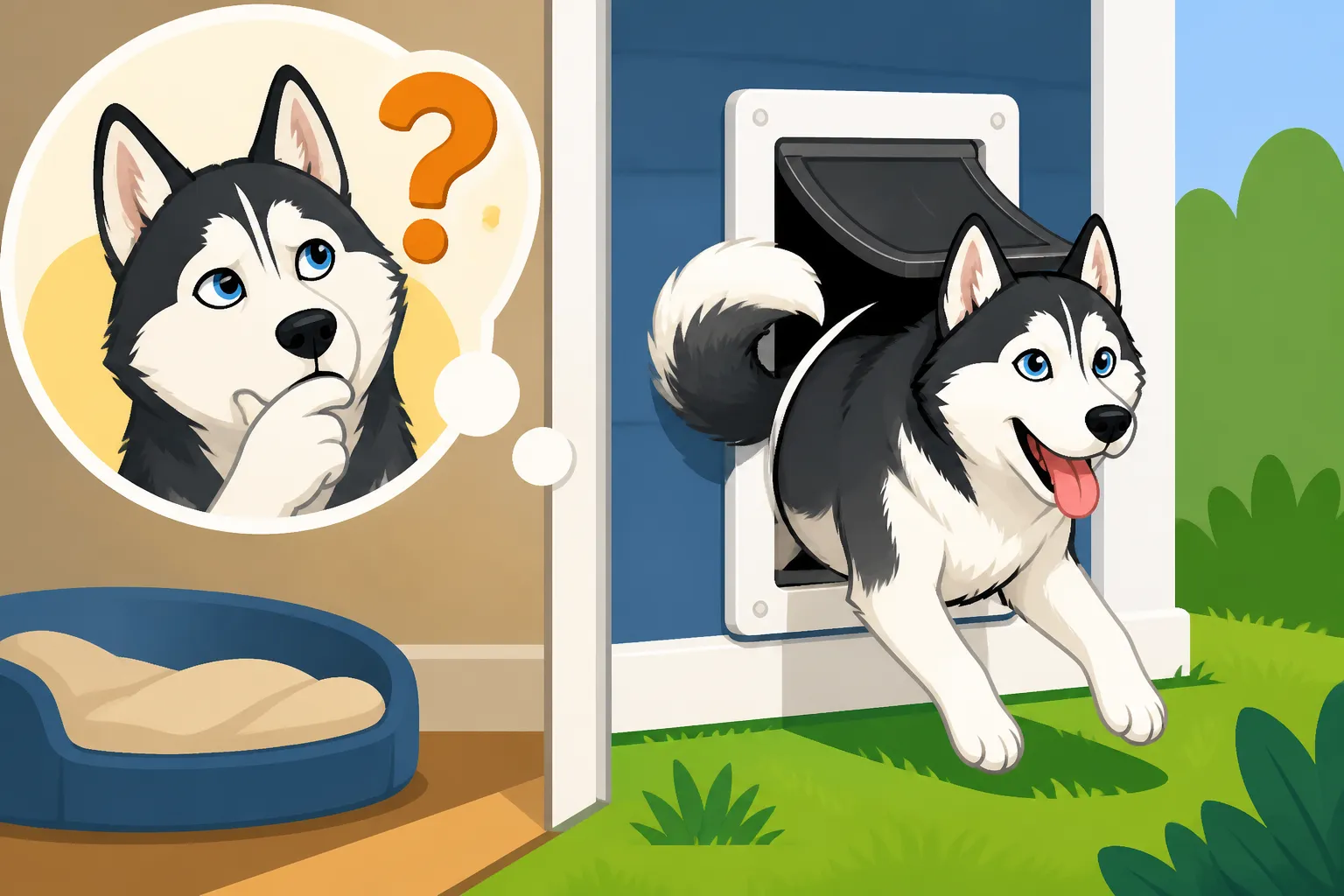
It’s easy to look at a dog door and think of it as a convenient amenity for your pet. For many breeds, it truly is. But for a Siberian Husky, a dog door isn't just a passageway; it's an opportunity, a challenge, or even a perceived invitation to explore beyond the known boundaries. Understanding their core instincts is crucial before you even consider installing one.
The Urge to Roam and Explore
Siberian Huskies were quite literally bred to run for miles and miles. Their ancestral job involved pulling sleds across vast, open landscapes in Siberia, often without direct human supervision for long stretches. This isn't just a quirky trait; it's a deep-seated instinct to roam, to explore, and to cover significant distances. When a Husky sees an opening, their brain doesn't necessarily register it as "the yard boundary" as much as it sees "the path to adventure." This inherent drive makes them masters of escape, constantly testing perceived weaknesses in their environment.
Imagine a world where your main purpose is to traverse immense territories. That genetic programming doesn't just switch off when they become a beloved pet in a suburban backyard. For a Husky, a dog door can feel like a less-than-subtle nudge towards fulfilling that deep-seated wanderlust. We often talk about The Roaming Instinct Bred Into Every Siberian Husky and how it impacts their everyday behavior. This isn't about being disobedient; it's about being true to their heritage. They aren't trying to upset you; they're simply being a Husky.
Husky Ingenuity and Problem-Solving
Beyond their desire to roam, Huskies are incredibly intelligent and, perhaps more importantly, persistent problem-solvers. If they want something, they will often figure out a way to get it. A dog door, especially one that isn't robustly secured, can quickly become a puzzle for a Husky to solve. They observe, they push, they prod, and they remember. If a flap can be bent, they'll bend it. If a lock has a weak point, they'll exploit it.
I've heard countless stories from other Husky owners who thought their dog door was secure, only to find their clever canine had outsmarted it. One friend told me about her Husky, Luna, who learned to shoulder-check the dog door flap until the plastic frame around it started to loosen. Once she had a small gap, it was only a matter of time until she popped the entire thing out. It's this combination of high intelligence, incredible persistence, and an underlying drive to explore that makes them uniquely challenging when it comes to any type of perceived boundary, including a dog door. They are often far smarter than we give them credit for when it comes to achieving their goals.
How Huskies Actually Use (and Abuse) Dog Doors
So, you've decided to install a dog door, maybe hoping your Husky will be the exception. Or perhaps you already have one and are seeing some concerning behaviors. Huskies have a knack for turning what we intend as convenience into an opportunity for adventure.
Testing the Limits of a Dog Door
From the moment a dog door is installed, a Husky's curious nature kicks in. They don't just use it; they investigate it. They'll push, chew, scratch, and even try to pull it apart. The weaker the construction, the faster it becomes a new escape route. Standard plastic flap doors, while convenient for many dogs, are often no match for a determined Husky. Their strong jaws, sharp claws, and powerful bodies can easily damage or bypass less robust models.
Think about it: A small, flexible flap might keep out a Pomeranian, but a 50-pound Husky can use its entire body weight to ram through it. They’ll quickly learn if the magnetic seal is weak, if the plastic is brittle, or if the locking mechanism is merely a suggestion. They might even discover that the entire door assembly, if not properly installed and sealed, can be dislodged with enough effort. This isn't malicious; it's simply a Husky being a Husky. They're constantly evaluating their environment for potential pathways, and a dog door, by its very nature, presents one.
What Makes a Dog Door Vulnerable
Several factors can turn a seemingly secure dog door into a Husky's personal launchpad. First, poor installation is a huge culprit. If the frame isn't firmly anchored to the wall or door, a strong Husky can eventually wiggle it loose. Second, the type of door matters immensely. Basic single-flap doors offer almost no security. Even some double-flap doors might not be sufficient if the material isn't durable.
Then there are the locking mechanisms. Many dog doors come with a sliding panel that's supposed to block access. However, Huskies are famous for their ability to manipulate objects with their noses and paws. I've personally seen a Husky nudge a poorly seated lock panel out of its grooves, creating just enough space to squeeze through. Others learn to lift latches, or if it's an electronic dog door, they might even learn to lean against the sensor to keep it open longer, allowing them to scope out the yard and beyond. Siberian Huskies That Learn Gate Latches are proof of their manual dexterity and cognitive abilities. They are incredibly observant and often just need one instance of a human opening or securing something to try to replicate it themselves.
Strategies to Prevent Dog Door Escapes
If you're determined to have a dog door for your Siberian Husky, all is not lost! It requires a multi-pronged approach combining robust equipment, diligent training, and realistic management of your expectations.
Reinforcing Your Dog Door Setup
Choosing the right dog door is your first line of defense. Forget the flimsy plastic ones; you need something heavy-duty. Look for doors made with durable materials like aluminum frames and rigid, chew-resistant flaps. Many companies now offer "smart" dog doors that operate with a microchip or RFID tag on your dog's collar, only opening for your specific pet. This is a game-changer because it prevents other animals (or even a super-clever Husky trying to manually open it) from using the door. You can find these advanced options on platforms like Amazon, offering a greater layer of security.
Beyond the door itself, consider the surrounding security.
- Secure the Frame: Ensure the dog door is installed meticulously, anchored firmly into the wall or human door according to the manufacturer's instructions. Use extra-long screws if necessary and consider adding caulking around the edges to prevent any prying.
- External Enclosure: If the dog door leads directly to a yard, that yard must be escape-proof. This means a Six-Foot Fences and the Siberian Husky That Climbs is a bare minimum, and ideally, you'll have an L-footer buried along the fence line to deter digging. Any weak points, like loose fence posts or gaps under gates, will be exploited.
- Cameras: A pet camera, also readily available on Amazon, can be invaluable. Place one where it monitors the dog door, allowing you to observe your Husky's behavior when you're not home. This can help you identify exactly how they're attempting to escape, giving you clues for further reinforcement.
Training and Management Solutions
Even with the most secure dog door, human intervention and training are key. Your Husky needs to understand the boundaries and expectations surrounding the door.
- Supervision is Paramount: Never assume your Husky will be perfectly contained just because you have a fancy dog door. Supervision, especially in the initial stages, is non-negotiable. Spend time observing them as they use it.
- "Come" and "Stay" Commands: Reinforce a solid recall. This is critical for any Husky owner, but especially if they have yard access. If they do manage to get out, a reliable "come" command could be the difference between a quick retrieval and a frantic search. Resources like BAXTER & Bella offer excellent online training programs that can help build these foundational commands, even for independent breeds like Huskies.
- Leash Management: For some Huskies, a dog door leading to an unsupervised yard is simply too much temptation. Consider keeping them on a long line in the yard, especially if your fence isn't 100% escape-proof. This isn't ideal for all-day access, but it can be a temporary solution while you work on training or fortifying your perimeter.
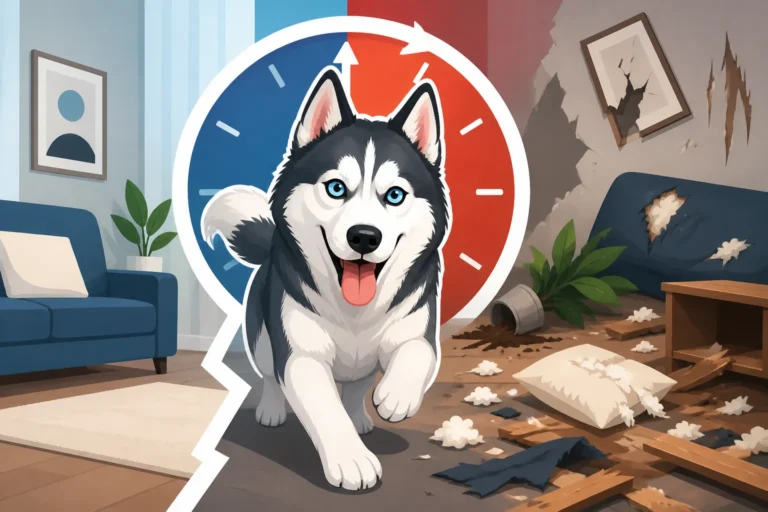
- Exercise, Exercise, Exercise: A tired Husky is less likely to have the mental and physical energy to engineer an escape. Ensure your Husky gets plenty of strenuous exercise daily—long runs, bikejoring, or vigorous playtime. A bored Husky is a destructive and escape-prone Husky. This also helps reduce instances of The Damage a Siberian Husky Does in Four Hours if they are left alone and under-stimulated.
Here's a quick comparison of dog door types and their Husky-proofing potential:
| Dog Door Type | Security Level for Huskies | Common Husky Escape Methods | Best Use Case |
|---|---|---|---|
| Basic Manual Flap | Very Low | Pushing, chewing, ripping | Not recommended for unsupervised Husky access. |
| Magnetic Flap | Low to Medium | Strong pushing, prying | Might deter less determined dogs, still risky. |
| Sliding Panel (Manual) | Medium | Nudging out, lifting, chewing | Requires diligent re-securing, prone to human error. |
| Electronic/Microchip | High | Learning to lean on sensor, door malfunctions, damage | Best option for restricted access, requires robust build. |
| Wall Mount vs. Door Mount | Wall Mount generally higher | Door mounts can be weaker | Wall mounts offer more stability and insulation. |
When a Dog Door Isn't the Right Fit for a Husky
Despite your best efforts and the most high-tech, reinforced dog door, there are instances where a dog door simply isn't a viable option for a Siberian Husky. It's a tough realization, but sometimes, their innate drive and intelligence are simply too powerful to contain with such a feature.
Assessing Your Husky's Individual Tendencies
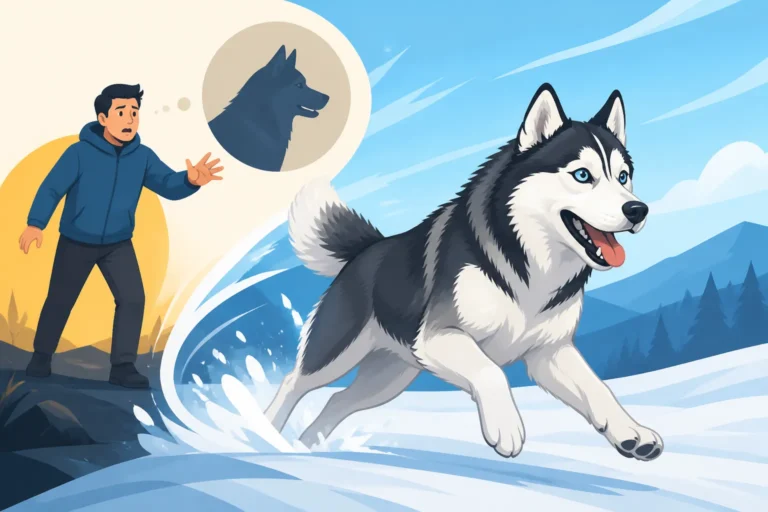
Every Husky is an individual, of course. Some might be perfectly content with a dog door and a secure yard. However, many possess an almost unparalleled drive to explore and escape. If your Husky has already proven themselves to be an escape artist – scaling fences, digging under barriers, or slipping leashes – then a dog door is likely to be just another challenge they'll happily conquer. For these dogs, the thrill of the chase, the unknown beyond the fence, is an irresistible siren call. If you've ever had your heart race wondering How Far a Loose Siberian Husky Travels, you know the dread.
It's not a reflection of your failure as an owner, nor is it about your Husky being "bad." It's about respecting their breed-specific traits and their individual personality. If your Husky consistently shows a high prey drive, an independent streak that makes recall difficult even in controlled environments, or a history of finding the weakest link in any containment, then a dog door might be an unnecessary risk. This is particularly true if you live in an area with high traffic, wildlife, or strict leash laws.
Alternative Solutions for Potty Breaks
If a dog door proves too risky, or if you've decided against one from the start, there are plenty of alternative ways to manage your Husky's potty breaks and outdoor access without compromising their safety.
- Scheduled Leashed Walks: This is the most reliable method. Take your Husky out on a leash for scheduled potty breaks. This provides mental stimulation, exercise, and ensures you're always aware of their whereabouts. It also doubles as valuable training time.
- Direct Supervision in a Secure Yard: If you have a truly secure yard (think prison-level security for a Husky, with a tall fence, L-footers, and no weak spots), you can let them out, but always with direct supervision. This means you are actively present, not just watching from a window. This allows you to intervene if they start testing boundaries or attempting to dig.
- Dog Walkers or Daycare: For owners who work long hours, hiring a reliable dog walker or enrolling your Husky in a reputable doggy daycare can provide necessary outdoor time and potty breaks. Look for walkers or daycares that understand the unique needs of Siberian Huskies, especially their high energy and potential for escape. This is a far safer option than risking an unsupervised escape.
- Crate Training and Potty Schedules: A well-crate-trained Husky can hold their bladder for reasonable periods, aligning with your schedule for supervised outdoor breaks. Crates a Siberian Husky Cannot Break Out Of are crucial for this, ensuring they are comfortable and secure while you're away.
Ultimately, the goal is to provide your Siberian Husky with a happy, healthy, and safe life. While a dog door might seem like a convenience, for many Huskies, it's a gateway to potential danger. Prioritizing their safety and understanding their inherent nature often means choosing more controlled and supervised methods for outdoor access. It's one of the many things that What New Siberian Husky Owners Underestimate when they first bring one of these amazing dogs into their lives. Investing in secure identification like a microchip and visible tags, as well as a GPS collar, is always a good idea for this breed, regardless of your door setup, just in case they manage to outsmart even your best efforts.
Disclaimer
This article is for general informational purposes only and does not constitute professional advice. Laws, prices and regulations vary by location and change over time. Consult a qualified professional for guidance on your specific situation.