Keeping a Siberian Husky Recall Alive Into Adulthood
One of the most heartbreaking frustrations for Siberian Husky owners is watching that once-reliable puppy recall vanish into thin air as they mature. It often feels like you’ve done everything right, only for your spirited companion to suddenly develop selective hearing when the leash comes off. This guide will walk you through understanding why this happens, and more importantly, practical, empathetic strategies to ensure your Siberian Husky’s recall remains strong, even as they transition into their independent adult years.
Understanding Why Recall Becomes a Challenge for Adult Siberian Huskies
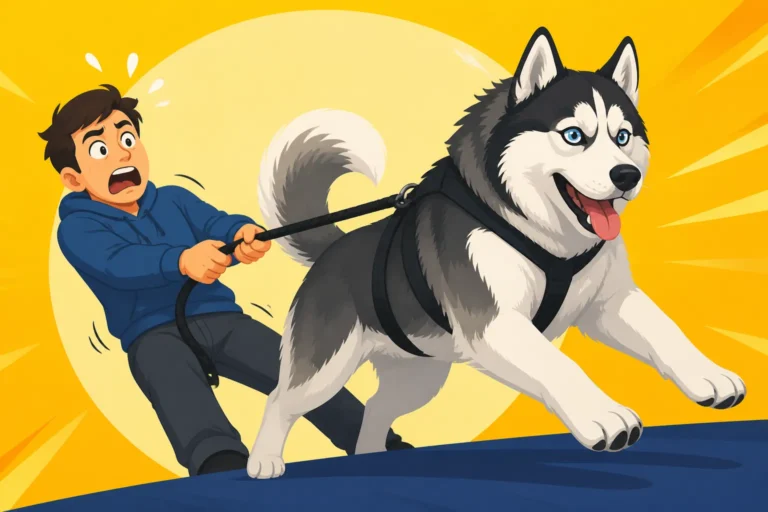
It’s easy to feel personally offended when your Husky, who once bounded back to you without a second thought, now seems to hear the call of the wild louder than your voice. But it’s not typically a personal slight. Siberian Huskies are bred for endurance and independence, and their instincts are powerful drivers. As they grow from playful puppies into more confident, self-assured adults, these innate traits come to the forefront, making recall a lifelong project rather than a one-and-done training task.
The Siren Song of Instinct: Roaming and Prey Drive
From the moment they open their eyes, Siberian Huskies carry the genetic blueprint of their ancestors, bred by the Chukchi people for long-distance travel and survival in harsh environments. This means a strong roaming instinct is deeply embedded. As puppies, their world is small and centered on their human family. But as they mature, their confidence grows, and the world outside the fence becomes a vast, fascinating landscape to explore. This natural wanderlust, combined with a significant Siberian Husky Prey Drive Around Small Animals, can make ignoring your calls an incredibly rewarding experience for them. They’re not being stubborn; they're simply being a Husky, following instincts honed over generations.
Think of it this way: your adult Husky sees a squirrel darting across the park, or smells a rabbit trail, or simply notices an interesting new scent carried on the breeze. To them, this is a prime opportunity for adventure. Their senses are heightened, and the urge to investigate, chase, or simply run free is incredibly strong. This often overpowers the desire to return to you, especially if the reward for coming back isn't immediately obvious or compelling enough. This isn't a sign of a poorly trained dog, but rather a reflection of the powerful instincts that define the breed.
The Independent Mindset: Not Always About Pleasing You
Unlike some breeds that live to please their owners, Siberian Huskies possess a remarkable independence. This trait made them exceptional sled dogs, capable of making decisions on their own in challenging conditions. While invaluable in a working context, it can be a real hurdle when trying to maintain a reliable recall in a pet setting. As they move out of puppyhood and into The Month a Siberian Husky Starts Testing You, usually around 6-12 months, you might notice a shift in their willingness to comply.
This isn't to say your Husky doesn't love you or doesn't want to connect. They absolutely do. However, their internal motivation often leans towards what they find stimulating and rewarding at that moment, rather than solely seeking your approval. This means that a recall command needs to be consistently paired with something incredibly high-value, something that can compete with the allure of a new discovery or a thrilling chase. If the "paycheck" for returning isn't worth the interruption of their current "job" (which might be sniffing a bush or watching a distant bird), they'll often prioritize their own agenda. It requires you, the owner, to be smarter and more consistent than their instincts.
Establishing a Rock-Solid Recall Foundation
Even if your Husky is already an adult and their recall has started to wane, it's never too late to reinforce or even rebuild a strong foundation. The key is consistency, high-value rewards, and a clear understanding of how your Husky thinks. You want to make coming back to you the absolute best thing in their world, every single time.
Starting with the Right Gear and Environment
Before you even begin formal training, you need to ensure you have the right tools to set your Husky up for success and prevent them from practicing unwanted behaviors. For any recall training, especially with a breed like the Siberian Husky, a long line is an indispensable tool. A 30-foot or even 50-foot line allows your dog to experience a sense of freedom while still giving you control and preventing them from truly bolting. Look for durable, lightweight options on platforms like Amazon.
When starting out, always train in a quiet, low-distraction environment. A securely fenced yard is ideal, or a private, empty field. Avoid busy dog parks or areas with lots of wildlife until your recall is absolutely bomb-proof. Remember, every time your Husky ignores your call and gets to continue doing what they want, they are being rewarded for not coming back. Setting up for success means preventing these accidental rewards. You can learn more about this in Starting Long Line Work With a Siberian Husky. The goal is to build a positive association with the recall command without the overwhelming distractions that often lead to failure.
Making "Come!" the Most Exciting Word Ever
For a Siberian Husky, a simple "good boy!" often isn't enough to compete with a tantalizing scent or the thrill of a run. You need to use Food Rewards a Siberian Husky Will Work For and experiences that are truly high-value. Think small pieces of cooked chicken, cheese, hot dogs, or whatever your Husky absolutely goes crazy for. These aren't just treats; they're the "jackpot" that makes interrupting their fun worthwhile.
Here's how to make it super exciting:
- Start Close: Begin with your Husky just a few feet away. Say their name, then your recall cue (e.g., "Buddy, COME!"), and immediately make exciting noises, clap your hands, or even run backward a few steps to encourage them.
- Reward Instantly: The second your Husky starts moving towards you, offer enthusiastic praise. When they reach you, immediately give them a jackpot of several high-value treats, one after another, creating a mini "party."
- Vary the Routine: Don't always make them sit or perform another command before the treat. Sometimes just coming to you is the reward. Occasionally, gently grab their collar before releasing them with another treat, so they get used to being handled when they come back. This is crucial for real-world scenarios.
- Practice Often, Keep it Short: Short, frequent training sessions (2-5 minutes) are far more effective than long, drawn-out ones. You want to end each session on a high note, with your Husky eager for the next time they hear the recall cue. Consistency is paramount in Keeping a Siberian Husky Interested in Training.
Advanced Strategies for Lifelong Recall
Once your Husky has a solid foundation in low-distraction environments, it's time to gradually increase the difficulty and integrate recall into your daily life. The goal is to make recall a habit, not just a command, and to ensure it holds up under real-world pressure.
Gradual Progression and High-Value Payoffs
The biggest mistake owners make is jumping from a quiet backyard to an open field too quickly. You need to introduce distractions slowly and systematically.
- Introduce Mild Distractions: Start with very minor distractions, like a family member walking by, or a toy gently tossed a short distance away. Increase the value of your reward even more for success in these situations.
- Increase Distance and Duration: Gradually extend the distance you call your Husky from. Also, practice calling them when they are engaged in a mildly interesting activity, like sniffing a patch of grass, rather than just standing around.
- Vary Locations: Once successful in your yard, move to a quiet, securely fenced park or a private field you've rented (many platforms like Sniffspot offer this). This allows them to experience new scents and surroundings while still being safe. Practicing Siberian Husky Recall in a Fenced Field is invaluable for building confidence.
- Always End Positive: If you move to a new environment and your Husky struggles, don't get frustrated. Take a step back, make it easier, and end on a successful note. Never end a session on a failure, as this creates negative associations with the recall.
Remember, your Husky's "paycheck" needs to remain competitive with whatever they might find exciting in the environment. If you're going to call them away from chasing a deer scent, you need to offer something better than kibble!
Teaching an Emergency Stop Cue
Beyond the regular "come" cue, an emergency stop cue is a critical safety net, especially for a breed with a strong Why Siberian Husky Recall Fails at the Worst Moment. This cue should be reserved for true emergencies and should always result in an immediate, huge jackpot reward, regardless of what they were doing. It’s essentially a "nuclear option" for recall.
Choose a unique word or sound that you don't use often, like "Front!" or a specific whistle. Introduce it in a low-distraction environment. Say the cue, immediately run backward while making happy noises, and when your Husky reaches you, give them their absolute favorite, highest-value treat (e.g., a whole piece of cooked meat, not just a tiny crumb). Practice this very rarely and only when you know you can get a 100% success rate. The idea is that this cue is so powerful and so consistently rewarded that it becomes ingrained as an automatic, non-negotiable response. For more insight into emergency cues, check out An Emergency Stop Cue for a Siberian Husky.
Troubleshooting Common Adult Husky Recall Issues
Even with the best training, Siberian Huskies can present unique recall challenges as they mature. It's about understanding why they might be faltering and adjusting your approach.
When Your Husky Develops Selective Hearing
This is perhaps the most common complaint: your Husky hears you perfectly indoors, but outdoors? Suddenly they're deaf. This isn't usually spite; it's often a case of insufficient motivation combined with overwhelming distractions.
- Increase Reward Value: Are you still using the same old kibble? It's time to upgrade! Rotate treats to keep things exciting. Try pieces of steak, salmon, or a small dollop of peanut butter. The online store section of Amazon offers countless options for high-value dog treats.
- Re-Evaluate Distractions: Is the environment too stimulating? Go back to a less distracting area. If your Husky struggles in a particular park, that park is too advanced for their current recall level.
- Consistency is Key: Do you only call them when it's time to go home? Huskies are smart. If "come" always means "fun is over," they'll quickly learn to avoid it. Call them for no reason, reward them, and then immediately release them to continue playing. This builds a positive association with the recall itself, not just with leaving.
- Consider Professional Help: If you're consistently struggling, don't hesitate to seek out a professional dog trainer who has experience with independent, high-drive breeds. Organizations like BAXTER & Bella offer online resources and training programs that can provide structured guidance.
The Husky That Tests Boundaries: Collar Grab and Release
Some Huskies will come close but not quite within reach. They treat it like a game of "keep away," enjoying the chase you initiate. This is incredibly frustrating and dangerous. To counteract this, you need to practice the "collar grab" as part of your recall routine.
Every time your Husky comes back, gently grab their collar before giving them the jackpot reward. Hold it for a second or two, praise them, give the treats, and then release them with a cue like "Okay, go play!" This teaches them that coming to you and being handled is part of the reward process, not an end to it. It also desensitizes them to you grabbing their collar, which is vital for safety in emergencies. If they pull away, calmly re-engage them until you can lightly touch their collar and then reward. Consistency here means they learn that coming all the way to you is the best deal.
| Recall Problem | Why It Happens | Solution |
|---|---|---|
| Selective Hearing Outdoors | Distractions overpower low-value rewards. | Increase treat value, reduce distractions, practice in varied settings. |
| Comes Close, Won't Let You Touch | Learns "come" equals end of fun or avoids handling. | Practice collar grabs, reward heavily for proximity and handling. |
| "Come" Always Means "Go Home" | Negative association with the command. | Call for no reason, reward, then release to play immediately. |
| Ignores You for Other Dogs/People | Strong social drive, insufficient motivation. | Practice around mild distractions first, use even higher-value rewards. |
| Bolts and Cannot Be Caught | Strong roaming/prey drive, unreliable foundation. | Go back to long line work, reinforce emergency stop cue. |
Maintaining Recall in the Golden Years
Recall isn't just for young, energetic Huskies. As your Siberian Husky ages, their senses might dull, their speed may decrease, and their independence might shift. However, consistency remains important. Caring for a Siberian Husky Past Ten means being mindful of their changing needs. Regular, positive reinforcement of recall, even if it's just in the backyard, helps keep their minds sharp and reinforces the positive association with responding to you.
You might find that as an older Husky, the lure of chasing a squirrel is less potent, but their hearing might also not be what it once was. Be patient, use clear and consistent cues, and always make coming back to you a comforting, rewarding experience. It solidifies the bond you've built over years and keeps them safe and connected to you, no matter their age.
Ultimately, keeping a Siberian Husky’s recall alive into adulthood is a continuous journey. It’s about respect for their instincts, unwavering patience, and a commitment to making yourself the most rewarding presence in their exciting world. It’s a challenge, yes, but one that strengthens the incredible bond you share.
Disclaimer
This article is for general informational purposes only and does not constitute professional advice. Laws, prices and regulations vary by location and change over time. Consult a qualified professional for guidance on your specific situation.