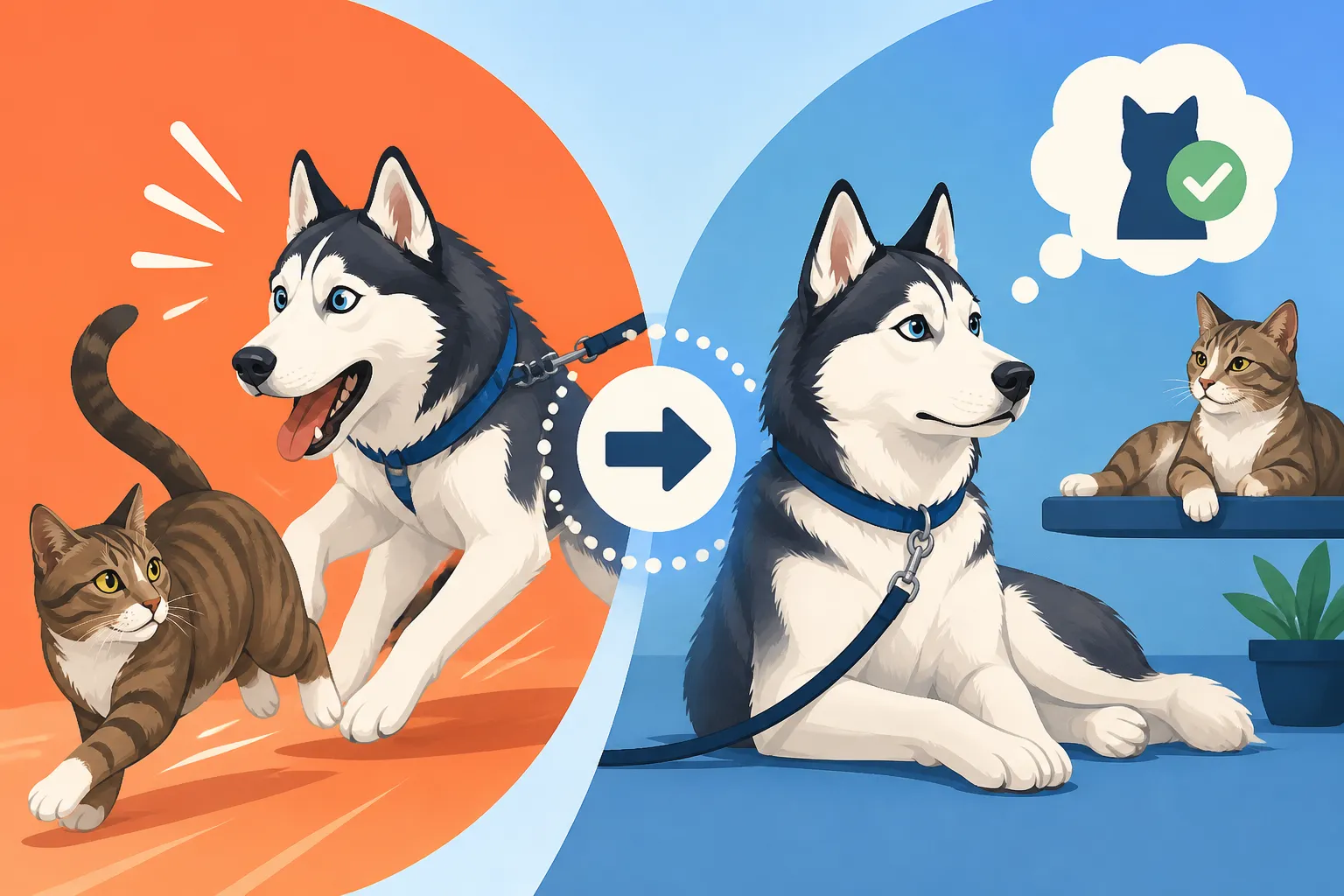
Whether an Adult Siberian Husky Can Learn to Ignore Cats
Oh, the age-old question that keeps so many aspiring Siberian Husky owners up at night: can your beautiful, high-energy Husky actually learn to live peacefully with your cherished feline friend? It’s a common fantasy to imagine them curled up together, but the reality is often far more complex and frankly, a bit anxiety-inducing. This guide is here to walk you through the realistic expectations, the significant challenges, and the dedicated strategies required to even attempt to have an adult Siberian Husky learn to ignore cats in your home.
Understanding the Innate Siberian Husky Prey Drive
Let's be brutally honest from the start: Siberian Huskies were bred for a job that involved a lot of instinctual behaviors, and one of the strongest among them is prey drive. It's not a flaw; it's a feature, deeply embedded in their DNA. When we talk about Huskies and cats, we're not just discussing a simple training challenge; we're talking about a fundamental biological predisposition.
Why Cats Are Seen as Prey by Huskies
Think about the ancestral roots of the Siberian Husky. They were developed by the Chukchi people in Siberia to pull light loads quickly over vast, desolate distances. Their survival, and the survival of their human companions, often depended on their ability to be resourceful foragers, which included hunting small game. This isn't just a historical footnote; it's the blueprint for how a Husky's brain often operates.
For a Husky, a cat’s sudden movements—a darting tail, a quick leap onto a counter, a sprint across the floor—can instantly trigger that deeply ingrained chase instinct. A cat's size, its quick, agile movements, and even the sounds it makes can all mimic the very creatures a Husky's ancestors would have hunted for food. It’s not that your Husky hates your cat; it’s that your Husky’s brain is registering the cat as something to pursue, to capture, and yes, potentially to kill. This isn't malice; it's instinct. It’s crucial to understand this distinction, as it reframes the entire approach to their coexistence. You can dive deeper into this instinctual behavior by reading Siberian Husky Prey Drive Around Small Animals.
The Challenge of Training Against Instinct
Now, I know what you’re thinking: "But my Husky is so smart! Surely, I can train them not to chase." And yes, Huskies are incredibly intelligent, but their intelligence often manifests as independence and problem-solving, not necessarily eager obedience to commands that go against their nature. Training a "sit" or a "stay" is one thing; trying to extinguish a deeply rooted prey drive, especially when the trigger is constantly present, is an entirely different beast.
The challenge here is that you're not just teaching a dog a new command; you're attempting to reprogram thousands of years of evolutionary purpose. While you can certainly teach a Husky impulse control and provide alternative outlets for their energy, the fundamental drive will always be there, simmering beneath the surface. It means that "training" in this context often looks more like meticulous management and constant vigilance rather than simply teaching a "leave it" command and calling it a day. Many owners find that conventional positive reinforcement, while essential, may only go so far when faced with such powerful biological urges. This is why the question of Whether Prey Drive Can Be Trained Out of a Husky is a topic of constant discussion and often, heartbreak.
Assessing the Individual Husky and Cat Dynamics
Not all Huskies are created equal, and certainly not all cats. The success (or failure) of introducing an adult Siberian Husky to a feline household often hinges on the unique personalities and histories of the individual animals involved. It's never a one-size-fits-all situation, and a realistic assessment of everyone's temperament is your first, best line of defense.
Factors Influencing a Husky's Adaptability
When considering this daunting task, several factors come into play. Firstly, the Husky’s early life experiences are paramount. Was your Husky raised from puppyhood with cats? If so, they might have developed a higher tolerance or even indifference. However, even then, the adolescent "teenager" phase of a Husky can bring out dormant prey drives as hormones surge and independence grows. An adult Husky with no prior positive exposure to cats will present a much greater challenge than one who grew up with them.
Then there's the individual Husky's personality. Some Huskies, though rare, might have a naturally lower prey drive than others. Perhaps they are older, less energetic, or simply have a more laid-back disposition (though a truly "laid-back" Husky is a rare gem indeed!). Conversely, a Husky with a very high energy level, a strong chase instinct, and a history of pursuing small animals outdoors will be an exceptionally difficult, if not impossible, candidate for cohabitation.
Crucially, the cat's personality is just as important. A bold, confident, dog-savvy cat who stands its ground or simply ignores the dog is far more likely to fare better than a timid, fearful cat who immediately flees at the sight of a dog. A cat that runs triggers the chase. A cat that freezes might become a target. A cat that calmly asserts itself or finds high ground is often the safest. Consider how your Siberian Huskies and Cats Under One Roof might typically interact given these variables.
Recognizing Red Flags and Unsuitable Pairings
It's vital to be brutally honest with yourself about what constitutes a red flag. This isn't about giving up too soon, but about prioritizing the safety and well-being of all animals in your home. Intense, fixated staring from your Husky, a stiff body posture, relentless tracking, lunging at barriers, or frantic barking when the cat is present are all serious warning signs. These behaviors indicate that your Husky views the cat not as a housemate, but as prey, and the risk of an incident is simply too high.
Another major red flag is chronic stress in your cat. Is your cat constantly hiding, reluctant to eat, exhibiting litter box issues, or showing signs of fear aggression towards the Husky? These are indicators that your cat's quality of life is severely compromised. A pet-friendly home should be a safe haven for all its inhabitants, and if one animal is living in perpetual fear, the situation is unfair and unsustainable. In such cases, pushing for coexistence can lead to tragic outcomes. It is a fundamental truth that Why a Siberian Husky Should Not Meet a Cat Loose is about preventing potential tragedy. Sometimes, despite our best intentions, separate homes might be the only responsible solution.
Strategies for Careful, Controlled Introduction and Management
If, after honest assessment, you believe there's a glimmer of hope for your adult Husky and your cat, prepare yourself for a marathon, not a sprint. This process demands extreme patience, consistent effort, and a willingness to commit to long-term management strategies. There's no magic bullet, only diligent, methodical steps to create an environment of managed coexistence.
Creating a Safe, Separated Environment
Before any direct interaction, your primary goal is to establish a completely safe and separated environment. This means physical barriers that are truly Husky-proof. Baby gates might work for some dogs, but for a determined Siberian Husky, a standard baby gate is often little more than a suggestion. You'll likely need taller, more robust gates, possibly even double-gating areas to ensure no accidental breaches.
Crucially, the cat needs abundant vertical escape routes. Cat trees, shelves, cat-only rooms with secure cat flaps, or even a simple sturdy bookshelf the cat can scale, are absolutely non-negotiable. These provide your cat with a sense of security and a quick escape route if they feel threatened. When the Husky is loose, the cat needs to be able to get away instantly.
For the Husky, a strong, secure crate is paramount. This isn't just for downtime; it's a critical tool for supervised interactions and for ensuring the cat's safety when you cannot be 100% focused. If your Husky has a history of destroying crates, you’ll need a heavy-duty model designed for escape artists. Think industrial-strength wire crates, possibly even custom-built ones. You can find many options on Amazon for robust crates, but remember to always read reviews from owners of strong, determined breeds. Understanding Crating a Siberian Husky That Bends the Bars is crucial here.
Gradual Desensitization and Positive Reinforcement
Once physical safety is established, you can begin the slow, arduous process of desensitization. Start with scent swapping: exchange blankets or beds between the Husky and the cat so they can get used to each other's smell without the visual stimulus. Then, move to parallel feeding, where they eat on opposite sides of a closed door, slowly bringing the bowls closer over days or weeks, as long as both remain calm.
When you finally move to visual interaction, always keep the Husky on a leash, and ensure the cat has an easy escape. These sessions should be incredibly short, maybe just a minute or two at first. The goal is not for them to play, but for the Husky to ignore the cat. Every time the Husky notices the cat but remains calm—even if just for a second—reward lavishly with high-value treats and praise. If the Husky fixates or lunges, calmly redirect them and end the session.
This is where consistency is key. Look for training resources that focus on positive, force-free methods, as Huskies often shut down or become more stubborn with harsh corrections. Many reputable online platforms, like BAXTER & Bella, offer comprehensive positive reinforcement training programs that can help you build a strong foundation of obedience and impulse control, which is essential for managing a high-prey drive dog. The philosophy is to make calm behavior around the cat the most rewarding thing your Husky can do. Consider what Food Rewards a Siberian Husky Will Work For and keep them exclusively for these interactions.
Long-Term Management and Realistic Expectations
Even if your Husky and cat reach a point of apparent peace, never assume the job is done. The reality is that for many adult Siberian Huskies, true "ignoring" means perpetual, meticulous management. This often translates to never leaving them unsupervised together, even for a moment. An unexpected twitch of a tail or a sudden movement from the cat could instantly trigger that latent prey drive, and an incident can happen in the blink of an eye.
Your household routine will revolve around managing their interactions. This might mean crating the Husky when you leave the house or for certain times of day, keeping them in separate rooms overnight, or ensuring the cat always has a safe, elevated space to retreat to. Continue to provide your Husky with plenty of mental and physical stimulation to burn off energy and reduce boredom, which can exacerbate undesirable behaviors. Puzzle toys, long walks, and training sessions are your allies.
It's about creating a lifestyle, not just a temporary training phase. This level of management can be exhausting, and it requires unwavering commitment from everyone in the household. It's not a failure if you eventually decide it's too much; it's a responsible decision. Sometimes, ensuring safety means accepting that full, unmanaged coexistence simply isn't feasible, and you might need to embrace strategies similar to Managing a Siberian Husky in a Rural Yard, where constant awareness and containment are paramount.
When to Seek Professional Help and When to Reconsider
Sometimes, despite your best efforts, you hit a wall. The behaviors are too intense, the progress is too slow, or you simply feel overwhelmed. This is not a sign of failure on your part, but an indication that it’s time to call in the cavalry—or, in some cases, to make the difficult but compassionate decision to reconsider the living arrangement.
Engaging a Qualified Professional
If you’re struggling, don't hesitate to seek help from a certified professional dog trainer or, even better, a veterinary behaviorist. Look for someone who has specific experience with strong prey drive breeds like Siberian Huskies and who employs positive, force-free methods. A qualified professional can assess your specific situation, read the body language of both your Husky and your cat, and provide tailored strategies that you might not have considered. They can help you identify subtle cues, refine your timing for rewards, and troubleshoot problems that seem insurmountable.
It's crucial to be discerning when choosing a professional. Avoid anyone who suggests harsh corrections, punitive tools, or techniques that promise to "break" your Husky's prey drive. These methods are not only inhumane but often counterproductive for Huskies, leading to fear, aggression, or a complete shutdown. Look for credentials like CPDT-KA (Certified Professional Dog Trainer – Knowledge Assessed) or a DACVB (Diplomate of the American College of Veterinary Behaviorists). While BAXTER & Bella offers excellent general training frameworks, for complex inter-species issues with a breed like a Husky, a hands-on, in-person behaviorist often provides the most effective support. Getting advice from Finding a Trainer Who Has Worked With Huskies is invaluable.
Making the Difficult Decision for Separate Homes
Finally, and perhaps most difficult of all, comes the acknowledgment that sometimes, it just isn't going to work. There comes a point where the risk to the cat is too great, or the stress on either animal (or you!) becomes unbearable. If your Husky's prey drive is consistently high, if there have been any close calls, or if your cat is living in a constant state of anxiety, it is time to seriously reconsider the situation.
It's a heartbreaking decision, but rehoming one of the animals to a more suitable environment might be the kindest, safest choice. This isn't a reflection of your failure as an owner; it's a testament to your love and responsibility for all your pets. Prioritizing their safety and well-being above your own desires for a multi-species household is the mark of a truly good pet parent. While we might wish for a fairytale ending, the reality of a Siberian Husky's ingrained instincts, like Siberian Huskies That Chase Backyard Squirrels, means some pairings are simply too high-risk to maintain.
| Factor | Suitable Husky-Cat Pairing (Rare) | Challenging Husky-Cat Pairing (More Common) |
|---|---|---|
| Husky Temperament | Low-to-moderate prey drive, raised with cats, easily redirected, calm | High prey drive, no cat exposure, fixates, difficult to redirect, restless |
| Cat Temperament | Confident, dog-savvy, assertive, uses vertical space, non-runner | Timid, fearful, runs frequently, hides constantly, easily stressed |
| Husky Behavior Cues | Ignores cat, loose body language, takes treats calmly near cat | Stiff body, intense stare, lunges, obsessive tracking, agitated |
| Cat Behavior Cues | Relaxed, eats normally, uses common areas, no fear aggression | Hiding, litter box issues, refusal to eat, fear vocalizations |
| Owner Commitment | Willingness for lifelong supervision and management | Underestimates challenge, desires immediate harmony, inconsistent |
| Environment | Ample vertical space for cat, secure barriers, designated safe zones | Limited escape routes for cat, insecure barriers, no separate spaces |
Disclaimer
This article is for general informational purposes only and does not constitute professional advice. Laws, prices and regulations vary by location and change over time. Consult a qualified professional for guidance on your specific situation.