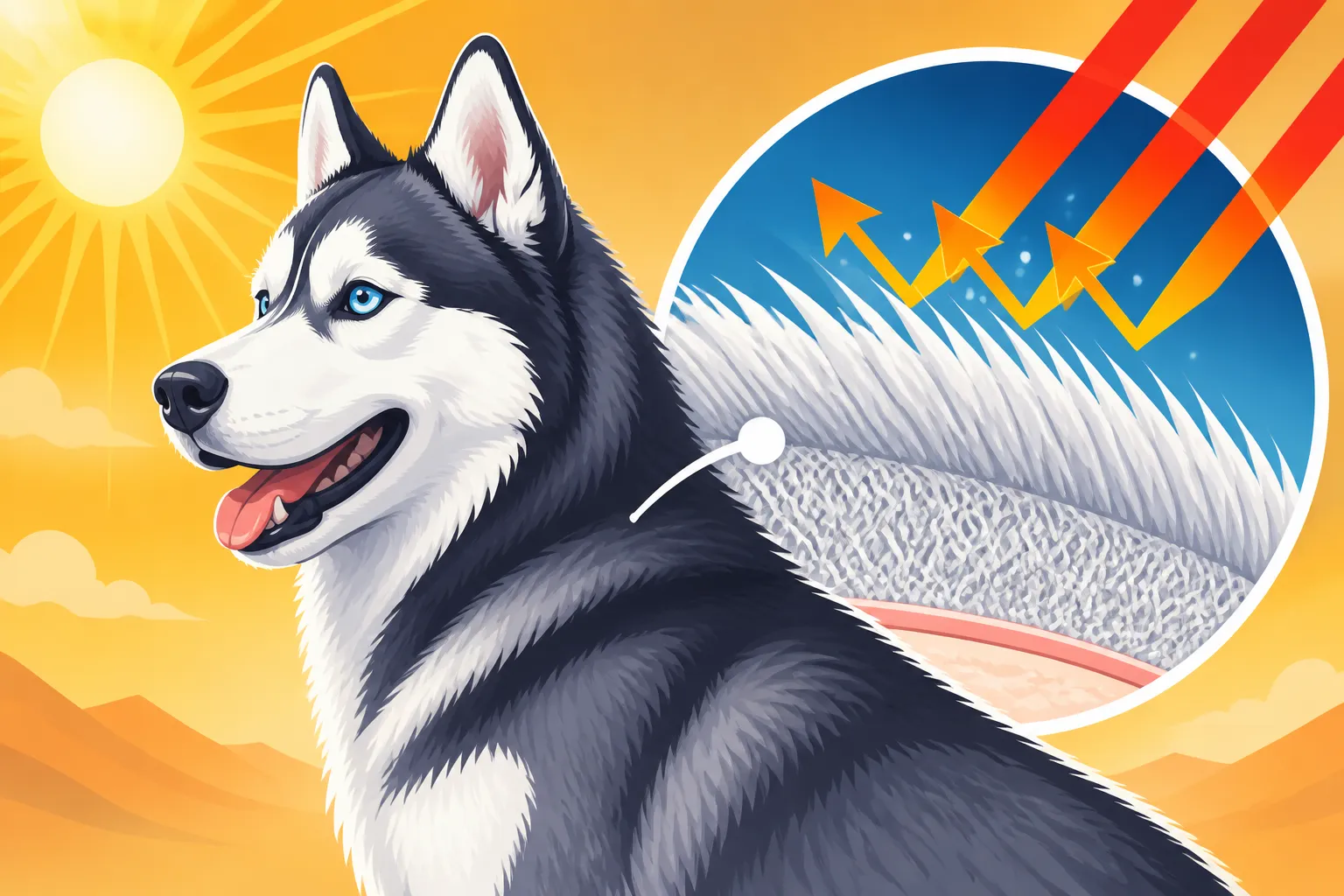
How a Siberian Husky Coat Keeps Heat Out
It's a common misconception that our beautiful Siberian Huskies, with their thick, luxurious coats, are just built for the snow and ice. Many people assume that such a coat must make them miserably hot in warmer weather, leading to well-intentioned but often misguided efforts to "help" them cool down. But the truth is, a Siberian Husky's coat is a marvel of natural engineering, designed not just to keep them warm, but crucially, to keep them cool too. This guide will explore exactly how that incredible coat works to regulate their body temperature, even when the mercury rises.
The Marvel of the Siberian Husky Double Coat
When you look at a Siberian Husky, the first thing that often strikes you is that magnificent fur. It's thick, dense, and screams "winter wonderland." But this isn't just any fur; it's a specialized double coat, and understanding its unique structure is key to appreciating how it protects them in all seasons, not just the cold ones. This coat is a direct inheritance from their ancestors, who lived in some of the most extreme environments on Earth. It’s their natural thermostat, a highly effective barrier against the elements.
Think of it like a perfectly designed insulated house. In winter, it holds the heat in, keeping the interior toasty. In summer, it keeps the blistering sun out, maintaining a comfortable coolness inside. The Husky's coat does exactly this for their body, creating microclimates that adapt to the ambient temperature. It's a testament to thousands of years of natural selection, ensuring these dogs could thrive in places where lesser coats would fail. Without this coat, they would be far more vulnerable to both the cold and the heat, making proper coat care absolutely essential for their well-being.
Layers of Protection: Guard Hairs and Undercoat
The magic of the Siberian Husky's coat lies in its two distinct layers, each with a crucial role to play. These aren't just random hairs; they are carefully differentiated to provide maximum protection. Understanding these layers is the first step in truly appreciating the sophistication of their natural insulation system. When we talk about Guard Hairs and Undercoat in a Siberian Husky, we're really delving into the mechanics of their survival.
The Stiff Outer Guard Hairs
The outer layer is comprised of what we call guard hairs. These are longer, coarser, and straighter hairs that form the protective shell of the coat. They aren't particularly dense, and you can usually see individual strands. Their primary job is to repel water, snow, and dirt, acting like a natural raincoat. Imagine walking through a snowy field; the guard hairs prevent moisture from soaking through to the delicate undercoat and the skin beneath. This keeps the dog dry, which is paramount for warmth in cold climates.
But their role extends beyond just water repellence. These guard hairs also shield the skin from harmful UV rays, preventing sunburn, which can be a real issue for dogs with exposed skin. They also protect against minor abrasions, thorns, and insects. In warmer weather, these guard hairs stand slightly away from the body, allowing air to circulate, which is a key component of their cooling system. This airflow is essential for dissipating heat, making the guard hairs a dynamic part of their temperature regulation.
The Dense, Wooly Undercoat
Beneath the guard hairs lies the true heart of the Husky's insulation system: the undercoat. This layer is incredibly dense, soft, and woolly, often feeling like fine cotton. It's much shorter than the guard hairs and provides the bulk of the coat's insulating properties. The undercoat traps a layer of air close to the dog's skin. This trapped air is the secret weapon, working similarly to the insulation in your attic.
In winter, this trapped air warms up from the dog's body heat, forming a warm buffer that prevents heat loss. It keeps the cold air out and the warm air in. In summer, the exact same principle applies, but in reverse. The dense undercoat, with its trapped air, acts as a barrier to the external heat. It prevents the hot ambient air and the sun's scorching rays from reaching the skin, effectively keeping the dog cooler than if the skin were exposed. It's a remarkable feat of passive cooling, leveraging air as an insulator against both extremes. This dual function is what makes the Siberian Husky's coat so special, demonstrating What the Siberian Husky Double Coat Actually Does in practice.
Insulation, Not Just for Cold
This brings us to a crucial point: the Siberian Husky coat isn't just about battling blizzards. It's a sophisticated thermo-regulation system designed for dynamic environments. The concept that a thick coat is only good for cold is a common human-centric misunderstanding. Dogs don't sweat all over their bodies like we do; their primary cooling mechanisms are panting and radiating heat from their paw pads. Their coat plays a different, yet equally vital, role in temperature management.
Trapping Air for Dual-Action Insulation
The undercoat’s ability to trap air is what makes it so effective in both hot and cold conditions. When it's freezing, that trapped air gets warmed by the dog's body, and the guard hairs keep that warm air close while repelling the external cold. It's like wearing a high-tech winter jacket that's breathable but incredibly warm. When it's hot, the same layer of trapped air acts as a buffer. It prevents the sun's direct heat from penetrating to the skin and helps regulate the surface temperature of the skin itself.
Think of an igloo. It's made of snow, yet it's warmer inside than outside because the snow acts as an insulator, trapping air and preventing heat transfer. A Husky's coat works similarly. The air layer acts as a barrier, slowing down the transfer of heat in either direction. This is why you'll often see Huskies relaxing comfortably in the shade on a warm day, looking perfectly at ease, while other breeds might be panting excessively. Their coat is actively working to maintain a stable internal temperature.
Protection from Sun and Radiant Heat
Beyond just insulation, the dense coat provides a physical shield. The guard hairs reflect some of the sun's rays, preventing direct solar radiation from hitting the skin. The undercoat then acts as a second line of defense, absorbing and dispersing any heat that gets past the guard hairs before it can reach the skin. This protective barrier is incredibly important for breeds that might spend time outdoors.
Without this layer, the sun would beat directly on their skin, leading to rapid overheating and potential sunburn. Just like you wouldn't stand naked in the desert sun, a Husky's natural covering is their best defense. This is why any efforts to "cool" them by shaving are so detrimental, as we'll discuss. Their coat is their natural parasol, their built-in sunblock, and their personal air conditioner all rolled into one. Maintaining its health and integrity is paramount for Keeping a Siberian Husky Cool Through Summer.
Dispelling the Shaving Myth
This is perhaps the biggest and most pervasive myth surrounding double-coated breeds like the Siberian Husky. Many well-meaning owners, seeing their dog with a thick coat in summer, jump to the conclusion that shaving it off will provide relief. Nothing could be further from the truth. In fact, shaving a Siberian Husky is one of the worst things you can do for their long-term coat health and their ability to regulate temperature.
Why Shaving Harms, Not Helps
When you shave a Husky, you remove both the protective guard hairs and the insulating undercoat. This immediately strips them of their natural defense system. The skin, which was once shielded, is now directly exposed to the sun's harsh UV rays. This drastically increases the risk of sunburn, which can be painful, lead to skin damage, and even increase the risk of skin cancer. You can read more about this in Sunburn Risk on a Shaved Siberian Husky. Without the insulating layer, their body also loses its ability to block external heat. Instead of being cooler, they can actually overheat faster because their natural thermal barrier is gone.
Furthermore, the act of shaving can permanently damage the growth cycle of the coat. Often, the undercoat grows back faster and thicker than the guard hairs, leading to a "wool-like" coat that is prone to matting and even less effective at shedding water and regulating temperature. This damaged coat can then cause more problems down the line, requiring even more intensive grooming to manage. It's a vicious cycle that starts with a good intention but has detrimental results. Why a Shaved Siberian Husky Overheats isn't just a theory; it's a proven reality.
The Problematic Regrowth
The regrowth of a shaved Husky coat is often uneven and problematic. The softer undercoat typically grows back much quicker than the tougher guard hairs. This can lead to a coat that is thicker, softer, and more prone to matting. A matted coat loses its ability to trap air effectively, further compromising the dog's natural insulation. Instead of a functional double coat, you end up with a coat that is less efficient at keeping them cool and more difficult to maintain.
It's a common lament among groomers and Husky owners alike that once shaved, the coat often never truly recovers its original texture and function. The balanced ratio of guard hairs to undercoat is disrupted, and it can take years, if ever, for the coat to return to its natural state. This is why professional groomers who understand double-coated breeds will adamantly refuse to shave a Husky unless it's for a medical reason. The Only Places a Siberian Husky May Be Trimmed are usually limited to paws for traction or hygiene trims, never the body.
Maintaining the Coat for Optimal Thermo-Regulation
Since shaving is out, proper coat maintenance becomes incredibly important for ensuring your Siberian Husky's coat can do its job effectively, especially in warmer months. A healthy, well-maintained coat is their best defense against both heat and cold. It's about working with their natural biology, not against it.
Regular Brushing and De-Shedding
The most crucial aspect of Husky coat care is regular brushing, especially during their "coat blows." Huskies typically shed their entire undercoat twice a year – often in spring and fall – a period known as The Months a Siberian Husky Blows Its Coat. During these times, the amount of loose fur can be astounding! If this dead undercoat isn't removed, it can become trapped, creating dense mats that prevent air circulation. This trapped, dead fur actually hinders their ability to stay cool by creating a solid barrier rather than an airy, insulating one.
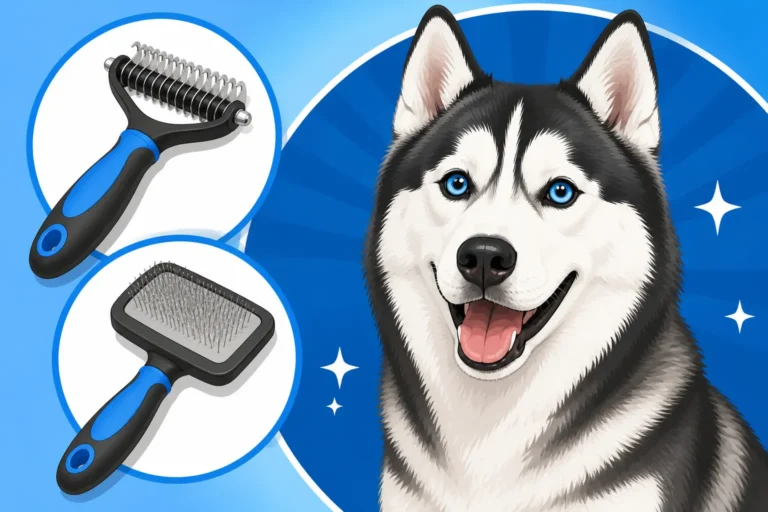
Investing in good quality grooming tools, such as an undercoat rake or a high-velocity dryer, is essential. Products available on platforms like Chewy or Amazon can make a huge difference. A thorough de-shedding session once or twice a week, or even daily during a full coat blow, helps remove all that dead, insulating fur that would otherwise block airflow. Many owners also opt for professional de-shedding services during these periods. You might be surprised to learn that many Huskies benefit from Two De-Shedding Appointments a Siberian Husky Year at a professional groomer.
The Role of Baths and Force Drying
While Siberian Huskies are remarkably clean dogs and don't require frequent bathing, a bath can be beneficial during a coat blow to help loosen dead fur. However, the drying process is critical. You absolutely must ensure the coat is dried all the way to the skin. A damp undercoat, especially if left to air dry slowly, can lead to skin issues like hot spots.
Professional groomers often use high-velocity dryers, which not only dry the coat quickly but also help to "blow out" immense amounts of loose undercoat that brushing alone might miss. If you're bathing your Husky at home, consider investing in a good pet dryer yourself, or take them to a self-service dog wash that has industrial dryers. This step is vital for ensuring the undercoat is fluffy and airy, ready to insulate properly. Proper Force Drying a Siberian Husky After a Bath is not just about cleanliness, but about maintaining the coat's thermal efficiency.
Nutrition for Coat Health
While not directly related to the coat's physical structure, a healthy diet plays an undeniable role in the overall health and quality of your Husky's fur. A diet rich in essential fatty acids, like Omega-3 and Omega-6, contributes to a strong, lustrous coat and healthy skin. A healthy coat is a functional coat. If the fur is dull, brittle, or sparse due to nutritional deficiencies, its ability to insulate effectively will be compromised.
Many high-quality dog foods, easily found on sites like Ollie or Chewy, are formulated with coat health in mind. Look for ingredients that support skin and coat, and ensure your Husky is getting all the necessary vitamins and minerals. While their metabolism is unique and they often eat less than you'd expect for their size, the quality of their food is paramount. A healthy dog with a healthy coat is naturally better equipped to manage environmental temperatures.
| Coat Layer | Structure | Primary Function | Heat Regulation Role (Summer) | Heat Regulation Role (Winter) |
|---|---|---|---|---|
| Guard Hairs | Long, coarse, stiff | Repel water/dirt, UV protection | Shields skin from sun, allows airflow | Keeps moisture out, holds warm air in |
| Undercoat | Dense, soft, woolly | Traps air, insulates | Blocks external heat, creates cool air buffer | Traps body heat, prevents cold penetration |
Remember, your Siberian Husky's coat is a living, breathing part of their anatomy, perfectly evolved to keep them comfortable in a wide range of temperatures. Resist the urge to shave, brush regularly, and appreciate the natural wonder that is their incredible double coat.
Disclaimer
This article is for general informational purposes only and does not constitute professional advice. Laws, prices and regulations vary by location and change over time. Consult a qualified professional for guidance on your specific situation.