Force Drying a Siberian Husky After a Bath
After bathing your majestic Siberian Husky, you might feel like you’ve started an entirely new, even more challenging project: getting them dry. It's a common frustration for Husky owners, watching towel after towel get soaked and feeling their dog's thick coat still holding onto moisture hours later. This guide is here to walk you through the absolute best way to tackle this task – force drying – ensuring your Husky is not only dry but also boasts a healthy, vibrant coat without the lingering dampness or potential for skin issues.
Why Traditional Drying Methods Fall Short for Siberian Huskies
Anyone who's ever given a Siberian Husky a bath knows that their coat is a marvel of nature, designed to withstand extreme cold and shed water remarkably well… eventually. But that "eventually" can feel like an eternity in your bathroom, and often, traditional drying methods simply don't cut it. You're not alone in feeling like you're wrestling a wet polar bear with a regular towel.
The Challenge of the Double Coat
The Siberian Husky’s famous double coat is its pride and joy, but it's also the reason why drying them feels like such an uphill battle. This coat isn't just one layer; it’s two distinct layers working in harmony. You have the soft, dense undercoat, which is incredibly fine and grows thick to provide insulation, and then the coarser, longer guard hairs that form the protective outer layer, shielding the undercoat from snow, ice, and wetness. When water gets past those guard hairs and saturates that dense undercoat, it clings on for dear life.
Imagine trying to dry a thick wool blanket by simply wiping it with a tea towel – that's essentially what you're up against with a Husky's undercoat. The sheer volume and density of the fur make it incredibly difficult for air to circulate and for moisture to evaporate naturally. Even after extensive toweling, you'll often find that deep down, near the skin, the undercoat is still stubbornly damp, which can lead to a host of problems. This is why just letting them "air dry" indoors usually results in a dog that smells vaguely of wet dog for days, and a house that feels like a sauna from their evaporating fur.
The Risks of Incomplete Drying
Beyond the annoyance of a perpetually damp dog, incomplete drying poses real health risks for your Siberian Husky. That moist, warm environment trapped close to the skin is an open invitation for bacteria and fungi to thrive, leading to various skin conditions. One of the most common issues is matting, especially in areas like behind the ears, under the legs, and around the tail. When the undercoat isn't thoroughly dried and brushed out, it can clump together, forming painful mats that pull at the skin and can hide underlying skin problems.
Even more concerning are hot spots, also known as acute moist dermatitis. These are inflamed, infected patches of skin that can appear seemingly overnight. A damp coat, especially if the dog is prone to licking or scratching an itchy spot, creates the perfect breeding ground for bacteria. These hot spots are incredibly uncomfortable for your Husky and often require veterinary intervention to clear up. The lingering dampness can also contribute to that distinct "wet dog" smell, which isn't just an olfactory nuisance, but often a sign that bacteria or mildew are growing in the coat. Traditional towels and human hair dryers (which are often too hot and not powerful enough) simply can't penetrate deep enough to extract all that trapped water, leaving your Husky vulnerable. This is why simply toweling off your Husky and letting them shake off isn't enough to get them truly dry, and why a more deliberate approach is needed to prevent issues like Whether a Wet Siberian Husky Undercoat Causes Hot Spots.
Understanding and Using a High-Velocity Dryer for Huskies
If you've spent any time researching how professional groomers handle Siberian Huskies, you've likely come across the term "force dryer" or "high-velocity dryer." This isn't just a fancy hair dryer; it's an essential tool that can transform your post-bath routine from a soggy struggle to an efficient, effective grooming session. Investing in one of these tools is probably the best decision you can make for your Husky's coat health, especially during those infamous coat blow seasons.
What Is a Force Dryer and How It Works
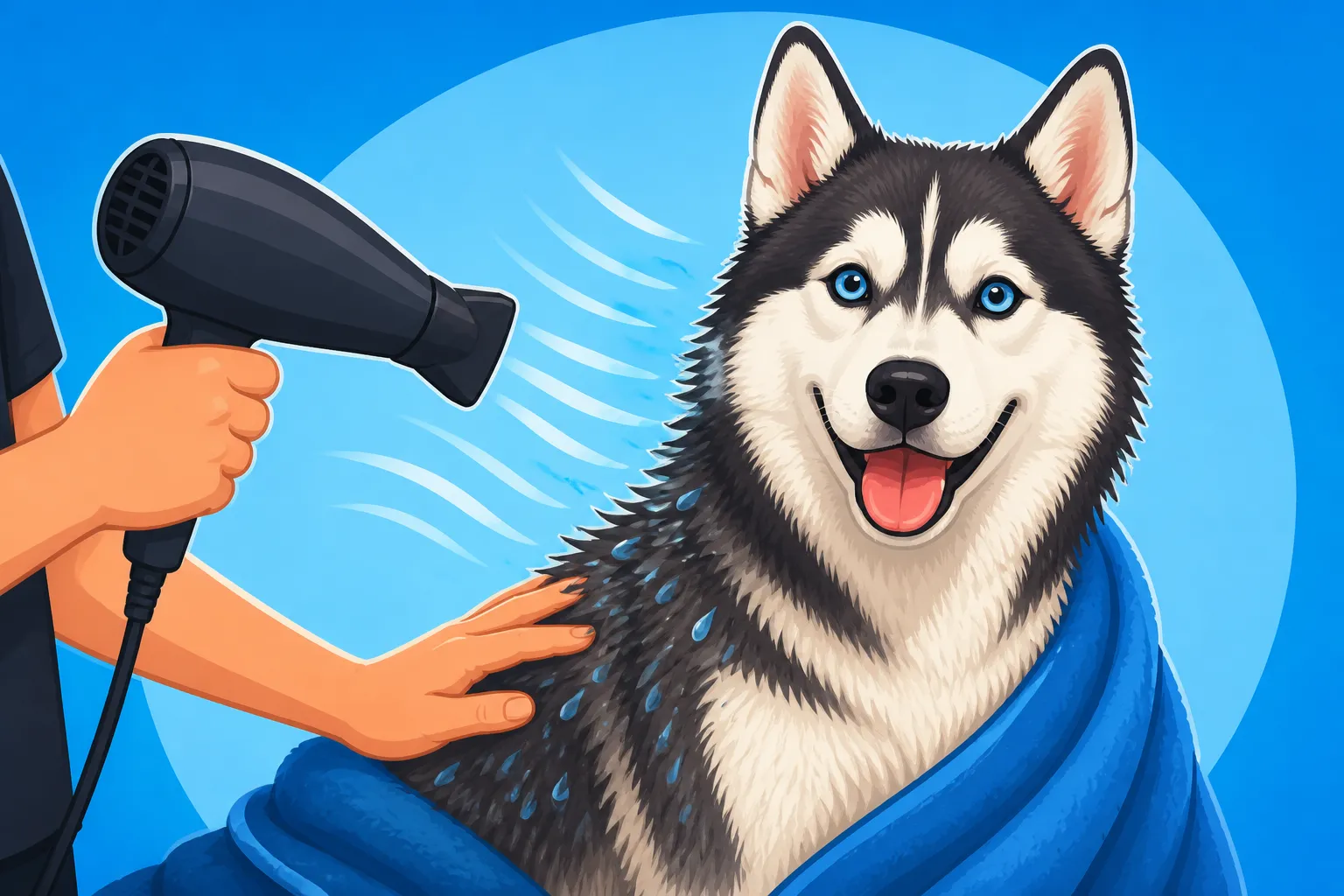
A force dryer, sometimes called a high-velocity dryer, is specifically designed for pet grooming. Unlike human hair dryers that rely on heat to evaporate water, force dryers use a powerful, concentrated stream of unheated air to quite literally "blast" water off the dog's coat and out of the undercoat. Think of it like a leaf blower for your dog's fur, but much more refined and with adjustable speeds and nozzles. The force of the air is what does the work, pushing water molecules away from the hair shafts and separating the individual strands of the dense undercoat.
This method is incredibly efficient because it removes water physically rather than waiting for evaporation. It also helps to fluff up the coat and separate the hairs, which is crucial for getting all the way down to the skin. You'll find these dryers available at various pet supply retailers like Chewy or on larger online marketplaces like Amazon, often specifically marketed for double-coated breeds. They come with different power levels and nozzle attachments – usually a flat, wide nozzle for large areas and a more concentrated, round nozzle for harder-to-reach spots or for detailing. The lack of heat is paramount; excessive heat can damage your Husky's skin and coat, and they are already prone to overheating. A good force dryer uses air at ambient temperature, making it safe and comfortable for your dog. For more information on maintaining that amazing double coat, check out What the Siberian Husky Double Coat Actually Does.
Step-by-Step Force Drying Technique
Getting started with a force dryer might seem intimidating, but with a little practice and patience, you'll be a pro in no time. The key is to introduce it gradually and make it a positive experience for your Husky.
-
Preparation is Key: First things first, after your Husky's bath (and remember, Bathing a Siberian Husky and How Rarely they actually need one!), get as much water out as possible with towels. Use absorbent microfibre towels and press them against the coat, rather than rubbing, to soak up excess moisture. Give them a good shake outside if possible to dislodge some water. Before starting the dryer, do a quick brush-through with an undercoat rake or slicker brush to remove any loose fur that's already shedding or starting to tangle. This makes the dryer's job much easier and helps prevent mats from forming under the force of the air.
-
Acclimation and Positive Association: Force dryers are loud. Your Husky might be startled by the noise and the sensation at first. Start by turning the dryer on its lowest setting away from your dog, letting them hear the sound. Offer treats and praise. Once they seem calmer, point the nozzle at their rear, a less sensitive area, from a distance, just for a few seconds. Gradually increase the time and get closer, always pairing it with positive reinforcement. Short, frequent sessions are better than one long, stressful one.
-
Working Through Sections: Once your Husky is comfortable, it's time to get down to business. Start with the powerful, wide nozzle. Hold the nozzle a few inches away from the coat, pointing it against the direction of hair growth. This is crucial because it helps lift the guard hairs and allows the air to blast deep into the undercoat, pushing water out. Work in sections, starting from the hindquarters and moving forward towards the head. As you work, you'll see the water literally flying off the coat. Keep moving the nozzle, don't hold it in one spot for too long, to prevent skin irritation. You want to see the skin as you dry, separating the fur to ensure it's completely dry underneath.
-
Protecting Sensitive Areas: When you get to more sensitive spots like the face, ears, and genitals, switch to the lowest setting or use a more concentrated nozzle. Some owners find it helpful to place cotton balls gently in their Husky’s ears (making sure they don’t go too deep) to muffle the sound, or use a Happy Hoodie, a soft fabric band that goes over the ears. Always be gentle and avoid directing air directly into their eyes or nostrils. Many Huskies will shake their head vigorously when you dry around their ears, so be prepared for some spray! You might want to get specific tools like the ones mentioned in Grooming Tools a Siberian Husky Owner Buys Once to make this easier.
Safety Tips and Best Practices
While a force dryer is an incredibly effective tool, it's essential to use it safely to protect both you and your Siberian Husky. This isn't a tool to be used carelessly; it requires attention and proper technique.
First and foremost, never use a human hair dryer on your Siberian Husky. The heat settings are far too high and can quickly overheat their skin, causing burns, even if you don't feel it immediately through their thick fur. Pet-specific force dryers are designed to use high velocity air at ambient temperatures, eliminating this risk. Always double-check that your force dryer is not emitting hot air.
Eye and ear protection are also paramount. For yourself, you might want to wear safety glasses to prevent water and loose fur from getting into your eyes, as the dryer can create quite a storm! For your Husky, as mentioned, cotton balls in the ears can help with the noise, and always avoid pointing the nozzle directly at their face or eyes. The sheer force of the air can be uncomfortable or even harmful to their delicate eyes. Watching for signs of stress or discomfort in your dog is crucial. If they are panting excessively, trying to escape, or showing signs of fear, take a break. Make the experience positive with treats and praise, and consider breaking it into shorter sessions if needed.
Finally, remember the goal is to get the dog dry down to the skin, but not to cause irritation. Keep the nozzle moving, avoid holding it in one spot, and maintain a few inches distance from their body. Continuously brush through the coat as you dry to help separate the hairs and ensure thoroughness. You'll be amazed at the amount of loose undercoat that comes out during this process – it's a fantastic de-shedding method in itself! This process will ensure Drying a Siberian Husky to the Skin is achieved effectively.
The Benefits of Force Drying Your Siberian Husky's Coat
Okay, so we’ve talked about how to force dry, and why it’s necessary for that amazing double coat. But let’s really dig into the payoff. Beyond just getting your Husky dry, there are some incredible benefits to incorporating a force dryer into your grooming routine that will make both your life and your dog’s much more comfortable and healthy.
Faster Drying and Healthier Skin
Let's be honest, who wants to spend hours trying to dry a Husky? Force drying drastically cuts down the time it takes to get your dog completely dry. What might take several hours of air drying, or repeated towel attempts, can often be accomplished in a fraction of the time with a powerful force dryer. This isn't just a convenience; it's a health benefit. When your Husky is completely dry in a shorter amount of time, you significantly reduce the window for moisture-related skin problems to develop.
The thoroughness of force drying means that trapped moisture is eradicated from the dense undercoat, right down to the skin. This prevents the humid environment that can lead to bacterial or fungal infections, skin irritations, and the dreaded hot spots we discussed earlier. A properly dried coat is a healthier coat and, by extension, a healthier dog. Your Husky will feel more comfortable without that lingering dampness, and you'll have peace of mind knowing their skin isn't suffering beneath their beautiful fur. It’s also crucial for maintaining the integrity of the coat itself, preventing issues like Matting Behind a Siberian Husky's Ears or other sensitive areas.
De-Shedding and Coat Maintenance
This is where force drying truly shines beyond just drying after a bath. It is arguably one of the most effective de-shedding tools you can use. During your Husky's notorious "coat blow" seasons – typically twice a year, in spring and fall – they shed massive amounts of that soft, dense undercoat. If you don’t actively remove it, it can get tangled in the guard hairs, lead to matting, and just end up all over your house.
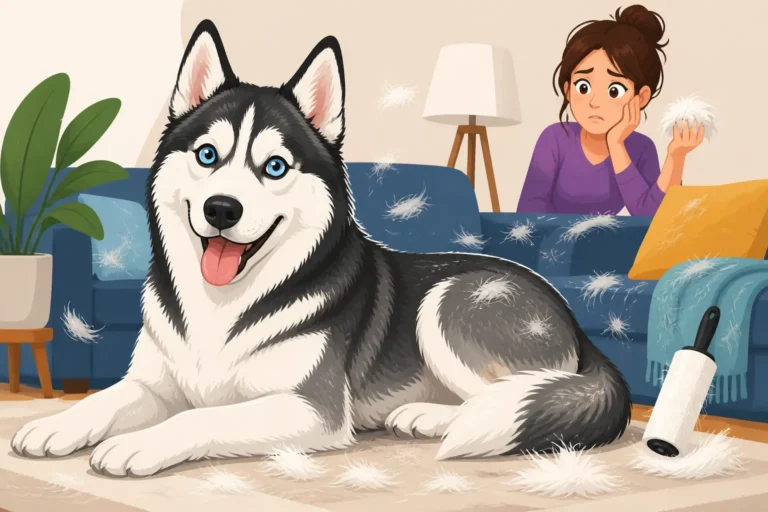
A force dryer literally blasts out all that loose, dead undercoat that would otherwise be left to shed all over your furniture and floors. As you work the dryer against the grain of the fur, you’ll see clouds of undercoat coming off – it's incredibly satisfying and surprisingly efficient. Many groomers use force dryers as their primary de-shedding tool. By regularly using your force dryer, especially during shedding season, you can dramatically reduce the amount of fur floating around your home and keep your Husky's coat healthy and free of tangles and mats. Think of it as an intensive Daily Raking Through a Siberian Husky Blow session, but with far greater efficiency. Plus, a healthy, well-maintained coat ensures that the natural insulation properties of your Husky's double coat are optimized, keeping them comfortable in various temperatures.
Cost and Time Savings Over Professional Grooming
While the initial investment in a quality force dryer might seem significant, it can lead to substantial long-term savings, especially if you regularly take your Husky to a professional groomer. Siberian Huskies, with their double coats and propensity for shedding, often incur higher grooming fees than short-haired breeds. A professional de-shedding bath can be quite costly, and if you're sending your dog in every few months, those costs add up quickly.
By learning to bathe and force dry your Husky at home, you essentially bring the groomer's salon to your own bathroom. This not only saves you money on Professional De-Shedding for a Siberian Husky services but also saves you the time and hassle of scheduling appointments, driving to and from the groomer, and leaving your dog there for several hours. You have the flexibility to groom your Husky on your own schedule, which is particularly useful during those intense shedding periods when you might want to de-shed more frequently than you would traditionally schedule with a groomer. Owning your own high-velocity dryer, like those readily available on Amazon or Chewy, puts the power of professional-grade grooming right in your hands.
Here’s a quick comparison of the two main drying methods for a Husky:
| Feature | Traditional Towel/Air Drying | Force Drying (High-Velocity Dryer) |
|---|---|---|
| Drying Time | Very long (hours to days for undercoat) | Significantly faster (30-90 minutes) |
| Effectiveness | Superficial, often leaves undercoat damp | Penetrates deep, dries to the skin |
| De-Shedding | Minimal, loose fur remains in coat | Highly effective, blasts out loose undercoat |
| Matting Risk | High if undercoat remains damp and tangled | Low, helps prevent mats by separating fur |
| Hot Spot Risk | Higher due to prolonged dampness against skin | Lower due to rapid, thorough drying |
| Odor | Prone to "wet dog" smell due to incomplete drying | Reduces odor by completely drying coat |
| Cost | Low initial cost (towels) | Moderate initial investment for dryer |
| Effort | Manual toweling, frequent brushing | Focused effort, less physical exertion |
Force drying your Siberian Husky after a bath isn't just about getting them dry; it's a critical step in maintaining their health, comfort, and the integrity of their magnificent double coat. While it might take a bit of practice to get the hang of it and for your Husky to adjust, the benefits of faster drying, superior de-shedding, and healthier skin far outweigh the initial learning curve. Embrace the power of the force dryer, and you'll wonder how you ever managed without it! Your Husky will thank you for it, and so will your vacuum cleaner.
Disclaimer
This article is for general informational purposes only and does not constitute professional advice. Laws, prices and regulations vary by location and change over time. Consult a qualified professional for guidance on your specific situation.