Professional De-Shedding for a Siberian Husky
If you live with a Siberian Husky, you know the struggle: glorious, fluffy tumbleweeds rolling across your floor, a perpetual snowfall of undercoat clinging to every surface, and that never-ending battle to keep your house from looking like a giant dog bed. It’s not just an annoyance; it’s a lifestyle, and frankly, it can be exhausting. This guide is here to shed some light (pun intended!) on how professional de-shedding services can be an absolute game-changer for managing your Husky’s infamous coat, giving you back some sanity and keeping your beautiful companion more comfortable.
The Never-Ending Saga of Siberian Husky Shedding
Anyone who has ever admired a Siberian Husky knows they possess a magnificent double coat, a testament to their Arctic origins. What they might not realize, until they own one, is the sheer volume of hair that coat can produce, especially during a "coat blow." It’s a natural process, but it can turn your home into a furry wonderland if not managed properly.
Understanding the Double Coat and Its Purpose
A Siberian Husky's coat isn't just for show; it's a finely engineered marvel designed to protect them from extreme temperatures. They have two distinct layers: a soft, dense undercoat and a longer, coarser outer coat, often called guard hairs. The undercoat acts as insulation, trapping air to keep them warm in freezing conditions and surprisingly, to help regulate their body temperature in warmer climates by preventing heat from penetrating their skin directly. The guard hairs are water-repellent and protect the undercoat from snow, ice, and debris.
This incredible design means Huskies are constantly growing and shedding their undercoat to adapt to seasonal changes. When they're not actively "blowing" their coat, they still shed moderately throughout the year. However, the true spectacle occurs during their biannual "coat blow," typically in spring and fall, where they rapidly shed massive amounts of undercoat to prepare for the upcoming season. If you've ever wondered about the timeline, you might find our article on Siberian Husky Coat Blow and the Six Weeks It Lasts quite enlightening. It’s during these periods that your vacuum cleaner truly earns its keep, and you start to seriously question your life choices as a Husky owner!
Why At-Home Grooming Often Falls Short
We all try our best, don't we? Armed with brushes, de-shedding tools, and perhaps a prayer, we attempt to tackle the avalanche of hair ourselves. For regular maintenance, tools like Undercoat Rakes and Slickers for a Siberian Husky are absolutely essential. However, the truth is, most at-home grooming, while helpful, simply cannot match the efficacy of a professional de-shedding treatment. Our regular brushes, no matter how good, often only skim the surface or struggle to penetrate the densest parts of the undercoat.
Think about it: a professional groomer has specialized tools, techniques, and often, an extra pair of hands that can work through every inch of that thick coat. They can get deep into the undercoat where the loose hair really resides, pulling out clumps you didn't even know were there. During a major Spring and Fall Sheds in a Siberian Husky, the amount of dead hair can be overwhelming, quickly clogging brushes and turning a simple grooming session into a Herculean task. It's not a reflection of your grooming skills; it's simply the reality of dealing with a breed bred for extreme conditions, not for easy home maintenance.
What a Professional De-Shedding Session Entails
When you take your Siberian Husky to a professional groomer for a de-shedding treatment, you're investing in a comprehensive process designed to remove as much loose undercoat as possible, leaving your dog lighter, cleaner, and ultimately, your home much tidier. It’s far more than just a quick brush-through.
The Multi-Step De-Shedding Process
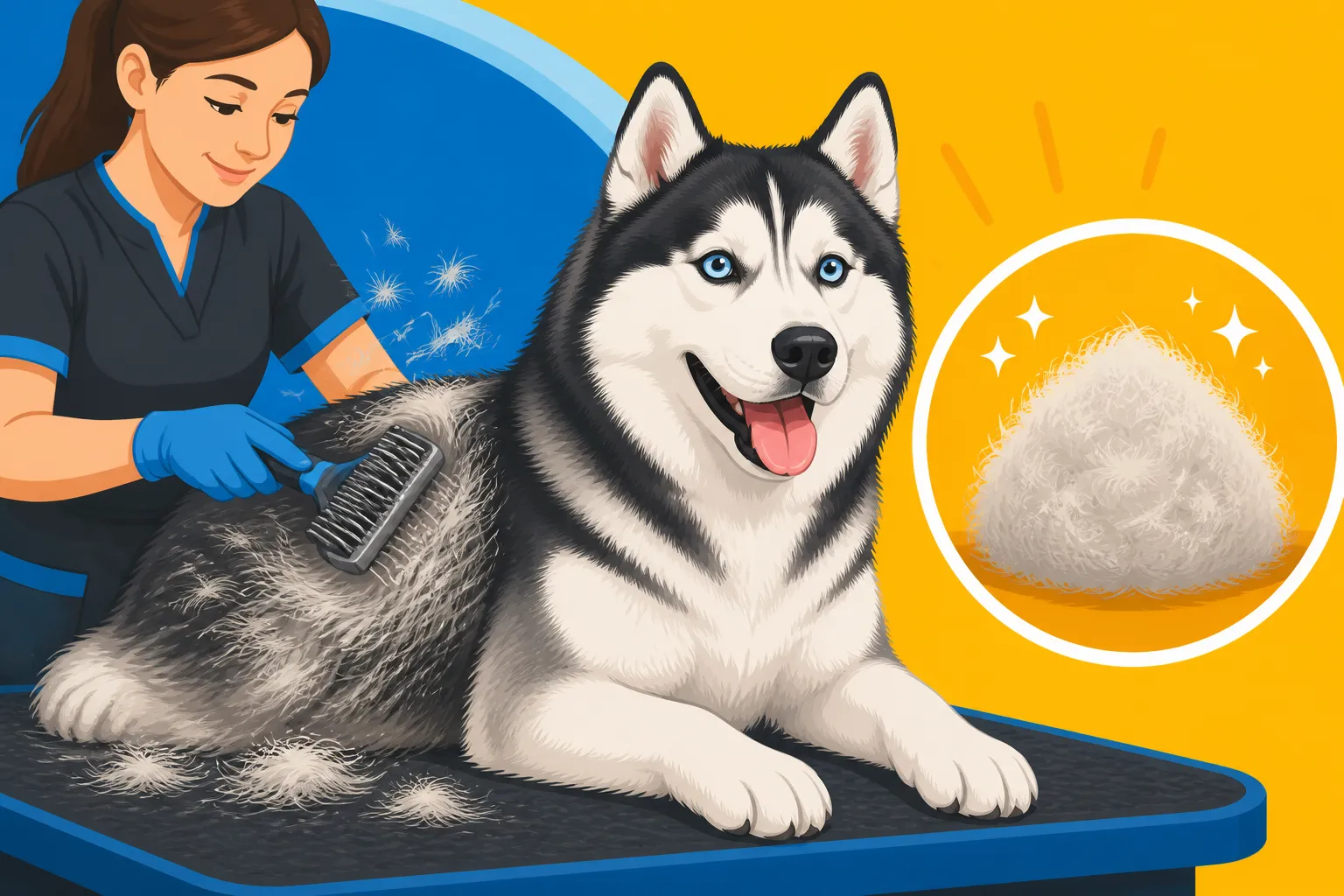
A quality professional de-shedding service for a Husky typically involves several crucial steps, each building on the last to maximize hair removal. It often starts with a thorough pre-brushing to remove surface tangles and some of the looser hair. Then comes the bath, which is critical. Groomers use specialized de-shedding shampoos and conditioners designed to loosen the dead undercoat and help it slide out more easily. They'll often work these products deep into the coat, ensuring every strand is saturated.
After rinsing, the magic really happens with the high-velocity dryer. This isn't just for drying; it's a powerful tool that literally blows the loose undercoat out of the dog's coat. The force of the air separates the hair shafts, allowing the dead undercoat to fly away. It’s a sight to behold, like a furry snowstorm! Finally, a professional will use various de-shedding tools, such as specialty rakes and blades, to manually remove any remaining loose hair. They work meticulously, section by section, ensuring a thorough job. This entire process is significantly more intensive and effective than anything most owners can achieve at home, even with dedicated Daily Raking Through a Siberian Husky Blow.
Specialized Tools and Techniques Used by Professionals
Professional groomers have an arsenal of tools and techniques specifically designed for double-coated breeds like Huskies. Beyond the de-shedding shampoos and conditioners, they utilize powerful forced-air dryers, sometimes referred to as "blasters." These dryers are incredibly effective at pushing out the loose undercoat without causing damage to the skin or the healthy guard hairs. This is often the most impactful part of the de-shedding process. If you've ever considered buying A High-Velocity Dryer for a Siberian Husky Coat for home use, you know how powerful these can be.
Additionally, groomers employ a variety of specialized brushes and combs. These might include undercoat rakes with different tooth lengths, shedding blades, and slicker brushes designed to reach deep into the coat without irritating the skin. They're also trained to identify areas where matting might be starting, such as behind the ears or on the legs, and address them carefully. This careful, systematic approach ensures maximum undercoat removal while keeping your Husky comfortable and safe. The goal is always to preserve the integrity of that magnificent double coat, not to damage it.
The Tangible Benefits Beyond Just Less Hair
While reducing the amount of Husky hair in your home is undoubtedly the primary driver for professional de-shedding, the benefits extend far beyond a cleaner living space. This specialized grooming contributes significantly to your dog's health, comfort, and overall well-being.
Improved Skin and Coat Health
Removing dead undercoat isn't just about aesthetics; it's crucial for skin and coat health. When excessive dead hair remains trapped in the coat, it can prevent proper air circulation, creating a damp, warm environment close to the skin. This can lead to skin irritation, hot spots, and even bacterial or fungal infections. A professional de-shedding treatment effectively "unclogs" the coat, allowing the skin to breathe. This improved air flow helps to keep the skin healthy and reduces the risk of dermatological issues.
Furthermore, by removing the old, dull undercoat, the healthy, new hair can grow in stronger and shinier. The natural oils produced by your Husky's skin can also distribute more evenly throughout the coat, further enhancing its natural luster and health. It’s a fantastic way to support your Husky's natural protective layers. Some skin conditions, like Zinc-Responsive Dermatosis in the Siberian Husky, can also impact coat quality, making good grooming even more vital.
Enhanced Comfort and Temperature Regulation
Imagine wearing a thick, itchy sweater that you can't take off, even when it's warm. That's a bit like what a Husky experiences with a coat full of dead, trapped undercoat. All that extra hair weighs them down and can make them feel incredibly uncomfortable, especially as the weather warms up. While you should never shave a Husky (we'll dive into Why a Shaved Siberian Husky Coat Grows Back Wrong in another post!), carefully de-shedding them provides immense relief.
By removing the dense, insulating layer of dead undercoat, you help your Husky’s body regulate its temperature more effectively. They'll feel cooler in warmer weather because air can circulate closer to their skin, and their natural shedding cycle prepares them better for the colder months by making way for new, healthy growth. This increased comfort is especially important during transitional seasons when the weather can be unpredictable. You might notice your Husky being more active and generally happier after a good de-shedding, no longer dragging around a heavy, itchy burden. This is critical for preventing heat stress, particularly if your Husky is sensitive to The Temperature a Siberian Husky Starts Struggling At.
Reduced Allergens and a Cleaner Home Environment
For many Husky owners, the sheer amount of hair is a nuisance. But for those with allergies, it can be a significant health issue. Pet allergies are often triggered by dander (flakes of skin) and saliva, which cling to loose hair and become airborne. While no dog is truly hypoallergenic, significantly reducing the amount of loose hair and dander in your home can go a long way in managing allergy symptoms for sensitive family members.
A professional de-shedding treatment, by removing copious amounts of undercoat and dander, directly impacts the allergen load in your environment. Less loose hair floating around means fewer allergens settling on furniture, carpets, and air filters. This translates to a cleaner home that requires less intensive vacuuming and dusting, and potentially fewer allergic reactions. It’s a win-win for both your Husky's comfort and your family's health, making the challenge of Living With Siberian Husky Undercoat in the House much more manageable. Some dog food brands like Ollie are focusing on skin and coat health with their fresh food diets, which can also contribute to reducing shedding by promoting a healthier coat from the inside out.
How Often Your Husky Needs Professional De-Shedding
Figuring out the optimal schedule for professional de-shedding can be tricky, as it depends on several factors, including your Husky’s individual shedding cycle, your climate, and your personal tolerance for dog hair. However, there are general guidelines that can help you plan.
Seasonal Timing and Frequency Recommendations
Most Siberian Huskies experience two major "coat blows" per year: one in the spring to shed their heavy winter coat, and another in the fall to prepare for a denser winter coat. These are the prime times for professional de-shedding appointments. Booking your Husky in as these cycles begin, usually around late winter/early spring and late summer/early fall, can dramatically cut down on the amount of hair you find around your house. Many owners find that two full de-shedding appointments per year are sufficient, as detailed in Two De-Shedding Appointments a Siberian Husky Year.
However, some Huskies, especially those living in more moderate climates or those with particularly dense coats, might benefit from additional "mini" de-shedding sessions in between the major blows. This could be a lighter bath and blow-out to keep the undercoat managed. Talk to your groomer about what they observe in your individual dog's coat to help tailor the best schedule.
Factors Influencing Shedding Patterns
Several factors can influence how much and how often your Siberian Husky sheds, thus impacting the frequency of professional de-shedding. Climate is a big one; Huskies living in consistently warm climates might shed more continuously throughout the year rather than having distinct seasonal blows, as their bodies are always trying to regulate temperature. Hormonal changes, such as those caused by spaying or neutering, can also sometimes alter shedding patterns, occasionally leading to a denser coat that sheds more persistently.
Diet and overall health play a crucial role too. A high-quality diet, like those offered by Ollie, rich in omega fatty acids, contributes to a healthier coat and skin, potentially reducing excessive shedding caused by poor nutrition. Conversely, underlying health issues, such as thyroid imbalances (which you can read more about in Siberian Husky Thyroid and Autoimmune Disease), can cause abnormal shedding or coat changes. If you notice a sudden, drastic change in your Husky’s shedding pattern that isn't seasonal, it’s always a good idea to consult your veterinarian. Even routine check-ups, like those mentioned in Siberian Husky Eye Disease and the Annual Exam, can sometimes reveal broader health indicators.
Choosing the Right Groomer for Your Siberian Husky
Finding a groomer who truly understands double-coated breeds like Siberian Huskies is paramount. Not all groomers are created equal, and a bad grooming experience can range from ineffective de-shedding to actual damage to your Husky's coat or skin.
What to Look for in a Professional Groomer
When searching for a groomer, start by asking specific questions about their experience with double-coated breeds. A good groomer for a Husky should be knowledgeable about their unique coat structure and shedding cycles. They should be able to explain their de-shedding process in detail, including the type of shampoos, conditioners, and equipment they use. Look for someone who emphasizes preserving the integrity of the double coat and explicitly states they do not shave Huskies unless medically necessary.
Online reviews and testimonials can also be a goldmine of information. Look for comments from other Husky or double-coat owners. A reputable groomer will often have a portfolio of their work, or at least be happy to discuss their approach with you. Don't be afraid to visit the salon, if possible, to observe the environment and how the animals are handled. A calm, clean, and well-organized space is a good sign. Ultimately, trust your gut feeling.
Questions to Ask Before Booking an Appointment
Before committing to a groomer, arm yourself with a few key questions:
- "Do you have experience with Siberian Huskies or other double-coated breeds?" This is non-negotiable. Their answer should demonstrate an understanding of the breed's specific needs.
- "What is your de-shedding process for a Husky?" They should describe a multi-step process involving bathing with specialized products and using a high-velocity dryer.
- "Do you ever shave double-coated breeds for shedding?" The correct answer for a healthy Husky should be an emphatic "No," unless there's a specific medical reason advised by a vet, such as severe matting that can't be brushed out.
- "What products do you use?" Quality de-shedding shampoos and conditioners are important.
- "What is the cost, and what's included?" Get a clear breakdown of services and pricing. Costs can vary depending on your Husky's size, coat condition, and the specific services included in the de-shedding package.
- "How long does a typical de-shedding appointment take?" This gives you an idea of their thoroughness. A proper de-shedding for a Husky is not a quick job.
- "What is your policy if my dog gets stressed or aggressive during grooming?" Huskies are generally good-natured, but any dog can get stressed. A good groomer will prioritize your dog's comfort and safety.
Don't hesitate to ask for a tour or to see their facility. Good groomers are transparent and proud of their work.
Professional vs. At-Home De-Shedding: A Comparative Look
When it comes to managing your Siberian Husky's majestic, yet challenging, coat, you essentially have two main options: regular at-home grooming or professional de-shedding services. Both have their merits and drawbacks, and understanding these can help you decide what's best for your lifestyle and your furry friend.
The Realities of DIY De-Shedding
At-home grooming is a necessary part of Husky ownership. Regular brushing, even during non-shedding periods, helps keep the coat healthy, prevents matting, and builds a bond between you and your dog. Tools like Undercoat Rakes and Slickers for a Siberian Husky are invaluable for Siberian Husky Weekly Grooming Between Blows. You can certainly perform basic de-shedding at home, especially with a good brush, a comb, and perhaps a decent dog-specific vacuum. Some dedicated owners even invest in a home high-velocity dryer, like the ones used by professionals, which can make a huge difference. You can find many of these tools easily on Chewy, which makes stocking up for home grooming convenient.
However, the reality is that home de-shedding is often messy, time-consuming, and less effective than a professional job, especially during a full coat blow. You might spend hours brushing, only to feel like you've barely made a dent. The loose hair can get everywhere, making clean-up an additional chore. Plus, without the proper technique or powerful equipment, it's hard to get deep enough into the undercoat to truly remove all the dead hair. For some owners, the sheer volume of hair and the effort involved lead to frustration and can make grooming a dreaded task.
Why Professional Services Offer Unmatched Effectiveness
Professional de-shedding services offer an effectiveness that's simply hard to replicate at home. They have the experience, the specialized tools, and the dedicated facilities to tackle even the most daunting Husky coat blow. The combination of professional-grade de-shedding shampoos, powerful high-velocity dryers, and expert brushing techniques allows groomers to remove a significantly greater volume of dead undercoat than most owners can. This results in a much more thorough job, leading to longer-lasting results and a healthier, more comfortable dog.
Beyond just hair removal, professional groomers also have an eye for potential health issues. During a thorough grooming session, they might notice skin irritations, lumps, hot spots, or even signs of parasites that you might miss at home. This early detection can be invaluable for your dog's overall health and could prompt a veterinary visit. While pet insurance providers like Healthy Paws focus on unexpected illnesses and accidents, preventative care like professional grooming contributes to overall wellness and can sometimes catch issues before they become major problems.
Here’s a quick comparison of the two approaches:
| Feature | At-Home De-Shedding | Professional De-Shedding |
|---|---|---|
| Cost | Low (initial tool purchase) | Moderate to High (per session) |
| Effectiveness | Moderate (good for maintenance, less for blows) | High (thorough removal of undercoat) |
| Time/Effort | High (can be very time-consuming and messy) | Low (you drop off and pick up) |
| Tools Needed | Undercoat rake, slicker brush, comb, vacuum | Specialized shampoos, high-velocity dryer, professional brushes |
| Mess Factor | High (hair gets everywhere in your home) | Low (mess contained at groomer's) |
| Health Check | Owner's observation only | Groomer may spot issues (skin, lumps, etc.) |
| Frequency | Weekly/daily maintenance, more during blow | 2-4 times a year, or as needed |
| Coat Health | Good basic maintenance | Optimal health, airflow, reduced matting |
Ultimately, for many Siberian Husky owners, a combination of regular at-home maintenance and periodic professional de-shedding during peak shedding seasons offers the best of both worlds. It keeps your Husky comfortable, their coat healthy, and your home (relatively) fur-free, striking a balance between cost, effort, and effectiveness.
Disclaimer
This article provides general information and recommendations regarding professional de-shedding for Siberian Huskies. Always consult with a qualified veterinarian or professional groomer for advice tailored to your individual dog's health, breed, and specific needs. Grooming practices should always prioritize the well-being and safety of your pet.